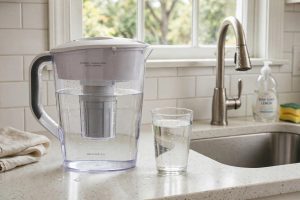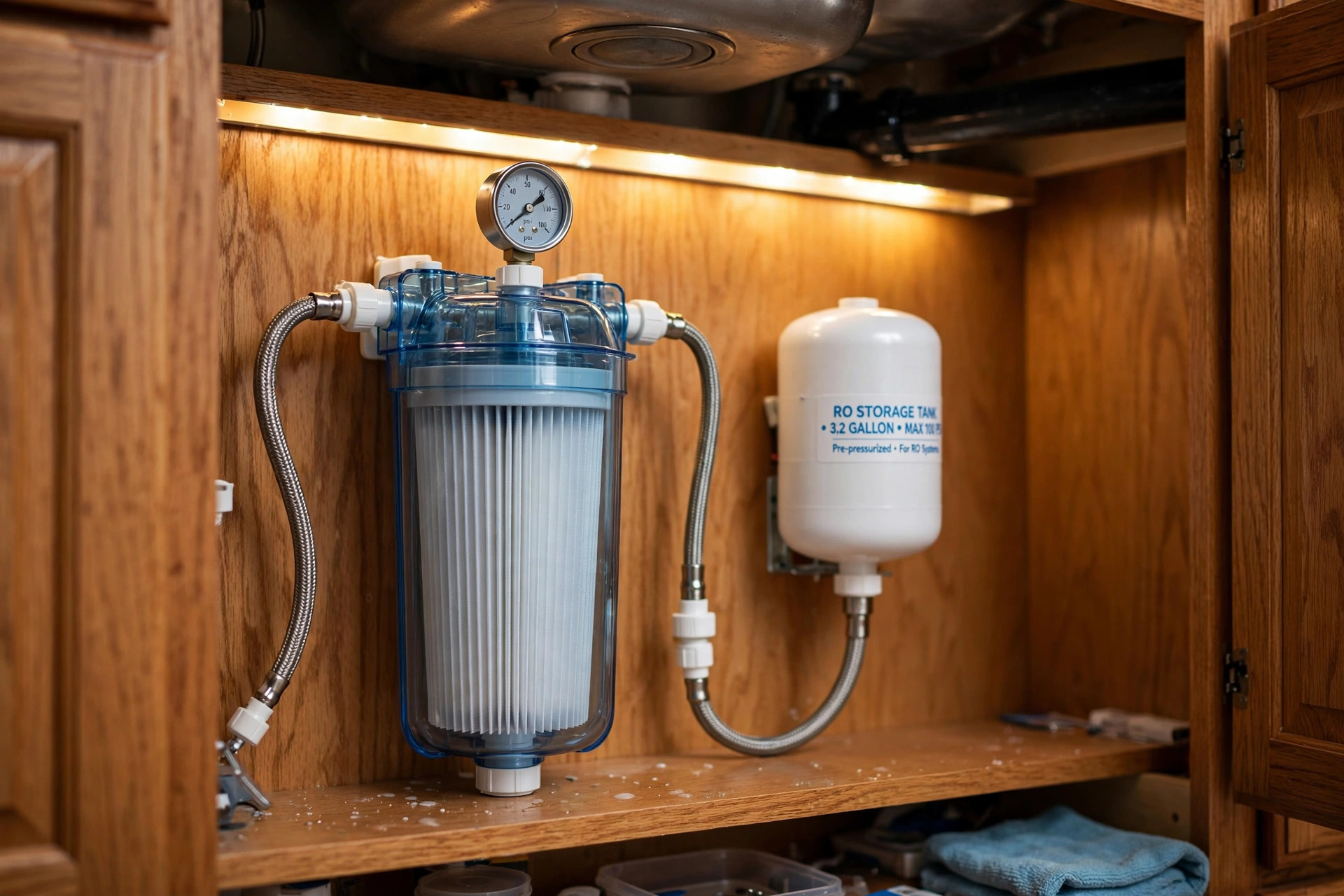

A reverse osmosis system gives a home very clean drinking water. Yet the heart of that system, the thin RO membrane, is delicate. Dirt, sand, silt, and rust can wear it down fast. This is why a pre filter matters. The best sediment pre filter for ro system usa homeowners can buy stands at the front of the system and catches the large particles first. It costs little. It extends the life of the far more expensive membrane. And it keeps water pressure steady throughout the home.
In this guide you will learn what a sediment pre filter does, how to choose one, what the common types cost, how to care for it, and how to stay safe when you install and service it. Whether your water comes from a city supply or a private well, the right pre filter is one of the simplest upgrades you can make.
Why Your RO System Needs a Sediment Pre Filter
A reverse osmosis system works in stages. Water first passes through one or two pre filters, then through carbon filters, and only then through the RO membrane itself. The membrane is a thin film with pores so small that it can block dissolved salts, heavy metals, and many chemicals. The Environmental Protection Agency’s drinking water guidance notes that point-of-use devices like these work best when their cartridges are matched to the water they treat and changed on schedule. That guidance applies strongly to the pre filter stage.
Without a good pre filter, the membrane faces every grain of sand and every flake of rust in the pipework. Each particle batters the membrane surface. Over months, the membrane clogs. Water output slows to a trickle. The system wastes more water down the drain. In time, contaminants begin to slip through. A sediment pre filter for reverse osmosis stops this chain of events before it starts.
The pre filter also protects the carbon filters that sit behind it. Carbon blocks remove chlorine and improve taste, but they foul quickly when silt coats their surface. When the sediment pre filter does its job, the carbon stage lasts its full rated life instead of burning out early.
Homes on private wells see the greatest benefit. Well water often carries fine sand and iron sediment that city water does not. If you draw from a well, pair your RO unit with a dedicated sediment filter for well water at the point of entry or at least a strong pre filter at the sink unit. City water users benefit too. Old galvanized pipes and seasonal main breaks send rust and grit through municipal lines several times a year.
What to Look For When You Choose: Best Sediment Pre Filter for Ro System Usa
Selecting the best sediment pre filter for ro system usa shoppers will last with is not complicated, but a few details decide whether a filter fits your home and your RO unit. Work through them in order before you buy.
Micron Rating
The micron rating tells you the smallest particle the filter can trap. One micron is one millionth of a meter. For an RO pre filter, the standard rating is five microns. A five-micron filter catches sand, silt, rust flakes, and pipe scale while still letting water flow freely to the membrane. Many under-sink RO systems come with a five-micron spun filter from the factory.
In areas with very dirty water, some homeowners use a two-stage approach: a twenty- or twenty-five-micron filter first, then a five-micron filter. This graded method spreads the load and stretches change-out intervals. A one-micron filter exists too, but it is usually overkill for a pre filter and can choke flow.
Size, Flow Rate, and Housing
Most under-sink RO systems use ten-inch cartridges in slim housings. Some use twenty-inch cartridges for higher capacity. Match the cartridge to the housing you own. A cartridge that is too short or too narrow will let water bypass the media entirely, and the filter will do nothing.
Flow rate matters less at the drinking-water tap than at whole-house scale, but it still counts. A standard ten-inch five-micron filter handles the slow flow of an RO unit with ease. If you are planning a whole house sediment filter installation ahead of the RO system, size the big housing for the full flow of the home or the pressure will drop at every faucet.
Check the pressure rating of the housing. Most quality housings handle up to 90 pounds per square inch. If your home has very high water pressure, a pressure regulator on the main line protects the housings, the RO unit, and the plumbing itself. Retailers such as Home Depot‘s water filtration department and Lowe’s water filter selection list pressure ratings on every product page, so compare them before you order.
Cartridge Life and Certifications
Manufacturers rate cartridges by months of service or by gallons of water filtered. Real life depends on your water. A ten-inch five-micron cartridge in clean city water may last six months. The same cartridge on a sandy well may last six weeks.
Look for independent certification marks. NSF/ANSI Standard 42 covers material safety and structural integrity for filters that improve taste and appearance. A cartridge that carries this mark has been tested by an independent lab rather than judged on the manufacturer’s word alone. This Old House‘s plumbing guides and Family Handyman‘s filter replacement advice both stress this point for beginners.
Common Types of Sediment Pre Filters
Four designs dominate the market. Each traps particles in a different way, and each suits a different water problem.
Melt-Blown Polypropylene
Melt-blown cartridges are the workhorse of the industry. Fine polypropylene fibers are blown into a dense tube that traps sediment through its full depth. They are cheap, widely available, and fit nearly every standard housing. For most city-water homes, a five-micron melt-blown cartridge is the best sediment pre filter for ro system usa buyers can choose without overthinking. Change it every six months, or sooner if the housing bowl turns dark with trapped dirt.
String-Wound Cartridges
String-wound filters wrap cotton, polypropylene, or glass-fiber cord around a rigid core. The winding pattern creates a gradient: larger gaps on the outside, tighter gaps near the core. This design holds a great deal of sediment and handles heavy loads well, which makes it popular on well systems. It costs a bit more than melt-blown, and the cotton versions can shed fibers into the line, so a carbon stage behind it is wise.
Pleated Polyester
Pleated cartridges fold their media like an accordion, packing a large surface area into a small housing. The result is long life and low pressure drop. Many are washable and reusable a few times, which lowers the cost per year. Pleated filters shine in homes with moderate sediment loads where the homeowner does not want to change cartridges every few weeks.
Gradient-Density Dual Cartridges
Some cartridges combine two stages in one shell: a coarse outer layer around a fine inner core, for example twenty-five microns outside and one micron inside. These duplex filters extend the change interval and polish the water in one pass. They cost more per cartridge but reduce labor, a fair trade for a busy household.
Shoppers comparing brands can read independent roundups on Aquasana‘s water education resources and check how different cartridge types pair with reverse osmosis system under sink reviews to see which pre filter stage each system ships with.
Cost and Price
Sediment pre filters are among the cheapest parts of any water system. A single ten-inch five-micron melt-blown cartridge usually costs between three and eight dollars when bought in a multi-pack. Premium gradient-density and pleated cartridges run from ten to twenty-five dollars each.
A complete pre filter housing kit, which includes the housing, bracket, wrench, and fittings, costs between twenty and sixty dollars. This is a one-time purchase. After that, you buy only cartridges.
Compare these numbers with the cost of an RO membrane, which often runs from forty to over one hundred dollars. A five-dollar pre filter that doubles membrane life pays for itself many times over. On well water, the math is even kinder: membranes fouled by sand must be replaced in months rather than years.
Budget for changes when you buy. Write the replacement dates on a card taped inside the sink cabinet. A cheap filter changed on time always beats an expensive filter left in too long.
Care and Upkeep
Routine care for a sediment pre filter takes about fifteen minutes and needs no special tools beyond the housing wrench that came with the kit.
First, watch the pressure. A simple gauge on the housing outlet shows when the cartridge is loading up. A drop of ten to fifteen pounds per square inch from the clean reading means it is time to change the cartridge, even if the calendar says otherwise.
Second, change cartridges before they turn into a problem. A saturated filter does more than slow the water. Trapped sediment can harbor bacteria, and high pressure drop can crack the housing. Mark the change date on the new cartridge with a permanent marker so the next change is easy to track.
Third, sanitize the housing at each change. Wash the sump, the cap threads, and the O-ring with warm soapy water. Rinse well. Apply a thin film of food-grade silicone grease to the O-ring before reassembly. This keeps the seal tight and makes the next opening easy.
Fourth, keep spare cartridges on the shelf. A filter that fails on a Sunday evening should not force you to wait three days for shipping. Two spare cartridges cost less than ten dollars and remove all urgency from the schedule.
Fifth, run a ro system sediment filter replacement check on the whole unit once a year. Look at tubing for kinks, check the storage tank pressure, and confirm the drain line is clear. A healthy pre filter cannot save a system whose other stages are neglected.
Safety
Water filters are safe devices, but a few rules keep them that way.
Work only with cold water lines. Sediment housings and RO tubing are not rated for hot water, and hot water will warp the housings and void the warranty. If your sink cabinet is tight, take a photograph of the plumbing before you disconnect anything, so reassembly is exact.
Always shut off the feed water and open the RO faucet to release pressure before opening a housing. A pressurized housing can spray water across the cabinet when the sump breaks free. Keep towels in the cabinet and a bucket under the housing.
Buy cartridges rated for potable water. Cheap industrial filters can leach dyes or binders into drinking water. The NSF mark discussed earlier is the simplest way to confirm a cartridge is safe for a home supply.
On private wells, test the water before choosing a filter strategy. Sediment is only one part of well water chemistry. Iron, manganese, hydrogen sulfide, and bacteria each need their own treatment. Moen‘s filtration products, Kohler‘s water product lines, and Delta Faucet‘s water treatment information pages all carry beginner material, but a laboratory water test is the foundation no brochure can replace.
Frequently Asked Questions
How often should I change my sediment pre filter?
Most manufacturers suggest every six months. Change it sooner if you see a pressure drop, notice slower flow at the RO faucet, or spot heavy discoloration in a clear housing. Well owners often change theirs every two to three months. The calendar is a guide; the water itself is the judge.
Can I use a sediment pre filter alone for drinking water?
No. A sediment filter removes particles only. It does not remove dissolved salts, lead, fluoride, pesticides, or microbes. It is the first stage of a system, not a complete system. Pair it with carbon filtration and an RO membrane for true drinking-water treatment.
Will a pre filter reduce my water pressure?
A clean pre filter causes only a small pressure loss, usually two to five pounds per square inch. As the cartridge loads with sediment, the loss grows. That is the signal to change it. If pressure stays low with a fresh cartridge, the cartridge rating may be too fine for your flow, or the housing may be undersized.
What micron rating is best for an RO pre filter?
Five microns is the standard and suits most homes. Use a coarser twenty- to twenty-five-micron stage ahead of it only if your water is visibly dirty. Going finer than five microns at the pre filter stage adds little and risks flow problems.
Are clear filter housings better than opaque ones?
Clear sumps let you see trapped sediment at a glance, which helps beginners learn their water. Opaque housings block light and reduce algae growth in sunlit cabinets. Either works. Choose clear if you want a visual gauge of filter life, opaque if the cabinet gets daylight.
Do I need a plumber to install a sediment pre filter?
Most under-sink kits are a do-it-yourself job for a homeowner comfortable with basic plumbing. You cut the cold-water line, mount the bracket, and connect the fittings. If you are unsure about any step, or if the main line must be altered, hire a licensed plumber. A flooded cabinet costs far more than a service call.
A Short Final Word
The best sediment pre filter for ro system usa homeowners can buy is not the most expensive one. It is the right micron rating, in the right size, changed on time. Spend a few dollars on the cartridge, spend fifteen minutes on the change-out, and the expensive heart of your RO system will thank you with years of clean water and steady flow. Start with a simple five-micron melt-blown cartridge, watch your pressure gauge, and adjust from there. Clean water begins with the humblest filter in the line.
References
Aquasana. (n.d.). Water filtration systems. https://www.aquasana.com Delta Faucet. (n.d.). Kitchen and bathroom faucets. https://www.deltafaucet.com Family Handyman. (n.d.). DIY home repair and maintenance. https://www.familyhandyman.com Kohler. (n.d.). Bathroom and kitchen fixtures. https://www.kohler.com Lowe’s. (n.d.). Home improvement products. https://www.lowes.com Moen. (n.d.). Faucets and plumbing fixtures. https://www.moen.com The Home Depot. (n.d.). Home improvement products. https://www.homedepot.com This Old House. (n.d.). Home renovation guidance. https://www.thisoldhouse.com
Was this guide helpful?

About Michael Thompson
The My Garden US editorial team writes practical, in-depth home and garden guides for American homeowners — tested advice, no fluff.
You May Also Like
Clogged Main Sewer Line Signs for Homeowners
February 27, 2026 0 views
Alcove vs Freestanding Tub Comparison USA: Which Tub Is Right for Your Bathroom
February 27, 2026 0 views
Best Instant Hot Water Tank Reviews USA
September 17, 2026 0 views