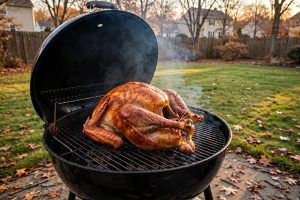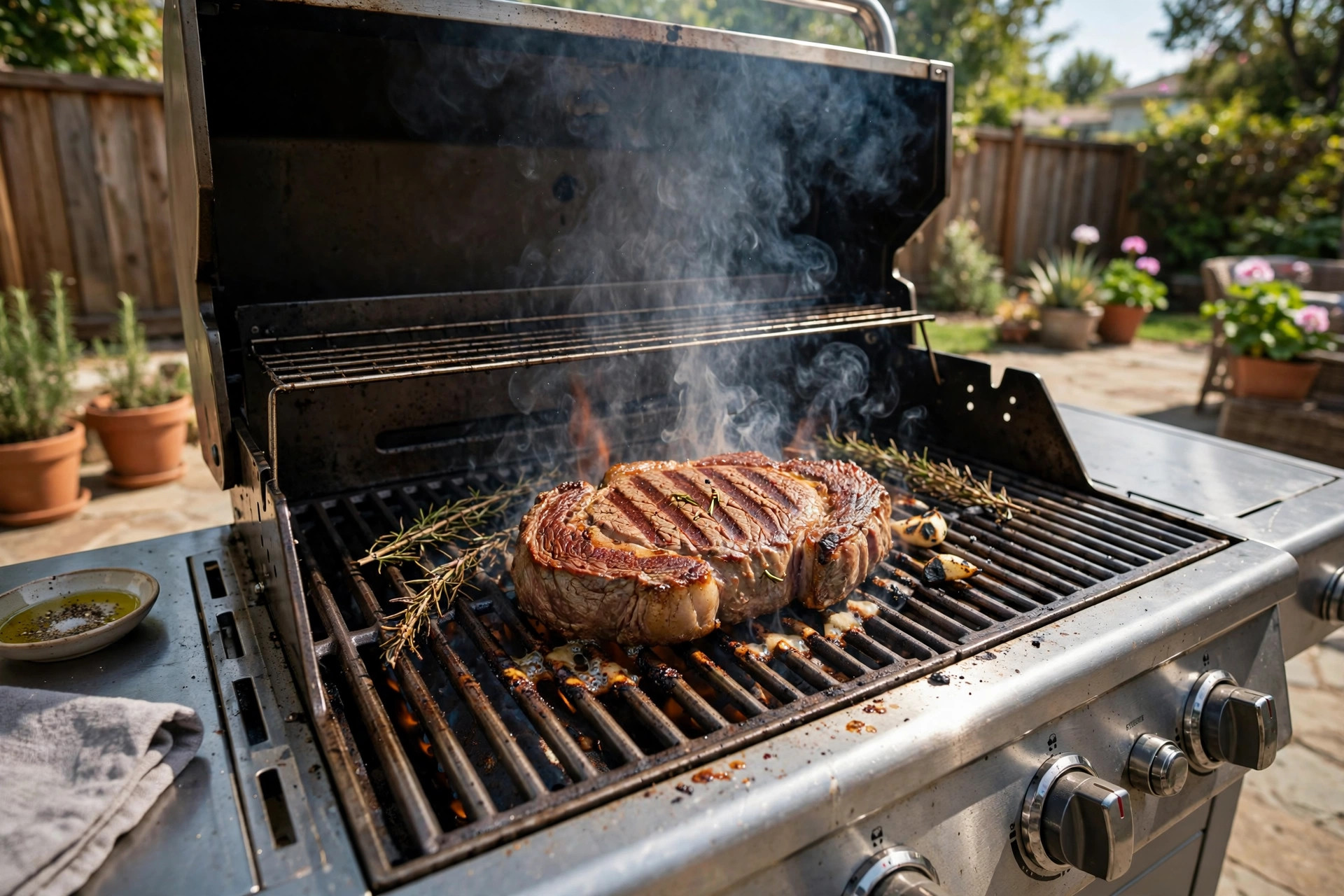

A good steak needs high heat and a hot grate. That is why so many home cooks search for best grill for searing steaks reviews before they spend their money. The market is full of choices. Gas grills, charcoal kettles, kamado cookers, and pellet models all claim to sear well. Not all of them do.
Searing is not the same as grilling at a medium heat. A true sear means surface heat of about 500 to 700 degrees Fahrenheit. At that heat, the meat forms a dark, crisp crust in a few minutes. The inside stays juicy. Reviews that test real searing, not just general grilling, are the ones worth reading. This guide will help you read those reviews with a clear eye, and help you choose the best grill for searing steaks for your own yard.
Why Searing Ability Matters
Many grills cook food well but fail at a hard sear. They warm up to 400 or 450 degrees and stay there. That is fine for burgers and chicken. A thick ribeye needs more. When heat is too low, the steak steams in its own juice. The surface turns gray. The crust never forms. You get a roast, not a steakhouse result.
Searing also matters for flavor. High heat starts the Maillard reaction. That is the chemical change that gives seared meat its rich, brown color and deep taste. No shortcut creates the same result. A grill that can hold 600 degrees for ten minutes gives you a real sear. A grill that cannot will always fall short, no matter how long you wait.
Reviews of the best grill for searing steaks focus on three facts. First, how hot the cooking surface gets. Second, how fast the grill reaches that heat. Third, how even the heat is across the grate. Cold spots ruin a sear. A steak that sits over a cold spot will cook slow while the rest of the steak burns. Good reviews test all three.
What to Look for in a Searing Grill: Best Grill for Searing Steaks Reviews
Before you trust any set of best grill for searing steaks reviews, learn the features that matter. These points will help you judge any model.
Maximum Heat Output
Look for a grill that reaches at least 550 degrees at the grate. The best searing grills reach 700 degrees or more. Gas grills state their power in BTUs. BTU numbers alone do not tell the whole story. A tight lid, heavy grates, and good burner design matter as much as raw power. Charcoal and kamado grills do not list BTUs. They rely on airflow and fuel load to build heat. A well built kettle with a full chimney of lit coals can pass 600 degrees with ease.
Grate Material
Heavy cast iron grates hold heat best. They keep their temperature when cold meat hits them. Stainless steel rod grates work well too, though thinner rods lose heat faster. Porcelain coated grates are common on mid price models. The coating protects against rust but can chip at very high heat. Many reviewers note how long grates last under searing use.
Burner Design and Zones
A good gas searing grill has burners that run front to back. This layout lets you set up hot and cool zones. You sear the steak over high heat, then move it to a cooler spot to finish. Some grills add a special sear burner or an infrared burner. Infrared burners put out intense heat in a small area. They are built for searing. Reviews often test whether these add on burners live up to their claims.
Size of the Cooking Area
A larger grate gives you room to work. You need space for a two zone setup. You also need space so steaks do not crowd each other. Crowded meat drops the grate temperature. For a family of four, about 450 square inches of primary cooking space is a sound target.
Build Quality
Thin steel bodies leak heat. Look for thick walls, heavy lids, and tight seals. A heavy lid holds heat in and keeps wind out. Cheap carts wobble and rust. A grill that lasts ten years is cheaper in the end than a grill you replace twice.
Types of Grills for Searing Steaks
Gas Grills
Gas is the most popular choice in America. It lights fast and heats fast. Many gas models reach 500 degrees in ten minutes. For true searing, look for models with a dedicated sear station or infrared burner. These add ons push one zone past 700 degrees. Brands such as Weber and Broil King both offer gas models with sear burners that reviewers test often.
The main strength of gas is control. You turn a knob and the heat changes at once. The main weakness is top end heat on basic models. A standard three burner grill without a sear burner may top out near 500 degrees. That is good for most food but short of steakhouse sear heat.
Charcoal Kettles and Barrels
Charcoal gives the hottest sear for the least money. A full load of quality briquettes or lump charcoal under a raised grate can pass 650 degrees. Charcoal also adds smoke flavor that gas cannot match. Char-Broil and other makers sell kettle models that reviewers praise for searing value.
The trade off is effort. You must light the coals, wait for them to ash over, and manage the vents. Temperature control takes practice. For cooks who enjoy the ritual, charcoal is hard to beat. Many best grill for searing steaks reviews rank a simple charcoal kettle above far more costly gas models for pure sear power.
Kamado Cookers
Kamado grills use thick ceramic walls to hold heat. They can reach 750 degrees and hold it for an hour. The Big Green Egg is the best known brand, and reviewers test its searing often. Kamados also excel at low and slow cooking, so one unit can both sear and smoke.
The drawbacks are weight and price. A large kamado weighs over 200 pounds. Quality models cost far more than a kettle. Moving one takes planning. But for searing, few grills match a kamado at full heat.
Pellet Grills
Pellet grills burn wood pellets and hold steady temperatures with ease. Most top out near 450 to 500 degrees. That is below true sear heat. Some newer models add a direct flame mode or a sear plate. Reviewers test these features with care. Traeger popularized the style, and their models appear in many review roundups.
Pellet grills shine for smoking. A cook who wants to both smoke and sear may pair a pellet grill with a small charcoal unit. If you want to learn more about smoke cooking, our guide on how to smoke duck on pellet grill walks through the method step by step.
Infrared and Specialty Sear Units
Some cooks buy a small infrared sear unit as a second grill. These units heat to 1,500 degrees in minutes. They sear a steak in about ninety seconds per side. They do not replace a full grill. They add a finishing station. Reviews note that they work well but add cost and take up patio space.
How Reviewers Test Searing
Trusted reviews follow a pattern. First, they preheat the grill as the maker directs. Then they measure grate temperature with an infrared thermometer at several points. This shows both peak heat and evenness. Next, they sear steaks of the same cut and thickness. They time each side and note crust color.
Consumer Reports uses lab methods and repeat tests. Sites like AmazingRibs test with a cook’s eye and deep knowledge of fire. Cooking sites such as The Spruce Eats test with home cooks in mind. Reading more than one source gives a fuller picture. A grill that scores well across all three kinds of reviews is a safe bet.
Watch for reviews that only test at medium heat. A grill can win a general burger test and still fail at searing. The phrase “best grill for searing steaks reviews” should point you to tests that push each model to its limit. If a review never lists a grate temperature, treat its sear claims with doubt.
Cost and Price Ranges
Searing grills span a wide price range. Knowing what each tier buys helps you set a budget.
Under 300 dollars. Basic charcoal kettles and small gas grills live here. A kettle at this price can sear very well. Basic gas models at this price often lack the heat for a hard sear. Retailers like Home Depot carry many entry models, and their listings often link to buyer reviews.
300 to 800 dollars. This is the sweet spot for most buyers. Mid range gas grills with sear burners, quality charcoal barrels, and small kamados sit in this band. You get thicker steel, better grates, and longer warranties. Many top picks in best grill for searing steaks reviews come from this range.
800 to 2,000 dollars. Premium gas grills, large kamados, and high end charcoal units live here. Napoleon makes gas models in this range with strong sear zones that reviewers rate highly. You pay for thicker metal, finer controls, and longer life.
Over 2,000 dollars. Built in outdoor kitchen units and large ceramic kamados reach this level. They sear well, but the extra cost buys looks and size more than extra sear power.
Remember to budget for tools. A good instant read thermometer, long tongs, and a grill brush matter as much as the grill. Factor in fuel cost too. Propane refills and quality charcoal add up over a season.
Care and Upkeep
A searing grill needs regular care to hold its heat year after year.
Clean the grates after every cook. Brush them while they are still hot. Burnt on food blocks heat transfer and causes sticking. For cast iron grates, brush clean and wipe with a thin coat of oil after the grill cools. This guards against rust.
Empty ash from charcoal grills after each use. Ash blocks airflow and makes the next fire burn cooler. Check vents for clogs. A stuck vent means poor heat control.
For gas grills, check the burners each season. Spiders and debris can block the tubes. A blocked burner makes cold spots. Look at the flame. It should be mostly blue with even height. Yellow, uneven flames mean it is time to clean.
Cover the grill when it is not in use. A quality cover costs little and adds years of life. Keep the grill on a level surface away from strong wind. Wind steals heat and makes searing harder. If you grill in cold months, our article on the best outdoor grill for winter grilling has tips for holding heat in low temperatures.
Safety Tips
High heat demands care. Place the grill at least ten feet from the house, deck rails, and overhanging branches. Never use a grill in a garage or under a covered porch. Carbon monoxide builds up fast in closed spaces.
Keep a spray bottle of water near for small flare ups. Keep the lid ready to close. Closing the lid starves a grease fire of air. Never leave a hot grill alone.
Wear heat proof gloves when handling the lid or moving grates. Long tools keep your hands clear of the heat. Keep children and pets at a safe distance. Hot metal stays hot long after the fire dies down.
Let charcoal cool fully before you dump the ash. Coals can hold heat for hours. Store propane tanks upright, outdoors, away from heat.
Frequently Asked Questions
What temperature is best for searing steaks?
Aim for 500 to 700 degrees at the grate surface. Thin steaks under one inch do well near 500 degrees. Thick cuts of one and a half inches or more need 600 degrees or higher to form a crust before the inside overcooks. Use an infrared thermometer to check your grate. Guessing leads to gray meat.
Is gas or charcoal better for searing?
Charcoal reaches higher heat for less money. A full bed of lit coals can pass 650 degrees. Gas is faster and easier to control. A gas grill with a sear burner or infrared zone closes the gap. Many cooks keep both. They sear over charcoal and use gas for weeknight speed.
Do I need a special sear burner?
Not always. A hot charcoal fire needs no special burner. On gas grills, a sear burner helps a lot. It adds a zone of intense heat where basic burners fall short. If you buy gas and sear steaks often, the sear burner is worth the extra cost.
How thick should a steak be for searing?
One and a quarter to one and a half inches is ideal. Thick steaks let you build a dark crust without overcooking the center. Thin steaks cook through before the crust forms. If you only have thin cuts, sear very hot and very fast, about one minute per side.
Should I oil the steak or the grate?
Oil the steak, not the grate. A thin coat of high smoke point oil on the meat keeps it from sticking. Oil on the grate drips through and causes flare ups. Pat the steak dry with paper towels first. A dry surface sears faster than a wet one.
Can a pellet grill sear a steak?
Most pellet grills top out near 500 degrees, which gives a mild sear at best. Some models add a direct flame or sear mode that helps. For a true steakhouse crust, many pellet owners finish the steak on a ripping hot charcoal grill or cast iron pan. If you host big cookouts, also see our picks for the best bbq for super bowl party to plan the full menu.
Final Word
The best grill for searing steaks is the one that holds real high heat, heats evenly, and fits the way you cook. Read best grill for searing steaks reviews with the facts in mind. Check the tested grate temperature. Note how fast the grill heats. Look for evenness across the cooking surface. Charcoal kettles give the most sear for the least money. Gas grills with sear burners give speed and control. Kamados give the highest heat of all, at a higher price.
Buy for your habits, not for the ads. If you grill steaks twice a month, a mid range model with a true sear zone will serve you well for years. Keep the grates clean, let the grill fully preheat, and give each steak room on the grate. Do that, and the crust you have been chasing is within reach.
References
AmazingRibs.com. (n.d.). Barbecue and grilling science. https://www.amazingribs.com Big Green Egg. (n.d.). Kamado grills and outdoor cooking. https://www.biggreenegg.com Broil King. (n.d.). Gas and charcoal grills. https://www.broilkingbbq.com Char-Broil. (n.d.). Gas and charcoal grills. https://www.charbroil.com Consumer Reports. (n.d.). Product reviews and ratings. https://www.consumerreports.org Napoleon. (n.d.). Fireplaces, grills, and heating products. https://www.napoleon.com The Home Depot. (n.d.). Home improvement products. https://www.homedepot.com The Spruce Eats. (n.d.). Recipes and cooking guides. https://www.thespruceeats.com Traeger. (n.d.). Wood pellet grills. https://www.traeger.com Weber. (n.d.). Grills and outdoor cooking. https://www.weber.com
Was this guide helpful?

About Sarah Mitchell
The My Garden US editorial team writes practical, in-depth home and garden guides for American homeowners — tested advice, no fluff.
You May Also Like

Best BBQ for Graduation Party Ideas: How to Host a Cookout Worth the Diploma
April 20, 2026 0 views
Best BBQ for Beginners Under 200: A Plain Guide to Your First Grill
September 27, 2026 0 views
Gas Grill Safety Tips for Homeowners
March 19, 2026 0 views