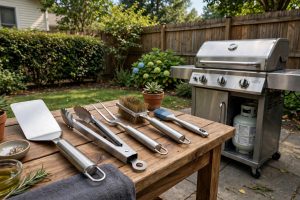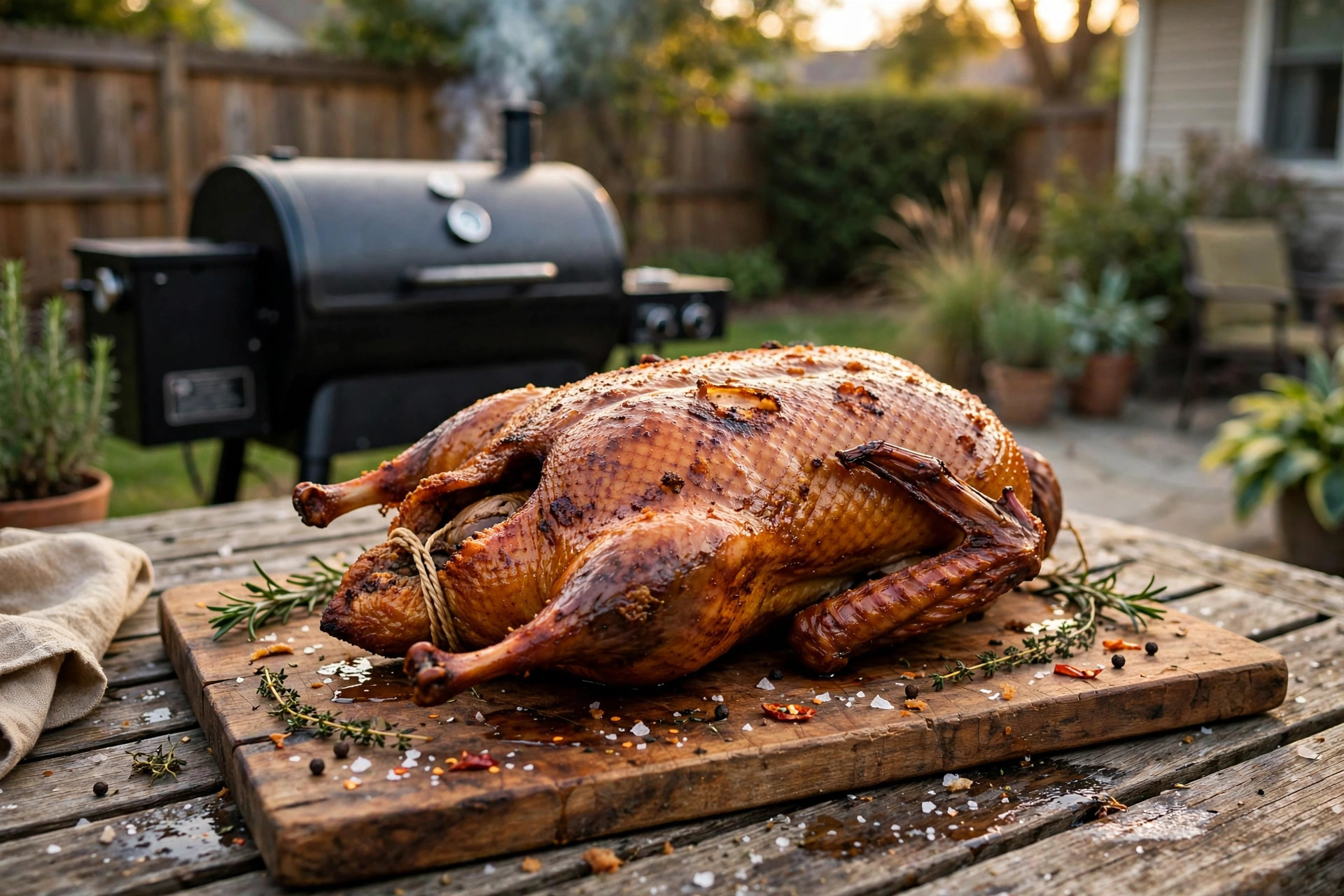

A whole duck on the smoker is a sight to behold. The skin turns a deep amber color. The meat stays rich and moist. And learning how to smoke duck on pellet grill equipment is simpler than most people think. A pellet grill holds steady heat for you. The fan feeds the fire a slow stream of hardwood pellets. You get real smoke flavor without babysitting a fire. This guide walks through the whole job, from buying the bird to carving the last slice.
Why Smoke Duck on a Pellet Grill
Duck is a rich bird. It carries a thick layer of fat under the skin. That fat is the secret to great smoked duck. Low, slow heat melts the fat out over time. The skin crisps as the fat leaves. The smoke reaches the meat and gives it a deep, gentle flavor.
A pellet grill fits this job well. It keeps a steady low temperature for hours. You set the dial and walk away. The auger feeds pellets into the fire pot at a measured rate. A fan pushes the smoke around the cooking chamber. This even heat is hard to match on a charcoal grill without constant work. Many cooks who once feared duck now turn to a pellet smoker for it, and guides at Traeger and Weber show the same set-and-forget style for long smokes.
Smoked duck also stands out at the table. Most guests have had roasted chicken or smoked brisket. A whole smoked duck feels special. The dark meat is tender. The skin crackles. Sliced thin, it works in salads, tacos, and sandwiches all week.
What You Need Before You Start: How to Smoke Duck on Pellet Grill
The Duck
Buy a whole duck, four to six pounds, for your first try. Pekin duck is the common choice in American stores. It has mild meat and a good fat layer. A Moulard duck is larger and meatier, but it costs more. Look for a bird with pale, unblemished skin and no strong odor. Frozen duck works fine. Thaw it in the refrigerator for two days before you plan to smoke. Never thaw poultry on the counter.
The Pellets
Wood choice shapes the flavor. Fruit woods are the classic match for duck. Apple and cherry give a sweet, mild smoke that suits the rich meat. Pecan is another fine choice, with a nutty note. Oak and hickory are stronger. They can work, but they may overpower the bird if you use them alone. Many pitmasters blend a mild wood with a small share of hickory. If you are new to this, start with pure apple or cherry. You can read about pellet flavors at Char-Broil and Broil King.
The Tools
You need a reliable meat thermometer. Duck must reach a safe internal temperature, and guessing is not enough. A wireless thermometer lets you watch the cook from inside the house. See our guide to the best bbq thermometer wireless for grilling for options that fit a long duck smoke. You also want a sharp knife, a cutting board, paper towels, and a drip pan. Duck gives off a lot of fat. A drip pan under the bird catches it and keeps the grill clean. Foil pans from Home Depot work well and cost little.
Preparing the Duck
Good preparation makes the difference between rubbery skin and crisp skin. Take your time here.
First, remove the duck from its wrapping. Pull out the neck and the giblets from the cavities. Save them for stock if you like. Rinse the bird under cold water, then pat it fully dry with paper towels. Dry skin is the first rule of crisp skin.
Next, trim excess fat. There is usually a thick pad of fat at the tail end and around the neck cavity. Cut away the loose flaps with a sharp knife. Leave the skin itself in place.
Now score the skin. This step lets the fat escape while the bird smokes. Use a sharp knife to cut a shallow crosshatch pattern over the breast and thighs. Cut through the skin and the fat layer, but do not cut into the meat. Keep the cuts about an inch apart. This takes a few minutes, and it pays off at the end.
Some cooks also prick the skin with a fork or a skewer, especially on the thighs and the back. A few dozen small holes give the fat more paths to drain. Either method works. Scoring gives a neater look.
Season the duck simply. Kosher salt and coarse black pepper are enough for a first smoke. Rub the salt over the whole bird, inside and out. Add pepper to the outside. Let the seasoned duck sit uncovered in the refrigerator for at least four hours, or overnight. The cold dry air tightens the skin. That dry skin crisps faster in the smoker. If you want herbs, thyme and rosemary pair well with duck. Slip a few sprigs inside the cavity with a halved onion and an orange.
Step by Step: How to Smoke Duck on Pellet Grill
Here is the full process, start to finish.
Step 1: Preheat the grill. Set your pellet grill to 225 degrees Fahrenheit. Let it run for fifteen minutes so the temperature settles and clean smoke rolls. Fill the hopper with apple or cherry pellets.
Step 2: Set up the bird. Place a foil drip pan on the grate. Set the duck breast-side up on the pan, or directly on the grate with the pan below it. Either way, the pan catches the fat. Tuck the wing tips under the body so they do not burn.
Step 3: Smoke low and slow. Put the duck on the grill and close the lid. Insert your thermometer probe into the thickest part of the breast. Keep the lid closed. Every time you open it, heat escapes and the cook slows.
Step 4: Watch the temperature, not the clock. A four to five pound duck takes about four to five hours at 225 degrees. But birds vary. Trust the thermometer. Pull the duck when the breast reads 160 degrees and the thigh reads 170 degrees. Carryover heat will carry it to the safe mark.
Step 5: Crisp the skin. Smoked duck skin can stay soft at low heat. For crisp skin, raise the grill to 400 degrees for the last twenty to thirty minutes. Watch closely so the skin browns without burning. This hot finish is the trick behind a smoked duck breast on pellet grill cooks that looks as good as it tastes.
Step 6: Rest and carve. Move the duck to a cutting board. Rest it for twenty minutes, tented loosely with foil. The juices settle back into the meat. Carve the breast in thin slices. Cut the legs at the joint. Serve warm.
Temperature and Timing at a Glance
Keep these numbers in mind during the cook:
– Grill temperature for smoking: 225 degrees Fahrenheit – Finishing temperature for crisp skin: 400 degrees Fahrenheit – Breast target: 160 degrees, resting to 165 – Thigh target: 170 degrees – Approximate time: 45 to 60 minutes per pound at 225 degrees
Poultry is safe at 165 degrees internal temperature. The United States food safety guidance sets this mark for all poultry. Duck served below this is a risk. Your thermometer is your guard. Check more than one spot if the bird cooks unevenly. Safety resources at Consumer Reports explain grill thermometer accuracy in plain terms.
Smoked Duck Breast on Pellet Grill: A Shorter Option
If a whole bird feels like too much, try a smoked duck breast on pellet grill heat alone. Boneless duck breasts, often called magrets, smoke in about ninety minutes at 225 degrees. Score the skin the same way. Pull them at 135 to 140 degrees for medium rare, or 160 for well done. Note that food safety guidance still calls for 165 degrees on poultry, so weigh your choice with care.
Pellet Grill Duck Breast Temperature and Wood Choices
Duck breast is leaner than the legs. It benefits from gentler smoke. Apple wood keeps the flavor sweet. Cherry adds a rosy color to the skin. For a bolder profile, mix in a little oak. Avoid mesquite. It is too harsh for duck and turns bitter on long cooks.
How long to smoke duck breast depends on thickness. A thick breast may take two hours. A thin one may take ninety minutes. Again, the thermometer decides. Pellet grill duck breast temperature is the number that matters, not the minutes on the dial.
Types of Smoked Duck to Try
Once you know the basics, try these variations:
– Whole duck: The classic. Feeds four to six people. Best for a weekend cook. – Duck legs and thighs: Dark, rich meat that takes smoke well. They finish faster than a whole bird. – Duck breast: Quick and elegant. Slices thin for salads and appetizers. – Dry-rubbed duck: Add brown sugar, paprika, and garlic powder to the salt base for a sweet crust. – Tea-smoked style: Some cooks add a foil packet of rice, sugar, and tea to the grill for an aromatic twist.
If you are weighing grill types for this kind of cooking, our look at pellet grill vs gas grill pros cons covers heat control, flavor, and cost.
Cost and Price
Duck costs more than chicken. A whole Pekin duck at an American grocery store usually runs between three and six dollars per pound. A five pound bird then costs fifteen to thirty dollars. Specialty or Moulard ducks can cost twice that.
Pellets are cheap per cook. A twenty pound bag costs about fifteen to twenty-five dollars. A duck smoke uses roughly four to six pounds of pellets. That is about four to seven dollars in fuel.
A good wireless thermometer costs thirty to sixty dollars and lasts for years. The drip pans cost a few dollars. All told, a first duck smoke costs about fifty dollars including reusable tools. Later smokes cost about twenty to twenty-five dollars in food and fuel. Guides at Napoleon and Big Green Egg list similar per-cook fuel math for long smokes.
Care and Upkeep After a Duck Smoke
Duck fat is the prize and the problem. Save the fat that collects in the drip pan. Strain it through a fine sieve into a jar. Duck fat keeps for months in the refrigerator. Cooks prize it for roasting potatoes.
But do not leave fat in the grill. Grease buildup causes flare-ups on the next cook. After the grill cools, remove the drip pan and throw away the foil. Scrape the grates with a grill brush. Empty the grease bucket. Vacuum ash from the fire pot every few cooks. A clean grill lights faster and holds temperature better. Maintenance tips at The Spruce Eats cover the same routine for all pellet cookers.
Store leftover pellets in a dry bin. Pellets absorb moisture from the air. Damp pellets crumble and jam the auger. A sealed bucket with a lid solves the problem.
Safety
Raw duck needs the same care as raw chicken. Wash your hands after handling it. Keep the bird cold until it goes on the grill. Do not let it sit out for more than two hours.
Keep a fire extinguisher near the grill. Duck fat can drip and flare. Never leave a hot grill fully unwatched for hours, even though pellet grills are steady. Check the hopper now and then to be sure pellets keep feeding.
Rest the meat, but do not rest it too long. Twenty minutes is right. After two hours at room temperature, leftovers should go in the refrigerator. Eat refrigerated duck within three to four days. Reheat it to 165 degrees.
Frequently Asked Questions
How long does it take to smoke a duck on a pellet grill?
Plan on forty-five to sixty minutes per pound at 225 degrees Fahrenheit. A five pound duck takes about four to five hours. Finish with twenty to thirty minutes at 400 degrees to crisp the skin. Always confirm with a thermometer.
What is the best wood pellet for smoking duck?
Apple and cherry are the best all-around choices. They give sweet, mild smoke that suits duck. Pecan is a good second choice. Avoid strong woods like mesquite.
What internal temperature should smoked duck reach?
The breast should reach 160 degrees and rest up to 165. The thighs should reach 170 degrees. Use a probe thermometer in the thickest meat, away from bone.
Why is my smoked duck skin rubbery?
Rubbery skin comes from too much moisture and too little finishing heat. Dry the bird well before smoking. Score the skin so fat can escape. Finish at 400 degrees for the last half hour. These three steps fix the problem.
Can I smoke a frozen duck?
No. Thaw the duck fully in the refrigerator first. A frozen bird cooks unevenly. The outside overcooks while the inside stays raw in the danger zone. Give a whole duck two full days to thaw.
What should I do with the duck fat?
Save it. Strain the fat from the drip pan into a jar and refrigerate it. Duck fat is prized for roasting potatoes and vegetables. It keeps for months in the fridge.
A Final Word
Learning how to smoke duck on pellet grill heat is a skill that pays off for years. The method is simple: dry the bird, score the skin, smoke low at 225 degrees, and finish hot for crisp skin. A thermometer does the hard work of judging doneness. Pick a mild wood like apple or cherry. Save the fat. Your first duck may not be perfect, but it will still beat most roast birds you have had. By the third try, you will cook it by feel. Fire up the grill this weekend and see for yourself. For more long-smoke ideas, try our guide on how to smoke brisket on pellet grill, and read smoke-cooking basics at Amazing Ribs.
References
AmazingRibs.com. (n.d.). Barbecue and grilling science. https://www.amazingribs.com Big Green Egg. (n.d.). Kamado grills and outdoor cooking. https://www.biggreenegg.com Broil King. (n.d.). Gas and charcoal grills. https://www.broilkingbbq.com Char-Broil. (n.d.). Gas and charcoal grills. https://www.charbroil.com Consumer Reports. (n.d.). Product reviews and ratings. https://www.consumerreports.org Napoleon. (n.d.). Fireplaces, grills, and heating products. https://www.napoleon.com The Home Depot. (n.d.). Home improvement products. https://www.homedepot.com The Spruce Eats. (n.d.). Recipes and cooking guides. https://www.thespruceeats.com Traeger. (n.d.). Wood pellet grills. https://www.traeger.com Weber. (n.d.). Grills and outdoor cooking. https://www.weber.com
Was this guide helpful?

About Robert Taylor
The My Garden US editorial team writes practical, in-depth home and garden guides for American homeowners — tested advice, no fluff.
You May Also Like
Charcoal Grill Temperature Control Tips for Even, Steady Heat
May 4, 2026 0 views
How to Choose the Best Grill for Smoking and Grilling
April 13, 2026 0 views
Charcoal Grill Deals Near Me USA: Where to Find the Best Bargains
August 18, 2026 0 views