A good plate of chicken wings starts long before the meat meets the heat. It starts with the seasoning. The best BBQ seasoning for chicken wings is the one that builds a crisp, savory crust on the skin and keeps the meat juicy inside. This guide explains how BBQ seasoning works on wings, what to look for when you buy it, and how to use it well on the grill.
Why Seasoning Matters for Chicken Wings
Chicken wings are small cuts with a high share of skin. That skin turns crisp on the grill when it is coated with a dry rub. Salt in the rub draws a little moisture to the surface, then the dry heat of the grill sets the skin firm and golden. Sugar in the mix adds color and a hint of sweet taste. Paprika gives the familiar red tint. Chili heat wakes up the palate. Without seasoning, a wing tastes plain. With the right seasoning, it tastes like food worth remembering.
The best BBQ seasoning for chicken wings does more than add flavor. It helps the cooking. A dry rub with a fine grind coats each wing evenly. It does not burn as fast as a thick wet sauce. It lets you build flavor in layers: rub first, sauce later, or rub only. Many backyard cooks now prefer a dry rub alone, because it keeps the wings crisp.
Grills matter here as well. A gas grill gives steady heat and simple control. A charcoal grill adds a smoky note that pairs well with BBQ rubs. If you cook wings on a pellet grill, a bold seasoning helps the mild pellet smoke stand up in the final taste. For cooks who want to learn how smoke works on smaller cuts, a piece on how to smoke cheese on pellet grill shows how gentle smoke behaves on delicate food.
What to Look for in a BBQ Wing Seasoning: Best Bbq Seasoning for Chicken Wings
Salt as the First Ingredient
Salt is the base of almost every good rub. It should come first on the label, followed by the main spices. Coarse salt gives a stronger bite. Fine salt spreads more evenly on small wings. A rub with too little salt will taste flat no matter how many spices it holds.
Sugar Type and Amount
Brown sugar melts into a dark, rich crust. White sugar gives a cleaner sweetness. Turbinado sugar holds up longer under high heat. A rub that is more than half sugar will burn before the wings finish cooking. For wings cooked fast over direct heat, a moderate sugar level works best.
Heat Level
Heat comes from black pepper, cayenne, chili powder, or dried peppers. Mild rubs suit family tables. Medium rubs suit most adult tastes. Hot rubs suit those who like a burn. Heat builds as you eat, so choose a level one step below what you think you want for a crowd.
Freshness and the Label
Spices lose strength with time. Check the date on the bottle. A rub that smells strong when you open it will taste strong on the wing. Avoid rubs with long lists of fillers or anti-caking chemicals when a simpler option sits on the same shelf.
Types of BBQ Seasoning for Chicken Wings
Classic Dry Rubs
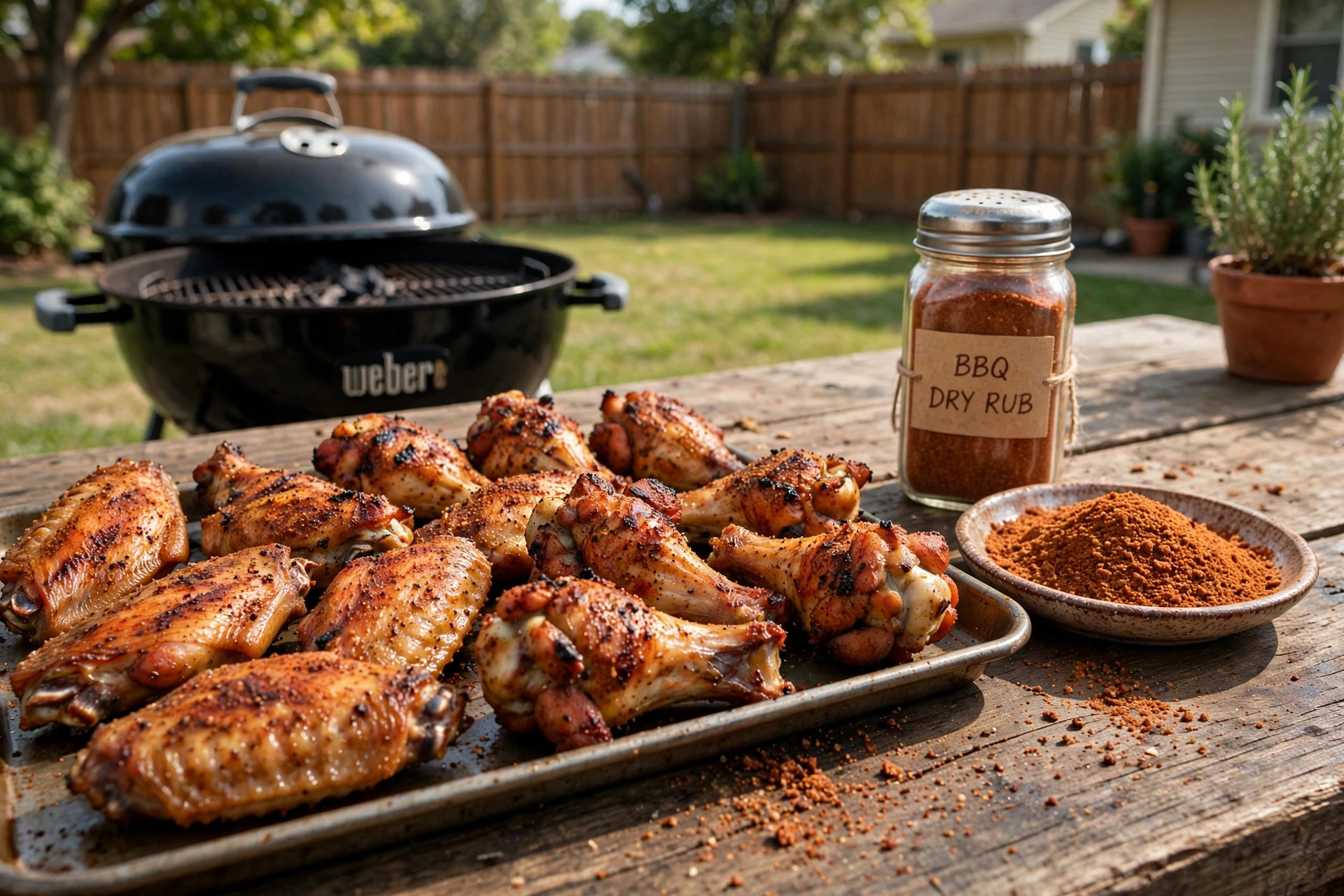
Dry rubs are the most common choice. They come in a shaker and go straight onto the wings. Classic rubs blend salt, sugar, paprika, garlic, onion, black pepper, and a little chili. They form a crisp crust on the grill and pair well with a light sauce or none at all. Quality makers of grills such as Weber publish guidance on dry-rub cooking that home cooks can trust for timing and heat.
Kansas City Style Blends
Kansas City blends run sweet. They use brown sugar, molasses notes, and smoked paprika. They give wings a deep red color and a sweet crust. These rubs do best at medium heat, because the sugar browns fast. They suit eaters who like their BBQ on the sweet side.
Memphis Style Blends
Memphis blends run savory. They use more salt, pepper, and garlic, with less sugar. They give wings a peppery crust with a strong savory pull. These rubs hold up well over hot charcoal, where sugar would burn. They suit cooks who want flavor without sweetness.
Spicy and Hot Blends
Spicy blends add cayenne, habanero, or ghost pepper. They build heat that grows with each bite. A little goes a long way on wings, because the skin holds the spice close to the tongue. Serve a cooling dip beside hot wings. Guides from trusted cooking sites such as The Spruce Eats’ grilling guides describe how heat interacts with fat on grilled wings.
Smoky and Chipotle Blends
Smoky blends use smoked paprika or chipotle powder. They give a deep, campfire note without a smoker. They pair well with charcoal cooking and with pellet grills. If you cook on a pellet grill, makers such as Traeger offer notes on matching rubs to pellet smoke.
Regional and Craft Blends
Small makers now sell regional blends from Texas, the Carolinas, and the South. Texas blends lean on black pepper and salt. Carolina blends add mustard notes. Craft blends often list every spice on the label and skip the fillers. They cost more, but a small jar seasons many batches of wings.
How to Choose the Best One for Your Grill
Match the Rub to Your Heat Source
Gas grills give clean, steady heat. Any style of rub works on a gas grill, because the flavor comes from the rub itself. Charcoal grills add smoke, so a simple salt-and-pepper-forward rub lets the smoke speak. Pellet grills add mild smoke, so a bolder rub with garlic and paprika stands up better. Big kettle-style cookers, the kind made famous by Weber, handle indirect heat well and suit sweet rubs that need gentle cooking.
Match the Rub to Your Cooking Method
Wings cooked hot and fast over direct heat need a rub with moderate sugar. Wings cooked low and slow need a rub with more spice and less sugar, because long cooks darken the crust. Wings finished in a sauce need a lighter rub, so the sauce does not turn salty.
Think About Who Will Eat
A family table wants a mild, sweet rub. A group of adults may want two batches: mild and hot. Label them clearly. Few things spoil a cookout faster than a surprise hot wing on a child’s plate.
Buy Small Jars First
Buy a small jar of each new rub. Season a test batch of wings. Taste before you commit to the big bottle. A rub that tastes great in the jar may taste weak after the grill heat works on it.
Cost and Price of BBQ Wing Seasoning
BBQ seasoning for wings is one of the cheapest upgrades in outdoor cooking. A small shaker jar costs a few dollars. A large bottle costs a little more. Bulk bags from warehouse stores cost the least per ounce. Prices move with the spice market, but the range stays modest year after year.
Making your own rub costs less per batch if you already own the spices. A home blend of salt, sugar, paprika, garlic powder, onion powder, black pepper, and cayenne costs pennies per use. Many cooks mix a big batch and keep it in a sealed jar. For a sense of fair prices, the home improvement shelves at Home Depot list rubs next to grills, and their prices track the market.
The best BBQ seasoning for chicken wings is not always the priciest. Some of the best-known rubs sell for less than a pound of wings. Spend your money on fresh spices, not on fancy packaging.
How to Season Chicken Wings Step by Step
Pat the Wings Dry
Dry skin turns crisp. Wet skin turns soft. Pat each wing with a paper towel before you season. This one step matters more than any rub choice.
Oil Lightly, Then Rub
A thin coat of oil helps the rub stick. Use a neutral oil. Toss the wings in a bowl, then sprinkle the rub over them. Use about one tablespoon of rub per pound of wings as a start. Toss again until each wing shows an even coat.
Rest Before Cooking
Let the seasoned wings rest in the refrigerator for thirty minutes to a few hours. The salt works into the meat and the rub sets on the skin. Do not rest them uncovered for more than a day, or the skin dries out.
Cook With Two Zones
Set the grill for two zones: hot on one side, mild on the other. Start the wings on the mild side to cook them through. Move them to the hot side to crisp the skin. A good pair of gloves helps here. A guide to the best grill gloves heat resistant reviews can help you pick gloves that protect your hands near hot grates.
Sauce After the Grill
If you want sauce, brush it on after the wings leave the grill. Hot wings take sauce well, because the sauce melts into the crust. Tossing wings in a bowl works too. A dry-rub wing needs no sauce at all.
Care and Upkeep of Your Seasoning
Spices fade in light and heat. Store rubs in a cool, dark cabinet. Seal the lid tight after each use. A rub kept well lasts about a year before it loses strength. If the smell seems weak, the rub is past its prime. Write the purchase date on the lid with a marker so you know how old it is.
Keep grilling tools clean too. A wire brush on warm grates removes old rub and char. Clean grates give the next batch of wings a fair start. Brands such as Char-Broil and Napoleon sell brushes and cleaning tools that fit most grates.
If you buy in bulk, split a large bag into smaller jars. Open only one jar at a time. The rest stays fresh longer in a sealed bag.
Safety Tips for Seasoned Wings
Keep Raw Wings Cold
Raw chicken needs cold storage. Keep wings in the refrigerator until you season them. Carry them to the grill in a clean tray, not the tray they rested in.
Watch the Internal Temperature
Wings are done when the thickest part reaches 165 degrees Fahrenheit. A quick-read thermometer gives a true reading in seconds. Do not trust color alone. Crisp, brown skin can hide undercooked meat near the bone.
Avoid Cross Contact
Use one set of tongs for raw wings and another for cooked wings. Wash the bowl that held raw wings before it touches cooked food. These simple habits keep a cookout safe.
Mind the Salt
Rubs hold a lot of salt. If you serve guests who watch their sodium, choose a low-salt rub or make your own with less salt. Check the label. Some rubs list more than 300 milligrams of sodium per serving.
For safe grilling practice in general, the consumer testing site Consumer Reports publishes grill safety guidance worth a read.
FAQ
How much BBQ seasoning should I put on chicken wings?
Start with about one tablespoon of rub per pound of wings. Taste a test batch, then adjust. A heavy coat gives a stronger crust. A light coat lets the chicken flavor show. Either way, coat every wing evenly.
Can I use the same BBQ seasoning for wings and ribs?
Yes, most dry rubs work on both. Wings cook fast, so a rub with less sugar burns less on wings. Ribs cook slow, so they tolerate a sweeter rub. If one rub must serve both, pick a middle-ground blend and watch the heat on the wings.
Is a dry rub better than sauce for chicken wings?
Each has its place. A dry rub gives crisp skin and deep spice flavor. A sauce gives a sticky, rich coat. Many cooks use both: rub on the grill, sauce at the table. For crisp wings, the dry rub wins. For rich flavor, the sauce wins. Try both and see what your table prefers.
How long should wings sit with the rub before grilling?
Thirty minutes is the minimum. Two to four hours in the refrigerator gives a deeper flavor. Overnight works too, but keep the wings covered so the skin does not dry out. Beyond a day, the salt can start to change the texture of the meat.
Can I make my own BBQ seasoning for chicken wings?
Yes, and many cooks do. A simple mix of salt, brown sugar, paprika, garlic powder, onion powder, black pepper, and a pinch of cayenne covers most tastes. Mix a small batch, test it on wings, and adjust the heat and sweetness to your taste. Resources such as AmazingRibs.com explain the science behind each spice in a rub.
Does the type of grill change which seasoning I should use?
It can. Charcoal grills add smoke, so a simple rub works well. Gas grills add no smoke, so a bold rub with smoked paprika adds depth. Kamado cookers such as the Big Green Egg hold steady heat for long cooks, which suits savory rubs. Kettle and pellet cookers each have their own strengths, and makers like Broil King publish cooking charts that help match rubs to heat levels.
A Short Final Word
The best BBQ seasoning for chicken wings is the one that fits your grill, your heat level, and the people at your table. Start with a classic dry rub, learn how it behaves on your grill, and branch out from there. If your climate runs hot and humid, it also helps to pick gear built for the weather. A look at the best outdoor grill for florida humidity shows how cooks in warm climates choose their setups. Buy small, taste often, and keep your rubs fresh. Good wings come from good habits, and good habits come from practice.
References
AmazingRibs.com. (n.d.). Barbecue and grilling science. https://www.amazingribs.com Big Green Egg. (n.d.). Kamado grills and outdoor cooking. https://www.biggreenegg.com Broil King. (n.d.). Gas and charcoal grills. https://www.broilkingbbq.com Char-Broil. (n.d.). Gas and charcoal grills. https://www.charbroil.com Consumer Reports. (n.d.). Product reviews and ratings. https://www.consumerreports.org Napoleon. (n.d.). Fireplaces, grills, and heating products. https://www.napoleon.com The Home Depot. (n.d.). Home improvement products. https://www.homedepot.com The Spruce Eats. (n.d.). Recipes and cooking guides. https://www.thespruceeats.com Traeger. (n.d.). Wood pellet grills. https://www.traeger.com Weber. (n.d.). Grills and outdoor cooking. https://www.weber.com
Was this guide helpful?

About Jennifer Lee
The My Garden US editorial team writes practical, in-depth home and garden guides for American homeowners — tested advice, no fluff.