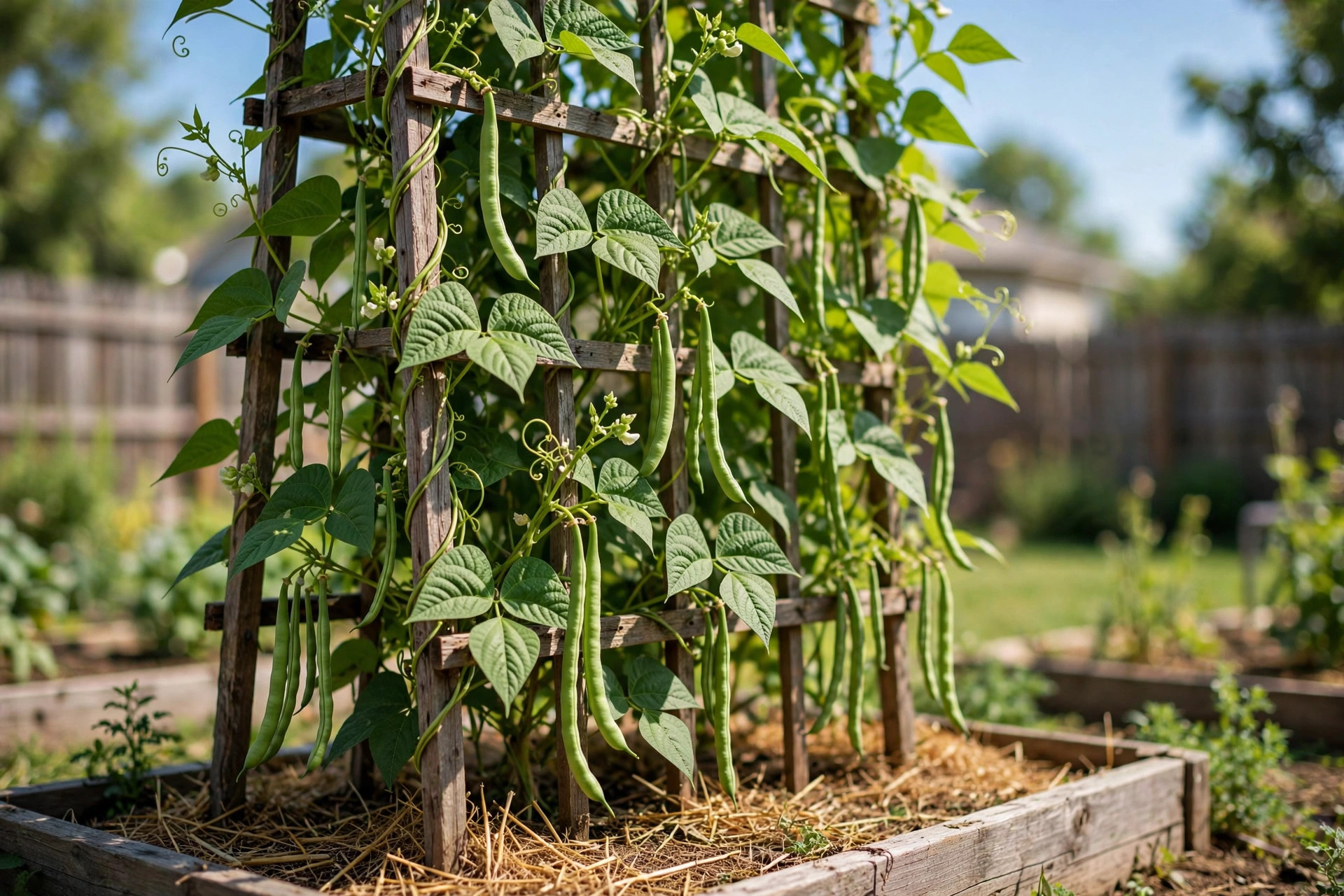

Every gardener who asks how to grow beans on trellis is chasing the same goal. They want more beans from less ground. A trellis gives climbing beans a way to grow up instead of out. The result is a wall of green vines loaded with pods. The harvest is easy to see and easy to pick. The plants stay drier and cleaner than plants left on the soil. This guide explains the full process in plain terms. It covers the choice of trellis, the choice of bean, planting, training, care, and harvest.
Why It Matters
Beans are one of the simplest crops to grow, yet many gardeners waste their potential. Bush beans spread across the bed and finish fast. Pole beans keep growing all season. One pole bean plant can yield two to three times what a bush plant yields. Learning how to grow beans on trellis turns a small bed into a tall factory.
A trellis also protects the crop. Pods hang in the air. They touch no wet soil. They dry faster after rain. That means less rot and fewer spots. Air moves through the vines, which cuts down on disease. Slugs and ground insects have a harder time reaching the pods. Picking is kinder on the back. You stand upright and reach across a wall of beans instead of bending over a bed.
There is a beauty side too. A bean trellis in full growth looks like a green curtain. It can shade a bench, hide a fence, or split a garden into rooms. For all these reasons, vertical growing has become popular with home food growers, and guides from Gardener’s Supply Company now recommend trellising widely.
Choosing the Right Bean: How to Grow Beans on Trellis
Not every bean climbs. The choice starts with the seed packet. Look for words like “pole,” “climbing,” or “runner.” These are the varieties that need a trellis. Bush types stay low and need no support. Popular pole beans include Kentucky Wonder, Blue Lake Pole, and Romano types. Runner beans, like Scarlet Runner, climb too and give showy red flowers.
Pole beans include snap types, picked young and eaten pod and all, and dry types, left on the vine until the pods dry for shelling. Snap types give a steady harvest across summer if picked often. Dry types give one big harvest at season end.
Read the days to maturity on the packet. Pole beans need a longer season than bush beans, often 60 to 75 days. In cold climates, count back from the first fall frost. Sow seed after all danger of frost has passed and the soil is warm. Seed suppliers such as Burpee publish regional planting charts that help with timing.
What to Look for in a Trellis
A good trellis for beans has three traits. It is tall enough, strong enough, and easy for vines to grip. Pole beans grow fast. Many reach 8 to 10 feet in one season. A trellis shorter than 6 feet will run out of room. Aim for 6 to 8 feet of climbing height.
Strength matters more than most beginners expect. A mature bean trellis is heavy. Vines, leaves, and pods add real weight, and wind pushes on the whole wall. A flimsy frame will lean or fall in a storm. Anchor posts firmly in the ground. Set posts at least 18 inches deep, deeper for tall frames.
Vines grip best on rough, thin material. Bean tendrils wrap around strings, twine, wire, and thin wood. They cannot grip thick poles or smooth metal well. A trellis of string or netting works perfectly. If you use thick posts, add string or wire mesh between them so the vines have something thin to hold.
Also think about sun and shade. Place the trellis so it does not shade the rest of the garden unless you want shade. In hot climates, a bean trellis on the west side can shield tender crops from harsh afternoon sun. Plan the spot before you dig. Practical setup advice for building garden structures can help with sturdy construction.
Types of Bean Trellises
There is no single best trellis. Each style suits a different garden and budget. Related ideas appear in guides to the best garden trellis for cucumbers, since cucumbers climb in much the same way.
String and Net Trellis
This is the cheapest option. Two posts hold a top wire or bar, and strings or netting hang down for the vines to climb. Garden netting is light and strong. A roll costs little and covers many feet. Replace the strings each year, since old twine can harbor disease.
Teepee
Three to six long poles are tied together at the top and spread at the base, forming a cone. Beans climb each pole. A teepee looks attractive and stands firm in wind. Use poles at least 8 feet long so the finished cone reaches 6 to 7 feet.
A-Frame
Two flat panels lean together and meet at the top. Beans climb the outside of both panels. You can pick from either side, and the inside stays shaded. An A-frame is stable and easy to fold flat for storage.
Fence and Wall Trellis
An existing fence can serve as a trellis. Attach netting or strings to the fence face, leaving a few inches of space so air flows behind the vines. A simple lattice panel held a few inches off the fence is best, since constant moisture against wood speeds rot.
Arch and Tunnel
Arches join two beds across a path. Beans climb up one side and down the other, forming a green tunnel that is easy to harvest from. Arches need strong anchoring, since wind catches the leafy surface. Similar vertical methods are used for squash, as shown in guides on how to grow squash vertically on a trellis.
Planting Step by Step
Beans are planted from seed straight into the garden. They dislike transplanting. Wait until the soil is warm, at least 60 degrees, and all frost danger is past. Cold wet soil rots bean seed.
1. Build the trellis first. It is hard to set posts among young plants without damage. 2. Prepare the soil. Beans like loose soil rich in organic matter. Dig in compost. Avoid heavy nitrogen fertilizer, since beans fix their own nitrogen from the air. Too much nitrogen gives leafy vines and few pods. 3. Sow seeds 1 inch deep. Place 3 to 4 inches apart along the trellis base. If using a teepee, plant 4 to 6 seeds around each pole. 4. Water gently. Keep the soil moist but not soaked until sprouts appear, usually in 7 to 14 days. 5. Thin if needed. Once seedlings have two true leaves, thin to the strongest plants, about 4 to 6 inches apart.
One common mistake is planting too early. Cold soil leads to poor germination. Another is planting too deep. An inch of cover is enough.
Training Vines to Climb
Pole beans climb on their own, but they need a little help at the start. Young vines grow upward and search for something to wrap around. If a vine leans the wrong way, gently wind it clockwise around the nearest string or pole. Beans naturally twine counterclockwise as they grow, so guide them in that direction and they will take hold.
Check the trellis weekly in early growth. Fast varieties can grow several inches a day. Tuck stray vines back onto the support. Once the vines pass 3 feet, they are usually self-sufficient. At the top of the trellis, let the vines flop over or pinch the tips to stop upward growth. Pinching encourages side shoots and more pods.
Keep the bottom of the trellis clear of weeds. A layer of mulch around the base keeps weeds down and holds moisture in. Straw, shredded leaves, or wood chips all work. Keep mulch a few inches from the stems to avoid rot.
Watering and Feeding
Beans need steady water. About 1 inch per week is the rule. Water the soil, not the leaves. Wet leaves invite disease. Morning watering is best, since leaves dry fast in the sun. Drip lines or soaker hoses under mulch are ideal. They deliver water to the roots and keep the vines dry.
Because beans fix nitrogen, they need little fertilizer. Too much nitrogen is a classic cause of lush plants with no beans. If the soil is poor, add compost at planting. In rich soil beans need nothing extra. Soil tests, explained in plain terms by resources like This Old House, can tell you exactly what your soil lacks.
Watch for signs of trouble. Yellow leaves may mean too much water or poor drainage. Flowers that drop without setting pods often point to heat stress or missed watering. Fix the cause early and the plants usually recover.
Cost and Price
A bean trellis project is one of the cheapest garden upgrades. A simple string trellis for a 10-foot row can cost under 20 dollars. Two wooden posts, a roll of twine, and a packet of seed are all you need. Bamboo teepees cost a little more, often 30 to 50 dollars for poles and twine. A metal arch or a large A-frame may run 60 to 150 dollars, but it lasts many seasons.
Seed is cheap. A packet holds enough for a full trellis and costs a few dollars. Compared with buying fresh beans at the store all summer, a trellis bed pays for itself many times over. Retailers like The Home Depot garden center and Lowe’s garden department stock trellis materials in every price range. A 10-foot trellis can carry 10 to 15 plants, and a healthy plant yields several pounds of beans across the season.
Care and Upkeep Through the Season
Ongoing care is simple but must be regular. Weed lightly each week. Add mulch if it thins. Check ties and strings, since a heavy vine can snap a weak string in wind. Replace broken strings at once before the vine sags.
Watch for pests. Bean beetles, aphids, and slugs are the usual suspects. Hand-pick beetles into soapy water. Blast aphids off with a strong spray of water. Copper tape or traps help with slugs. Avoid harsh sprays when bees are working the flowers, since bees help pollinate the crop. Reviews of garden netting for pest control discuss physical barriers that keep pests off without chemicals.
Disease is less common on trellised beans because air flows freely. Still, water at the base and avoid crowding. Remove any leaves with rust spots or mildew and throw them in the trash, not the compost. At season end, pull the vines and clean the trellis before storage. A quick scrub and full drying prevents disease from carrying over. Maintenance routines from Bob Vila cover end-of-season cleanup in detail.
Harvesting
Harvest often. This is the most important rule of bean growing. Pick snap beans when the pods are smooth, firm, and about the thickness of a pencil. Do not wait until the seeds bulge inside. Over-mature pods turn tough and stringy, and they signal the plant to stop producing.
Pick every two to three days at peak season. Morning picking is pleasant and the pods are crisp. Use two hands: hold the vine with one hand and pull the pod with the other, so the plant is not torn. A sharp pair of pruning shears from Fiskars can speed the work on thick stems.
For dry beans, leave the pods on the vine until they rattle. Harvest before heavy rain, since wet pods mold. Shell the pods, spread the beans to dry fully, then store in airtight jars. Properly dried beans keep for a year or more. Corona Tools’ harvest guides include tips on keeping hand tools sharp for clean cuts during harvest.
Safety
Bean trellises are safe, but a few cautions apply. Anchor tall structures well. A top-heavy trellis in a storm can fall on paths or beds. Keep trellises away from play areas unless they are built like a sturdy teepee. Check wooden posts yearly for rot at ground level and replace weak ones.
Some raw beans contain compounds that upset the stomach. Kidney-shaped beans, in particular, should always be cooked before eating. Teach children not to eat raw beans from the garden. Wash all harvested pods before cooking or eating. When using any garden product, read the label and follow safety directions; guidance from the U.S. Consumer Product Safety Commission covers safe use of garden equipment. Independent testing groups like Consumer Reports also review garden tools for safety.
FAQ
How tall should a trellis be for beans? Aim for 6 to 8 feet of climbing height. Most pole beans reach 8 to 10 feet, so a 6-foot trellis is the minimum. Taller is fine if the structure is strong.
Can beans climb string? Yes. String, twine, and netting are ideal. Bean tendrils wrap easily around thin, rough material. Use sturdy garden twine or woven netting, not thin thread that snaps under weight.
How many bean plants per trellis? Space plants 4 to 6 inches apart along the base. A 10-foot trellis holds 10 to 15 plants. For a teepee, plant 4 to 6 seeds around each pole.
Do pole beans need full sun? Yes. Beans need at least 6 to 8 hours of direct sun daily for a heavy crop. Less sun gives weak vines and few pods.
Why are my bean vines growing but not producing pods? The usual causes are too much nitrogen, extreme heat, or missed watering during bloom. Cut back fertilizer, water steadily, and pick any pods that do form to keep the plant producing.
Can I grow beans on a trellis in containers? Yes. Use a large pot, at least 5 gallons, with a small teepee or a string trellis tied to a stake. Container vines need more frequent watering since pots dry fast.
A Final Word
Learning how to grow beans on trellis is a skill that pays back every summer. Set a strong trellis, plant after the soil warms, guide the young vines, water the roots, and pick often. By midsummer you will have a green wall heavy with pods.
References
Bob Vila. (n.d.). Home improvement advice. https://www.bobvila.com Burpee. (n.d.). Seeds, plants, and gardening supplies. https://www.burpee.com Consumer Reports. (n.d.). Product reviews and ratings. https://www.consumerreports.org Corona Tools. (n.d.). Garden and landscape tools. https://www.corona-tools.com Family Handyman. (n.d.). DIY home repair and maintenance. https://www.familyhandyman.com Fiskars. (n.d.). Garden and cutting tools. https://www.fiskars.com Gardener’s Supply Company. (n.d.). Gardening tools and supplies. https://www.gardeners.com Lowe’s. (n.d.). Home improvement products. https://www.lowes.com The Home Depot. (n.d.). Home improvement products. https://www.homedepot.com This Old House. (n.d.). Home renovation guidance. https://www.thisoldhouse.com U.S. Consumer Product Safety Commission. (n.d.). Product safety information. https://www.cpsc.gov
Was this guide helpful?

About Emily Rodriguez
The My Garden US editorial team writes practical, in-depth home and garden guides for American homeowners — tested advice, no fluff.
You May Also Like
Raised Bed Corners for Easy Assembly: Build a Sturdy Garden Bed in an Afternoon
August 16, 2026 0 views
Best Garden Gloves for Thorn Protection
March 17, 2026 0 views
Cold Frame vs Greenhouse Pros Cons: A Plain Guide for Home Gardeners
February 13, 2026 0 views