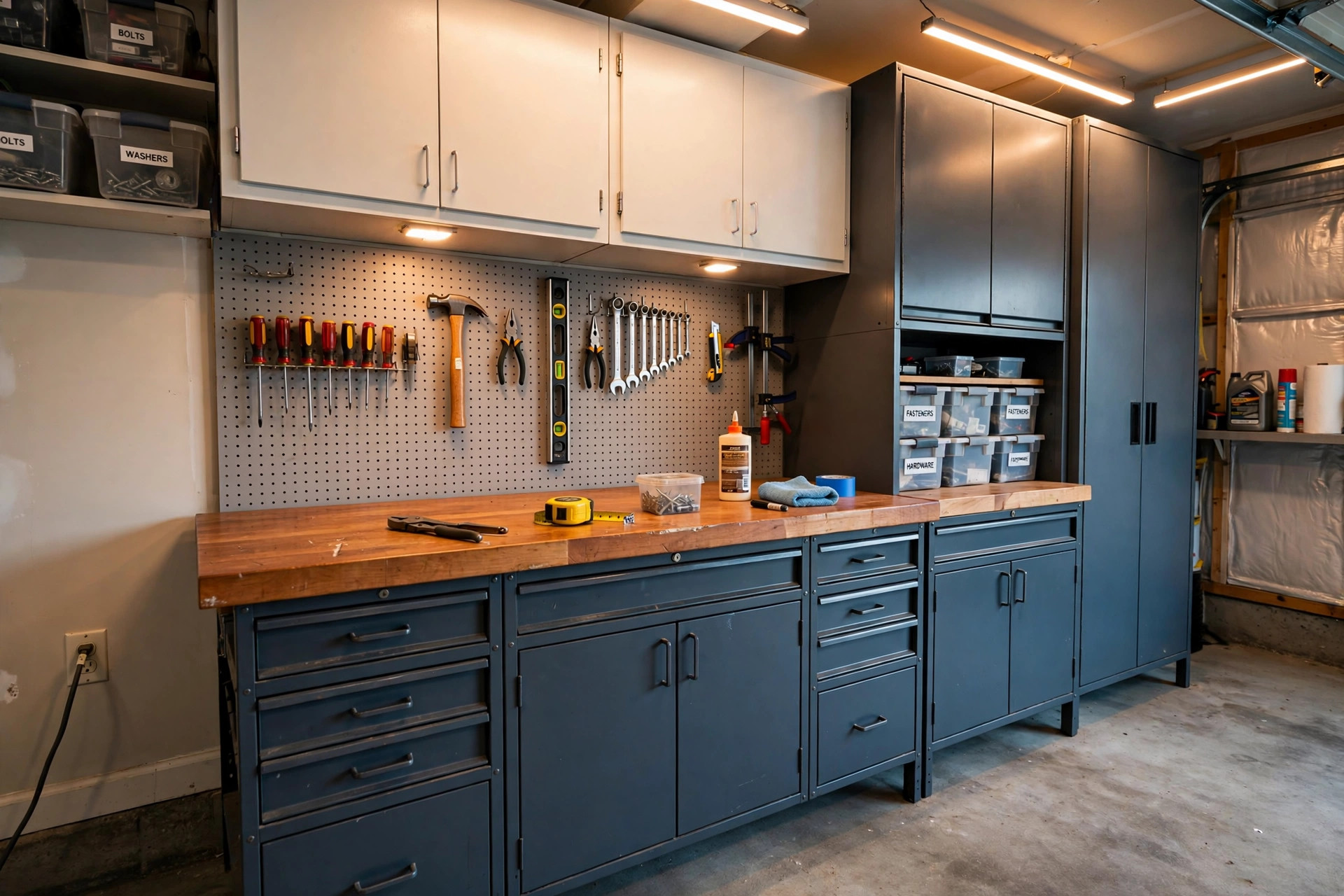

A garage workbench with storage is one of the most useful purchases an American homeowner can make. It gives you a solid place to work, and it gives your tools a place to live. When you compare garage workbench with storage price options across the USA, you will find a wide range. Some benches cost less than a tank of gas. Others cost as much as a used car. The right choice depends on how you work, how much you store, and how long you want the bench to last. This guide walks through the types, the costs, the features that matter, and the traps to avoid, so you can buy once and buy well.
Why a Garage Workbench With Storage Matters
Most garages turn into dumping grounds. Tools pile on the floor. Boxes stack in the corners. Nails roll under the car. A workbench with storage changes that picture. It puts a firm top at a working height and cabinets, drawers, or shelves below. Everything has a place. You spend less time hunting for the right wrench and more time doing the job.
A good bench also protects your tools. Damp garage floors rust metal. Tools left in the open collect dust and grit. Closed drawers and cabinets keep moisture and dirt away. That means your saws, drills, and hand tools last longer. Over ten years, a bench that costs two hundred dollars can save you many times that amount in tools you did not have to replace.
Storage in a garage is part of a bigger picture. When the garage is organized, the whole house feels more in order. Many homeowners who sort out their garage go on to tackle the entryway next; our mudroom storage benches price comparison usa guide covers that project. A tidy garage also makes room for other things you own, from bikes to lawn gear.
How to Compare Garage Workbench With Storage Prices: Garage Workbench with Storage Price Comparison Usa
Comparing prices is not just a matter of looking at the tag. Two benches can both cost three hundred dollars and be very different machines. A fair garage workbench with storage price comparison in the USA looks at several things at once.
What Drives the Price
Size comes first. A four-foot bench costs less than an eight-foot bench. Depth matters too. Most benches are between twenty and thirty inches deep. Deeper tops cost more because they use more material.
Material comes second. Light steel frames with thin tops sit at the low end. Solid hardwood tops on heavy steel or wood frames sit at the high end. Particle board tops fall in the middle, though they hate moisture.
Storage type comes third. Open shelves are cheap. Drawers cost more because they need slides and fronts. Locking cabinets cost more again. A bench with six drawers on ball-bearing slides will always cost more than a bench with one open shelf.
Brand and warranty come fourth. Big names like the ones sold at Home Depot and Lowe’s often include longer warranties and easier returns. Store brands can be just as good, but read the warranty card before you buy.
How to Shop Smart
Start by measuring your garage. Mark the space on the floor with tape. Leave room to open cabinet doors and walk past. A bench that blocks the car door is a bad bench, no matter the price.
Next, list what you will store. Count your power tools, hand tools, paint cans, and boxes. This tells you whether you need drawers, tall cabinets, or open shelves. Then set a budget with a small margin. Prices swing with sales, and holiday weekends often bring real discounts.
Read reviews from several places. Consumer Reports tests workshop gear for build quality. The Spruce publishes plain buying guides with pros and cons. Family Handyman writes from the point of view of people who actually build and fix things. Check at least two of these before you spend serious money.
Types of Garage Workbenches With Storage
Not all benches suit all garages. Here are the main types you will meet in American stores.
Steel Frame Workbenches
These are the workhorses. A powder-coated steel frame holds a wood or steel top. Below sit shelves, drawers, or a cabinet. They handle heavy loads, often one thousand pounds or more. Steel frames shrug off bumps from the car bumper. They suit owners who do car work, metal work, or heavy repairs.
The weak point is often the drawers. Cheap steel benches use thin drawers on weak slides. Look for full-extension ball-bearing slides. They cost more but last far longer.
Wood-Top Cabinet Workbenches
These look like kitchen cabinets with a thick work top. The base is usually plywood or solid wood, and the top is butcher block or laminated maple. They look fine enough that some people put them in a finished garage or a basement shop.
Wood tops are kind to tools. You can hammer on them without chipping steel edges. They absorb shock well. The drawback is moisture. In a damp garage, seal the top with polyurethane or oil at least once a year.
Rolling Workstations
A rolling bench sits on locking casters. You can pull it to the car, roll it outside for messy work, then tuck it back against the wall. Many have a mix of drawers and open space. They are popular with people who rent, because nothing bolts to the wall.
The catch is weight capacity. Casters have limits. A rolling bench that holds five hundred pounds is doing well. If you plan to rebuild engines on it, buy a fixed bench instead.
Fold-Down and Wall-Mount Benches
Small garages need small answers. A fold-down bench hinges to the wall and drops when you need it. Storage hangs above or beside it, not below. These cost less than full benches and free the floor for the car.
They suit light work: potting plants, fixing a lamp, sharpening blades. They do not suit pounding work or heavy vices. Know the load rating before you buy.
Cost and Price Ranges in the USA
Here is what a garage workbench with storage price comparison in the USA looks like today, by tier.
Budget tier, roughly seventy-five to one hundred and fifty dollars. You get a steel frame bench with a thin wood or composite top and one or two shelves. Storage is open. Assembly takes an hour. Fine for light hobby use.
Mid tier, roughly one hundred and fifty to four hundred dollars. You get sturdier steel or wood frames, thicker tops, and a mix of drawers and cabinets. Many benches in this range include a pegboard back or a power strip. This is the sweet spot for most homeowners.
Premium tier, roughly four hundred to one thousand dollars and up. You get hardwood tops, heavy-gauge steel, soft-close drawers, and load ratings above one thousand pounds. Some brands, like those sold at Wayfair and specialty shops, add modular parts you can bolt together into a full wall of storage.
Very large or custom setups can pass one thousand dollars. Cabinet-style runs from tool brands, modular wall systems, and professional-grade stations live here. Compare them with tool chests and rolling cabinets too, since a chest plus a simple top can sometimes beat a built-in bench on price.
Watch for hidden costs. Delivery fees on heavy benches can run fifty to one hundred dollars. If the bench ships flat, plan for assembly time. If you hire a handyman to assemble it, add that to the total. And if your garage floor is uneven, you may need leveling feet or shims.
Sales matter. The big home centers run sales on workshop gear in spring, when people start projects, and in late fall, when stores clear stock. Online sellers like IKEA and The Container Store run their own events. A bench that costs three hundred dollars in March may cost two hundred and twenty in November. If you are not in a hurry, wait for the season.
What to Look For Before You Buy
A checklist keeps the comparison honest. Run through these points for every bench on your short list.
Top thickness. One and a half inches is a good working top. Thinner tops flex under load. Ask what the top is made of and how it handles spills.
Drawer slides. Full-extension ball-bearing slides let you reach the back of the drawer. Partial slides leave dead space. Soft-close is a luxury, not a need, but it is nice.
Weight capacity. Match the rating to your work. Five hundred pounds covers most home jobs. One thousand pounds covers engine parts and heavy vices.
Locking. If the bench holds expensive tools, a lock matters. Some benches lock all drawers with one key. Others lock only the cabinet door. Check before you buy.
Power. A built-in power strip with three or four outlets saves running cords across the floor. Check the cord length and the amp rating.
Feet and leveling. Adjustable feet keep the bench steady on sloped garage floors. Locking casters do the same for rolling benches. Cheap fixed feet wobble.
Dimensions. Measure twice. Note the height as well. Standard bench height is about thirty-four to thirty-six inches, which suits most adults. Taller people may want a taller bench or a riser.
Finish. Powder-coated steel resists chips and rust. Bare steel rusts in humid garages. Painted wood chips. Pick a finish that fits your climate.
Care and Upkeep
A workbench is a tool, and tools need care. Wipe the top after messy jobs. Oil or wax a wood top once a year. Tighten bolts every six months, since vibration loosens them. Check drawer slides for grit and wipe them clean. In humid states, run a small dehumidifier or leave the garage door cracked on dry days. A little care adds years to a bench.
Keep the storage organized as well. Label drawers. Group tools by job: electrical in one drawer, plumbing in another. When everything has a home, you will notice the moment something is missing. Apartment Therapy offers simple systems for keeping workshop zones tidy that work well in garages too.
Every spring, do a full clean-out. Pull everything out of the bench. Throw away dried paint, dead batteries, and broken bits. Put back only what you use. A yearly purge keeps the storage from turning back into a junk drawer.
Safety
A loaded workbench is heavy. Anchor tall benches to the wall with brackets so they cannot tip. This matters most in homes with children. Keep chemicals, sharp blades, and heavy items on low shelves, never high up where they can fall.
Unplug power strips when the bench is not in use for long stretches. Keep a fire extinguisher within reach of the work area, not buried behind boxes. Wear eye protection when grinding or cutting. And never stand on a workbench to reach a high shelf. Buy a step stool instead.
If you store fuel, oil, or solvents in the bench, check local rules. Some towns limit how much flammable liquid a home garage can hold. Bob Vila publishes garage safety checklists that cover storage of hazardous materials in plain language.
Frequently Asked Questions
How much should I spend on a garage workbench with storage?
For most American homes, one hundred and fifty to four hundred dollars buys a solid bench that lasts a decade or more. Spend less if you only do light repairs. Spend more if you work on cars, weld, or run a home business from the garage. Match the bench to the work, not to the advertisement.
Are expensive workbenches worth the money?
They can be. A premium bench gives you a thicker top, better drawers, and a higher load rating. If you use the bench every week, the extra cost pays for itself in durability. If you use it twice a year, a mid-tier bench is the smarter buy. Be honest about your habits before you open your wallet.
Can I build my own workbench with storage cheaper than buying one?
Often yes, if you own basic tools and value your time at zero. Lumber, screws, and drawer slides for a solid bench can cost one hundred to two hundred dollars. But a store-bought bench comes with finished surfaces, tested load ratings, and a warranty. Building makes sense when you need odd sizes. Buying makes sense when you want it done this weekend.
What size workbench fits a two-car garage?
A six-foot bench along one wall fits most two-car garages with room to park both cars. Leave at least thirty inches of clear floor in front of the bench for standing and working. In a one-car garage, a four-foot bench or a fold-down model is the safer pick. Always tape the outline on the floor before you buy.
How do I keep tools from rusting in a garage workbench?
Keep the bench off bare concrete with adjustable feet or a mat. Store tools in closed drawers, not on open shelves. Use silica gel packs or a small dehumidifier in damp months. Wipe metal tools with a light oil cloth before putting them away. These small habits beat any rust-proofing spray.
Where can I see benches in person before buying?
Big home centers display floor models you can touch and open. That hands-on look tells you more than photos about drawer quality and sturdiness. Bring a tape measure. Open every drawer. Push on the top. A bench that wobbles empty will wobble worse when loaded.
A Short Final Word
A garage workbench with storage is not a luxury. It is the backbone of a working garage. Compare prices with care, but compare quality with even more care. The cheapest bench that does the job is a bargain. The cheapest bench that falls apart in a year is the most expensive bench of all. Measure your space, list your tools, check a few trusted reviews, and buy the bench that fits your real work. It will serve you for years.
Once the bench is in place, the rest of the garage gets easier. Wall racks for bikes free the floor, as our bike storage racks price comparison usa guide shows. Shelves above the bench hold paint and boxes. Bit by bit, the garage turns from a storage problem into a workshop you enjoy walking into.
References
Apartment Therapy. (n.d.). Home design ideas and inspiration. https://www.apartmenttherapy.com Bob Vila. (n.d.). Home improvement advice. https://www.bobvila.com Consumer Reports. (n.d.). Product reviews and ratings. https://www.consumerreports.org Family Handyman. (n.d.). DIY home repair and maintenance. https://www.familyhandyman.com IKEA. (n.d.). Home furnishings. https://www.ikea.com Lowe’s. (n.d.). Home improvement products. https://www.lowes.com The Container Store. (n.d.). Storage and organization products. https://www.containerstore.com The Home Depot. (n.d.). Home improvement products. https://www.homedepot.com The Spruce. (n.d.). Home and garden advice. https://www.thespruce.com Wayfair. (n.d.). Furniture and home goods. https://www.wayfair.com
Was this guide helpful?

About David Wilson
The My Garden US editorial team writes practical, in-depth home and garden guides for American homeowners — tested advice, no fluff.
You May Also Like

Heavy Duty Wicker Storage Baskets With Free Shipping: A Practical Guide
August 1, 2026 0 views
Best Kitchen Drawer Organizers for First Time Homeowners
May 3, 2026 0 views
Pantry Food Storage Containers Reviews and Buying Guide
April 11, 2026 0 views