
Tap water in the United States is treated and tested, but many homes still want a cleaner glass of water. Under sink filters for sale USA give families a way to improve their water at the kitchen sink. These small units sit inside the cabinet under the sink. They clean the water before it reaches the tap. This guide explains what they do, how to pick one, what they cost, and how to care for them. It is written for anyone who shops for the first time.
Why an Under Sink Filter Matters
Most city water is safe to drink. It meets state and federal rules. Still, it can carry things that change taste and smell. Chlorine is the most common. It is used to kill germs, and it often leaves a strong smell. Many wells and city lines also carry sediment, rust, lead, or hard minerals. An under sink water filter can cut these down. It works on the water line that feeds one tap, usually the kitchen faucet. That is the water you drink and cook with.
A filter under the sink does not clean the whole house. That is its strength. It treats the water you use most. The unit stays out of sight inside the cabinet. It costs less than a whole house system. Many buyers say the taste change is clear on the first day. Tea tastes cleaner. Coffee tastes smoother. Cooking water leaves less film on pots.
Shoppers in the United States have many choices. Big stores carry dozens of models. Online shops carry hundreds. The search for under sink filters for sale USA brings up prices from fifty dollars to several hundred. Knowing the types makes the choice easier.
What to Look for When You Choose: Under Sink Filters for Sale Usa
Start with your water. A test tells you what the filter must catch. Home test kits are sold in hardware stores. They check for chlorine, lead, hardness, and pH. Some towns publish a water quality report each year. Read it before you shop. If you use a private well, test once a year. A lab test is more exact than a strip kit. For general guidance on testing, the EPA offers plain advice for home owners.
Next, check the filter rating. Filters are rated in microns. The number tells how small a particle the filter can catch. A 5-micron filter catches sand and rust. A 0.5-micron filter catches more, including some cysts. Lower is finer. A finer filter may slow the water flow. Match the rating to your needs, not just the lowest number on the shelf.
Certification is also worth a look. Independent labs test filters against set standards. Look for marks from NSF International on the box or in the manual. NSF/ANSI 42 covers taste and smell. NSF/ANSI 53 covers health effects like lead and cysts. A certified filter has been tested by a third party. A claim on a box with no mark is only a claim.
Space and Fit
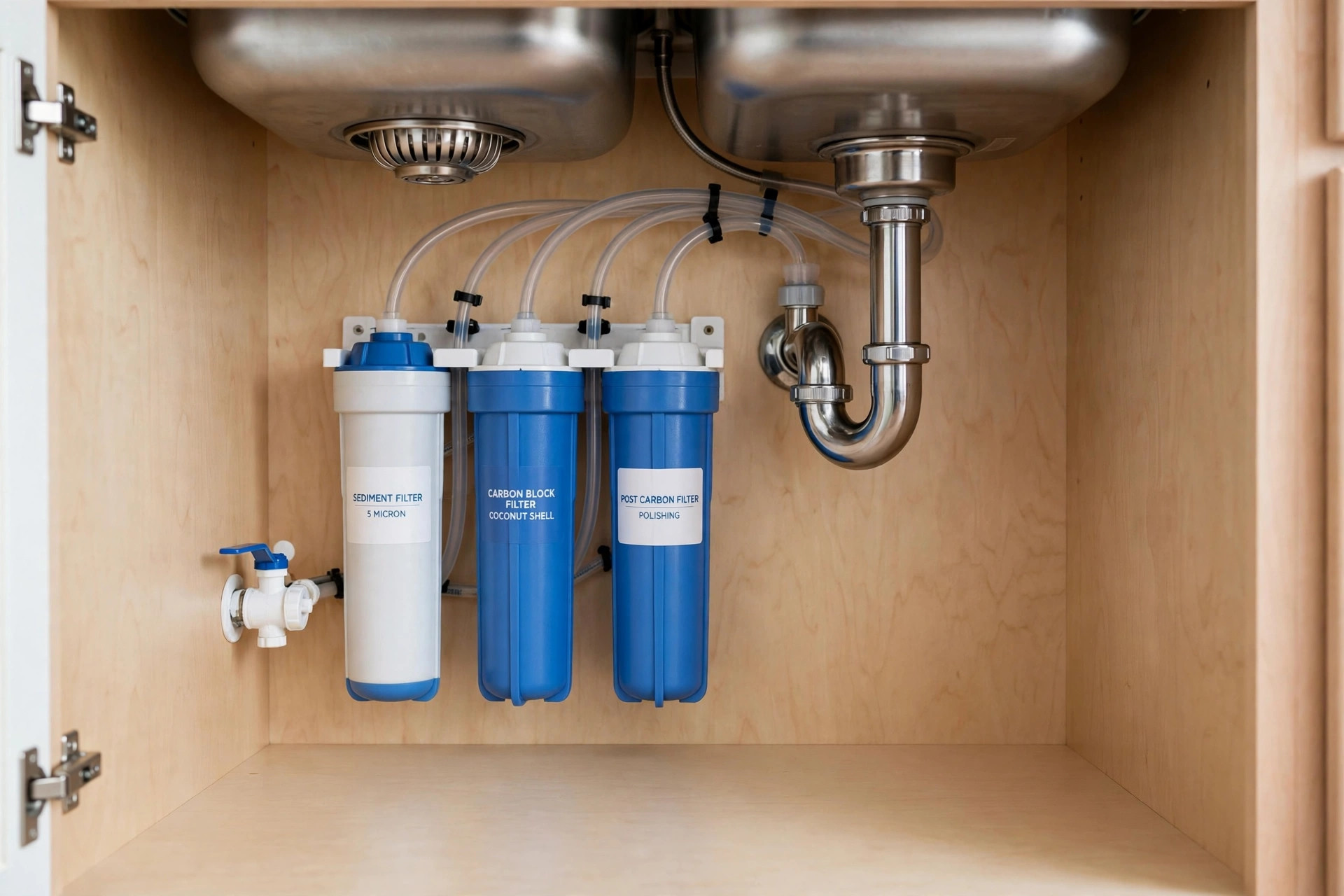
Open your cabinet before you buy. Measure the width, height, and depth. Most under sink units need a flat wall inside the cabinet. A single-cartridge unit is small. A multi-stage unit is wider. Leave room for the storage tank if you buy a reverse osmosis model. You must also reach the unit to change cartridges. Keep three inches of space under each cartridge. This Old House has clear kitchen cabinet advice for home owners.
Check your water pressure too. Most units work best between 40 and 80 psi. Very low pressure can cut the flow. Very high pressure can stress the fittings. A pressure gauge that screws onto a faucet costs a few dollars. It takes a minute to use.
Types and Options
Under sink filters come in four main types. Each has strengths and limits.
Single-Stage Cartridge Filters
These are the simplest units. One cartridge holds one filter block. Most catch chlorine, sediment, and bad taste. They are small and easy to install. A first-time buyer often starts here. The cartridge needs a change every three to six months. Cost is low. Filtration power is basic.
Multi-Stage Filters
These use two or three cartridges in a row. Each stage does one job. The first stage catches sediment. The second catches chlorine. The third may catch lead or improve taste. Multi-stage units clean more than single-stage units. They take more cabinet space. They cost more to buy and to keep up. Many shoppers who want lead removal choose this type.
Reverse Osmosis Systems
Reverse osmosis pushes water through a very fine membrane. It removes most dissolved solids, lead, fluoride, and many chemicals. It gives the cleanest water of the four types. It is also the most complex. The unit needs a storage tank under the sink. It sends some water down the drain during cleaning. That waste water adds up over time. Newer models waste less. ENERGY STAR rates many home appliances, and its site explains how to judge efficiency claims.
Alkaline and Specialty Filters
Some units add minerals back to the water or raise the pH. They market a crisp taste. The science on health claims is thin. Buyers who like the taste can try them. Make sure the base filtration is solid first. Specialty stages should be an extra, not a replacement for good filtration.
When you compare models, read the data sheet. It lists what each stage removes and how long cartridges last. Consumer Reports tests home products and publishes results that can help you compare brands.
Cost and Price
Prices for under sink filters for sale USA fall into clear bands. Single-stage units cost 50 to 120 dollars. Multi-stage units cost 120 to 300 dollars. Reverse osmosis systems cost 150 to 450 dollars. Specialty units sit in the middle or above.
The purchase price is only part of the story. Cartridges need replacement. A single-stage cartridge costs 20 to 40 dollars and lasts three to six months. A full set for a multi-stage unit costs 40 to 80 dollars. Reverse osmosis needs a membrane change every two to three years, at 40 to 100 dollars, plus yearly pre-filter changes. Work out the yearly cost before you buy. A cheap unit with costly cartridges can cost more than a dear unit with cheap cartridges over five years.
Installation cost matters too. Many buyers install the unit themselves. The job takes one to two hours with basic tools. You shut off the cold water line, add a tee fitting, and mount the unit. If you hire a plumber, expect 100 to 200 dollars in most American cities. Some stores sell a basic installation kit with the unit. The Home Depot and Lowe’s both sell filters and parts, and their staff can point you to the right fittings.
Do not forget the faucet. Some units need a separate small faucet drilled into the sink or counter. Check if your sink has a spare hole. Many sinks have a hole covered by a cap. If not, you may need a plumber or a new sink top.
Care and Upkeep
An under sink filter only works if you keep it up. The main job is cartridge changes. Mark the date on the cartridge with a marker. Set a phone reminder for the change month. Late changes are the most common mistake. An old cartridge can slow flow and let bad taste back in.
Sanitize the housing once a year. Remove the cartridges. Wash the housing with warm water and a small amount of mild soap. Rinse well. Some manuals allow a weak bleach rinse. Follow the manual, not a guess. Wear gloves. Keep the area dry when you work.
Check for leaks each month. Look under the sink with a flashlight. Feel each fitting with your hand. Water on the cabinet floor is a warning sign. A drip at a fitting often means a loose nut or a worn O-ring. O-rings cost little and are easy to swap. Bob Vila publishes simple home repair guides that show each step.
Keep spare cartridges on the shelf. When the flow drops or the taste changes, you can act at once. Store spares in a dry place away from heat. Do not use a cartridge past its date, even if the water still tastes fine.
Safety
Water filters are safe when installed well. Still, follow basic safety rules. Shut off the water before you open any line. Place a bucket under the work area. Water spills are common and messy.
Use food-safe parts only. All fittings that touch drinking water should be lead-free. United States law requires lead-free plumbing parts in drinking water systems. Look for the mark on the fitting or the box. If you are unsure, ask at the store.
Drill with care if you need a faucet hole. A stainless steel sink drills easily with a hole saw. Porcelain and stone need a diamond bit and slow speed. Wear eye protection. Keep the bit cool with water. If the counter is stone or quartz, many buyers call a pro. A cracked counter costs far more than a service call.
Test the water after installation. Run the tap for several minutes to flush the new cartridge. Some carbon cartridges release fine dust at first. This is normal. It clears after a good flush. If the water tastes odd after a day, check the manual. A loose connection or a wrong-stage cartridge is the usual cause.
FAQ
How long does an under sink filter last?
The unit itself can last ten years or more with care. Cartridges are the short-life part. Carbon cartridges last three to six months. Multi-stage sets last six to twelve months. Reverse osmosis membranes last two to three years. Follow the maker schedule for your model.
Can I install an under sink filter myself?
Most buyers can. The kit includes the parts and a manual. You need a wrench, a drill for some models, and one to two hours. Basic plumbing comfort helps. If you are not sure, hire a plumber. A bad connection can flood a cabinet.
Will the filter slow my water flow?
A little. Any filter adds some resistance. Single-stage units slow flow the least. Multi-stage and reverse osmosis slow it more. Reverse osmosis fills a tank, so the tap flow stays steady. If the flow drops over time, the cartridge is likely due for a change.
Do under sink filters remove lead?
Some do. Look for NSF/ANSI 53 certification with a lead claim. Many multi-stage and reverse osmosis units carry it. Single-stage basic units often do not. Read the data sheet. Do not assume.
What is the difference between a filter and a softener?
A filter removes taste, smell, and some contaminants. A softener removes hard minerals like calcium. They do different jobs. An under sink filter will not fix hard water spots. You may need both if your water is hard and tastes bad. The Spruce explains home water systems in plain terms.
Where can I buy one?
Most large home stores in the United States carry them. Online shops carry a wider range. Major appliance makers such as Whirlpool, GE Appliances, and Bosch make or sell filtration products and list dealers on their sites. Compare the yearly cartridge cost, not just the shelf price, before you choose.
A Short Final Word
The search for under sink filters for sale USA ends best with a clear plan. Test your water. Pick a type that fits the test. Measure your cabinet. Count the true yearly cost. Change cartridges on time. Do these five things and the filter will give you clean, good-tasting water for years. For more ideas on kitchen upgrades, see our guides to undermount stainless sinks for sale USA, pot filler faucets for sale USA, and garbage disposal installation for sale USA.
References
Bob Vila. (n.d.). Home improvement advice. https://www.bobvila.com Bosch. (n.d.). Home appliances. https://www.bosch-home.com Consumer Reports. (n.d.). Product reviews and ratings. https://www.consumerreports.org ENERGY STAR. (n.d.). Energy efficient products. https://www.energystar.gov GE Appliances. (n.d.). Kitchen and home appliances. https://www.geappliances.com Lowe’s. (n.d.). Home improvement products. https://www.lowes.com NSF International. (n.d.). Product certification standards. https://www.nsf.org The Home Depot. (n.d.). Home improvement products. https://www.homedepot.com The Spruce. (n.d.). Home and garden advice. https://www.thespruce.com This Old House. (n.d.). Home renovation guidance. https://www.thisoldhouse.com U.S. Environmental Protection Agency. (n.d.). Protecting human health and the environment. https://www.epa.gov Whirlpool. (n.d.). Home appliances. https://www.whirlpool.com
Was this guide helpful?

About Robert Taylor
The My Garden US editorial team writes practical, in-depth home and garden guides for American homeowners — tested advice, no fluff.
You May Also Like

French Door Refrigerators for Texas Homes: A Practical Buying Guide
May 20, 2026 0 views
Shaker Cabinet Doors Buying Guide USA: What to Know Before You Buy
September 29, 2026 0 views
Butcher Block Countertops for Texas Homes: A Complete Guide
April 17, 2026 0 views