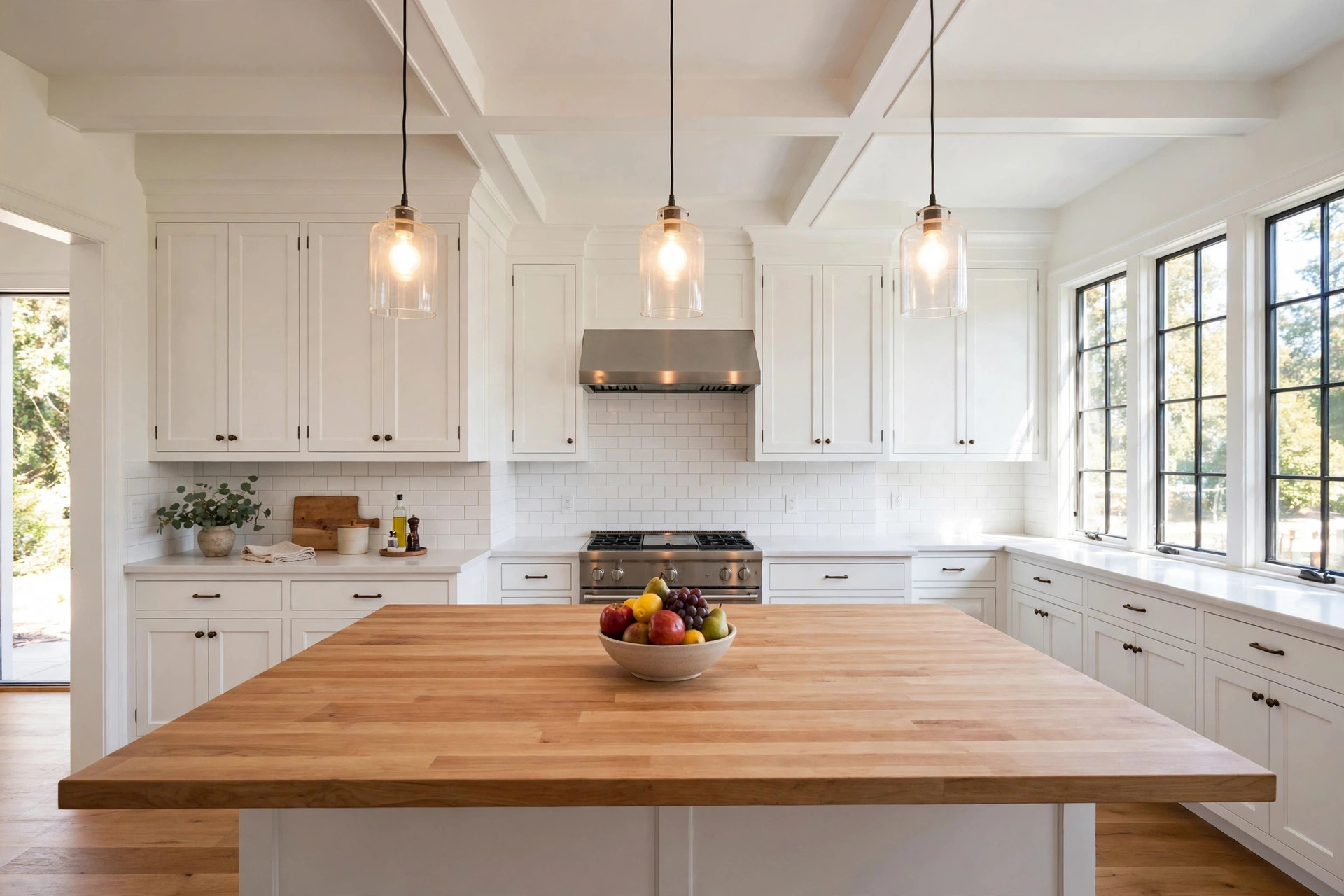
This kitchen island hanging lights reviews buying guide usa was written for home owners who want better light over the heart of the kitchen. The island is where families cook, eat, talk, and work. Good light there makes the whole room feel warm and useful. Bad light makes even a new kitchen feel cold. This guide walks you through the main choices, one step at a time. It explains what to look for, what each style offers, and what each option may cost. By the end, you should know which hanging light fits your island, your home, and your budget.
Why Island Lighting Matters
A kitchen island does many jobs at once. It is a work counter, a breakfast table, a homework desk, and a place where guests gather. Overhead lights that sit far away cannot serve all these uses. Hanging lights sit right above the island, where the light is needed most. They cut shadows on the counter and make food prep safer. They also set the mood of the room. A row of pendants can turn a plain kitchen into a place that feels planned and cared for.
When buyers review pendant lights for kitchen islands in the United States, they often mention the same things. They want light that is bright enough to chop and read by, but soft enough for dinner. They want fixtures that look good from the living room, since many kitchens are open to the main living space. They want shades that are easy to wipe clean, because grease rises with cooking steam. And they want bulbs that last, so they do not climb a ladder every few months.
What to Look for When You Choose: Kitchen Island Hanging Lights Reviews Buying Guide Usa
Start with the size of your island. Measure its length and width. Then look at the ceiling height. In most American homes, the bottom of a hanging light should sit 30 to 36 inches above the island counter. If your ceiling is very high, you may need longer cords or rods. If it is low, choose a flush or semi flush style so no one hits a shade while walking past.
Think about brightness. Most islands need 30 to 40 foot candles of light on the counter. That sounds technical, but it is simple in practice. One pendant with a 60 watt bulb gives about 800 lumens. Two or three such pendants side by side usually cover a standard island. Check the box or listing for lumens, not just watts. With modern LED bulbs, wattage no longer tells you how bright the light is.
Look at the color of the light. Warm white, around 2700K to 3000K, suits most kitchens. It makes food look good and skin tones look natural. Cooler white can feel harsh in a home. Many buyers read lighting guides on The Spruce before they shop, and warmth of light is one of the first things they learn to check.
Check how the fixture installs. Some hang from a single cord, some from a rigid rod, and some from a chain. Rods are steady and keep shades level. Cords are simple and cheap. Chains suit farmhouse and rustic rooms. If you are replacing an old fixture, check that your junction box is rated for the weight of the new one. Heavy glass shades need a strong box and a firm mount.
Types of Kitchen Island Hanging Lights
Glass pendants
Glass pendants are the most popular choice in American homes. Clear glass shows the bulb and throws light in all directions. Frosted or opal glass softens the light and hides the bulb. Seeded glass, with its small bubbles, fits farmhouse and coastal kitchens. Glass is easy to wipe down, and it never rusts. Retailers like Home Depot carry wide rows of glass pendants, which makes it easy to compare prices in person.
Metal pendants
Metal shades give a focused pool of light. They aim the light down at the counter, which is exactly where you need it for cooking. Enamel, copper, brass, and matte black finishes are common. Metal pendants suit industrial and modern kitchens. They can dent if handled roughly, and some finishes spot with grease. Wipe them with a soft cloth and mild soap.
Drum and lantern pendants
Drum pendants use a wide fabric or metal drum around the bulb. They spread light gently and look calm in a large room. Lantern pendants have a frame with glass panels and a candle style look. They suit traditional and transitional homes. Both styles are bigger than simple pendants, so measure carefully. One drum can cover what two small pendants would.
Multi light pendants
Some fixtures hang several small lights from one canopy. This gives even light with only one junction box. It is a good answer when you want three or five lights but your ceiling has only one wire. Stores such as Lowe’s stock many multi light bars that fit standard island widths.
Mini pendants
Mini pendants are small shades, often 6 to 10 inches wide. They are sold in sets of two or three and suit narrow islands. They cost less than big fixtures. Their light is modest, so pair them with good general kitchen lighting.
How Many Lights and What Size
The old rule is simple. For an island up to 4 feet long, two small pendants or one wide drum is enough. For 5 to 7 feet, use three pendants. For islands over 7 feet, use three large pendants or a long multi light bar. Space the centers 24 to 30 inches apart. Leave 6 to 12 inches from the edge of the island to the center of the end light.
Shade size matters too. A shade that is too big crowds the room. A shade that is too small looks lost. As a rule, the total width of your pendants should be about two thirds the length of the island. When shoppers compare fixtures at Bob Vila’s site, sizing charts are one of the most read features.
Cost and Price
Prices vary widely. A simple mini pendant can cost 25 to 60 dollars. A mid range glass or metal pendant runs 80 to 200 dollars. Designer fixtures from brands you know can cost 300 dollars or more per light. Most American home owners spend 150 to 500 dollars for the full island set, not counting labor.
Labor adds to the bill. If a junction box already exists, an electrician may charge 100 to 250 dollars to hang two or three lights. If new wiring is needed, the job can run 300 to 600 dollars. Some towns require a permit for new wiring. Ask your electrician before work starts.
Energy cost is small but worth a look. LED bulbs use 80 percent less power than old incandescent bulbs. Energy Star lists certified fixtures and bulbs that meet strict efficiency rules. Over ten years, a set of LED pendants can save a real sum on power bills.
Related Kitchen Projects
New island lights often come with other kitchen changes. If you are reworking storage, readers of this guide also study our notes on kitchen pantry cabinets for Texas homes. If your range sits near the island, stainless range hoods with USA online deals pair well with pendants. And if you live in a warm climate, see kitchen island hanging lights for Florida homes for heat and humidity notes.
Installation and Placement
Many home owners hang their own pendants. The job is doable when a switched junction box already hangs in the right spot. Turn off the breaker first. Test with a non contact tester. Connect black to black, white to white, and ground to ground. Support heavy fixtures with a brace.
But some jobs need a pro. Call an electrician when there is no box, when the ceiling is very high, or when the fixture is heavy. Heavy lanterns and drum lights can weigh 20 pounds or more. A standard box rated for 35 pounds is fine, but it must be fastened to a joist or brace. Advice columns on This Old House often stress this point: never trust drywall alone to hold a light.
Keep the pendants centered over the island, not over the walkway. If the island moves, such as a rolling cart, skip hardwired pendants and use plug in lights or a track instead.
Care and Upkeep
Hanging lights near a stove collect grease. Wipe shades once a month with a soft cloth dampened with warm water and a drop of dish soap. Dry right away to avoid spots. Clear glass may need a glass cleaner for a streak free finish. Do not spray cleaner directly on the bulb or socket.
Replace bulbs in sets when you can. Bulbs fade with age, and a new bulb next to an old one looks uneven. Write the install date on the base of each bulb with a marker. Dust the cords and canopies twice a year. Check set screws yearly and tighten them gently.
Safety
Water and electricity do not mix. If your island has a sink, choose fixtures rated for damp locations. Keep pendants at least 7 feet above the floor in walkways, so tall guests do not bump them. Use only the bulb wattage listed on the fixture label. A hotter bulb can melt a socket or scorch a shade.
Smart bulbs and dimmers are popular, but they must match. Many LED bulbs hum or flicker with an old dimmer. Buy a dimmer labeled for LED use. Major appliance makers like GE Appliances and Whirlpool remind buyers that matched controls save both bulbs and tempers. If a pendant sways near an open flame on a gas range, keep it high and short, or move it away from the flame.
FAQ
How high should kitchen island hanging lights hang?
In most homes, the bottom of the shade should sit 30 to 36 inches above the island top. Measure from the counter surface, not the floor. For ceilings over 9 feet, raise the lights 3 inches for each extra foot of ceiling. The goal is light on the work surface without glare in the eyes of people sitting at the island.
How many pendant lights do I need for my island?
Count by island length. Up to 4 feet: two minis or one wide light. Five to 7 feet: three pendants. Over 7 feet: three large pendants or a multi light bar. Keep centers 24 to 30 inches apart. This rule works in most American kitchens and is the starting point in many kitchen lighting buying guides.
Are LED pendant lights worth the extra cost?
Yes, for most buyers. LED bulbs last 15 to 25 times longer than old bulbs and use far less power. The higher price at the register is paid back in power bills and fewer bulb changes. Choose warm white LEDs at 2700K to 3000K for a homelike glow.
Can I hang pendant lights on a sloped ceiling?
Yes. Many pendants come with a swivel canopy that tilts to fit a slope. For steep slopes, use a pendant with an adjustable stem or a track head. Check the product page for the words “sloped ceiling adaptable” before you buy.
What finish is best for kitchen pendants?
There is no single best finish. Matte black and brushed nickel hide fingerprints. Brass and copper warm up a white kitchen. White enamel brightens a dark room. Pick a finish that repeats something else in the kitchen, such as the faucet or cabinet pulls, so the room looks tied together.
Do island lights need to match the rest of the kitchen?
They do not need to match exactly, but they should belong to the same family. If the kitchen is modern, pick modern pendants. If it is rustic, pick rustic ones. Mixed metals can work when one metal is clearly dominant and the other appears twice. When in doubt, keep it simple.
A Short Final Word
Choosing island lights is not hard when you take it step by step. Measure the island. Pick a style that fits the room. Check brightness, warmth, and install needs. Read a few honest product reviews before you spend. Then hang the lights at the right height and enjoy the room. Good light will pay you back every day, at breakfast, at homework time, and at every family dinner to come.
References
Bob Vila. (n.d.). Home improvement advice. https://www.bobvila.com Bosch. (n.d.). Home appliances. https://www.bosch-home.com Consumer Reports. (n.d.). Product reviews and ratings. https://www.consumerreports.org ENERGY STAR. (n.d.). Energy efficient products. https://www.energystar.gov GE Appliances. (n.d.). Kitchen and home appliances. https://www.geappliances.com Lowe’s. (n.d.). Home improvement products. https://www.lowes.com The Home Depot. (n.d.). Home improvement products. https://www.homedepot.com The Spruce. (n.d.). Home and garden advice. https://www.thespruce.com This Old House. (n.d.). Home renovation guidance. https://www.thisoldhouse.com Whirlpool. (n.d.). Home appliances. https://www.whirlpool.com
Was this guide helpful?

About Lisa Anderson
The My Garden US editorial team writes practical, in-depth home and garden guides for American homeowners — tested advice, no fluff.