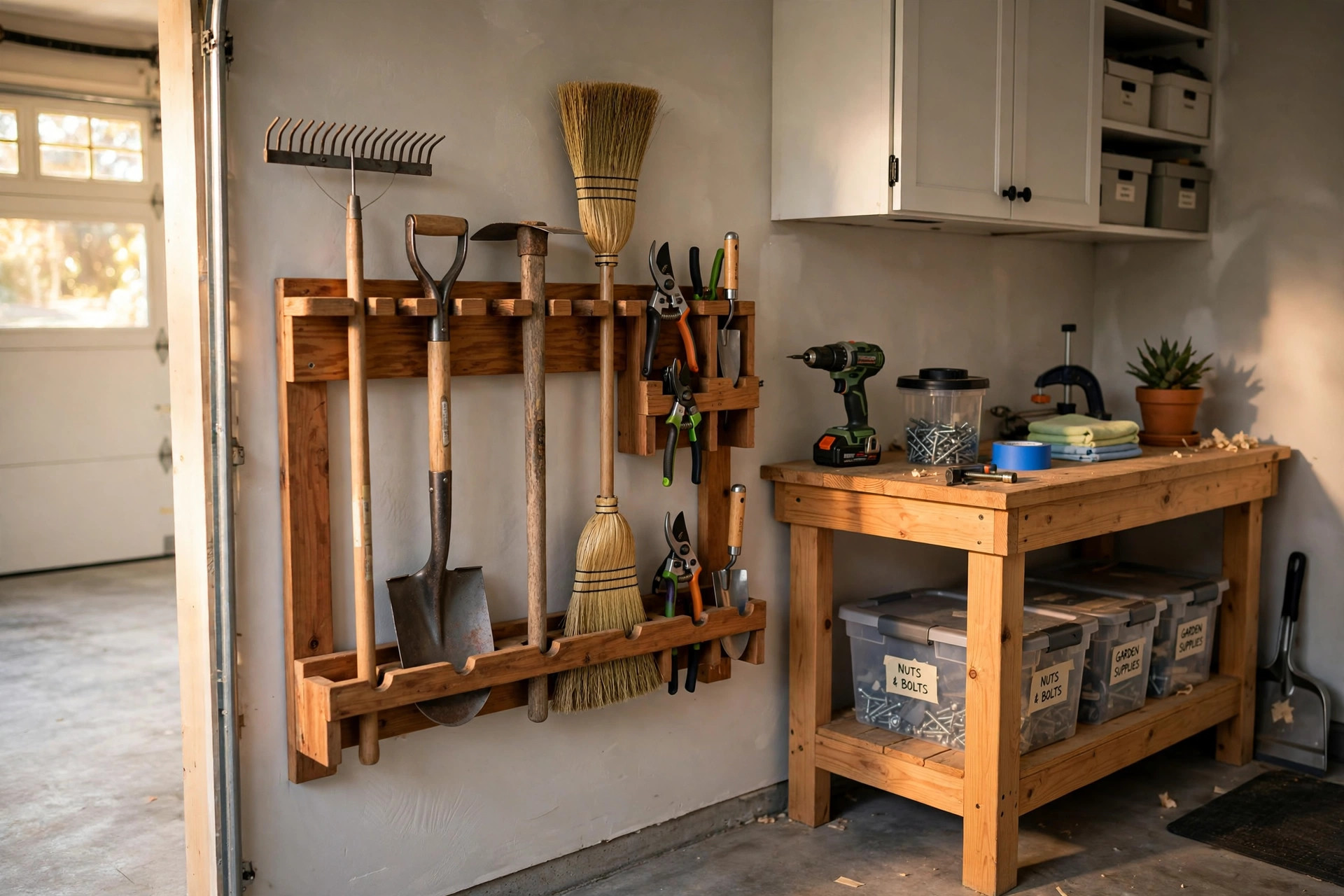
Every shed and garage in America holds the same problem. Rakes lean against the wall. Shovels slide to the floor. Trowels hide in the corner. The work goes slower when the tools are a mess. Affordable garden tool organizers for sale solve this problem for less money than most people expect. A simple rack or cart can turn a pile of handles into a neat row.
You do not need to spend much. Many good organizers cost under fifty dollars. Some cost under twenty. The trick is to match the organizer to your tools and your space. This guide walks through why order matters, what to look for, the main types on the market, what they cost, how to keep them up, and how to stay safe. At the end you will find answers to common questions and a short list of trusted sources.
Why a Garden Tool Organizer Matters
Garden tools are awkward. They are long, heavy, and sharp. When they lie in a heap, they damage each other. A shovel blade can dull a rake. A hoe can chip a trowel. When they stand loose against a wall, they fall. A falling rake is not funny when the handle strikes your head or the tines catch your foot.
Order saves time. Studies of work flow show that lost tools waste hours each year, and the home garden is no exception. When every tool has its place, you start the job faster and you finish faster. You also spot broken tools sooner. A cracked handle is easy to see on a rack. It is easy to miss in a pile.
Order also saves money. Tools kept dry and off the floor last longer. Wooden handles do not rot when they hang in the air. Metal heads do not rust when they do not sit in damp soil. A twenty dollar rack can protect tools worth hundreds of dollars. Large home improvement retailers sell starter racks at prices that pay for themselves in one saved shovel.
A tidy shed is also safer for children and pets. Sharp edges hidden on a high rack cannot cut a curious hand. Hanging tools cannot fall on small feet.
What to Look For When You Shop: Affordable Garden Tool Organizers for Sale
Shopping for affordable garden tool organizers for sale is easier when you know the four main points to check. Keep this list in mind as you browse stores or catalogs.
Size and Capacity
Count your tools before you buy. List the long handled tools first: rakes, shovels, hoes, brooms, and loppers. Then list the short tools: trowels, hand rakes, pruning shears, and gloves. A rack that holds eight long tools will not help if you own twelve.
Measure your space too. A wall rack needs a clear stretch of wall about four feet wide and six feet tall. A rolling cart needs floor space plus room to move. A storage shed needs a level patch of ground.
Think about growth. Most gardeners add tools over time. Buy a little more capacity than you need today. An organizer that is full on the first day will overflow by spring.
Material and Build
Plastic organizers are light and cheap. Good plastic resists rain and sun. Cheap plastic turns brittle in cold weather, so read reviews from buyers in cold states before you pick one.
Metal racks are stronger. Steel racks can hold heavy tools like post hole diggers and mattocks. Powder coated steel resists rust. Plain painted steel chips and rusts where the paint breaks. Stainless steel lasts longest but costs more.
Wood looks warm and fits a garden shed. Cedar and pressure treated pine stand up to damp air. Wood needs a coat of sealant every year or two. Solid wood racks can be heavy, which is fine for wall mounting into studs.
Fabric and canvas organizers are the cheapest. Hanging pockets and tool rolls work well for hand tools. They fold flat when not in use. They do not suit heavy long tools.
Mounting Style
Wall mounted racks free the floor. They need solid wood studs or masonry anchors. Drywall alone will not hold a loaded rack. If you rent your home, look for freestanding models that need no screws.
Freestanding racks stand on the floor like a frame. They move where you want them. They take up floor space, which can be a problem in a crowded garage.
Rolling carts give you both. The tools travel to the garden bed with you. Locking wheels keep the cart still on slopes. Check the wheel size. Small wheels sink into soft soil. Larger wheels roll better on lawns.
Weight Rating
Every rack has a limit. A cheap rack rated for fifty pounds may sag under eight long tools plus attachments. Look for the total weight rating on the package or listing. Then estimate your load. A full size shovel weighs about five pounds. A bag of soil you set on the same rack can weigh forty. When in doubt, choose the stronger model. A broken rack drops tools on your feet.
Types of Affordable Garden Tool Organizers
The market offers many styles. Most fall into four groups. Each group suits a different garden and a different budget.
Wall Racks and Holders
Wall racks are the most common type. A board or rail mounts to the wall. Slots or clips grip each tool handle. Foam grips hold round handles tight. Notched rails hold flat handles like hoes.
Simple wall racks start around fifteen dollars. They hold six to ten tools. Deluxe models with hooks, shelves, and a top bin cost thirty to sixty dollars. Well known furniture and home stores carry wooden wall racks that look good in a finished garage.
For small spaces, corner racks use dead corners well. A triangular rack turns a useless corner into storage for six tools. Flat pack racks from stores known for simple affordable storage suit buyers who want a clean look on a small budget.
Rolling Garden Carts
A garden cart holds hand tools, soil, seeds, and drinks in one rolling station. The classic rolling garden seat lets you sit while you weed. Tool caddies with deep pockets carry trowels and shears around the yard.
Basic rolling carts cost twenty to forty dollars. Heavy duty models with large wheels cost fifty to eighty dollars. Carts with built in seats cost more but save your knees. Home advice sites often rate rolling carts in their garden storage guides.
Totes, Buckets, and Tubes
A five gallon bucket with a tool apron is the cheapest organizer of all. The apron slips over the bucket. Pockets hold hand tools. The bucket itself holds soil or weeds. Total cost is often under fifteen dollars.
PVC tubes are another cheap classic. A length of four inch pipe screwed to the wall holds handles upright. Do it yourself guides in magazines for homeowners show this project step by step.
Hanging fabric organizers with pockets suit renters. They hang from a hook or a door. They hold hand tools, gloves, and spray bottles. Prices run ten to twenty dollars.
Small Sheds and Cabinets
If your tools must live outside, a small storage cabinet or mini shed keeps them dry. Resin cabinets cost sixty to one hundred dollars. They lock, which matters if tools sit near the street.
Metal garden lockers cost more but last decades. Wooden tool sheds look best but need paint and care. Stores that sell only storage goods carry indoor style cabinets that also work in a dry garage.
For renters or small patios, a tall narrow cabinet takes little floor space but holds many tools. Look for adjustable shelves so long tools and short tools both fit.
Cost and Price
Affordable garden tool organizers for sale span a wide price range, but the sweet spot sits low. Here is what American shoppers can expect to pay in 2026.
– Bucket and apron sets: eight to fifteen dollars. – Simple wall racks: fifteen to thirty dollars. – Rolling hand tool carts: twenty to fifty dollars. – Deluxe wall systems with bins and hooks: thirty to seventy dollars. – Resin storage cabinets: sixty to one hundred dollars. – Metal garden lockers: one hundred to two hundred fifty dollars.
Prices move with sales. Spring brings garden sales at large home improvement chains. Fall clearance can cut prices in half. Buying off season is the easiest way to save.
Watch the total cost. A rack that needs special screws, anchors, or a stud finder adds to the bill. A cart that needs assembly may need tools you do not own. Read the box before you buy.
Cheap is not always the best value. A ten dollar rack that breaks in a year costs more than a thirty dollar rack that lasts ten years. Divide price by expected years of life. The result is the true yearly cost. Often the stronger mid priced model wins.
Free shipping matters for online orders. Some sellers raise the price to cover shipping. General retailers with free shipping on most orders, like Target, can beat a lower headline price that adds eight dollars for delivery.
Care and Upkeep
An organizer needs little care, but a few habits keep it working for years.
Clean tools before you store them. Knock soil off blades. Wipe metal dry. Wet tools rust on the rack just as they rust on the floor.
Check fasteners twice a year. Screws loosen with vibration. A wall rack that wobbles needs its screws tightened before it pulls out of the wall. Check the clips too. Worn foam grips lose their hold. Most makers sell replacement grips cheaply.
Keep wood sealed. Once a year, brush a coat of outdoor sealant on wooden racks. This takes twenty minutes. It stops warping and rot.
Keep plastic out of harsh sun when you can. Ultraviolet light weakens plastic over time. A rack inside a shed lasts far longer than one on a sunny fence.
Oil moving parts. Cart wheels and hinges need a drop of oil each season. This stops squeaks and rust.
Empty and sweep the organizer each fall. Old soil holds moisture. Seeds sprout in stored bags. A clean organizer starts spring ready to work.
Safety
Safety is simple but worth stating plainly.
Mount wall racks into studs or masonry. Use a stud finder. A rack full of tools can weigh sixty pounds or more. Drywall anchors are not enough for that load.
Hang sharp tools blade up and handle down when the rack allows it. This keeps blades away from hands reaching for handles. Keep shears closed and latched.
Do not overload. Respect the weight rating. Overloading bends rails and cracks plastic. A collapsing rack drops heavy tools without warning.
Keep chemicals separate. Fertilizers, pesticides, and fuels do not belong on a tool rack. Store them in a locked cabinet away from tools and away from children. Many home organization guides stress this point for family safety.
Wear gloves when you grab tools with wooden handles. Old handles can splinter. Sand rough spots smooth at once.
Light the storage area. A dark shed hides sharp edges and trip hazards. A battery powered LED light costs a few dollars and makes the space far safer.
Frequently Asked Questions
What is the cheapest way to organize garden tools? The cheapest working system is a five gallon bucket with a canvas tool apron. It costs under fifteen dollars and holds hand tools, gloves, and small supplies. For long handled tools, screw short lengths of PVC pipe to a board for a rack that costs only a few dollars in parts.
How many tools can a typical wall rack hold? Most basic wall racks hold six to ten long handled tools. Deluxe models with side hooks and bins hold twelve to fifteen tools plus hand tools. Always check the listed capacity before you buy, and buy one size up if your collection is still growing.
Can I use a garden tool organizer in a rented home? Yes. Freestanding racks need no screws. Hanging fabric organizers need only a hook. Rolling carts need nothing at all. Avoid wall mounted models that need drilling unless your landlord gives written permission. Related storage ideas for renters appear in guides to wall mounted storage for small homes.
Are plastic tool racks strong enough for heavy tools? Good quality plastic racks handle normal garden tools well. They struggle with very heavy tools like post hole diggers and digging bars. For heavy tools, choose a steel rack. Check the weight rating on the package and do not exceed it.
Where should I keep the organizer: garage, shed, or outside? A garage or shed is best because it keeps tools dry. If you must store tools outside, use a weatherproof resin cabinet or mini shed with a lock. Tools left in the open rust fast, even under a tarp. For bigger equipment, see guides to workshop tool chests for home garages.
How do I store tools for winter? Clean every tool and let it dry fully. Oil metal heads lightly to stop rust. Hang long tools on the rack. Store hand tools in a tote with dry cloth. Keep the organizer in a dry place. Check once mid winter for moisture. Come spring, your tools will be ready.
A Final Word
A garden runs on simple habits. Put each tool back in its place. Keep the blades clean and dry. A good organizer makes these habits easy. Affordable garden tool organizers for sale number in the hundreds, from a ten dollar bucket apron to a hundred dollar resin cabinet. Pick the style that fits your tools, your space, and your budget. Your back, your shed, and your tools will all thank you. If your storage needs grow past the garden, look at bike and sports gear storage options to keep the whole garage in order.
References
Apartment Therapy. (n.d.). Home design ideas and inspiration. https://www.apartmenttherapy.com Family Handyman. (n.d.). DIY home repair and maintenance. https://www.familyhandyman.com IKEA. (n.d.). Home furnishings. https://www.ikea.com Lowe’s. (n.d.). Home improvement products. https://www.lowes.com Target. (n.d.). Retail store. https://www.target.com The Container Store. (n.d.). Storage and organization products. https://www.containerstore.com The Home Depot. (n.d.). Home improvement products. https://www.homedepot.com The Spruce. (n.d.). Home and garden advice. https://www.thespruce.com Wayfair. (n.d.). Furniture and home goods. https://www.wayfair.com

About Sarah Mitchell
The My Garden US editorial team writes practical, in-depth home and garden guides for American homeowners — tested advice, no fluff.
You May Also Like
Waterproof Dresser Drawer Dividers With Free Shipping: A Simple Buying Guide
June 11, 2026 0 views
Space Saving Attic Storage Solutions for Sale: A Practical Guide
March 16, 2026 0 views
Top Rated Kitchen Drawer Organizers for USA Homes
February 27, 2026 0 views