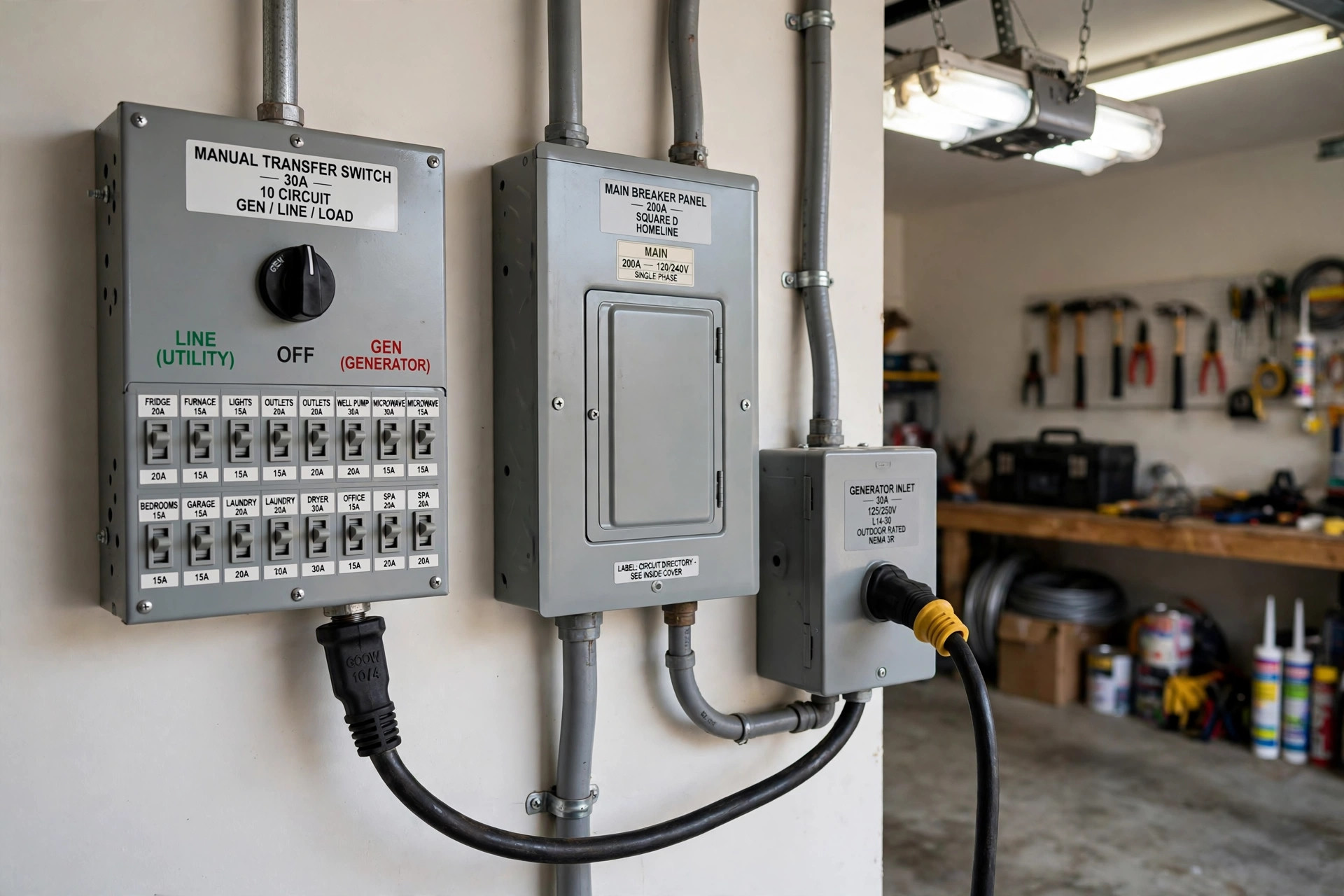

When the power grid goes down, a portable generator can keep a home running. Yet the generator alone is only half of the answer. The best transfer switch for portable generator usa shoppers is the device that connects the generator to the house wiring in a safe and legal way. Without a transfer switch, most people run extension cords through a window or an open door. That method powers only a few items, and it invites trip hazards, theft, and weather damage. A transfer switch changes the whole picture. It lets the generator feed selected house circuits through the home’s own wiring, with one clean connection outside the house.
Why a Transfer Switch Matters
A transfer switch does one job that matters above all else: it keeps generator power and utility power apart. When utility power fails and a generator starts, electricity must never flow backward into the street lines. Backfeeding, as electricians call it, can send lethal voltage through lines that repair crews believe are dead. It can also destroy the generator when utility power returns. A transfer switch makes this mistake impossible by design, because it can connect the house circuits to only one source at a time.
Convenience is the second reason. Without a switch, every outage means dragging cords across the floor, lifting the refrigerator plug, and hunting for flashlights. With a switch, the routine is simple: roll the generator outside, plug one heavy cable into the inlet box on the wall, start the engine, and move the switch from utility to generator. The furnace blower, the refrigerator, the well pump, and the lights come on through the normal outlets and switches in the rooms.
There is also a security angle. Power outages often arrive with storms, and a dark house is a soft target. Security companies such as SimpliSafe point out that alarm panels, cameras, and sensors need steady power to keep working. ADT notes the same risk in its outage guidance. A transfer switch keeps those circuits alive, and smart devices such as those sold by Ring stay online instead of going dark. Pairing backup power with a best outdoor security camera without wifi subscription usa plan is a common step for homeowners who want protection that does not depend on the grid.
Finally, local electrical codes in most American towns require a proper transfer means before a generator may be wired to a house panel. Inspectors ask for it, and insurance adjusters notice its absence after a claim. A listed transfer switch is the cheapest way to stay on the right side of both.
How a Transfer Switch Works: Best Transfer Switch for Portable Generator Usa
A manual transfer switch sits between the utility meter and the home’s breaker panel, or it takes the form of a small subpanel mounted beside the main panel. Inside are heavy-duty contacts rated for the full current of the generator circuit. A lever or rotary handle has three positions: utility, off, and generator. The design is mechanical, so the two sources can never be connected at the same moment.
Outside the house, an electrician mounts a weatherproof inlet box. A thick generator cord, usually 25 feet long, runs from the generator’s outlet to this inlet. Twenty-five feet is a common length because it keeps the machine far enough from doors and windows while reaching the wall. When an outage starts, the homeowner switches the main loads to the generator position, and the selected circuits receive power through the house wiring. When utility power returns, the lever moves back, the cord is unplugged, and the generator is shut down and stored.
Types of Transfer Switches
Manual Transfer Switches
The manual type is the standard match for a portable generator. The homeowner throws the lever by hand when the lights go out. These units typically come in 30-amp and 50-amp sizes, with panels that hold six, eight, or ten circuits. A 30-amp model suits most portable generators up to about 7,500 running watts. A 50-amp model fits larger portables and gives headroom for a well pump or an electric water heater. Manual switches are simple, dependable, and the least expensive of the wired options.
Automatic Transfer Switches
An automatic switch senses the outage, signals the generator to start, and moves the load without human help. It then switches back when utility power is stable again. This comfort comes at a price: the switch alone often costs several times more than a manual unit, and it is usually paired with a permanently installed standby generator rather than a portable one. For a portable generator that a person wheels out of the garage, automatic equipment is rarely worth the money.
Interlock Kits
An interlock kit is a sliding metal plate fitted to the main breaker panel. It blocks the main breaker from being on at the same time as a dedicated generator breaker. It is the cheapest listed option, often under one hundred fifty dollars for the part, and many local codes accept it. The trade-off is that it offers no circuit-by-circuit selection and no wattage meters, so the homeowner must manage the load by hand. Smart electrical panels, covered in The Verge’s smart home reporting, take the opposite approach with app-based load control, but they cost far more than a basic kit.
What to Look for When You Choose
Start with size. Match the switch to the largest outlet on the generator. A generator with a 30-amp twist-lock outlet wants a 30-amp switch; a 50-amp outlet wants a 50-amp switch. Then count the circuits that truly matter during an outage: refrigerator, freezer, furnace blower, sump pump, well pump, a few lights, the internet router, and the security system. Most families find that six to ten circuits cover the essentials.
Do the wattage math before buying. List each appliance with its running watts and its starting watts, which are the brief surge when a motor starts. A refrigerator may run at 150 watts but need 1,200 watts to start. Add the running watts, add the largest single starting surge, and keep the total under eighty percent of the generator’s rated output. Testing bodies such as Consumer Reports publish generator wattage charts that make this step easy.
Look for a UL 1008 listing on the box. That mark means the switch passed safety tests for transfer equipment. A weatherproof inlet box is worth the small extra cost, since the connection point lives outdoors in rain and snow. Check the cord length against the spot where the generator will sit; the machine belongs at least twenty feet from the house, with exhaust pointed away.
Think about load management as well. CNET’s home backup power guides suggest staggering big loads rather than starting everything at once. Reviewers at PCMag note that smart thermostats, like those sold through the Google Store, can trim heating and cooling demand during an outage. A smart water leak detector reviews 2026 usa setup also deserves a backed-up circuit, since a sump pump that stops in a storm can flood a basement within hours.
Cost and Price
A manual transfer switch kit for a portable generator typically costs between two hundred and six hundred dollars. Thirty-amp kits sit at the lower end, and fifty-amp kits with ten circuits sit at the higher end. An interlock kit costs fifty to one hundred fifty dollars for the part, though the electrician’s labor is the same either way.
Professional installation is the larger expense. Most electricians charge four hundred to one thousand two hundred dollars for a standard job, depending on how far the inlet box sits from the panel and whether the panel needs reorganization. Permits add fifty to two hundred dollars in most towns, and an inspection visit is usually part of the deal. An automatic transfer switch, for comparison, runs six hundred to two thousand dollars for the equipment alone.
All told, a typical American home setup with a manual switch lands between eight hundred and two thousand dollars, equipment and labor included. That is a one-time cost that lasts for decades, and it protects a generator investment that often costs as much again.
Care and Upkeep
A transfer switch needs little attention, but it rewards a small routine. Once a month, run the generator for fifteen minutes with a real load on it, and move the switch through its positions. Monthly exercise keeps the contacts clean and proves that the whole chain works before a storm tests it. Before each storm season, walk the full path: check the inlet box for rust or cracked gaskets, inspect the cord for cuts or melted spots, and confirm that every circuit label on the switch panel is still readable.
Keep the switch dry and the area around it clear. Store the generator cord coiled and off the damp garage floor. If a breaker ever feels hot or a contact looks discolored, stop using the switch and call the electrician who installed it. Panel work is not a do-it-yourself task, and a loose connection inside a switch is a fire risk.
Safety Rules You Must Follow
Never plug a generator into a wall outlet through a double-ended cord. Electricians call these suicide cords for a reason: they energize the prongs, backfeed the grid, and have killed line workers. The United States Consumer Product Safety Commission warns plainly against any generator connection that lacks a listed transfer means.
Carbon monoxide is the other great danger. Generators produce the odorless gas in large amounts, and it drifts through open windows and doors. Run the machine at least twenty feet from the house, point the exhaust away from the building, and never run it in a garage, even with the door open. Install best carbon monoxide detector reviews 2026 units on every floor of the home and test them twice a year.
Ground the generator the way its manual describes. Make all connections with dry hands on dry ground. Let a licensed electrician do the panel wiring and pull the permit. And respect the wattage limit: an overloaded generator sags in voltage, which can damage motors and electronics across the backed-up circuits.
Frequently Asked Questions
What size transfer switch do I need for my portable generator? Match the switch amperage to the generator’s largest outlet. A 30-amp outlet calls for a 30-amp switch, which handles most portables up to about 7,500 running watts. Larger portables with a 50-amp outlet need a 50-amp switch. When in doubt, choose the switch that fits the generator you own today, and size the circuit count for the loads you cannot lose.
Can I install a transfer switch myself? Most homeowners should not wire a transfer switch into the main panel. Panel work involves live service conductors, and mistakes can be fatal. Many local codes require a licensed electrician and a permit with inspection. A handy homeowner can sometimes mount the outdoor inlet box and run the conduit, then let the electrician make the final panel connections.
Should I buy a manual or an automatic transfer switch? For a portable generator, manual is the sensible choice. It costs far less, has fewer parts to fail, and matches a machine that a person starts by hand anyway. Automatic switches suit permanently installed standby generators that must respond when nobody is home.
How much does installation cost in the USA? Equipment runs two hundred to six hundred dollars for a manual kit, and electrician labor adds four hundred to one thousand two hundred dollars. With permits, most homeowners spend eight hundred to two thousand dollars all in. Long wire runs and crowded panels push the price toward the top of that range.
Will a transfer switch power my whole house? Usually not with a portable generator. Most setups back up six to ten chosen circuits, which covers comfort and safety but not everything at once. Whole-house backup needs a large generator, careful load management, and often a bigger budget.
Do I need a permit to install one? In most American towns, yes. The permit triggers an inspection that confirms the wiring meets code. Skipping it can void the homeowner’s insurance if an electrical fire follows. The fee is small, and the inspection is quick.
Final Word
The best transfer switch for portable generator usa buyers is not the most expensive one. It is the manual, UL-listed switch that matches the generator’s outlet, covers the circuits the family truly needs, and is installed by a licensed electrician with a permit. Buy the right size, keep the generator far from the house, guard against carbon monoxide, and exercise the system monthly. Then the next outage becomes a short routine instead of a long night.
References
ADT. (n.d.). Home security and automation. https://www.adt.com CNET. (n.d.). Technology news and reviews. https://www.cnet.com Consumer Reports. (n.d.). Product reviews and ratings. https://www.consumerreports.org Google Store. (n.d.). Smart home devices. https://store.google.com PCMag. (n.d.). Technology product reviews. https://www.pcmag.com Ring. (n.d.). Smart home security devices. https://www.ring.com SimpliSafe. (n.d.). Home security systems. https://www.simplisafe.com The Verge. (n.d.). Technology news and reviews. https://www.theverge.com U.S. Consumer Product Safety Commission. (n.d.). Product safety information. https://www.cpsc.gov
Was this guide helpful?

About Emily Rodriguez
The My Garden US editorial team writes practical, in-depth home and garden guides for American homeowners — tested advice, no fluff.
You May Also Like

Best Robot Mop Combo Reviews 2026 USA: A Plain Guide for Hard Floors
June 30, 2026 0 views
Smart Doorbell Installation Cost Near Me: What You Will Pay in 2026
January 21, 2026 0 views
Best Smart Dimmer Switch Reviews 2026 USA
September 30, 2026 0 views