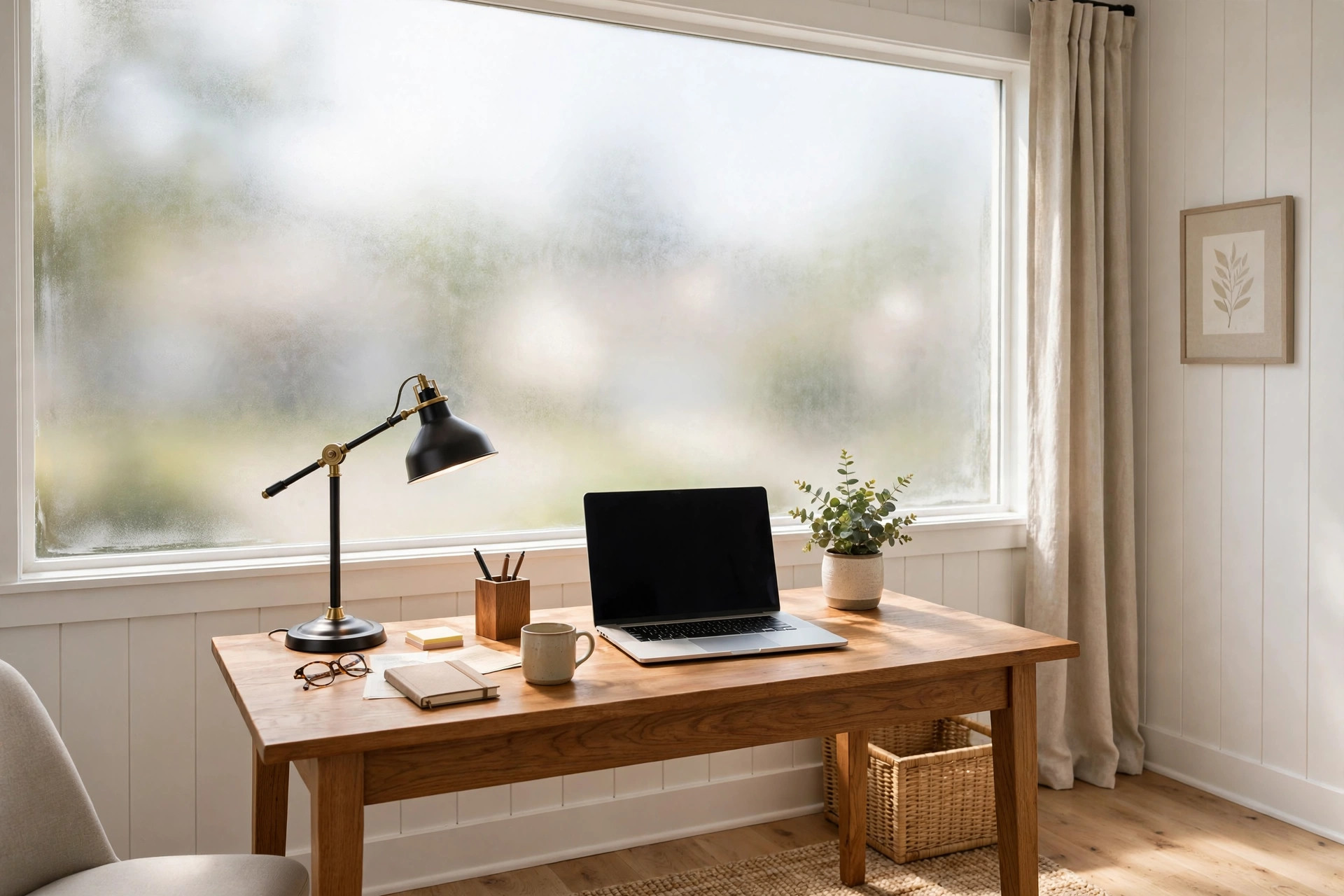

Many people now take video calls from home. A window behind or beside your desk can cause real trouble. Neighbors can see your screen. Passersby can watch you talk. A home office window privacy film for meetings solves this in a simple way. It is a thin sheet that sticks to the glass. It blurs the view from outside. It still lets light come in. You can work in daylight and still keep your calls private.
Why Privacy Film Matters for Meetings
Video meetings have become part of daily work. Your camera shows more than your face. It shows your room. It can show papers on your desk. It can show notes on a whiteboard. A clear window adds another risk. Anyone outside can look in while you are on a call.
Privacy matters for two reasons. First, it protects your work. Client names, reports, and plans should stay in the room. Second, it protects your comfort. It is hard to speak with confidence when you feel watched. A frosted window gives you peace of mind.
Curtains and blinds also block views. But they block light too. A dark room looks dull on camera. Your face can appear shadowed. Viewers may lose focus. Privacy film keeps the room bright. Light passes through the frosted surface. The room feels open, yet no one outside can make out details.
Film also costs less than new blinds or shutters. It takes about an hour to install. It does not harm the glass. This makes it a smart first step for any home office.
What to Look for When You Choose a Film: Home Office Window Privacy Film for Meetings
Not all privacy films work the same way. A little care at the start saves trouble later. These are the main points to weigh.
Privacy Level
Films are rated by how much they hide. Some only blur shapes. These are called semi-private. You cannot read text through them, but you can see a person move. For meetings, choose a film rated for full privacy. With full privacy film, an outsider sees only light and vague shapes. They cannot tell who is in the room or what is on the screen.
Light Transmission
Check how much light the film lets through. A good film blocks the view but keeps 70 to 85 percent of the light. Your room stays bright. Your camera image stays clear. Very dark films can make the room feel gray. They can also strain your eyes on long work days. Office lighting research from companies like Herman Miller shows that natural light helps people stay alert and focused. Keep as much daylight as you can while staying private.
Adhesive or Static Cling
Two kinds of film are sold. Adhesive film sticks with glue. It stays put for years. It is hard to remove. Static cling film holds with static charge and a little water. It peels off clean. Renters should choose static cling. You can take it down when you move. You leave the glass clean.
Size and Coverage
Measure your windows before you buy. Note the height and width of each pane. Buy a roll that is wider than the glass. You will trim the edges. Cover the full window if your desk faces it. If only one pane matters, you can cover that pane alone. Partial coverage can look odd from outside, but it works.
Pattern and Style
Frosted film is the most common choice. It gives an even, soft white look. Some films mimic etched glass. Others have simple bands or dots. For a home office, plain frosted film looks best on camera. Busy patterns can distract viewers. Keep the look clean and calm.
Simple Installation Tips
Most films install with water and a squeegee. Clean the glass first. Dust causes bubbles. Spray the glass with soapy water. Lay the film on the wet surface. Slide it into place. Push the water out from the center to the edges with the squeegee. Trim the extra film with a sharp blade. Work slowly. Rushing makes wrinkles. A second pair of hands helps with large windows. Many home office tips from The Spruce stress the same point: a clean surface is the key to a smooth finish.
Types of Window Privacy Film
Several types are on the market. Each has strengths and limits. Here are the main ones.
Frosted Film
Frosted film is the top pick for meetings. It turns clear glass into a soft, cloudy surface. It hides details both day and night. It lets in plenty of light. It also reduces glare on your monitor. If your desk sits near the window, this film cuts the harsh shine on the screen. Pair it with an adjustable monitor light bar for even, eye-friendly light during long calls.
One-Way Mirror Film
One-way mirror film acts like a mirror from the bright side. During the day, outsiders see their own reflection. You can still see out. This sounds ideal. But it has a limit. At night, when your room is brighter than the street, the effect flips. People outside can see in. For evening meetings, frosted film is safer.
Blackout Film
Blackout film blocks all light and all views. It gives full privacy. But it makes the room dark. You will need strong lamps. It can feel closed in. It suits a recording studio more than a daily office. Most home workers prefer frosted film for balance.
Decorative Film
Decorative film adds texture or color. It can look like stained glass or bamboo. It gives privacy and style. It costs more than plain frosted film. It can also distract on video calls. Use it in a home office only if the design is subtle.
Removable Privacy Film for Rental Home Office Spaces
Renters often ask if film is safe for leased homes. Static cling film is the answer. It uses no glue. It comes off with a simple peel. Landlords rarely object. Look for the words “removable” and “no adhesive” on the package. This type of film is also easy to reposition. If you place it crooked, lift it and try again.
Cost and Price
Privacy film is one of the cheapest upgrades for a home office. A basic roll of static cling frosted film costs between 15 and 40 dollars. That roll covers several standard windows. Large or custom-cut sheets cost more. Premium brands can reach 60 to 100 dollars per roll.
Adhesive films cost about the same. Professional installation adds 50 to 150 dollars per window. Most people do it themselves and skip that cost. Compare this with new blinds, which can cost 100 to 400 dollars per window. Film wins on price.
There is no real upkeep cost. The film lasts five to ten years indoors. Sunlight does not harm it much on a home office window. When it wears out, you peel it off and put up a new one. The total cost over ten years stays very low.
If you are setting up a full workspace, look at complete home office desks at Wayfair or office furniture ideas from IKEA to budget the whole room at once. Film is the small item. The desk, chair, and lighting are the big items. Tested home office gear lists at Wirecutter can also help you spend wisely.
Care and Upkeep
Privacy film needs little care. Clean it the way you clean glass. Use a soft cloth and mild soap. Do not use harsh chemicals. Ammonia-based cleaners can cloud some films over time. A mix of water and a drop of dish soap works well.
Wipe gently. Hard scrubbing can lift the edges. If an edge peels, press it back with a damp cloth. For static cling film, you can remove the whole sheet, rinse it, and reapply it. This is useful if dust gets under the film.
Check the film once a year. Look for bubbles, cracks, or yellowing. Cheap films may yellow after years in strong sun. A fresh sheet restores the clean look in minutes. Keep the leftover roll in a dry place. You can cut a patch for small repairs.
Safety
Privacy film is safe for most home offices. It has no sharp parts. It does not give off fumes once installed. Keep a few safety points in mind.
Use a sharp blade with care when trimming. Cut away from your body. Keep the blade capped when not in use. If you stand on a chair to reach a tall window, make sure the chair is steady. A small step ladder is safer.
Do not cover windows that must open for fire escape. Bedrooms often have egress rules. A home office in a spare bedroom should keep at least one window fully usable. Film does not block the window from opening, but make sure the sash still moves freely after install.
Some films reduce heat from sunlight. This is a bonus, not a risk. Less heat means a cooler room during afternoon calls. Workplace guidance from Steelcase notes that thermal comfort affects focus. A cooler room helps you stay sharp on long meeting days.
If you share the home office with a partner, talk before you install. Agree on the style and coverage. A sturdy adjustable monitor arm and good lighting matter to both of you too. Video call tech advice from PCMag also covers camera angles and sound, which pair well with a private, well-lit room.
Frequently Asked Questions
Does privacy film work at night?
Frosted privacy film works day and night. It blurs shapes no matter which side is brighter. One-way mirror film does not. It fails at night when indoor lights are on. For meetings after dark, choose frosted film.
Can people see my computer screen through the film?
No. Good frosted film hides all detail. An outsider cannot read your screen. They cannot see papers on your desk. They see only soft light and vague movement. For full peace of mind, pick a film rated for full privacy, not semi-privacy.
Will the film damage my windows?
Static cling film will not damage glass. It peels off clean. Adhesive film can leave some residue. You can remove the residue with warm soapy water. Test a small corner first if you are unsure.
How long does installation take?
One window takes 20 to 40 minutes. Most of that time goes to cleaning and measuring. A full home office with three windows takes about two hours. No special tools are needed beyond a spray bottle, a squeegee, and a blade.
Does the film reduce glare on my monitor?
Yes. Frosted film scatters direct sunlight. This cuts the harsh glare that washes out screens. Your camera image also improves. Soft light on your face looks better than hard sun from the side. Standing desk setups at Uplift Desk often pair well with glare-free windows, and adjustable height desk legs let you raise or lower your screen to the best light.
Is privacy film better than curtains for video calls?
For most people, yes. Curtains block light. A dark room looks poor on camera. Film keeps the light and blocks the view. Curtains also need rods and hardware. Film needs only a spray bottle. Curtains still work well if you want full darkness for recordings. Many people use both: film for daily privacy, curtains for full blackout when needed.
A Short Final Word
A home office window privacy film for meetings is a small change with a big effect. It keeps your calls private. It keeps your room bright. It costs little and installs fast. Choose a frosted, full-privacy, static cling film if you rent. Clean the glass well before you start. Your meetings will feel calmer, and your work will stay yours.
References
Herman Miller. (n.d.). Office furniture and ergonomic seating. https://www.hermanmiller.com IKEA. (n.d.). Home furnishings. https://www.ikea.com PCMag. (n.d.). Technology product reviews. https://www.pcmag.com Steelcase. (n.d.). Office furniture and workplace research. https://www.steelcase.com The Spruce. (n.d.). Home and garden advice. https://www.thespruce.com UPLIFT Desk. (n.d.). Standing desks and ergonomic office furniture. https://www.uplift-desk.com Wayfair. (n.d.). Furniture and home goods. https://www.wayfair.com Wirecutter. (n.d.). Product reviews from The New York Times. https://www.nytimes.com/wirecutter
Was this guide helpful?

About Michael Thompson
The My Garden US editorial team writes practical, in-depth home and garden guides for American homeowners — tested advice, no fluff.
You May Also Like
Home Office Rug to Protect Hardwood Floors: A Complete Guide
August 7, 2026 0 views
Home Office Monitor Riser with Drawer Storage: A Complete Buyer Guide
April 2, 2026 0 views
Lockable Filing Cabinet for Home Business Documents: A Practical Guide
April 3, 2026 0 views