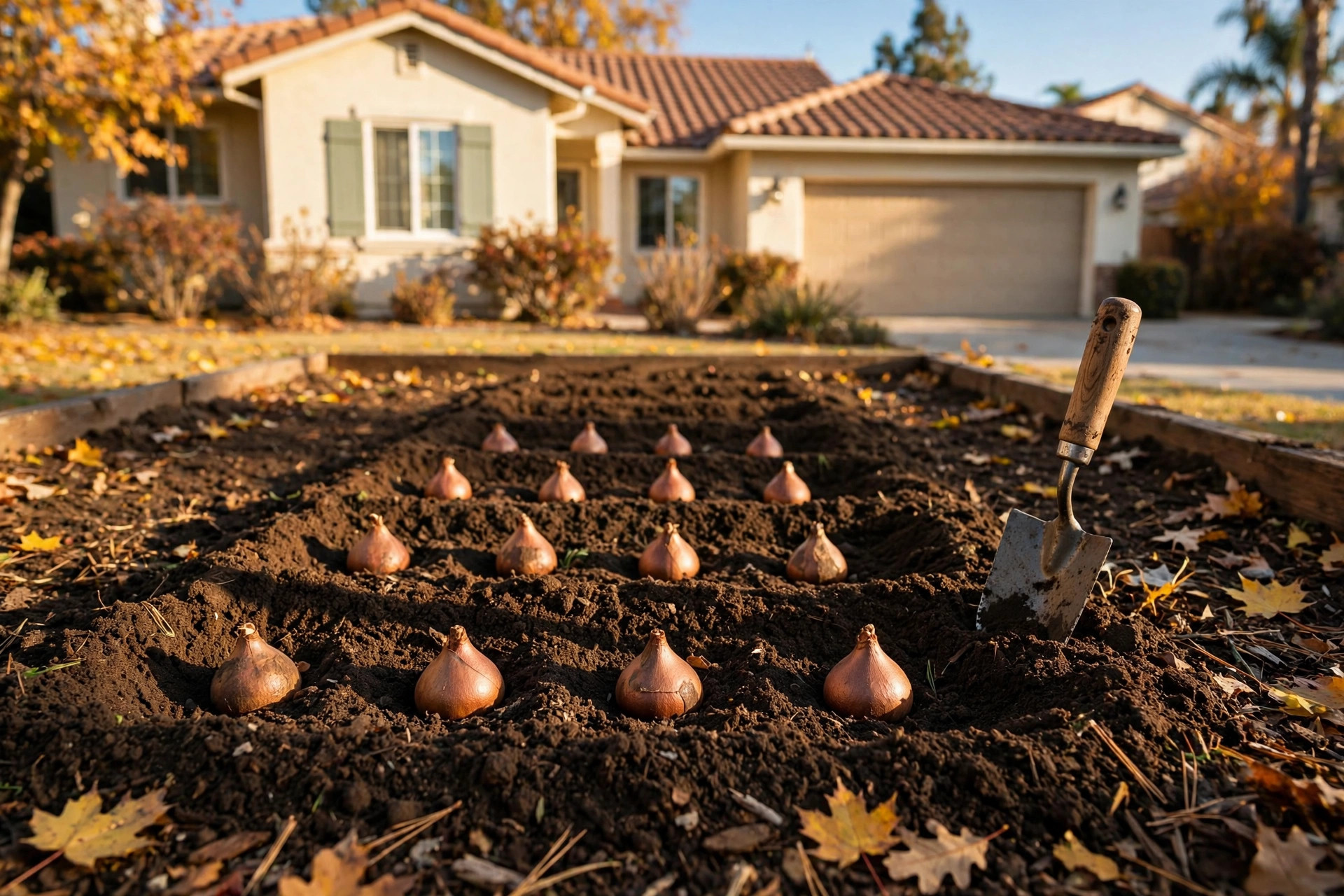

Many gardeners think of tulips as a flower for cold states. But tulip bulbs fall california homes usa gardeners plant each autumn can bloom just as well in the Golden State. The trick is to understand one simple fact. Tulips need cold to bloom, and most of California does not give it to them on its own. Once you learn how to give the bulbs the chill they need, spring color is easy.
Fall is the right season to plant tulip bulbs in nearly every part of California. The soil is still warm enough for roots to grow. The nights are cool. The bulbs settle in before winter. When spring comes, they push up strong stems and bright cups of color. This guide explains the whole process in plain steps. It covers how to choose bulbs, when to plant, how to chill them, what they cost, and how to care for them after the flowers fade.
Why Fall Planting Matters for Tulips in California
Tulips come from places with hard winters. The bulb must feel weeks of cold before it will send up a flower. In most of California, winter nights stay mild. A bulb planted in warm ground with no chill will grow leaves but no bloom. This is the single most common reason California gardeners fail with tulips.
Planting in fall solves part of the problem. The bulb has time to grow roots while the soil is still warm. Roots anchor the plant and feed the spring growth. But in zones 8, 9, and 10, fall planting alone is not enough. Gardeners must also give the bulbs an artificial chill in the refrigerator. This sounds like work, but it takes only a few minutes. Put dry bulbs in a paper bag, keep them away from fruit, and leave them in the fridge for eight to ten weeks. Then plant.
In colder parts of the state, such as the Sierra foothills and far northern counties, nature does the chilling for you. Plant the bulbs in fall and let winter handle the rest. The rest of this guide tells you which path fits your home.
How to Choose Tulip Bulbs: Tulip Bulbs Fall California Homes Usa
Look for Firm, Heavy Bulbs
A good tulip bulb feels firm and heavy for its size. The outer skin should be dry and papery, with no soft spots and no mold. Avoid bulbs that feel light or spongy. They will not bloom. Avoid bulbs with green shoots already poking out. These have been stored too warm.
Buy from a seller who stores bulbs cool and dry. Bulbs that sit in a hot shop will be weak before they reach your yard. If you order by mail, open the package at once and check every bulb. Plant damaged ones in pots near the house where you can watch them, or throw them away.
For a wider look at how to judge bulb quality before you buy, see our tulip bulbs fall buying guide. It walks through size grades and what each grade means for your first spring show.
Best Varieties for Warm California Zones
Not all tulips suit California. In warm parts of the state, treat tulips as annuals. You will plant fresh bulbs each fall and enjoy one strong season of bloom. The Darwin hybrid group works best for this. These are tall, sturdy, and hold their color in warm spring air. Good choices include Apeldoorn, Oxford, and Parade.
Single early tulips are another solid pick. They bloom a little sooner and handle mild winters well. Avoid the tall late varieties with heavy double flowers. They need more cold than California gives, and their big heads flop in warm rain.
In cooler California zones, such as zone 7 and the colder parts of zone 8, you can also try Triumph and lily-flowered types. These may return for a second or third year if the soil drains well and the summer stays dry.
Planting Steps for Fall
When to Plant
Timing depends on your zone. In cooler northern and mountain areas, plant from late September through October. The soil should still be workable but the heat of summer should be past. In mild coastal and southern areas, wait until late October through November. You want the soil to have cooled a bit before the bulbs go in.
If you must pre-chill, count backward. Bulbs need eight to ten weeks in the fridge. To plant in late November, start chilling in mid-September. Mark the date on the bag so you do not forget.
How to Pre-Chill Bulbs
Place the dry bulbs in a paper bag, not plastic. Plastic traps moisture and causes rot. Keep the bag in the refrigerator at 35 to 45 degrees. Do not store bulbs near apples, pears, or other fruit. Ripening fruit gives off a gas called ethylene, and it can kill the flower bud inside the bulb. A bulb chilled near apples may grow leaves and no flower.
Check the bag once a month. Remove any bulb that turns soft or moldy so it does not spoil the rest. After eight to ten weeks, take the bulbs out and plant them right away. Do not let them warm up for days on the counter.
Depth, Spacing, and Soil
Dig or loosen the soil to a depth of about eight inches. Tulips need loose soil for their roots. Mix in a little compost if your soil is heavy clay, which is common in many California yards. Good drainage matters more than rich soil. Bulbs rot in standing water.
Plant each bulb pointy end up, about six inches deep. Measure from the top of the bulb, not the bottom. Space bulbs four to six inches apart. For a full bed of color, plant in drifts of ten or more bulbs of one color rather than single bulbs scattered about. A drift of red tulips reads from the street. Single bulbs do not.
Water the bed well after planting. Then leave it alone. Fall rain in California usually gives enough water. If the fall is dry, water once every two weeks until winter rains begin.
Planting in Pots
Tulips grow well in pots, and pots solve the drainage problem for many California gardeners. Use a pot at least ten inches deep with holes in the bottom. Fill it with a mix of potting soil and a little sand or perlite. Plant bulbs closer together than in the ground, about three inches apart, with their tips just below the soil surface.
Pots chill faster than the ground, so they suit the pre-chill method well. Move pots into shade during hot fall days. Move them into full sun when the shoots appear in late winter.
What Tulip Bulbs Cost in California
Fall tulip bulbs are one of the cheapest ways to buy spring color. A bag of ten standard bulbs usually costs between four and ten dollars at a garden center. Specialty and jumbo bulbs cost more, often one to two dollars per bulb. Buying in bulk brings the price down. Bags of fifty or one hundred bulbs are the best value for big beds.
Mail-order prices run a little higher, but the selection is wider and the quality is often better. Watch for sales in October, when shops clear fall stock. Do not buy bulbs that look dried out or sprouted, even at a deep discount.
Plan on about one dollar per bulb as a working budget for a home bed. A bed of fifty bulbs, enough for a strong front-yard show, costs roughly the same as one flat of annual flowers. The tulips give far more color per dollar.
When you shop, you may want to compare with other fall bulbs. Our daffodil bulb packs buying guide covers prices and pack sizes for another easy fall bulb that needs no chilling in most of California.
Care and Upkeep Through the Seasons
After planting, tulips ask for little. Keep the bed free of weeds, which steal water and food. Do not cut the leaves after the flowers fade. The leaves feed the bulb for next year. Let them turn yellow and brown on their own, then pull them away gently.
In most of California, you will pull the bulbs after the leaves die and plant fresh ones next fall. If you want to try for a second year, leave the bulbs in dry soil through the summer. Do not water the bed in summer. Wet summer soil rots tulip bulbs fast. In dry-summer areas like much of California, this works in your favor.
Fertilizer is simple. Mix a balanced bulb food into the planting hole at planting time. That is all most beds need. Do not add fresh manure. It burns the roots and invites disease.
Watch for pests. Gophers and squirrels love tulip bulbs. In areas with heavy gopher pressure, plant bulbs inside wire baskets made for the purpose. Snails and slugs chew the leaves in wet springs. A ring of coarse sand around the bed helps keep them back.
If you are ready to order, our tulip bulbs fall for sale page lists what to look for when bulbs go on sale each autumn and how to time your purchase.
Safety in the Garden
Tulip bulbs are not food. All parts of the tulip contain compounds that irritate the skin and stomach. The bulb holds the highest amount. Wear gloves when you handle and plant large numbers of bulbs. Some people get an itchy rash called tulip finger from long contact with the bulbs.
Keep bulbs away from small children and pets. Dogs that dig up and eat bulbs can get sick, with vomiting and drooling. Store pre-chilling bulbs on a high shelf or in a closed crisper drawer, clearly marked, so no one mistakes them for onions. Shallots and tulip bulbs look alike to a child.
Wash your hands after planting, and keep tools clean. These are simple habits that keep a fun garden project safe for the whole family.
Frequently Asked Questions
Do I really have to chill tulip bulbs in California?
In most of the state, yes. Zones 8, 9, and 10 do not stay cold long enough for tulips to bloom well without help. Eight to ten weeks in the refrigerator gives the bulb the winter it needs. In zone 7 and colder mountain areas, you can skip the fridge and plant straight into the ground in fall.
When is the best month to plant tulip bulbs in California?
Late October through November suits most of the state. Cooler northern areas can plant in late September or October. Southern and coastal gardeners should wait until the soil cools, often mid to late November. Planting too early in warm soil can cause weak growth.
Can tulips come back year after year in California?
Sometimes, but not often. In warm zones, treat tulips as annuals and plant fresh bulbs each fall for the best show. In cooler zones with dry summers, Darwin hybrids may return for two or three years. To help them return, let the leaves die back naturally and keep the bed dry all summer.
How deep should I plant tulip bulbs?
Plant about six inches deep, measured from the top of the bulb to the soil surface. In sandy soil, you can go a little deeper. In heavy clay, plant a bit shallower and make sure the soil drains. Deeper planting helps in hot areas because the soil stays cooler down below.
Why did my tulips grow leaves but no flowers?
The most common cause is lack of chill. Without enough cold weeks, the flower bud inside the bulb never forms. Planting too shallow, planting old weak bulbs, or storing bulbs near fruit can also cause blind buds with leaves only. Next fall, pre-chill new bulbs for the full ten weeks.
Can I plant tulips in pots on a California patio?
Yes, and pots work very well. Use a deep pot with drainage holes, good potting mix, and bulbs spaced about three inches apart. Pre-chill the bulbs first if you are in a warm zone. Pots warm up fast in spring, so move them to a cool spot if a heat wave hits during bloom.
A Final Word
Tulip bulbs planted in fall bring one of the brightest rewards in the California garden. The work is small. Choose firm bulbs, chill them if your zone needs it, plant six inches deep in well-drained soil, and wait for spring. For the price of a few bags of bulbs, a California home can have weeks of red, yellow, pink, and purple bloom when the rest of the yard is just waking up. Start this fall, and next spring you will be glad you did.
For more background, see The Spruce, Burpee, and National Institute of Food and Agriculture. For more background, see Park Seed, Gurney’s Seed & Nursery Co, and White Flower Farm. Buying guides are also published by Monrovia and Proven Winners.
References
Burpee. (n.d.). Seeds, plants, and gardening supplies. https://www.burpee.com Gurney’s Seed & Nursery Co. (n.d.). Seeds, plants, and garden supplies. https://www.gurneys.com Monrovia. (n.d.). Plants for home gardens. https://www.monrovia.com National Institute of Food and Agriculture. (n.d.). Agricultural research and extension. https://www.nifa.usda.gov Park Seed. (n.d.). Seeds, plants, and gardening supplies. https://www.parkseed.com Proven Winners. (n.d.). Plants and gardening inspiration. https://www.provenwinners.com The Spruce. (n.d.). Home and garden advice. https://www.thespruce.com White Flower Farm. (n.d.). Plants, bulbs, and garden supplies. https://www.whiteflowerfarm.com
Was this guide helpful?

About James Carter
The My Garden US editorial team writes practical, in-depth home and garden guides for American homeowners — tested advice, no fluff.
You May Also Like
Daffodil Bulb Packs Reviews: A USA Buying Guide
June 23, 2026 0 views
Native Grass Seed Deals Near Me: A Practical Guide for Homeowners
July 31, 2026 0 views
Seed Starting Trays for Sale USA: A Plain Guide for American Gardeners
February 15, 2026 0 views