
This onion sets planting American homes guide was written for the home gardener. Onion sets are small, dry onions that you plant to grow full onions. They are one of the easiest crops for a new gardener. You push them into the soil. You water them. You wait. A few months later, you pull full onions from the earth.
Many families in the United States grow onions this way. The sets cost little. They take little space. They grow in most states. This guide covers every step. It covers how to choose sets, when to plant them, how to plant them, and how to care for them. It also covers cost, safety, and common questions.
Why Planting Onion Sets Matters
Onions are a base crop. They go into soup, stew, sauce, and salad. Fresh onions taste better than store onions. They are also cheaper when you grow them yourself.
Onion sets matter because they give the home gardener a head start. A set is a small onion grown from seed in the year before. It rests through winter. When you plant it in spring, it wakes up and keeps growing. You skip the hard part. Growing onions from seed is slow and fussy. Sets make it simple.
Sets also fit small gardens. You can plant them in a raised bed, a row in the yard, or a large pot. A family can grow enough onions for a season in a four foot by four foot bed. That is the main reason this onion sets planting American homes guide starts with sets, not seeds.
What Onion Sets Are: Onion Sets Planting American Homes Guide
An onion set is a small bulb, usually about the size of a marble. It was grown from seed the year before and stopped while small. It then dried out and went to rest.
When you buy a bag of sets at a store, you will see they are firm and dry. Some are yellow. Some are white. Some are red. Each one will grow into one full onion if you plant it right. Sets do not split or make more bulbs. One set equals one onion.
Sets differ from green onions and from onion plants. Green onions are grown thick for their tops. Onion plants are small seedlings. Sets are the simplest choice for most home gardens.
How to Choose Onion Sets
Long Day, Short Day, and Intermediate
Onions form bulbs based on day length. This is the most important thing to know when you buy sets.
Long day onions need 14 to 16 hours of daylight to form bulbs. They grow best in the northern United States. Short day onions need 10 to 12 hours of daylight. They grow best in the southern states. Intermediate or day neutral onions sit in the middle. They grow best in the central states.
If you plant the wrong type, the bulbs stay small. A long day onion in the South may never bulb. A short day onion in the North may bulb too soon and stay tiny. Read the bag or tag. Buy the type that fits your state. Many seed houses publish variety guides that explain which onions fit each zone. Burpee sells sets and explains the day length types in plain terms. Almanac tables also show planting dates by region.
What to Look for When You Buy
Good sets are firm. They feel solid when you squeeze them gently. They have dry, papery skins. They have no soft spots, no mold, and no green shoots longer than half an inch.
Avoid bags that feel damp. Damp sets may rot. Avoid sets that already show long green tops. They may bolt, which means they flower instead of forming a bulb. Buy sets that are the size of a dime to a nickel. Very large sets are more likely to bolt. Very small sets grow slowly.
Buy from a trusted seller. Garden centers, farm stores, and seed catalogs all sell sets. Gurneys and Park Seed carry onion sets and other dahlia bulbs bulk reviews buying guide usa garden stock for home planters. Buy early in the season for the best pick.
When to Plant Onion Sets
Plant sets in early spring, as soon as the soil can be worked. In many states, this is March or April. The soil should be at least 50 degrees. Sets can stand light frost, so you do not need to wait for warm nights.
In the deep South, some gardeners plant sets in the fall for a winter harvest. In the far North, wait until the ground thaws. Your local extension service has a planting calendar for your county. The NIFA site links to extension offices across the country. The Spruce also posts spring planting calendars for common vegetables.
Do not plant sets in summer heat. They need cool spring weather to start roots. Hot soil slows them down.
Types and Options for the Home Garden
Yellow Onion Sets
Yellow sets are the most common. They grow storage onions with strong flavor. They keep well in a dry place for months. Most gardeners start here.
White Onion Sets
White sets grow mild onions. They are good for fresh eating and salads. They do not store as long as yellow onions. Plant fewer of them unless you plan to eat them fast.
Red Onion Sets
Red sets grow sweet, colorful onions. They are good in salads and on sandwiches. They store for a moderate time.
Mixed Bags
Some stores sell mixed bags. They are fine for a first garden. But if you want even results, buy one color at a time. Mixed bags make harvest timing less even.
Sets, Seeds, or Plants
Seeds are cheapest but take longest. They need an early indoor start. Plants, sold as small green seedlings in bunches, give fast results but cost more. Sets sit in the middle on cost and effort. For most American homes, sets are the best first choice. Once you have success with sets, you can try seeds the next year. Seed starting trays help if you go that route. See our notes on seed starting trays usa online deals for indoor sowing gear.
Cost and Price
Onion sets are one of the cheapest crops to start. A one pound bag of sets costs about three to six dollars. That bag holds 60 to 80 sets. Each set grows one onion.
Do the math. For five dollars, you can grow 60 to 80 onions. That is less than ten cents per onion. Store onions cost far more. Even with soil and fertilizer, the crop pays for itself.
You will also need basic tools. A trowel, a rake, and a watering can may already be in your shed. A bag of balanced fertilizer costs a few dollars. Mulch, such as straw, costs a few dollars more. Total start up cost for a small onion bed is often under twenty dollars.
How to Plant Onion Sets, Step by Step
Follow these steps for a clean planting.
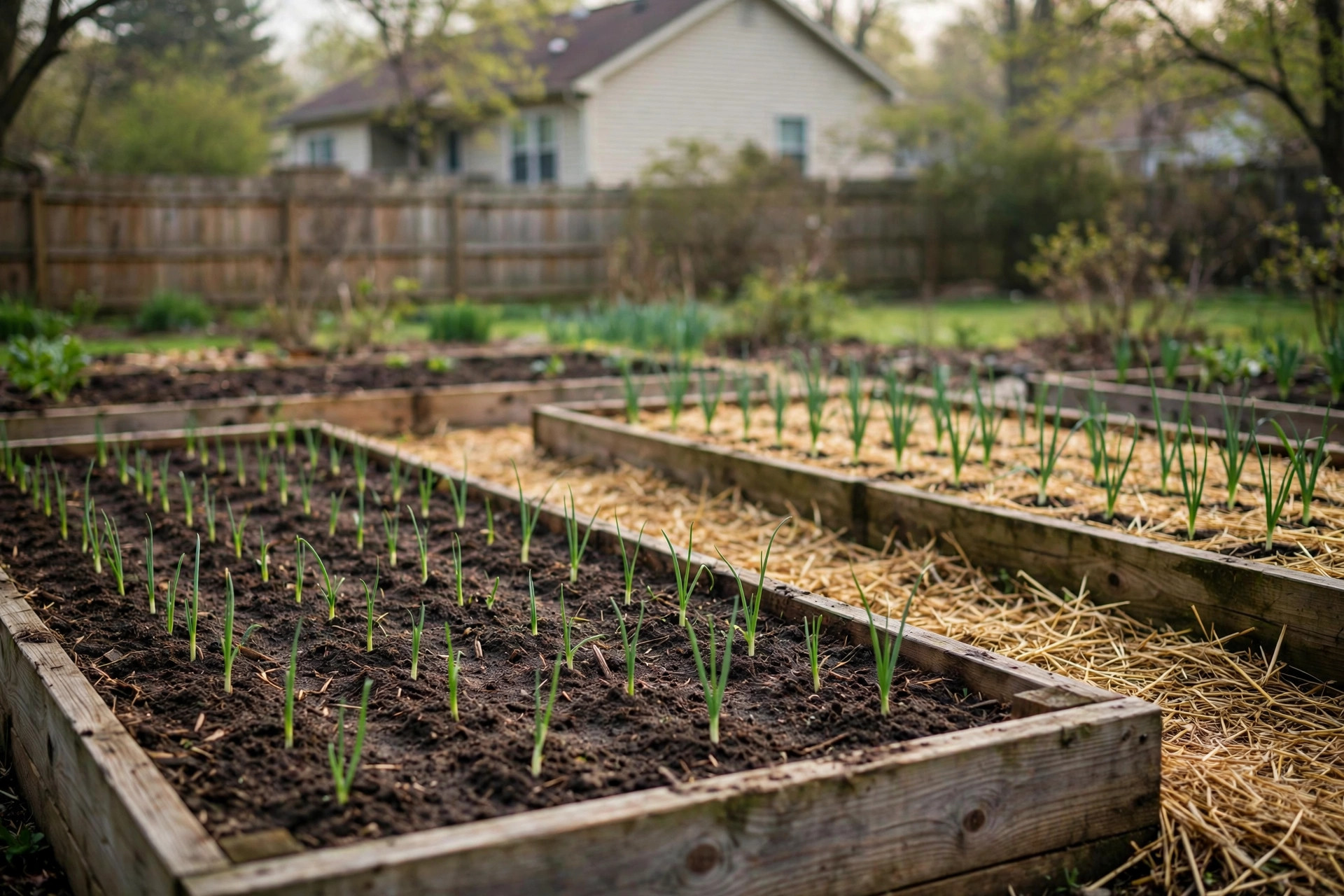
1. Pick a sunny spot. Onions need at least six hours of direct sun each day. 2. Loosen the soil to six inches deep. Pull out stones and old roots. 3. Mix in compost or a balanced fertilizer. Onions feed well. 4. Make shallow holes or a shallow trench, about one inch deep. 5. Push each set into the soil with the pointed end up. The tip should sit just under the surface. Cover with a thin layer of soil. 6. Space sets four to six inches apart. Leave twelve inches between rows. 7. Water well after planting. The soil should feel damp, not soaked. 8. Spread two inches of straw mulch around the rows. Keep the mulch away from the necks of the sets.
That is the whole job. The sets will push up green tops within one to two weeks.
Care and Upkeep
Onions need steady water. Give them about one inch of water per week. Water more in dry spells. Stop watering when the tops start to fall over at harvest time. Too much water late in the season can cause rot.
Feed the plants once or twice. A side dressing of nitrogen fertilizer three weeks after planting helps the tops grow strong. Strong tops make big bulbs. Do not feed after the bulbs start to swell. Late feeding gives soft necks that store poorly.
Weed often. Onions have shallow roots and thin tops. Weeds steal water and light. Pull weeds by hand so you do not cut the onion roots. Mulch cuts the weed work in half.
Watch for pests. Thrips are tiny insects that feed on onion tops. A strong spray of water knocks them off. Onion maggots attack the base. Crop rotation helps. Do not plant onions in the same bed two years in a row. Gardening Know How posts guides on common onion pests and simple controls. Proven Winners and Monrovia run garden centers with staff who can answer local pest questions, even though they focus on ornamental plants.
Bulbs swell in early to mid summer. The tops will turn yellow and fall over. That is the harvest signal.
How to Harvest and Store
Pull the onions when half the tops have fallen over. Lay them on dry ground or a screen for one to two weeks to cure. Curing dries the necks and skins. It is the key to long storage.
After curing, cut the tops to one inch. Trim the roots. Store the onions in a cool, dry, dark place. A mesh bag or a crate works well. Do not store them in plastic. They need air.
Yellow storage onions keep for three to six months. White and sweet types keep for one to two months. Check the stored onions each month. Use any soft ones first.
Safety
Onion sets are safe to handle. There are no sprays on most dry sets. Wash your hands after planting if you used fertilizer.
Onions are toxic to dogs and cats, raw or cooked. Keep harvested onions out of pet reach. Do not feed onion scraps to pets. The ASPCA notes onion poisoning as a real risk for pets, so store your harvest where animals cannot reach it. If a pet eats onion, call your vet.
Wear gloves when you spread fertilizer. Keep fertilizer bags away from children and pets. Store tools with sharp edges out of reach.
Frequently Asked Questions
How deep do I plant onion sets?
Plant them about one inch deep, with the pointed end up. The tip can sit just at or under the soil surface. Deeper planting slows growth.
Can I grow onion sets in pots?
Yes. Use a pot at least eight inches deep. Plant sets three inches apart. Pots dry out fast, so water often. A large pot can hold 12 to 16 sets.
Why did my onions flower instead of forming bulbs?
That is called bolting. It happens when sets face cold snaps after planting, or when the sets were too large. Buy medium sized sets and plant after hard frost risk passes. Remove flower stalks at once if they appear.
How long do onion sets take to grow?
Most sets need 90 to 120 days from planting to harvest. Warm states run faster. Cool states run slower. The falling tops tell you they are ready.
Can I plant onion sets in the fall?
In mild winter areas, yes. Fall planted sets grow through winter and bulb in spring. In cold states, fall planting will freeze out. Follow your local planting calendar.
Do I need to fertilize onion sets?
One feeding at planting and one side dressing three weeks later is enough for most soils. Poor soils may need a bit more. Too much nitrogen late in the season hurts storage.
Related Garden Projects
Once your onions are in, you may want more color in the yard. Bulbs are a natural next step. Read our dahlia bulbs bulk reviews buying guide usa before you buy in bulk. Indoor growers may like our look at air plants bulk american homes guide. White Flower Farm lists garden tested bulbs and perennials for home beds.
A Short Final Word
Onion sets are the easy door into home food growing. They ask for sun, water, and a little care. They pay back with a full harvest. Pick the right day length type for your state. Plant early. Water steady. Cure the harvest. Follow this onion sets planting American homes guide, and your first onion bed will teach you the rest.
References
Gardening Know How. (n.d.). Gardening guides and plant care. https://www.gardeningknowhow.com Gurney’s Seed & Nursery Co. (n.d.). Seeds, plants, and garden supplies. https://www.gurneys.com Monrovia. (n.d.). Plants for home gardens. https://www.monrovia.com Park Seed. (n.d.). Seeds, plants, and gardening supplies. https://www.parkseed.com Proven Winners. (n.d.). Plants and gardening inspiration. https://www.provenwinners.com The Old Farmer’s Almanac. (n.d.). Gardening calendars and advice. https://www.almanac.com The Spruce. (n.d.). Home and garden advice. https://www.thespruce.com White Flower Farm. (n.d.). Plants, bulbs, and garden supplies. https://www.whiteflowerfarm.com
Was this guide helpful?

About Emily Rodriguez
The My Garden US editorial team writes practical, in-depth home and garden guides for American homeowners — tested advice, no fluff.
You May Also Like
Succulent Variety Packs: A Practical Guide for Florida Homes
June 14, 2026 0 views
Dahlia Bulbs Bulk American Homes Guide: Plant Big and Bloom Bright
June 15, 2026 0 views
Morning Glory Seeds Reviews: A Buying Guide for American Gardeners
February 22, 2026 0 views