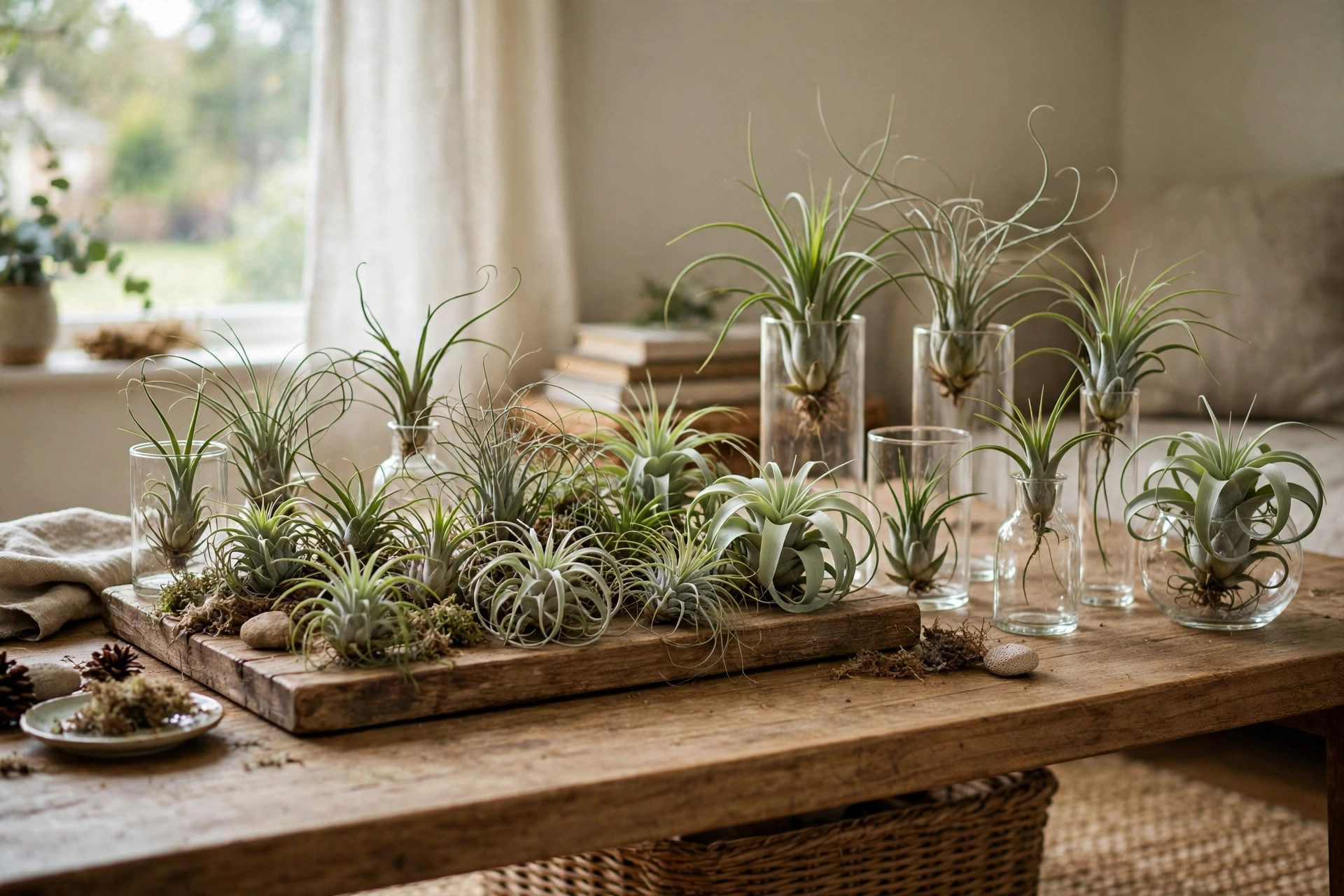

This air plants bulk American homes guide begins with a simple fact. Air plants are among the easiest houseplants to keep. They need no soil. They ask for little water. They fit almost any room. When bought in bulk, they also cost far less per plant. Many American homes now hold ten, twenty, or even fifty of them. They sit on shelves, hang in glass globes, and line window sills. This guide explains how to buy them in bulk, how to pick good ones, what they cost, and how to keep them alive for years.
Why Air Plants Matter in the American Home
Air plants belong to the genus Tillandsia. They grow on trees and rocks in the wild. They pull moisture and nutrients from the air through their leaves. This makes them different from most houseplants. They need no pots of soil. A home with little space can still hold many of them.
Bulk buying has made air plants popular. A single air plant in a garden center may cost five dollars or more. A pack of twenty from a wholesale seller may cost the same as four singles. For families who want green decor in every room, the savings add up. Event planners also buy them in bulk for weddings and parties. They work as favors, table decor, and gifts.
Air plants suit American homes because they are clean. There is no soil to spill on carpets. There is no heavy pot to move. Children and pets are generally safe around most species. The plants add texture to modern rooms. They fit farmhouse style, coastal style, and plain apartments alike. A plant care resource notes that tillandsia can thrive in bright indoor light with simple weekly watering.
How to Choose Bulk Air Plants: Air Plants Bulk American Homes Guide
Buying in bulk is easy, but choosing well takes care. Follow these points before you order.
Check the Seller
Buy from a seller who grows or imports air plants in volume. Garden nurseries, online plant shops, and wholesale lots are common sources. A good seller lists the species in the pack. Avoid packs that say only “assorted air plants” with no detail at all. A trusted seed and plant retailer lists species names and sizes for its live plants, and air plant sellers should do the same.
Look at the Leaves
Healthy air plants have firm leaves. The color should be green, silver-green, or gray-green, depending on the species. Avoid plants with brown, mushy, or falling leaves. In photos, look for full, even rosettes. If buying in person, pick up a plant. It should feel light but solid.
Ask About Size
Bulk packs often list sizes in inches, such as “1 to 2 inches” or “2 to 3 inches.” Small plants suit crafts and wedding favors. Medium plants suit home decor and gifts. Large plants, three inches and up, make better single displays. Know what you want before you buy. Mixing sizes in one order can work well for a whole home.
Count the Cost per Plant
Divide the total price by the number of plants. This gives the true unit price. A pack of 25 at thirty dollars costs one dollar and twenty cents per plant. Compare that to single-plant prices at local stores. Bulk should be clearly cheaper. If it is not, keep looking.
Read the Shipping Terms
Air plants are living things. They do not like long, hot trips in closed boxes. Check how fast the seller ships. Two to three day shipping is best. In winter, make sure the seller adds a heat pack or delays shipping in freezing weather. A dead plant costs more than a slow shipment.
Related buying guides, such as this sunflower seed packs buying guide, show the same rule: good sellers give clear plant details and fair shipping terms.
Types and Options
Many tillandsia species appear in bulk packs. Some are common and cheap. Some are rare and cost more. Here are the main ones you will meet.
Tillandsia Ionantha
This is the most common air plant in bulk packs. It is small, often one to two inches wide. Its leaves are silver-green. When it blooms, the center turns bright red or pink, and a purple flower appears. It is hardy and cheap. A pack of fifty ionantha plants is a common bulk order.
Tillandsia Xerographica
This plant is large and striking. Its wide, silver leaves curl into a rosette that can reach six inches or more across. It grows slowly. It costs more than ionantha. Bulk packs may include only five or ten of these. They make strong gifts and centerpieces.
Tillandsia Caput-Medusae
The name means “head of Medusa.” Its thick leaves twist like snakes. It is a tough plant that tolerates dry indoor air. It often appears in mixed bulk packs. It blooms with a red spike and purple flowers.
Tillandsia Bulbosa
This species has a round base and thin, wavy leaves that reach upward. It likes humidity. It is a good pick for bathrooms with windows. It shows up often in tropical-themed bulk assortments.
Tillandsia Harrisii
A soft, silvery plant with fine leaves. It is gentle to the touch. It dries out faster than thicker species, so it needs a bit more water. It is common in starter packs.
Mixed Assortments
Many sellers offer “designer assortments” of five, ten, or twenty different species. These packs suit beginners. They let you learn which types you like. They also give a home more visual variety. A gardening knowledge site explains that mixing tillandsia types is fine as long as each plant gets the right light and air flow.
Some buyers also pair air plants with bulb plantings. If you enjoy growing from bulbs, this daffodil bulb packs for sale guide covers another easy way to add color to a home.
Cost and Price
Air plant prices move with size, species, and order size. Here is what to expect in the American market.
Small ionantha plants in bulk often cost between fifty cents and one dollar and fifty cents each in packs of twenty-five or more. Medium plants of two to three inches run one to three dollars each in bulk. Large xerographica plants may cost eight to fifteen dollars each, even in small bulk lots.
Shipping adds to the cost. A small order may carry a shipping fee of eight to twelve dollars. Large orders may ship free. Always add shipping to the per-plant math.
Display items cost extra. Glass globes, driftwood pieces, wire holders, and wall frames are common. A simple glass globe costs three to six dollars. Bulk packs of holders lower that price. If you are decorating for an event, order holders at the same time as plants to save on shipping.
Compare prices across at least three sellers. Prices vary more than most buyers expect. A plant nursery site and similar retailers publish clear pricing, and the same habit helps when you compare bulk air plant lots.
Watch for hidden costs. Some sellers charge extra for heat packs in winter. Some charge for faster shipping. Read the full listing before you pay.
Care and Upkeep
Air plants are easy, but they are not carefree. They need water, light, and air. Get these three right and they will live for years.
Water
Most air plants need a good soak once a week. Fill a bowl with room-temperature water. Place the plants in the bowl for twenty to thirty minutes. Then take them out and shake off extra water. Set them upside down on a towel for an hour or two so no water sits in the center. Standing water causes rot.
In dry homes, or in winter when the heat runs, soak twice a week. In humid rooms, once a week is enough. Rainwater or tap water left out overnight both work well. Avoid softened water, which holds salts that harm the plants.
Light
Air plants like bright, indirect light. A spot near an east or north window works well. A south or west window works if the light is filtered by a sheer curtain. They can take some direct morning sun. Hot afternoon sun through glass can burn the leaves.
If your home is dark, add a simple grow light. Keep it a few inches above the plants and run it for eight to ten hours a day. The plants will respond with stronger growth.
Air
Good air flow is vital. Air plants rot in still, damp air. Do not seal them in closed jars or terrariums with lids. Open glass globes are fine. Wire holders, wood mounts, and open shelves all work. After watering, make sure they dry fully within four hours.
Feeding
A light feeding once a month helps. Use a fertilizer made for bromeliads or air plants, mixed at quarter strength. Add it to the soak water. Too much fertilizer burns the leaves. Skip feeding in winter when growth slows.
Blooming and Pups
A healthy air plant will bloom once in its life. After blooming, it grows small offsets called pups at its base. These pups can be left to form a clump, or gently pulled off when they reach one third the size of the mother plant. A bulk order that blooms and pups can double your collection over time.
The federal agriculture research site notes that indoor plant care basics like proper light and water apply across species, and tillandsia is no exception.
Safety
Air plants are non-toxic to people and pets. This is one reason they suit family homes. Cats may chew the leaves, but the plants will not poison them. Still, keep plants out of reach if a pet chews them often. Chewed plants look poor and may die.
The main safety point is mounting. Some people glue air plants to wood or wreaths. Use plant-safe glue and keep glue away from the center of the plant. Never use copper wire for holders. Copper is toxic to tillandsia. Aluminum, stainless steel, and plain string are safe.
Check displays for stability. A heavy glass globe on a high shelf can fall and break. Place glass displays where children will not knock them down. This matters most when plants are part of daffodil bulb packs for Florida homes style gift sets or other home decor groupings that sit in busy rooms.
Frequently Asked Questions
How long do air plants live?
With good care, air plants live for several years. Most bloom once, then produce pups that carry on the line. A single bulk order can turn into a lasting collection if you keep the pups.
Can air plants live in a windowless bathroom?
They can, but only with help. A bathroom with no window needs a grow light. Run it eight to ten hours a day. The humidity from showers helps, but light is still required.
Why are my air plant leaves turning brown?
Brown, crispy leaf tips usually mean too little water or too much sun. Brown, mushy bases mean too much water and poor air flow. Adjust one thing at a time and watch for a week.
Do air plants need soil at all?
No. Air plants never need soil. Planting them in soil will kill them. They take all they need through their leaves. Display them bare, on wood, in open glass, or on wire.
How do I display fifty air plants without clutter?
Group them. A large driftwood branch can hold a dozen plants. A wall grid can hold twenty. Tiered shelves keep them neat. Spread groups across rooms rather than crowding one shelf. An almanac gardening guide suggests planning plant placement by light first, then by looks.
Where can I learn more about tillandsia species?
Several trusted sites cover tillandsia in depth. A garden seed company carries live plants with care notes. A nursery grower offers species profiles. A flower farm and a seed supplier also publish plant care articles worth reading.
A Final Word
Buying air plants in bulk is one of the simplest ways to bring green life into an American home. The plants cost little per piece. They need no soil. They ask only for weekly water, bright light, and moving air. Start with a mixed pack of twenty or twenty-five. Learn which species you like. Then order more of your favorites. In a year, your home can hold a thriving tillandsia collection that started from one small box.
References
Burpee. (n.d.). Seeds, plants, and gardening supplies. https://www.burpee.com Gardening Know How. (n.d.). Gardening guides and plant care. https://www.gardeningknowhow.com Gurney’s Seed & Nursery Co. (n.d.). Seeds, plants, and garden supplies. https://www.gurneys.com Monrovia. (n.d.). Plants for home gardens. https://www.monrovia.com National Institute of Food and Agriculture. (n.d.). Agricultural research and extension. https://www.nifa.usda.gov Park Seed. (n.d.). Seeds, plants, and gardening supplies. https://www.parkseed.com Proven Winners. (n.d.). Plants and gardening inspiration. https://www.provenwinners.com The Old Farmer’s Almanac. (n.d.). Gardening calendars and advice. https://www.almanac.com The Spruce. (n.d.). Home and garden advice. https://www.thespruce.com White Flower Farm. (n.d.). Plants, bulbs, and garden supplies. https://www.whiteflowerfarm.com
Was this guide helpful?

About Emily Rodriguez
The My Garden US editorial team writes practical, in-depth home and garden guides for American homeowners — tested advice, no fluff.
You May Also Like
Sunflower Seed Packs: Reviews and a Buying Guide for USA Gardeners
May 12, 2026 0 views
Dahlia Bulbs Bulk for Sale USA: How to Buy, Plant, and Enjoy Big Beds of Blooms
June 29, 2026 0 views
Sunflower Seed Packs for Florida Homes: A Complete Growing Guide
February 14, 2026 0 views