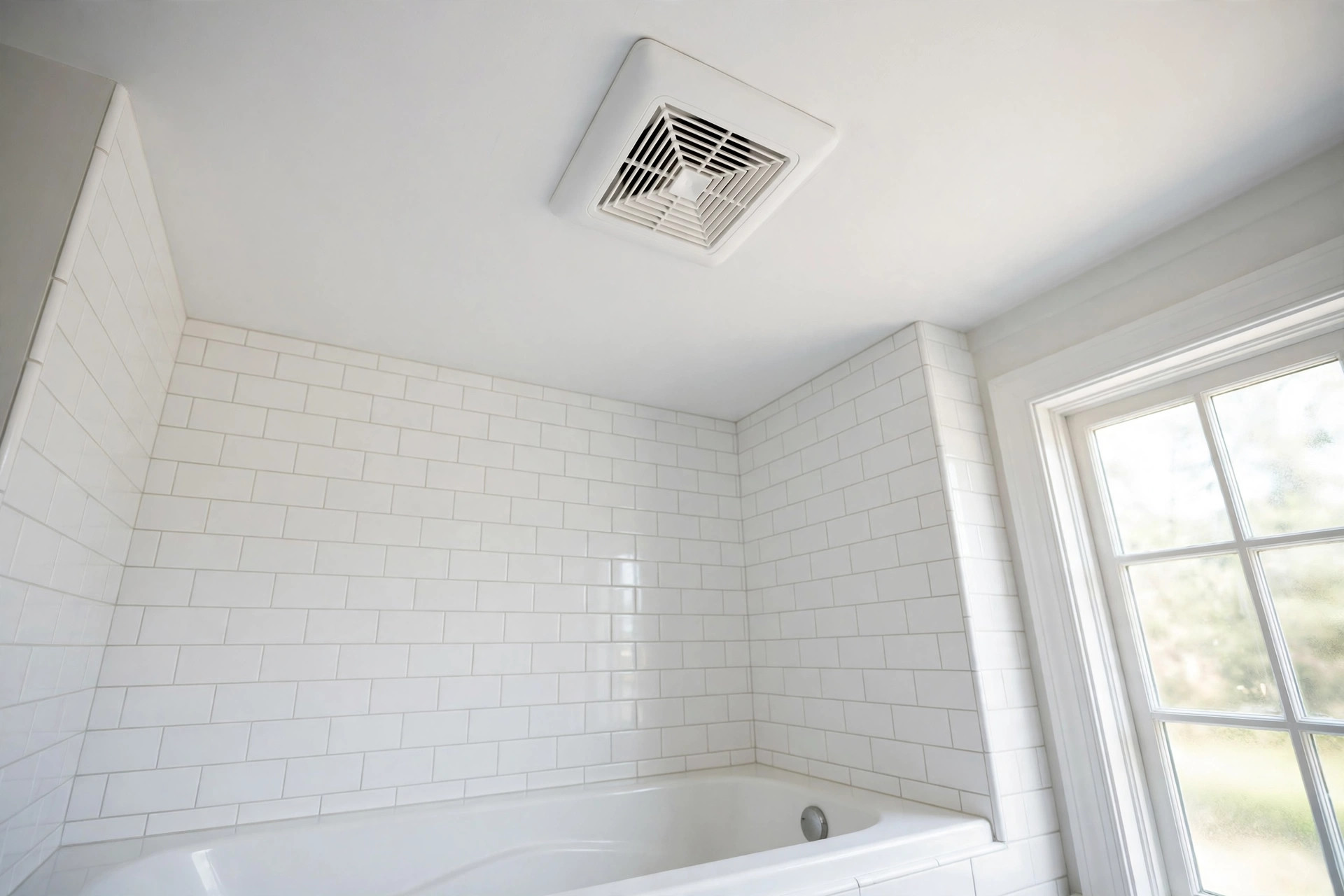

A good bathroom fan is the kind you forget. It runs in the background, clears the steam, and lets the house stay calm. Too many older fans fail this test. They rattle, they drone, and they still leave the mirror fogged. That is why so many homeowners now search for quiet exhaust fans texas homes usa can rely on in daily life. A quiet fan changes the feel of a bathroom. Morning showers feel easier. Night use does not wake the rest of the house. And the moisture leaves the room the way it should, instead of settling into paint, drywall, and trim.
This guide walks through the choice step by step. It covers why quiet matters more in Texas, how to read noise and size ratings, which types of fans are worth a look, what they cost to buy and install, how to keep them running, and which safety rules matter. The writing stays plain. The facts stay practical. By the end, you will know what to buy and what to skip.
Why It Matters in a Texas Home
Texas is hot and humid for much of the year. A hot shower adds more steam to air that is already wet. That steam settles on every cool surface it can find. It lands on mirrors and tile. It also works its way into walls, ceilings, and wood trim. Over time, damp air peels paint, stains drywall, and feeds mold. Mold does not need much. It needs moisture and warmth, and Texas gives it both.
A bathroom fan is the first defense. It pulls damp air out of the room and sends it outside. That keeps indoor humidity in check and protects the finishes you paid for. But a fan only works if people use it. A loud fan gets switched off early. A quiet fan stays on until the job is done. Homeowners in Dallas, Houston, San Antonio, and El Paso all report the same pattern. When the fan is quiet, the shower routine changes. People leave it running for ten or fifteen minutes after the water stops. That extra time is what pulls the last of the moisture out.
Quiet fans also suit the way Texas homes are built. Many homes have the main bathroom close to bedrooms. A fan rated under one sone is barely noticed. It hums at a level close to a quiet refrigerator. That makes a real difference in a home where someone sleeps while someone else showers. Dry air is also cheaper to cool than wet air, which helps the air conditioner during a long Texas summer.
What to Look For: How to Choose: Quiet Exhaust Fans Texas Homes Usa
Buying a fan is not hard once you know the three numbers that matter. Every box or listing carries them. Learn them, and the rest is simple.
Sone Ratings
The sone is the unit for noise. A low number means a quiet fan. Most new fans list their sone rating right on the package. A fan rated at 4 sones or more sounds like an old roaring fan. A fan rated at 1 sone sounds like a quiet refrigerator. Fans rated at 0.5 sones or less are near silent. You will hear the air move more than the motor.
For a home where noise matters, aim for 1.0 sone or less. The difference between a 3-sone fan and a 1-sone fan is large. It is the difference between a machine you notice and one you forget. Many of the best fans now sit at 0.3 or 0.5 sones. They cost more than the loud basic models, but the gap in price is small compared with the gap in daily comfort.
CFM and Room Size
CFM stands for cubic feet per minute. It measures how much air the fan moves. A bathroom needs enough CFM to clear the room quickly. The simple rule is one CFM per square foot of floor space. A 50 square foot bathroom needs a 50 CFM fan at least. A 100 square foot bathroom needs a 100 CFM fan.
Many Texas homes have large main bathrooms with separate tub and shower areas. In that case, go higher than the minimum. A 150 square foot bathroom does well with a 150 to 200 CFM fan. A fan that is too weak will run forever and still leave fog on the mirror. A fan that is sized right clears the room in a few minutes.
Ceiling height matters too. If the ceiling is above eight feet, add a bit more CFM. Tall rooms hold more air. A fan that would suit a standard room can struggle in a tall one.
Duct Size
Fans connect to the house through a duct. Ducts come in four-inch and six-inch sizes. A six-inch duct moves air with less noise than a four-inch duct. If your home can take a six-inch duct, choose it. The fan works less hard and the sound stays lower. Older homes often have four-inch ducts already in place. A quiet fan can still work well with a four-inch duct, but the run should be short and straight.
Short, straight duct runs are the goal in any install. Every bend in the duct adds drag. Drag makes the fan louder and weaker. Keep bends to a minimum. Use smooth metal duct instead of ribbed flex duct when you can. The smooth pipe cuts noise and moves more air.
Types of Exhaust Fans
Fans come in a few main styles. Each suits a different kind of bathroom.
Ceiling-mount fans are the most common. They sit in the ceiling, usually over the tub or shower, or in the middle of the room. A grill covers the motor. They are simple to install in a home with attic space above. Most of the quiet models on the market are ceiling-mount units.
Fan and light combinations serve two jobs at once. They vent the room and light it. The grill holds a light fixture, often an LED panel. These suit small bathrooms where one ceiling opening does the work of two. They cost a bit more than plain fans. The light quality in newer models is warm and even.
Inline fans put the motor in the duct, away from the bathroom. The room sees only a small grill in the ceiling. The noise stays in the attic or between joists. Inline fans are very quiet at the grill because the motor is far from the ear. They are a strong choice for a main bathroom near bedrooms. They need more planning, since the installer must place the motor and run the duct to it.
Wall-mount fans work through an outside wall. They are common in bathrooms with no attic above. The fan sits in the wall and vents straight out. This short path makes them efficient. Some wall-mount models are quite quiet, and the install is simple since the vent path is short.
Fans with humidity sensors add a smart touch. They sense the moisture in the air and run until the room is dry. You do not have to remember to leave them on. The sensor switches the fan off when the air clears. This is a useful feature in homes where children or guests use the bathroom and forget the fan. Some models also include motion sensors or timers.
For a home that is getting a full remodel, the fan is one choice among many. A rain shower head adds spa comfort, and heated floor kits take the chill out of tile in the winter months. A LED bathroom mirror finishes the room with clean, even light. A quiet fan keeps all of these upgrades protected from the damp that ruins finishes.
Cost and Price
Quiet fans cost more than basic loud fans, but the jump is not steep. A basic loud fan may sell for 20 to 40 dollars. A quiet fan rated at 1 sone or less usually runs from 60 to 150 dollars. Premium models with humidity sensors, lights, or very low sone ratings run from 150 to 300 dollars. For the daily difference it makes, the extra money is well spent.
Installation is the larger cost. If you replace a fan in an existing opening and reuse the same wiring and duct, a handy homeowner can do it in an afternoon. The fan itself is the only cost. If the opening must be cut larger, the duct must change, or new wiring must run, an electrician is the safe call. In Texas, a professional install of a bathroom fan usually costs 200 to 500 dollars, depending on the work. Attic access, duct length, and roof or wall venting all change the price.
Duct work can add cost. If the old fan vents into the attic instead of outside, the new run must go through the roof or a side wall. It is worth doing. Venting into the attic dumps moisture into the roof space, and in a hot Texas attic that feeds mold on the wood and ruins insulation. Compare the fan cost with the cost of fixing mold damage or repainting a peeling ceiling. The fan is the cheap part. The damage is the dear part.
Care and Upkeep
A quiet fan stays quiet only if it is cared for. The work is simple and takes minutes.
Clean the grill every few months. Dust and lint build up on the cover and block air flow. Most grills pull off with a gentle tug or a turn. Wash the grill in warm soapy water, dry it, and press it back on. A clean grill lets the fan breathe. You will hear the difference at once.
Wipe the motor and the blades once a year. Turn off the power at the breaker first. Remove the grill and wipe the fan blades with a damp cloth. Dust on the blades makes the fan louder over time. Some motors are sealed and need no oil. Older motors may have small oil ports. Check the manual that came with the fan.
Check the outside vent cap once or twice a year. The cap is the small louvered cover where the duct meets the outside of the house. Make sure it opens and closes freely. Birds sometimes build nests in them. Wasps like them too. A blocked vent makes the fan strain and groan. A free vent lets the air out fast.
Check the backdraft damper. This is the small flap inside the fan or duct that keeps outside air from blowing back in. Texas winds can push hot air through a weak damper. If you feel a draft from the fan grill on a windy day, the damper may be stuck or worn. It is a small part and easy to replace.
Run the fan long enough. A timer switch helps. Set it for twenty or thirty minutes after a shower. This habit does more for the bathroom than any fan feature. It gives the fan time to pull out the moisture that hides in corners and behind the toilet.
Safety
Bathroom fans deal with electricity and moisture in the same space. Respect both.
Always turn off the power at the breaker before you touch the fan. Bathroom circuits may share with other rooms. Test with a non-contact voltage tester before you put your hands in the housing.
Never vent a bathroom fan into the attic, the crawl space, or a wall cavity. The code in Texas, like most of the country, requires the duct to end outside the house. Venting into the attic is one of the most common causes of attic mold. The fix is a proper duct run to a roof cap or a wall vent.
Keep the duct away from hot surfaces. If the duct runs through the attic, use insulated duct where it passes through unconditioned space. In a hot Texas attic, a bare metal duct can sweat. Insulation stops the sweat.
Let an electrician handle new wiring. A simple swap of a fan in the same opening is a fair do-it-yourself job for a careful homeowner. New circuits, new switches, and new duct penetrations are jobs for a licensed pro. The cost of an electrician is small next to the risk of a bad wire in a wet room.
If you smell burning from the fan, turn it off at the breaker and call an electrician. A hot or failing motor is not a cleaning job. It is a repair job. Most quality fans last ten to fifteen years. A fan older than that owes you nothing. Replace it.
Frequently Asked Questions
How quiet should a bathroom fan be? Aim for 1.0 sone or less. A fan rated at 0.5 sones is very quiet. A fan at 0.3 sones is near silent. Anything above 2 sones will be heard through a closed door. The sone number is printed on the box and in the product details online.
What size fan does my bathroom need? Use one CFM per square foot of floor space as a start. A 60 square foot bath needs at least a 60 CFM fan. For large baths over 100 square feet, pick a fan at 100 CFM or more. Tall ceilings and separate tub and shower areas call for a stronger fan.
Can I replace my old loud fan myself? In most cases, yes, if the new fan fits the same opening and uses the same wiring and duct. Turn off the breaker, remove the old unit, and wire the new one the same way. If the opening must grow, the duct must change, or new wiring is needed, call an electrician.
Why does my fan still leave fog on the mirror? The fan may be too small for the room. The duct may be long, bent, or blocked. The grill may be clogged with dust. Or the fan may be switched off too soon. Clean the grill, check the vent cap outside, and run the fan for twenty minutes after the shower.
Should the fan vent through the roof or the wall? Both work. The shortest straight path to the outside is the best. Whichever you choose, the duct must end outside, not in the attic.
Do humidity-sensing fans really work? Yes. A good humidity sensor turns the fan on when the air gets wet and off when it dries. It removes the guesswork. They are worth the extra cost in homes where the fan is often forgotten. Look for models with adjustable sensitivity so the sensor matches your climate.
A Final Word
A bathroom fan is a small machine with a large job. It protects paint, drywall, trim, and air quality. It keeps the room fresh for the next person. And in a Texas home, where heat and humidity never take a season off, it works harder than most parts of the house. A quiet fan does all of this without a sound to remind you. It runs, it clears, and it is forgotten. That is the mark of a good one.
Choose the size to fit the room. Choose a sone rating at 1.0 or less. Give the duct a short straight path to the outside. Run the fan long enough to finish the job. Keep the grill clean. Do these simple things and the bathroom will stay dry, calm, and fresh for years.
For more background, see Moen, Delta Faucet, and American Standard. For more background, see The Home Depot, Lowe’s, and This Old House. Buying guides are also published by HGTV and Bob Vila.
References
American Standard. (n.d.). Bathroom and kitchen products. https://www.americanstandard.com Bob Vila. (n.d.). Home improvement advice. https://www.bobvila.com Delta Faucet. (n.d.). Kitchen and bathroom faucets. https://www.deltafaucet.com HGTV. (n.d.). Home and garden ideas. https://www.hgtv.com Lowe’s. (n.d.). Home improvement products. https://www.lowes.com Moen. (n.d.). Faucets and plumbing fixtures. https://www.moen.com The Home Depot. (n.d.). Home improvement products. https://www.homedepot.com This Old House. (n.d.). Home renovation guidance. https://www.thisoldhouse.com
Was this guide helpful?

About Lisa Anderson
The My Garden US editorial team writes practical, in-depth home and garden guides for American homeowners — tested advice, no fluff.
You May Also Like

Brushed Nickel Faucets Buying Guide USA: How to Choose the Right Faucet for Your Home
August 17, 2026 0 views
Bathroom Linen Cabinets California Homes USA: A Full Guide
July 5, 2026 0 views
Bidet Toilet Seats for California Homes in the USA
May 21, 2026 0 views