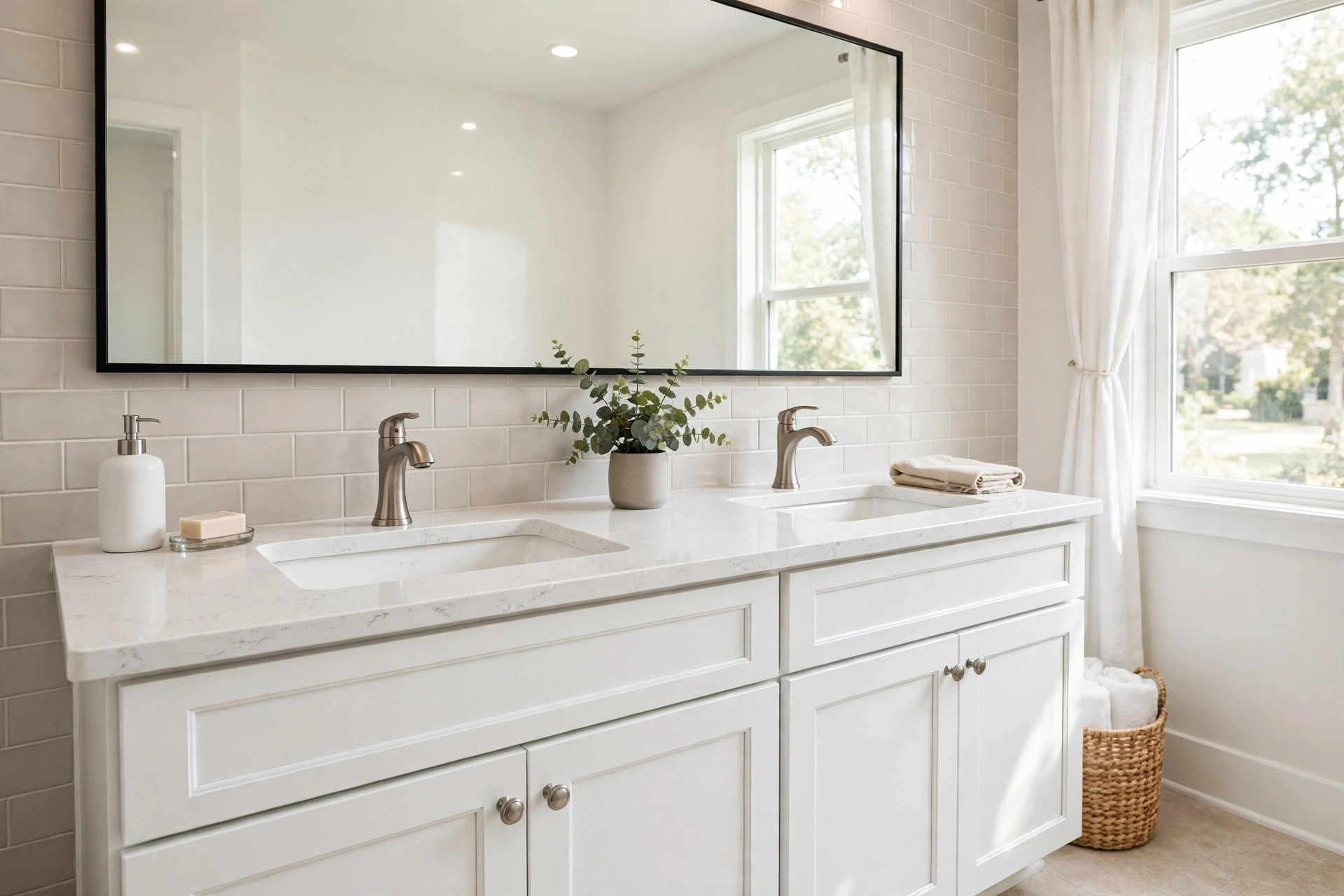

The bathroom sink vanities reviews buying guide USA readers need is a simple one. Too many shoppers buy the first pretty cabinet they see in a store. Then they find out the drawers stick, the top stains, or the size is wrong for the room. A vanity is the hardest working piece of furniture in most bathrooms. It holds the sink, hides the pipes, stores the towels, and sets the look of the whole room. Choose it with care and it will serve you for twenty years. This guide covers the reviews, the types, the sizes, the materials, the prices, and the upkeep. By the end you will know exactly what to look for when you shop.
Why the Vanity Matters So Much
The sink vanity is the center of the bathroom. It is the first thing your eye finds when you walk in. It also takes more daily punishment than any other fixture. Water splashes on it every day. Steam rises around it every morning. Wet hands touch the doors and handles a dozen times a day. A cheap piece will show the damage in a year. The finish will peel near the sink. The doors will swell from damp air. The hinges will rust. A good one, built the right way, stands up to all of this and keeps its looks. That is why reviews matter more here than for almost any other bathroom purchase. Owners who have lived with a vanity for two or three years will tell you the truth about it. Read those long-term notes before you trust the showroom shine.
What to Look For: How to Choose: Bathroom Sink Vanities Reviews Buying Guide Usa
Start with the room, not the catalog. Measure the wall where the vanity will sit. Write down the width, the depth you can allow, and the height that feels right. Standard vanities are about 21 inches deep and 30 to 34 inches high. Small powder rooms may only take a 24-inch-wide unit. A shared family bath may have room for 60 inches or even 72. Keep four inches of clearance on each side if you can. Doors and drawers need room to open.
Next, look at the plumbing. The drain and water lines are fixed in the wall or the floor. Open-back or split-back cabinets give the plumber room to work. If you are moving pipes, plan that cost before you fall in love with a vanity.
Then check the cabinet build. Solid wood frames are the gold standard. Plywood boxes are very good and resist moisture well. Medium-density fiberboard is common in lower-priced units. It can look fine at first, but it swells badly if water gets into it. Soft-close hinges and drawer slides are worth the extra money. They stop the slamming that shakes a bathroom at six in the morning.
Look at the finish. Painted finishes should be smooth with no orange-peel texture. Stained wood should show even color on all sides. Run your finger along the bottom edge of the cabinet, where mopping water hits. Good makers seal this edge.
The sink and top deserve the same attention. Undermount sinks look clean and are easy to wipe down, since there is no lip to trap grime. Top-mount or drop-in sinks cost less and are simple to replace. Vessel sinks sit on top of the counter and make a style statement, but they add height and can splash more. Porcelain and vitreous china are the classic sink materials. They resist stains and clean easily. Cast iron sinks with enamel are heavy but nearly indestructible. Solid-surface tops look like stone and have no seams. Natural stone tops like granite or marble are beautiful, but marble stains and needs sealing.
Do not forget the faucet holes. Vanities come with tops drilled for specific faucet spreads: single hole, 4-inch centerset, or 8-inch widespread. Match the top to the faucet you want. Mismatched holes are an expensive mistake. Faucet makers list the required hole spacing on every product page, so check before you order.
Types of Bathroom Sink Vanities
Freestanding Vanities
These are the most common type. They sit on the floor with legs or a solid base. They come in every width from 18 to 72 inches. Freestanding units are easy to install and easy to replace later. If you ever remodel again, the plumber can work around them without tearing up the floor. They also give a solid, furniture-like look that suits most homes. For a single sink, 30 to 48 inches is the usual range. For a couple who shares a bath, a 60-inch double unit ends each morning argument over sink time. Many shoppers browse fixture lines from Kohler and Moen while planning the full bath. Our guide to double sink vanities covers that layout in detail.
Wall-Mounted or Floating Vanities
These bolt to the wall and hang above the floor. The open space under them makes a small bathroom feel larger, and mopping becomes easy. A floating vanity must be anchored into studs or solid blocking. Drywall alone will not hold it.
Corner Vanities
A corner vanity tucks into a small or oddly shaped bathroom. Most are 24 to 36 inches wide and hold a single sink. Measure the corner angle of your room. Most are square, but older houses can surprise you.
Vessel and Console Styles
A vessel vanity pairs a cabinet or console base with a bowl sink that sits on top. It looks striking and gives the bathroom a spa feel. The trade-off is practical. The bowl adds six or more inches of height, so shorter family members may struggle. Console vanities are open-legged tables with a sink set in. They suit period homes but offer almost no hidden storage. Both styles work best in a guest or powder room where the sink sees light use.
Custom and Semi-Custom Units
If your space is unusual, a custom vanity is the answer. Cabinet shops build to your exact width, depth, and style. The price runs well above stock units, and the wait can be six to ten weeks. Semi-custom lines offer more sizes with shorter waits. Many shoppers start with big retailers such as Home Depot and Lowes to learn stock sizes and prices, then decide whether custom is worth it.
Reading Reviews the Smart Way
Reviews are the best tool in this bathroom sink vanities reviews buying guide USA shoppers can use, but only if you read them right. Start with the overall rating, then dig into the three-star reviews. Those owners are the most honest. They liked the product enough to keep it but were annoyed enough to write. Their complaints will tell you what daily life with the vanity is really like.
Pay special attention to reviews written a year or more after purchase. New reviews praise the look. Old reviews reveal the truth about durability.
Check what the reviews say about shipping. Large vanities are heavy and arrive by freight. Look for notes about damaged corners and missing hardware, and how the seller handled claims.
Independent test reports add another layer. The fixture tests published by American Standard and the design guides at This Old House give a solid picture of what holds up.
Trust the reviewers who name specifics: the exact width, the drawer depth, the finish after two winters.
Cost and Price: What to Expect
Vanity prices in the United States cover a wide range. A basic 24-inch stock unit with a cultured marble top can cost between 150 and 300 dollars. These work in rentals and quick flips, but do not expect fine joinery. The middle range, roughly 400 to 1,200 dollars, buys a 30 to 60-inch vanity with a plywood box, soft-close hardware, and a solid-surface or quartz top. This is where most homeowners should shop. The value is strong and the quality lasts.
High-end stock and semi-custom vanities run 1,500 to 4,000 dollars. You get furniture-grade finishes, dovetail drawers, and premium tops.
Add the hidden costs. A new faucet costs 80 to 400 dollars. A plumber may charge 200 to 600 dollars for the install, more if pipes must move. The mirror, lighting, and paint are often part of the same project. Plan the whole budget before you buy the cabinet. A 600-dollar vanity with a 500-dollar install and a 200-dollar faucet is really a 1,300-dollar project.
Sales follow the calendar. The big home-improvement holidays, Memorial Day, Labor Day, and Black Friday, bring real discounts on bath lines. Just inspect floor models closely for wear before you buy.
Care and Upkeep
A vanity lasts longest when water never sits on it. Wipe splashes off the counter and the cabinet front after use. It takes ten seconds and adds years of life. In a steamy bathroom, run the exhaust fan during every shower and for twenty minutes after. Moisture in the air is the slow killer of wood finishes.
Clean with mild soap and a soft cloth. Harsh cleaners and scouring pads dull the finish and can etch stone tops. Care guides from Bob Vila, The Spruce, and HGTV all stress the same point: standing water is the enemy of every finish. For natural stone, use a stone-safe cleaner and reseal the surface once a year. Check the seal by dropping a little water on the stone. If it beads up, the seal is fine. If it soaks in and darkens the stone, it is time to reseal.
Tighten handles and hinges once a year. Check the caulk line where the top meets the wall. If it cracks, scrape it out and lay a fresh bead of bathroom caulk.
Keep cleaning products inside the cabinet in a tray, not loose. A leaking bottle of drain cleaner will ruin a cabinet floor fast. If the inside of the cabinet feels damp, look for a slow leak at the drain or supply lines. Catch it early and the fix is a washer. Catch it late and you are buying a new cabinet.
Safety
Bathrooms are wet, and wet means slips and shocks. Anchor every tall vanity or linen tower to the wall. A child climbing an open drawer can tip a freestanding cabinet. Use the anti-tip hardware that comes in the box. It takes five minutes to install.
Keep electricity away from water. Outlets near the sink must be GFCI protected. They shut off power in a fraction of a second if current leaks. If your bathroom still has old two-prong outlets, have an electrician upgrade them before the new vanity goes in. Never rest a hair dryer or curling iron on the counter edge where it can fall into the sink.
Choose a top with a slight edge or backsplash. It stops water from running down the back of the cabinet. If anyone in the home has trouble standing, add a grab bar near the vanity. Faucet safety matters too. Set the water heater to 120 degrees to prevent scalds, and look for faucets with anti-scald features such as those described by Delta Faucet.
Frequently Asked Questions
What is the most popular bathroom vanity size? The 36-inch single-sink vanity is the best seller in American homes. It fits most standard bathrooms, gives decent counter space, and leaves room for storage. The 60-inch double is the favorite for shared master baths. Measure your own room first. Popular does not mean right for your space.
Are bathroom vanities hard to install? A basic replacement is a moderate job for a handy homeowner. You disconnect the water, remove the old unit, set the new one level, reconnect the plumbing, and caulk the edges. Moving pipes or wall-mounted units call for a professional.
How long should a bathroom vanity last? A well-built vanity lasts 15 to 25 years. Solid wood and plywood cabinets with good finishes reach the top of that range. Cheap fiberboard units in steamy bathrooms may fail in five to eight years. Care matters as much as build. Wiping water and running the fan add years to any cabinet.
Should the vanity match the other bathroom fixtures? It does not have to match exactly, but it should belong to the same family. Brushed nickel faucets sit well with chrome or nickel hardware on the cabinet. Mixing too many finishes, chrome, brass, black, and copper in one small room, looks busy. Pick two finishes at most and repeat them. If you are also updating the tub, our notes on freestanding soaking tubs may help you match styles.
Can I reuse my old sink and faucet with a new vanity? Sometimes. If the new top has the same faucet hole spacing and the sink cutout fits your old basin, reuse is possible. In practice, most people replace the top and sink with the cabinet. The old sink rarely matches the new style, and the gasket or seal is often worn. A fresh top also lets you pick a modern low-flow faucet that saves water. If you plan a full bathroom upgrade, also see our notes on heated floor kits.
A Final Word
This bathroom sink vanities reviews buying guide USA homeowners can trust comes down to a few plain rules. Measure twice. Read the long-term reviews, not just the new ones. Check the cabinet build and the finish with your own hands. Match the top to your faucet. Budget for the install, not just the cabinet. Do those five things and you will end up with a vanity that looks good on day one and still works well on day five thousand.
References
American Standard. (n.d.). Bathroom and kitchen products. https://www.americanstandard.com Bob Vila. (n.d.). Home improvement advice. https://www.bobvila.com Delta Faucet. (n.d.). Kitchen and bathroom faucets. https://www.deltafaucet.com HGTV. (n.d.). Home and garden ideas. https://www.hgtv.com Kohler. (n.d.). Bathroom and kitchen fixtures. https://www.kohler.com Lowe’s. (n.d.). Home improvement products. https://www.lowes.com Moen. (n.d.). Faucets and plumbing fixtures. https://www.moen.com The Home Depot. (n.d.). Home improvement products. https://www.homedepot.com The Spruce. (n.d.). Home and garden advice. https://www.thespruce.com This Old House. (n.d.). Home renovation guidance. https://www.thisoldhouse.com
Was this guide helpful?

About David Wilson
The My Garden US editorial team writes practical, in-depth home and garden guides for American homeowners — tested advice, no fluff.
You May Also Like

Rain Shower Heads Where to Buy USA: A Complete Guide
May 31, 2026 0 views
Bathroom Wall Tiles for American Homes: A Complete Guide
July 19, 2026 0 views
Freestanding Soaking Tubs: Reviews and Buying Guide for USA Homes
August 19, 2026 0 views