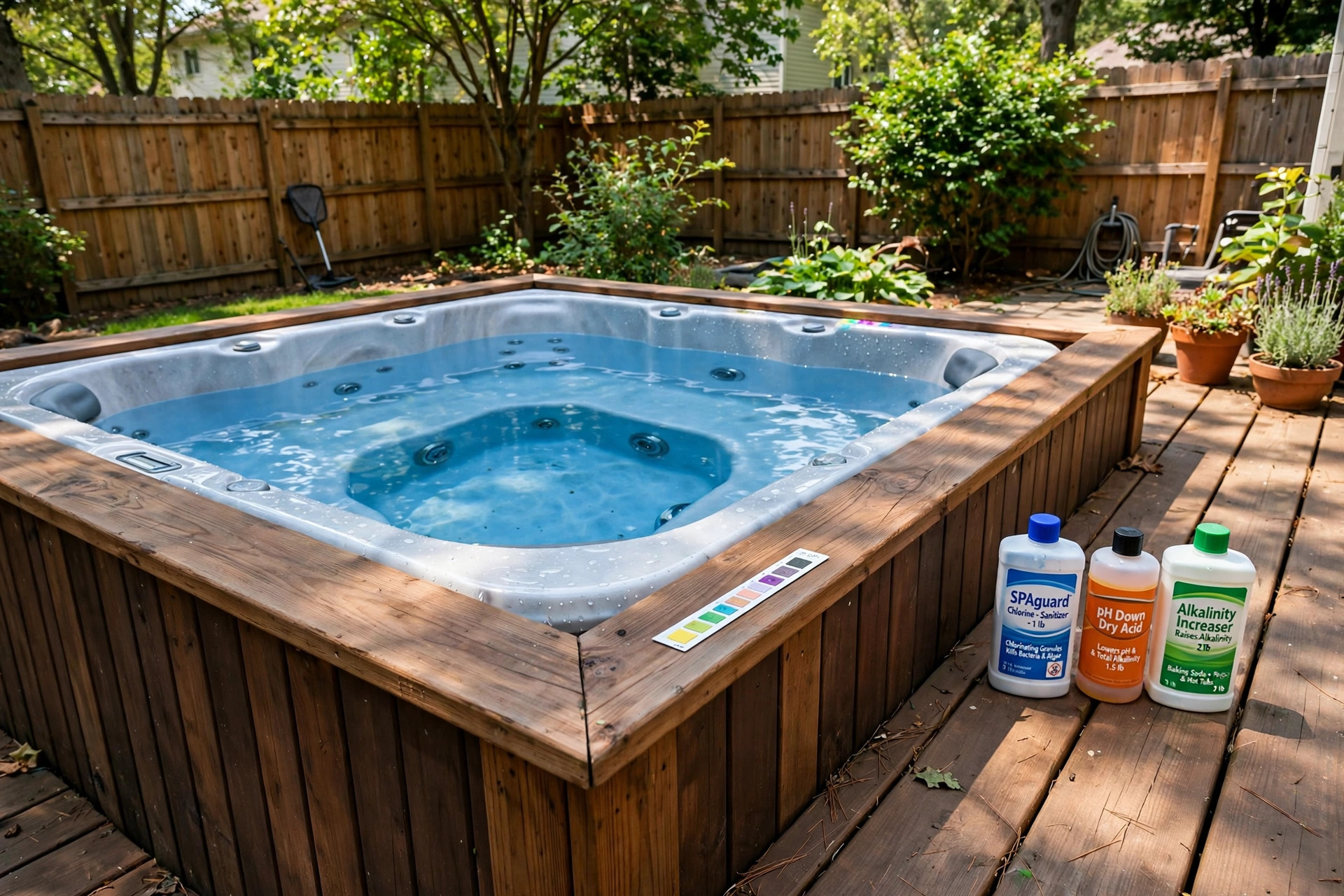

Learning how to balance hot tub ph levels is one of the most useful skills a spa owner can have. The pH of your water decides how well your sanitizer works. It decides how clear the water looks. It even decides how your skin feels after a soak. When pH drifts too high or too low, small problems turn into big ones fast. The good news is that balancing pH is not hard. It takes a few minutes, a test strip, and the right chemical. This guide walks you through the whole process in plain language. You will learn what pH means, what the ideal range is, how to test your water, and how to raise or lower pH safely.
Why pH Balance Matters in a Hot Tub
The pH scale runs from 0 to 14. A reading of 7 is neutral. Numbers below 7 are acidic. Numbers above 7 are alkaline. For hot tubs, the target range is 7.2 to 7.8. Staying inside this narrow band protects the tub, the water, and the people who use it.
When pH runs too low, the water turns acidic. Acidic water can eat away at metal parts. Heater elements, pump seals, and jets wear out sooner. Swimmers may notice stinging eyes and itchy skin. The water itself can look dull or cloudy.
When pH runs too high, the water becomes too alkaline. Sanitizers like chlorine and bromine lose much of their power. That means bacteria and algae can grow even when you think you have added enough sanitizer. High pH also causes scale. Scale is a white, crusty mineral deposit. It forms on the tub walls, the filter, and the heater. Scale makes equipment work harder and can clog small parts.
pH also affects total alkalinity, a related measure that keeps pH from bouncing up and down. You should test and fix alkalinity before you touch pH, because alkalinity acts like a shock absorber. Once alkalinity is in range, pH becomes much easier to hold steady. Retailers of spa supplies explain this two-step order in detail on their water care pages, such as Leslie’s Pool Supplies, and it is worth learning.
In short, balanced pH keeps water clear, equipment healthy, and soaks comfortable. It is the single most repeated chore in hot tub care, and it is worth doing right.
How to Test Your Hot Tub Water: How to Balance Hot Tub Ph Levels
You cannot balance what you do not measure. Testing is the first real step, and you have three common options.
Test Strips
Test strips are the easiest tool. Dip a strip in the water, wait the time shown on the bottle, and compare the colors. Most strips also read sanitizer, alkalinity, and hardness at the same time. Keep the bottle sealed and dry. Old or damp strips give false readings. For advice on choosing a dependable brand, read best pool test strips accurate reviews.
Liquid Drop Kits
Liquid kits use small bottles of reagent. You fill a vial with tub water, add drops, and match the color. These kits tend to be more accurate than strips, but they take a few minutes longer. They are a good choice for owners who want tighter control.
Digital Testers
Digital pH meters give a number on a screen. They are fast and precise, but they need regular calibration with buffer solution. Without calibration, they drift and mislead.
Test your water at least twice a week. Test more often when the tub gets heavy use, after rain, or after you add water. Write down your readings in a small notebook or a phone note. A short log shows patterns. You will start to see when your pH creeps up and when it stays put. Guides from Swim University walk through testing routines for beginners and are a helpful place to review the basics.
What Raises and Lowers pH in a Hot Tub
Before you add anything, it helps to know what moves pH around. Many everyday things push pH up or down.
Body oils, lotions, sweat, and hair products tend to raise pH over time. This is one reason heavy-use days end with higher readings. Splashing and aeration from jets also raise pH. Bubbles drive carbon dioxide out of the water, and that shifts pH upward. This effect is stronger in hot water than in cold water.
Source water matters too. Some city water arrives slightly acidic. Some well water arrives slightly alkaline and very hard. If your fill water starts outside the ideal range, you will fight it until you correct it.
Sanitizers play a role as well. Chlorine tends to lower pH. Bromine is closer to neutral. Non-chlorine shock products usually lower pH. When you learn how to lower pool ph levels safely, you will see the same forces at work, because pool and spa chemistry follow the same rules on a smaller volume of water.
Total alkalinity should sit between 80 and 120 parts per million in most hot tubs. If alkalinity is too low, pH will swing wildly after every small addition. If alkalinity is too high, pH gets locked high and resists correction. Fix alkalinity first. Then turn to pH.
How to Raise Low pH in a Hot Tub
If your test shows pH below 7.2, you need to raise it. The product to use is called a pH increaser, also sold as pH up or sodium carbonate. In a pinch, plain baking soda also raises pH, though dedicated products are easier to dose.
Follow these steps:
1. Turn the jets on. Moving water mixes the chemical faster and more evenly. 2. Read the product label. Doses are usually given per 100 gallons. A typical hot tub holds 300 to 500 gallons. Do the math for your tub. 3. Add only half the dose you think you need. It is easy to overshoot. You can always add more. 4. Scatter the granules across the surface of the water. Do not dump them in one spot. 5. Keep the jets running for 20 to 30 minutes. 6. Wait at least an hour, then test again.
Repeat with smaller doses until pH lands between 7.2 and 7.8. Patience matters here. Small, repeated additions beat one large guess. Equipment makers like Hot Spring and Bullfrog Spas both stress slow, measured dosing in their water care guides, and it is advice worth following.
A starter set that includes pH up, pH down, test strips, and sanitizer makes this routine simpler. Our look at the best hot tub chemicals starter kit lists kits that give you everything in one box.
How to Lower High pH in a Hot Tub
If your test shows pH above 7.8, you need to lower it. The product to use is called a pH decreaser, also sold as pH down or sodium bisulfate. Muriatic acid also lowers pH, but it is a strong acid and needs careful handling. Most home spa owners are better served by the dry granular product.
Follow these steps:
1. Test and correct total alkalinity first. High pH often comes with high alkalinity. Lowering alkalinity usually drags pH down with it. 2. Turn the jets on to mix the water. 3. Read the label and calculate the dose for your tub size. 4. Add half the dose across the water surface. 5. Run the jets for 20 to 30 minutes. 6. Wait at least an hour, then retest.
High pH is the more common problem in hot tubs. Aeration from jets, sweat, and lotions all push pH upward day after day. Do not be surprised if you lower pH often. That is normal spa ownership. Guides from Pool Warehouse and The Spruce both note that weekly correction is typical for heavily used tubs.
Common Mistakes to Avoid
New spa owners make a handful of errors again and again. Avoid these and your water care gets much easier.
Adding chemicals at the same time. Never mix dry chemicals together, and never add different products minutes apart without checking the labels. Some combinations can damage the tub or create fumes. Space additions out and retest between them.
Guessing the dose. Eyeballing chemicals is how owners end up bouncing from low pH to high pH and back. Weigh or measure each dose. Know your tub’s gallon capacity. Write it on the inside of the chemical storage cabinet.
Testing right after adding. Chemicals need time to mix. Testing five minutes after a dose gives a false reading and leads to a second, unnecessary dose. Wait at least an hour, and never run two full corrections in one evening.
Ignoring alkalinity. Trying to fix pH while alkalinity sits outside its range is like tuning a radio with a broken dial. Get alkalinity to 80 to 120 parts per million first. Then pH almost fixes itself.
Using pool-only products without checking labels. Some pool products are too strong for the small water volume of a spa. Always choose products labeled for spas and hot tubs. Home Depot and Lowe’s carry spa-specific lines that take the guesswork out.
Cost of Balancing Hot Tub pH
Keeping pH in range is one of the cheaper parts of hot tub ownership. Here is what to expect.
Test strips cost a few dollars per bottle and last for dozens of tests. Liquid kits cost more up front but run cheaper per test. A digital meter costs the most at the start and needs buffer solution over time.
A bottle of pH increaser or pH decreaser lasts many months for an average household tub. Most owners spend under one hundred dollars a year on pH control products alone. The full chemical budget, including sanitizer, shock, alkalinity adjusters, and filter cleaner, runs higher, but pH products are only a small slice.
The real cost of ignoring pH is far greater. A replacement heater can run several hundred dollars. Pump seals, jet damage, and stained shells add up. Scale buildup shortens filter life. Compared with those repairs, a bottle of pH down is pocket change.
Care and Upkeep: A Weekly Routine
A simple weekly routine keeps pH steady with little effort.
– Test pH, sanitizer, and alkalinity twice a week. – Adjust alkalinity first if it is out of range. – Raise or lower pH in small doses, waiting an hour between test and retest. – Rinse the filter every week and deep clean it monthly. Dirty filters trap organic matter that feeds bacteria and skews readings. – Drain and refill the tub every three to four months. Over time, dissolved solids build up and make balancing harder. Fresh water resets the chemistry. – Keep a log of test results and doses. Patterns in the log tell you when the tub needs attention before the water looks bad.
Cover the tub when it is not in use. A cover keeps out debris, slows heat loss, and reduces chemical use. It also keeps rain from diluting or contaminating the water.
When refilling, test the source water before it goes in. If your tap water runs hard and alkaline, you may want a pre-filter on the garden hose. Pre-filters remove some minerals and make the first balancing round much easier.
Safety Tips for Handling Hot Tub Chemicals
Hot tub chemicals are safe when handled with care, but they deserve respect. The U.S. Consumer Product Safety Commission offers general guidance on pool and spa chemical safety that every owner should read.
Store chemicals in a cool, dry place away from children and pets. Keep them off the floor of a damp shed if you can. Keep each product in its original container with its label intact. Never reuse food containers for chemicals.
Wear gloves and eye protection when measuring dry granules. Work outdoors or in a well-ventilated space. Never mix two chemicals together in a bucket or add them to the tub at the same time unless the label says to.
Add chemicals to water, never water to concentrated chemicals. Keep the tub cover open while chemicals mix so gases can escape. Wait the time stated on the label before anyone soaks, usually at least 30 minutes to an hour.
Keep a basic first aid note near your chemical storage: what to do if granules touch skin or eyes, and the poison control number. You will likely never need it, but a prepared owner is a safe owner.
FAQ
What is the ideal pH range for a hot tub?
The ideal range is 7.2 to 7.8. This band keeps sanitizer working well, protects equipment from corrosion and scale, and feels comfortable on skin and eyes.
How often should I test pH in my hot tub?
Test at least twice a week. Test after heavy use, after rainstorms, and after topping off water. More frequent testing is better than less.
Why does my hot tub pH keep rising?
Aeration is the most common cause. Jets drive carbon dioxide out of the water, which raises pH. Sweat, lotions, and body oils also push pH upward. Weekly correction with pH decreaser is normal.
Can I use baking soda to raise hot tub pH?
Yes. Baking soda raises both alkalinity and pH. It works well when both are low. If only pH is low and alkalinity is fine, a dedicated pH increaser gives you more precise control.
Can I use vinegar to lower hot tub pH?
Vinegar is not recommended. It is too weak to correct pH reliably in a hot tub, and it can leave odors. Use a proper pH decreaser made for spas.
How long after adjusting pH can I use the hot tub?
Wait at least 30 minutes to an hour after the jets have mixed the chemical. Retest before soaking to confirm the water is in range. When in doubt, wait longer.
A Short Final Word
Balancing hot tub pH is a small habit with a large payoff. Test twice a week. Fix alkalinity first. Add chemicals in small, measured doses. Give them time to work before you test again. Follow these plain rules and your water will stay clear, your equipment will last longer, and every soak will feel better. The chemistry is simple once it becomes routine, and routine is all it takes.
References
Bullfrog Spas. (n.d.). Hot tubs and spas. https://www.bullfrogspas.com Hot Spring Spas. (n.d.). Hot tubs and spas. https://www.hotspring.com Leslie’s Pool Supplies. (n.d.). Pool supplies and equipment. https://www.lesliespool.com Lowe’s. (n.d.). Home improvement products. https://www.lowes.com Pool Warehouse. (n.d.). Pool equipment and supplies. https://www.poolwarehouse.com Swim University. (n.d.). Pool and hot tub care guides. https://www.swimuniversity.com The Home Depot. (n.d.). Home improvement products. https://www.homedepot.com The Spruce. (n.d.). Home and garden advice. https://www.thespruce.com U.S. Consumer Product Safety Commission. (n.d.). Product safety information. https://www.cpsc.gov
Was this guide helpful?

About James Carter
The My Garden US editorial team writes practical, in-depth home and garden guides for American homeowners — tested advice, no fluff.
You May Also Like

How to Test Pool Water Without Kit: Simple Ways to Read Your Pool
May 2, 2026 0 views
Inground Pool Resurfacing Cost Texas: What Homeowners Should Know
April 9, 2026 0 views
Best Hot Tub for Couples Retreat: A Complete Buying Guide
September 20, 2026 0 views