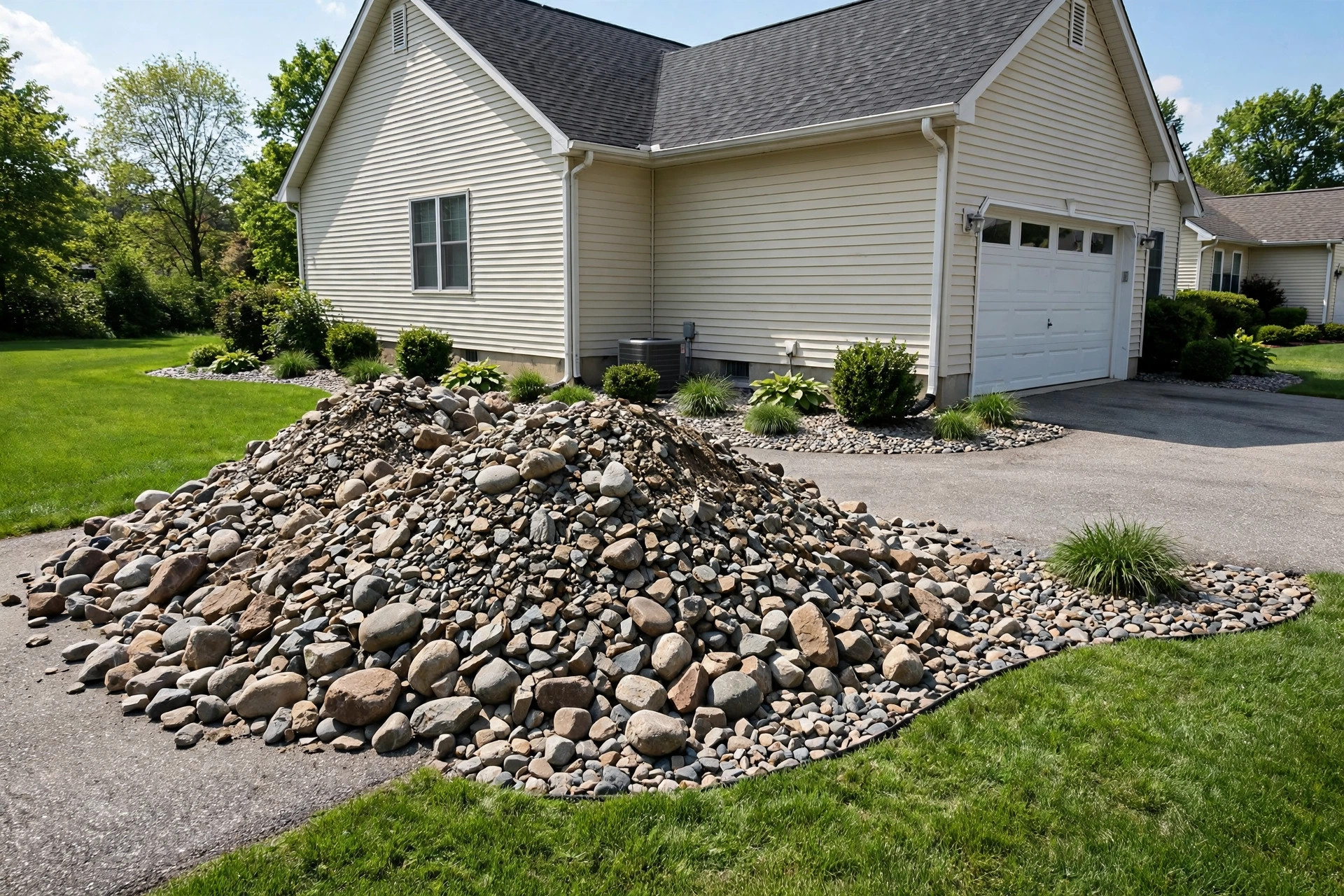

If you are searching for cheap landscape rock delivery near me, you want two things at once. You want a low price on the rock itself, and a fair price to get it dropped at your curb. This guide walks you through both: the common rock types, what a fair price looks like, how bulk delivery works, and how to keep costs down.
Why Delivery Often Costs More Than the Rock
Many homeowners make the same mistake. They compare the price per ton at three yards and pick the lowest one. Then the delivery truck arrives and the bill jumps. Delivery can add 30 to 60 percent to the cost of a small load. On a half-ton load, the delivery fee can be more than the rock itself.
Stone yards and quarries price delivery by the mile and by the load size. A truck that carries five tons costs nearly the same to run as a truck that carries one ton. That is why buying more rock at once often lowers the price per ton. If you plan your order well, delivery becomes a small part of the total bill instead of the biggest part.
Types of Landscape Rock and What They Cost: Cheap Landscape Rock Delivery near Me
Not all rock is priced the same. Knowing the common types helps you ask for the right product and avoid overpaying for a name.
River Rock
River rock is smooth, round stone shaped by water. It comes in sizes from small pea gravel up to large cobbles. It is popular around downspouts, in dry creek beds, and as ground cover that does not blow away. Larger, well-sorted stone costs more.
Pea Gravel
Pea gravel is small, rounded stone about the size of a pea. It is used for walkways, patios, dog runs, and play areas. It is one of the cheaper options and spreads easily. It shifts underfoot, so it is not the best choice for sloped areas.
Crushed Stone
Crushed stone is angular rock broken into sharp-edged pieces. Common sizes include three-quarter inch and one inch. Because the pieces lock together, it packs firm. It works well for driveways, shed bases, and walkway foundations, and is usually priced near the low end.
Lava Rock
Lava rock is light, porous, and reddish or black. It is sold in bags at garden centers more often than in bulk. In bulk it can be affordable. It does not fade, and it is light enough to carry in buckets. It can break down over time and is sharp to handle.
Decomposed Granite
Decomposed granite is fine, sandy rock that packs into a firm surface. It is popular for paths and patios in dry climates. It is often priced by the cubic yard and is cheap in regions near granite quarries.
Prices change by region. Rock is cheapest near the quarry that produces it. In Texas and the South, crushed limestone is cheap. In the Southeast, river rock is common and priced well. Always ask the yard what is local. Local rock is almost always the cheap option.
How Bulk Delivery Works
Most stone yards sell by the ton or by the cubic yard. A cubic yard of rock weighs about 1.3 to 1.7 tons, depending on the type. Loose rock weighs less per yard than wet, packed rock.
Here is how a typical order goes. You call or visit the yard. You tell them how many tons you need and where it should go. They quote a price per ton plus a delivery fee. The driver arrives with a dump truck or a smaller trailer and dumps the load where you ask. Some yards offer a slinger truck that can place rock exactly in a bed, but that service costs extra.
Ask these questions before you order:
– What is the price per ton, and is there a minimum order? – What is the delivery fee to my address? – What size truck will arrive, and can it get down my driveway? – Is the rock clean, or does it carry dirt and fines? – Can the driver dump in two spots for one fee?
A minimum order of one to two tons is common. Some yards charge a flat short-load fee under a certain weight. That fee is what turns cheap landscape rock delivery near me into an expensive errand if you order too little.
What a Fair Price Looks Like
Hard numbers are tricky because prices move with fuel costs and distance. Still, there are useful ranges. Common crushed stone and basic gravel often sell for 25 to 55 dollars per ton at the yard in many parts of the country. River rock and decorative stone often run 45 to 120 dollars per ton, depending on size and color. Delivery fees for a local trip often run 50 to 150 dollars, though long hauls cost more.
Watch out for the bag trap. A forty-pound bag at a home center can cost as much per pound as a whole ton bought in bulk costs per hundred pounds. If you need more than a few bags, bulk delivery is almost always cheaper. Do the math. One ton is about fifty forty-pound bags. Even a small flower bed can take a full ton.
How to Measure What You Need
Ordering the right amount is the fastest way to save money. Too little, and you pay a second delivery fee. Too much, and you paid for rock that sits in a pile.
Use this simple method. Measure the area in feet: length times width. Decide on depth. Two to three inches is standard for ground cover. Four inches is better under a downspout or in a wash area. Then apply this rough guide:
– One ton of rock covers about 80 to 100 square feet at two inches deep. – One ton covers about 50 to 65 square feet at three inches deep.
Round up a little. It is cheaper to have a half-ton extra on the same delivery than to order a second load later.
Ways to Cut the Delivery Cost
There are several honest ways to bring the total down.
Buy a full load. Ask the yard what a full truck carries. If it carries five tons, five tons at once beats two loads of two and a half tons.
Share an order with a neighbor. Two homes on the same street can split one delivery. Ask for two dumps. Many drivers will do it for a small extra fee.
Pick up yourself if you have a trailer. A half-ton pickup can carry about a half ton of rock safely. A small utility trailer can carry more. The yard will load you with a loader. This only saves money if the trip is short and your truck can handle the weight. Check your truck’s payload rating first.
Ask about seconds and mixed loads. Some yards sell leftover or mixed stone at a discount. The color may not match perfectly, but for a back bed or a drainage area, it works fine.
Compare total price, not price per ton. Get the delivered price to your door from at least three suppliers. A yard ten miles farther away can still win if its delivery fee is lower.
Preparing the Site Before the Truck Arrives
A little preparation saves time and money. Clear the area of old mulch, weeds, and debris. Mark where the dump should go with cones or stakes. Make sure the path is clear of cars, low branches, and soft ground. A loaded truck is heavy, and soft, wet ground can leave ruts.
If the truck cannot reach the bed, you will move the rock by wheelbarrow. That is fine for a ton or two, but it is real work. Plan the dump spot as close to the final bed as the truck can safely get. For help designing the bed itself, see rock garden ideas for front yard for layouts that keep rock where you want it.
If you are mixing rock with mulch areas, read up on best mulch for flower beds bulk delivery so one delivery day can cover both materials. Some yards sell both rock and mulch, which lets you combine the trip.
Caring for Rock After It Is Down
Rock needs less care than mulch, which is one reason people switch. It does not rot or blow away. Still, a little care keeps it looking good for years.
Leaves and debris collect in rock beds. A leaf blower clears them fast. Set the blower low so it does not scatter the stone. Once a year, rinse dusty rock with a garden hose. This brings back the color.
Weeds can still grow in rock. A layer of landscape fabric underneath cuts them down, but no fabric stops them all. Pull small weeds by hand before they root deep. Keep the bed edged. A clean edge stops rock from wandering into the lawn and keeps mower blades safe.
Safety Around a Rock Delivery
Rock is heavy and a delivery truck is big. A few simple steps keep everyone safe.
Keep children and pets inside while the truck dumps. A dump bed swings up fast and the driver has blind spots. Let the driver know about septic tanks, soft spots, and buried lines before the truck enters. Call 811 before you dig or grade if the work goes beyond a simple surface bed.
Handle the rock with care. Even small stone is hard on the back. Use a wheelbarrow, not buckets, for moving loads. Wear gloves. Crushed stone has sharp edges that cut skin.
Check local rules. Some towns limit truck weight on residential streets. Some homeowner groups require approval for landscape changes. A quick call to the town office avoids a fine.
Cost and Price: Putting It All Together
Let us walk through a real example. Say you want to rock a bed that is 200 square feet at three inches deep. You need about three to four tons. At 40 dollars a ton, the rock costs 120 to 160 dollars. Add a delivery fee of 75 dollars. The total is about 200 to 235 dollars.
Now compare bags. Three tons is about 150 forty-pound bags. At 5 dollars a bag, that is 750 dollars, plus your time and fuel to haul them. Bulk delivery is not just cheaper. It is not close.
Bigger jobs tilt the math even further. A gravel driveway installation cost usa project can run 20 tons or more. At that size, the delivery fee per ton drops to a few dollars. The yard may even waive it for a large order. Always ask. The worst they can say is no.
Common Mistakes to Avoid
Ordering by the yard when the yard sells by the ton. A yard of wet rock weighs more than a yard of dry rock. If you need a set volume, confirm how the yard measures.
Skipping the fabric. Without fabric, soil mixes into the rock over a few seasons. The bed sinks and weeds rise. Fabric is cheap insurance.
Choosing rock too small for the spot. Pea gravel washes off slopes in hard rain. Use larger stone or a different material where water runs fast.
Dumping on the lawn. A ton of rock dumped on grass kills the grass and makes cleanup hard. Lay a tarp first or dump on the driveway.
Forgetting the edging. Rock migrates. Without edging, you will be raking it out of the lawn every spring.
Frequently Asked Questions
How much does landscape rock delivery cost?
Rock itself often runs 25 to 120 dollars per ton depending on the type. Delivery often adds 50 to 150 dollars for a local trip. The total depends on your distance from the yard and the size of the load. Get three delivered quotes and compare the final number, not just the price per ton.
What is the cheapest landscape rock to buy in bulk?
Plain crushed stone and basic gravel are usually the cheapest. Prices are lowest on rock quarried near you. Ask the yard which product is local. Local rock costs less because the haul to the yard is short.
How many tons of rock do I need?
One ton covers about 80 to 100 square feet at two inches deep, or about 50 to 65 square feet at three inches deep. Measure your length times width, pick a depth, and round up a little. A small extra amount on the first load is cheaper than a second delivery.
Can I get landscape rock delivered to my backyard?
Yes, if the truck can reach it. A full dump truck needs a wide, firm path. Smaller yards use trailers or small dumps that fit down driveways. Walk the path with the yard or driver first and point out soft ground, gates, and buried lines.
Is bulk rock cheaper than bagged rock?
Almost always. One ton equals about fifty forty-pound bags. Bulk rock often costs a third or less per pound than bagged rock from a home center. If you need more than a few bags, order in bulk.
Does cheap landscape rock look good?
Yes, if you pick the right type for the job. Crushed stone looks clean in a modern bed. River rock looks natural around water features. What matters most is a level bed, clean edges, and one consistent stone type per bed. Mixing three colors in one bed is what makes cheap rock look cheap.
A Short Final Word
Finding cheap landscape rock delivery near me comes down to three habits. Buy in bulk, measure before you order, and compare the full delivered price. The rock itself is only half the bill. Plan the load, prep the site, and one truck visit can finish a job that would take weeks of bag hauling.
For more on equipment brands that make yard work easier, the manufacturer sites below carry product lines for mowing and grounds care, and independent reviews can help you compare before you buy.
References
Toro. (n.d.). Lawn mowers and outdoor power equipment. https://www.toro.com Deere. (n.d.). Lawn care and grounds equipment. https://www.deere.com Consumer Reports. (n.d.). Product reviews and buying guides. https://www.consumerreports.org
Was this guide helpful?

About Michael Thompson
The My Garden US editorial team writes practical, in-depth home and garden guides for American homeowners — tested advice, no fluff.
You May Also Like
Sprinkler Head Replacement Cost Estimate USA: What to Expect
August 11, 2026 0 views
The Best Electric Lawn Mower for Seniors: A Practical Guide for Older Homeowners
March 10, 2026 1 views
The Best Push Mower for Thick Grass: How to Choose One That Cuts Clean
May 5, 2026 0 views