
Many people want to grow their own vegetables and flowers, but the cost of store-bought garden beds stops them cold. A wooden bed from a home store can cost a hundred dollars or more. Yet learning how to build raised garden bed cheap is easier than most people think. With scrap lumber, a few simple tools, and a free afternoon, you can build a sturdy bed for a fraction of the store price. This guide walks through the whole job in plain terms: what wood to use, how to cut it, how to put it together, and how to fill it with good soil.
Why a Raised Bed Matters
A raised bed is a simple frame of wood or stone that holds soil above the level of the ground. Gardeners have used them for a long time, and for good reason. The soil inside a raised bed warms up earlier in spring, drains better after rain, and stays loose instead of turning hard. You do not have to bend so far to weed or pick. You can walk around the bed instead of stepping on the soil, which keeps it soft for roots.
There is another gain that matters most to a family on a budget. When you build the bed yourself, you control the cost. A store kit looks nice, but the same bed can be built from reclaimed wood for almost nothing. The money you save goes into what really feeds the plants: good soil and compost.
What You Need Before You Start: How to Build Raised Garden Bed Cheap
You do not need a workshop full of tools. The job takes a short list.
Tools: a handsaw or circular saw, a drill with a bit, a measuring tape, a square or a simple corner bracket, and a pencil. A level helps but is not a must.
Materials: boards or lumber, screws or bolts, and a liner if you wish. Most beds are built from 2-inch-thick lumber because it holds soil well and lasts for years.
Soil: a mix of topsoil, compost, and something light such as peat moss or coconut coir. Compost is the heart of it. A raised bed lives or dies on the quality of the soil inside.
Before you buy anything, look around. Check the back of hardware stores for damaged boards, ask at construction sites for cutoffs, and watch your local listings for free lumber. Old fence boards, deck boards, and shipping pallets can all be reused if they are sound. This habit of scouting is the heart of how to build raised garden bed cheap.
How to Build Raised Garden Bed Cheap: The Basic Plan
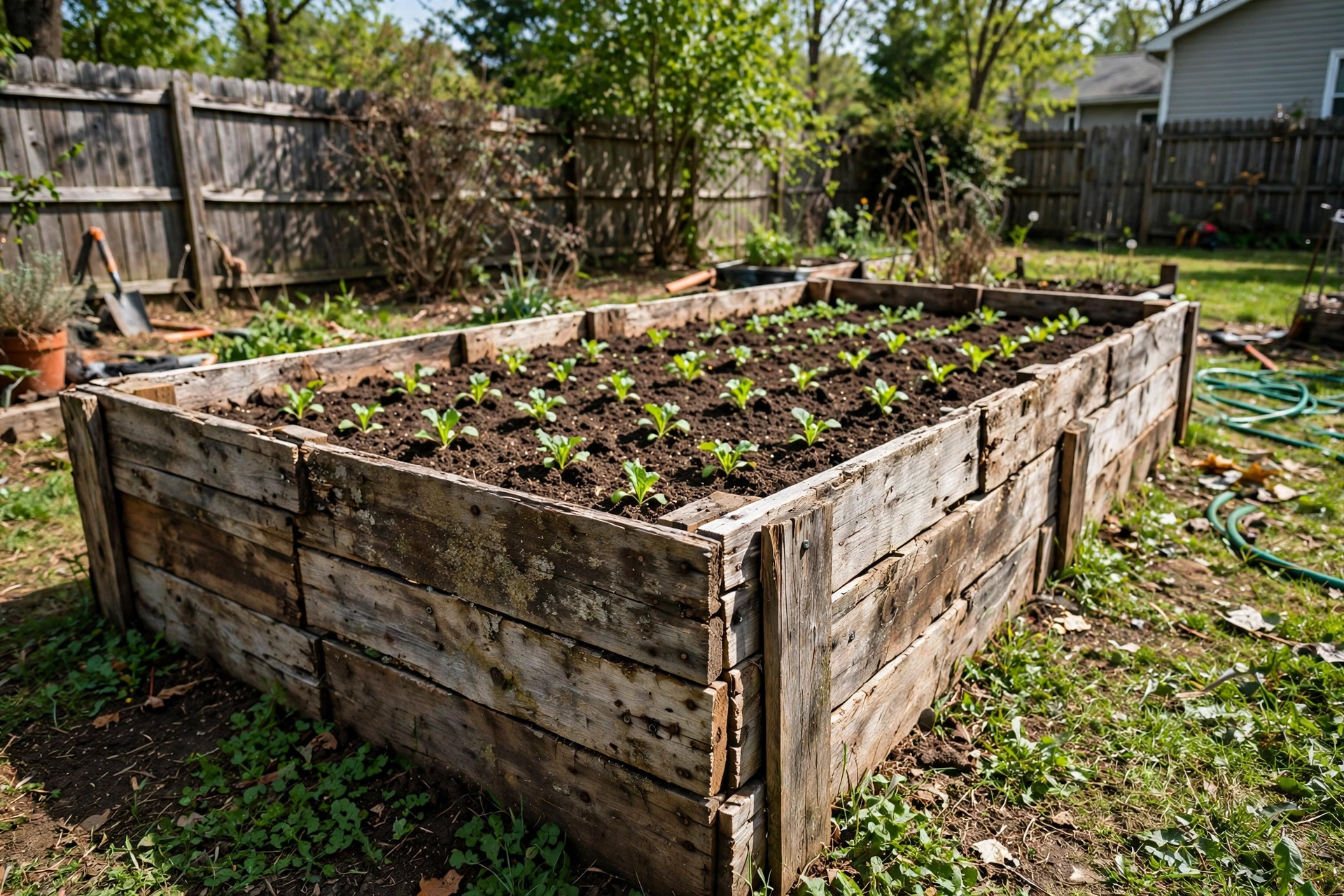
A bed that is four feet wide and eight feet long works well for most yards. Four feet is wide enough to hold plenty of plants yet narrow enough to reach the middle from either side without stepping into the bed. Six to twelve inches of depth suits most vegetables. Root crops such as carrots and parsnips like a full twelve inches.
Step 1: Pick the Spot
Walk your yard in the morning and again in the afternoon. Most vegetables need six to eight hours of direct sun. Avoid low spots where water stands after rain. Leave room on all sides to walk with a wheelbarrow, and keep the bed close to a hose or rain barrel. Watering by hand gets old fast, so a short walk to water matters.
Step 2: Choose Your Wood
The cheapest good choice is untreated pine or fir lumber. It rots sooner than cedar, but it costs a fraction of the price, and a pine bed still lasts three to five years. If you find used boards, check them for soundness. Press a screwdriver into the wood. If it sinks in easily, the board is too far gone. Avoid boards painted with old paint that may carry lead, and avoid railroad ties and wood soaked in creosote, which can harm soil and plants.
Many gardeners worry about pressure-treated lumber. The modern kind, marked for ground contact, is far safer than the old type that used arsenic. Still, if you want to stay fully natural, stick with untreated wood or line the inside of treated boards with heavy plastic sheeting.
Step 3: Cut and Assemble
Measure and mark your boards. For a four-by-eight bed you need two boards eight feet long and two boards cut to four feet minus the thickness of the two long boards, so the frame closes square. A common corner trick is to screw a short two-by-two stake inside each corner, then drive the long screws through the boards into the stake. Pre-drill each hole so the wood does not split.
If the bed is more than twelve inches deep, or if you stack two boards high, add a mid-span brace on the long sides. Soil is heavy when wet, and a long side can bow outward. A simple stake driven into the ground and screwed to the board stops the bulge.
Step 4: Prepare the Ground
Set the frame where you want it and check that it sits fairly level. Shovel off the grass or weeds inside the frame. You do not need to dig deep. A layer of cardboard laid flat on the ground kills the grass beneath and breaks down into the soil. This trick is called sheet mulching, and it saves the hard work of digging out sod.
Some gardeners staple hardware cloth to the bottom of the frame to keep out moles and voles. It costs a few dollars and is worth it in country yards where tunneling pests are common.
Step 5: Fill It With Soil
Fill the bed with a simple mix: about sixty percent topsoil, thirty percent compost, and ten percent aeration material such as perlite, coarse sand, or shredded bark. Bagged raised-bed mix works well but is the priciest part of the job. To cut the cost, haul bulk compost from your town yard-waste site, which is often free or cheap. Mix everything with a rake, water it well, and let it settle for a day or two before planting.
Types of Cheap Raised Beds
Not every bed has to be a wood rectangle. Several low-cost forms work just as well.
Scrap-lumber bed. The classic. Any straight boards of the same thickness work. Ugly boards are fine; paint or stain the outside later if you care how it looks.
Pallet bed. Take apart two clean pallets for the boards. Heat-treated pallets, marked with the letters HT, are safe to use. Avoid pallets marked MB, which means they were treated with a chemical fumigant.
Cinder-block bed. Used blocks from a demolition site stack into a solid bed in minutes. The holes in the blocks can hold small herbs. Blocks last nearly forever, but they are heavy to move, so set the bed where you want it to stay.
Mounded bed. No frame at all. Mound soil into a long ridge a few feet wide. It is the cheapest bed of all and works well on sloped ground. The edges erode over time, so this suits a bed you plan to rebuild each spring.
Cost and Price: What You Will Spend
Here is what a typical four-by-eight bed costs when you build it cheap. New lumber and screws from a hardware store run about forty to sixty dollars. Reclaimed lumber brings that down to ten to twenty dollars, mostly screws and gas for the pickup. Soil is the largest cost. Bagged mix for a full twelve-inch bed can cost sixty to ninety dollars, while bulk compost and topsoil from a local yard often come in under thirty dollars.
Put another way, a full bed can be built and filled for under fifty dollars with a little scouting, and for under a hundred even if you buy everything new. Compare that with a store kit, which often costs one hundred and fifty dollars or more before soil. Over a few seasons, the savings pay for the whole project many times over in fresh produce.
Care and Upkeep
A cheap bed needs a small amount of care to last. Check the corners each spring and tighten any loose screws. Wood in ground contact rots first, so keep mulch pulled back from the frame a little. Top up the soil each year with an inch or two of fresh compost, because soil settles and plants use up the nutrients. This is called top-dressing, and it is the single best habit a raised-bed gardener can keep.
Turn your watering into a routine. Raised beds dry out faster than ground soil, especially in hot weather. Water deeply two or three times a week rather than a little every day, so the roots grow down deep. A thick layer of straw mulch on top of the soil cuts watering in half and keeps weeds down.
Watch for soil compaction at the edges where you lean in. A light forking with a hand fork in spring loosens it again. If the wood starts to crumble after several years, you can rebuild the frame around the soil in place, one side at a time, and keep the good soil you have built up.
Safety
Wear work gloves when handling rough lumber and pallets to avoid splinters. Use eye protection when sawing. Keep the work area clear of trip hazards, and keep children and pets away from power tools. If you burn scrap wood, burn only clean, untreated lumber, and check local rules first. When you use a power mower or tiller to prepare the ground, follow the maker guidance for safe use; sources such as the Toro and Deere homepages carry operator manuals and safety notes for yard equipment, and Briggs & Stratton publishes safe-start and maintenance guidance for the small engines that power tillers and mowers.
Also treat reclaimed materials with care. Wash your hands after handling old wood, and do not use wood you cannot identify. When in doubt, buy new untreated lumber for the boards that touch the soil.
Frequently Asked Questions
How deep should a cheap raised bed be? Six inches is enough for lettuce, herbs, and radishes. Ten to twelve inches suits tomatoes, peppers, beans, and root crops. Build to twelve inches if you can; deeper soil holds water better and gives roots room.
Can I build a raised bed straight on grass? Yes. Lay cardboard over the grass inside the frame, wet it down, and fill with soil. The grass dies and breaks down. You do not need to dig out the sod.
What is the cheapest wood for a raised bed? Free reclaimed lumber is cheapest. If you must buy, untreated pine or fir in two-inch thickness gives the best strength for the price. Cedar lasts longer but costs two to three times more.
Do I need to line the inside of the bed? A liner is optional. Landscape fabric keeps soil from washing through gaps but can slow drainage. Heavy plastic sheeting on the inside walls slows rot of the wood. Do not line the bottom; roots and worms should move freely into the ground below.
How long will a cheap pine bed last? Three to five years in most climates, longer if the wood stays dry and you keep mulch away from the boards. When a board fails, replace just that board. You rarely need to rebuild the whole bed.
When should I start planting after building the bed? As soon as the soil has settled for a day or two and the weather suits your crop. There is no need to wait weeks. Water the mix well, plant, and mulch.
A Final Word
Learning how to build raised garden bed cheap is one of those small skills that pays back for years. The bed itself is simple carpentry, but what grows in it is worth far more than the boards. Start with one bed, keep the soil fed with compost, and tend it through a season. If you like the harvest, add another bed next year. And when the rest of the yard needs attention, the same plain approach works there too, whether you are learning the best time to aerate lawn in midwest yards, picking the best gas hedge trimmer for homeowners, or finding a lawn irrigation winterization service near me before the first freeze.
References
Toro. (n.d.). Lawn mowers, snow blowers, and yard equipment. https://www.toro.com Deere. (n.d.). Agricultural and turf equipment. https://www.deere.com Briggs & Stratton. (n.d.). Small engines and outdoor power equipment. https://www.briggsandstratton.com
Was this guide helpful?

About Robert Taylor
The My Garden US editorial team writes practical, in-depth home and garden guides for American homeowners — tested advice, no fluff.
You May Also Like
Outdoor Tick Control for Yards: Reviews of the Main Options
August 2, 2026 0 views
Lawn Fertilizer With Iron for Greening: A Plain Guide to a Deep Green Yard
April 27, 2026 0 views
How to Overseed a Bermuda Grass Lawn
June 12, 2026 0 views