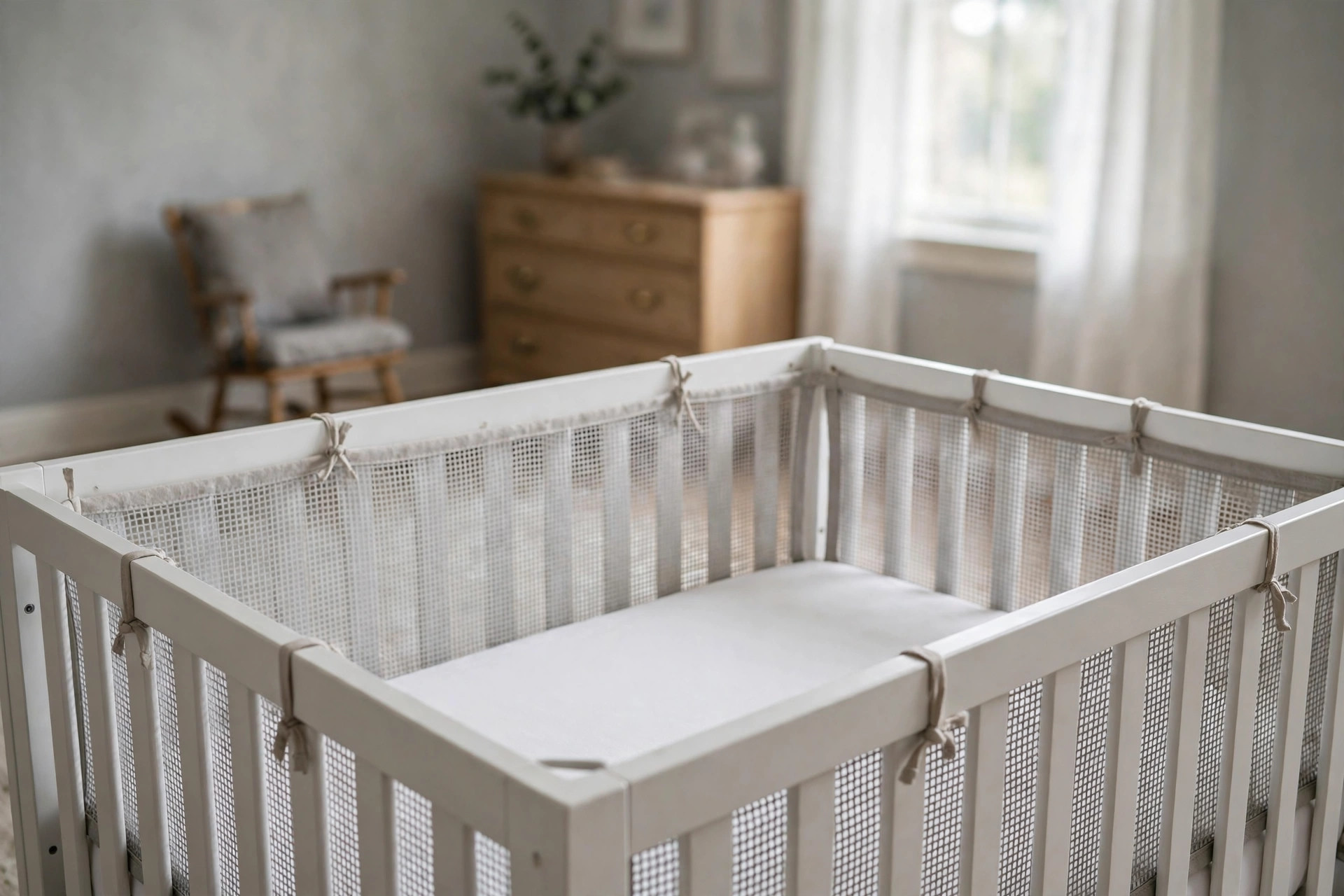

Many new parents want a crib bumper alternative breathable mesh liner for the nursery. The idea is simple. A thin mesh panel lines the inside of the crib rails. It keeps tiny arms and legs from slipping between the slats. At the same time, air flows freely through the open weave. Many families see it as a middle ground between a bare crib and an old-style padded bumper. This guide explains what the product is, how to pick one, what it costs, and how to use it with care. It also covers the safety rules that matter most in the first year of a child’s life.
Why the Old Padded Bumper Lost Favor
For many years, padded crib bumpers were a standard nursery item. They came in matching sets with sheets and blankets. Parents liked the soft look. They thought the padding would protect a baby’s head. Over time, safety experts grew concerned. Thick bumpers can trap air near a baby’s face. They can also create a surface a child may climb on. In recent years, several groups advised parents to skip padded bumpers entirely.
The U.S. Consumer Product Safety Commission sets federal crib safety standards that every new crib must meet. Safety groups now urge a bare sleep space. That means a firm mattress, a fitted sheet, and nothing else in the crib. No pillows. No blankets. No stuffed animals. The old bumper does not fit this picture. That is why many parents search for a safer way to cover the rails.
Why a Breathable Mesh Liner Matters: Crib Bumper Alternative Breathable Mesh Liner
A mesh liner answers one common worry. Babies move in sleep. Arms and legs slide through crib slats. A child may wake up stuck and crying. A thin mesh panel blocks the gaps. The weave is open, so air passes through it. The fabric is light and has no thick padding. Most liners tie or strap to the top rail of the crib.
Parents choose this type of product for a few plain reasons. It reduces the chance of a trapped limb. It does not add bulk to the sleep space. It can be washed in a home machine. Many liners come in plain colors that suit a calm nursery. When you look at nursery design ideas, you will see that simple bedding is now the norm. The mesh liner fits that style.
It is worth noting that the product does not remove every risk. A liner is still an extra item in the crib. It must fit well. It must stay in place. Loose fabric in a crib is never a good thing. The sections below explain how to choose and use one with care.
What to Look for When You Choose One
Shopping for a crib bumper alternative breathable mesh liner is not hard, but the details count. Keep these points in mind.
Fit and Size
Cribs come in a few standard sizes. Most full-size cribs use the same rail length. Some portable or mini cribs are smaller. Measure the inside of your crib rails before you buy. A liner that is too long will bunch up. A liner that is too short will leave gaps. Many makers sell one size that fits most standard cribs. Check the package for the exact length and height. If you own a convertible crib, confirm the liner works in each stage. A guide to the best convertible crib for a small nursery room can help you plan the whole setup.
Material and Mesh Quality
The mesh should feel light but strong. Hold it up to the light. You should see through it with ease. The weave should be even, with no stretched or broken threads. Look for a liner made from a single layer of mesh. Avoid products with thick padding hidden inside the mesh. The point of the product is airflow. Soft polyester mesh is common. It dries fast and holds its shape. Check that the edges are bound with smooth trim. Rough edges can rub against small hands.
Attachment and Ease of Use
Most liners fasten with ties, straps, or hook-and-loop tabs. Ties should be short. Long ties can wrap around a small neck. Many experts say ties should be no longer than a few inches. Hook-and-loop tabs are simple to adjust. Straps with buckles hold well but add hard parts. Test the fastener in the store if you can. The liner should hug the rails with no sag. It should take only a few minutes to put on and take off. You will wash it often, so easy removal matters.
Types and Options on the Market
Not all mesh liners are the same. The main types differ in coverage and fastening style.
Full rail liners wrap around all four sides of the crib. They give the most coverage. They also use the most fabric. They suit parents whose babies move a great deal in sleep.
Two-sided liners cover only the long rails. The head and foot of the crib stay bare. These use less fabric and cost less. They suit smaller nurseries and tight budgets.
Tie-on liners use fabric ties at the top rail. They are the classic style. They fit many crib shapes. Keep the ties short and secure.
Wrap-around liners slide over the top rail like a sleeve. They have no ties. Some parents find them neater. They may not fit cribs with wide or shaped rails.
A few liners add a water-resistant backing. This can help with drool and small spills. It may reduce airflow a little. If you want a safe alternative to crib bumpers that still guards the mattress area, read the product label with care. A simple single-layer mesh is the most common pick.
You can find these products at baby stores, at major home retailers such as Lowe’s, and through independent reviews from sources such as Wirecutter. Prices and styles change often. Focus on fit and fabric, not on brand names or fancy patterns.
Cost and Price
A crib bumper alternative breathable mesh liner is not costly. Most sell for between fifteen and forty dollars. Simple two-sided liners sit at the low end. Full rail sets with many fasteners sit at the high end. Organic cotton trim may add a few dollars. Sales and multi-packs can lower the price per liner.
Think about how many you need. Many parents buy two. One stays on the crib. The other is in the wash. Crib sheets need the same plan. Budget for two or three fitted sheets as well. The liner itself is a small part of the nursery budget. A crib, a mattress, and a chair cost far more. For the price of a few cups of coffee, a mesh liner is an easy add.
Care and Upkeep
Mesh liners need regular washing. Babies drool. Milk spills. Dust settles. Wash the liner at least once a week. Wash it sooner if it is soiled.
Most liners are machine washable. Use a gentle cycle with cold or warm water. Use a mild detergent with no heavy scent. Strong scents can irritate a baby’s skin and nose. Put the liner in a mesh laundry bag. The bag keeps ties from tangling. It also guards the weave. Skip the fabric softener. It can coat the mesh and reduce airflow. Tumble dry on low heat or hang the liner to dry. High heat can warp the fabric.
While the liner is off, check it. Look for snags, tears, or stretched ties. Pull each fastener with care. If a tie is frayed, replace the liner. A damaged liner can come loose in the night. Many parents keep a spare on hand for wash day. Appliance makers such as Whirlpool publish laundry care guides that explain gentle cycles in more detail.
Keep the nursery air fresh as well. Dust the room often. Wash crib sheets weekly. The indoor air quality guidance from the U.S. Environmental Protection Agency notes that clean air helps everyone sleep better. A calm, clean nursery is the best setting for any sleep product.
How to Install It Step by Step
Set up the liner when the baby is not in the crib. Lay the liner flat first. Check that it is clean and dry. Start at one long rail. Line up the top edge with the top rail. Fasten each tie or tab in turn. Pull the fabric snug. It should lie flat with no folds. Move to the next rail. Keep the tension even all the way around.
When all sides are on, step back and look. The mesh should sit flat against the rails. The bottom edge should reach near the mattress. It should not drag across the mattress top. Push the liner with your hand. It should not shift or sag. Put your hand through the mesh from inside. Air should move through it with ease.
Check the install each night. Babies kick and pull. Fasteners can loosen over time. A quick check takes less than a minute. Make it part of the bedtime routine, like checking the room temperature. If you use a crib skirt for a convertible crib, make sure the skirt does not pull on the liner ties.
Safety Rules Every Parent Should Know
A mesh liner is a helper, not a guard against every risk. Follow these rules.
Keep the sleep space bare otherwise. The mattress should be firm and flat. Use only a fitted sheet. Add no pillows, blankets, or toys. This is the core of safe sleep.
Stop using the liner when the child can stand. Once a baby pulls up, a liner can become a step. A child may use it to climb. Remove the liner at that stage.
Check for recalls. Before you buy, and once a year after, check the product for recalls. The federal crib safety standards page lists recalls and safety alerts.
Follow the maker’s age range. Most liners are sold for newborns up to the pulling-up stage. Do not use one past the stated limit.
Never use a liner on a broken crib. If rails are loose or slats are cracked, fix the crib first or replace it. No liner can make a broken crib safe.
Watch for overheating. Keep the room at a comfortable temperature. Dress the baby in light sleep clothes. A mesh liner does not add warmth, but a hot room is still a risk.
Sleep advice for new parents changes as research grows. Sources of sleep advice such as What to Expect track these updates. Your child’s doctor is the best guide for your own case. Ask about the sleep setup at each checkup.
Some families add a small plant to the nursery corner for a calm feel. If you do, choose a non-toxic plant and keep it out of reach. Plant suppliers such as Burpee sell starter plants suited to indoor pots. Keep soil covered and water only when the plant needs it.
Frequently Asked Questions
Is a breathable mesh liner safer than a padded bumper? Most safety experts say padded bumpers should not be used at all. A mesh liner is thinner and lets air pass through. It is widely seen as the lesser risk of the two. Still, many experts prefer a fully bare crib. Talk to your child’s doctor about your own setup.
At what age can I start using one? Most makers say from birth. The liner is meant for young infants who cannot roll far. It should come out once the baby can pull to a stand. Always follow the age range on the package.
Will it fit a mini crib? Some liners are made for mini or portable cribs. Standard liners may be too long. Measure your crib rails first. Buy the size that matches your crib.
Can I wash it with the baby’s clothes? Yes. Use a gentle cycle and mild detergent. A mesh laundry bag keeps the liner in good shape. Wash it apart from items with zippers or rough hooks that could snag the weave.
Does a mesh liner replace the need for a fitted sheet? No. The liner covers the rails. A fitted sheet covers the mattress. You need both. Use a sheet made for your exact mattress size. If you are moving to the next stage later, a toddler bedding set with pillow is made for toddler beds, not cribs. Keep pillows out of the crib.
Where can I buy one? Baby stores, large retailers, and online shops all carry them. Compare the fit, fabric, and fastener type before you buy. Read recent reviews to learn how the liner holds up after washing.
A Final Word
A crib bumper alternative breathable mesh liner is a small item with a clear job. It keeps small limbs inside the crib rails while letting air move freely. Pick one that fits your crib well. Choose a single layer of strong, open mesh. Keep the ties short and the fabric snug. Wash it often and check it each night. Remove it once your child can stand. Pair it with a bare sleep space and a firm mattress. With these simple steps, the liner can be a useful part of a safe and restful nursery.
References
Burpee. (n.d.). Seeds, plants, and gardening supplies. https://www.burpee.com Houzz. (n.d.). Home design and remodeling. https://www.houzz.com Lowe’s. (n.d.). Home improvement products. https://www.lowes.com U.S. Consumer Product Safety Commission. (n.d.). Product safety information. https://www.cpsc.gov U.S. Environmental Protection Agency. (n.d.). Protecting human health and the environment. https://www.epa.gov What to Expect. (n.d.). Pregnancy and parenting guidance. https://www.whattoexpect.com Whirlpool. (n.d.). Home appliances. https://www.whirlpool.com Wirecutter. (n.d.). Product reviews from The New York Times. https://www.nytimes.com/wirecutter
Was this guide helpful?

About Jennifer Lee
The My Garden US editorial team writes practical, in-depth home and garden guides for American homeowners — tested advice, no fluff.
You May Also Like
Best Nursery Crib for Grandparents House: A Complete Guide
July 6, 2026 0 views
Kids Desk Lamp with USB Port for Homework: A Parent’s Guide
February 28, 2026 0 views
Kids Nightstand Lamp for Bedtime Reading: How to Choose the Right One
April 27, 2026 1 views