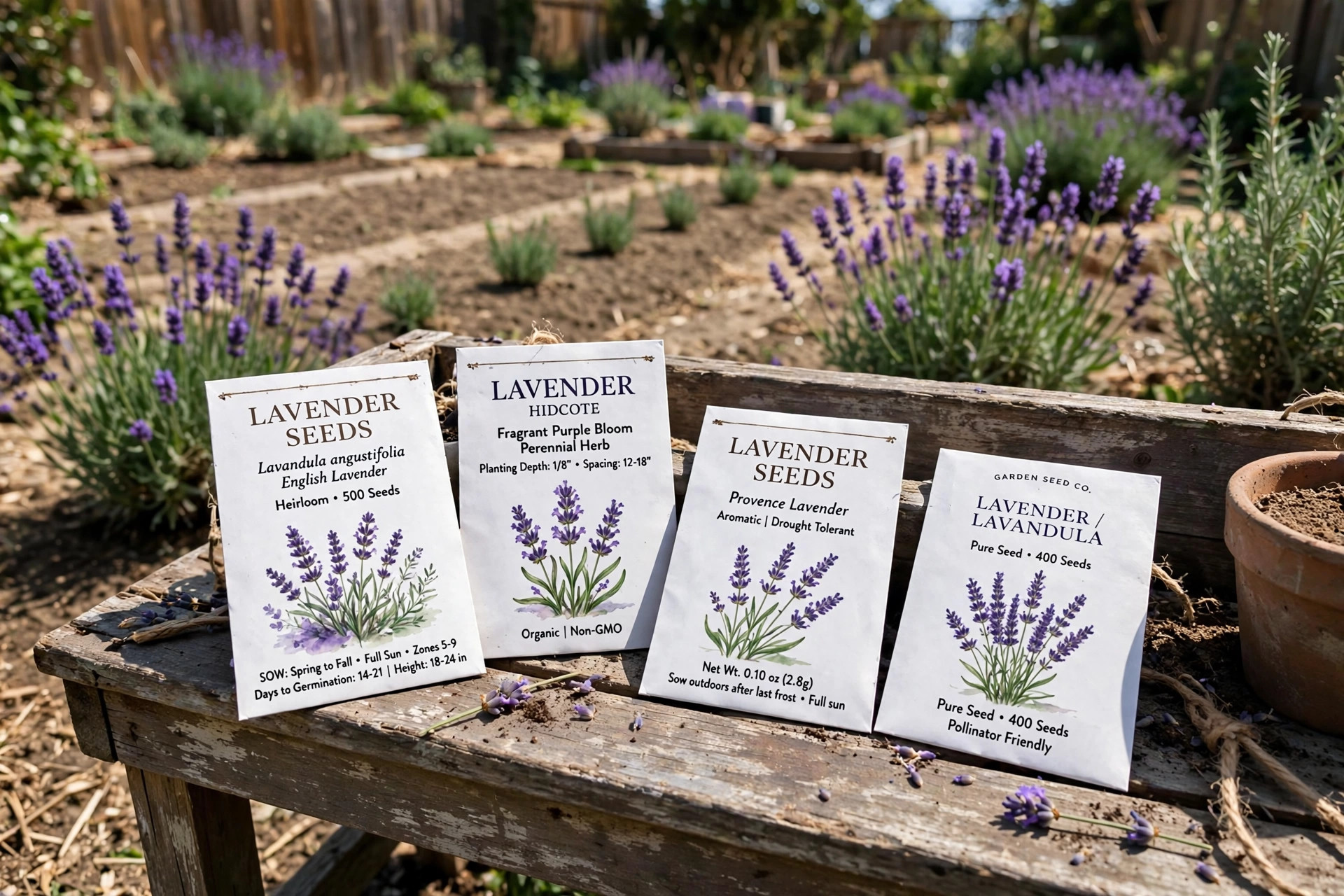

Lavender seed packets for sale USA are an easy way to start your own lavender plants at home. A single packet holds dozens of seeds. Each seed can grow into a fragrant plant. Lavender brings color, scent, and pollinators to the garden. It also does well in pots on a sunny patio. Many gardeners buy lavender seed packets for sale USA because seed is cheaper than young plants. This guide explains how to shop for packets, what varieties to try, how much they cost, and how to grow strong plants from seed.
Why It Matters
Lavender is one of the most loved herbs in American gardens. It has gray-green leaves and tall purple spikes of flowers. The scent is calm and clean. Bees and butterflies visit the blooms all summer. Once plants are established, they need little water. That makes lavender a good choice for dry regions and for gardeners who want a low-care bed.
Starting from seed matters for two reasons. First, it is cheap. One packet can cost less than a single starter plant, yet it can yield thirty or more seedlings. Second, it gives you choice. Stores carry a wide list of varieties in seed form, more than they carry as live plants. If you want a rare type or a large drift of one color, seed is often the only path.
But lavender seed is slow and tricky. Germination takes two to four weeks. Young plants grow slowly in their first year. Many people give up too soon. Knowing what to expect before you buy helps you succeed. A good packet, the right variety for your zone, and a little patience will reward you for years.
How to Choose Lavender Seed Packets: Lavender Seed Packets for Sale Usa
Not all packets are equal. A little study before you buy will save time and money.
Pick the Right Variety
There are three main groups of lavender. English lavender, called Lavandula angustifolia, is the hardiest. It survives winters down to zone 5 in most cases. Its scent is strong and sweet. It is the best choice for most of the northern and central United States. French lavender, Lavandula dentata, has frilly leaves and a lighter scent. It is tender and best for warm zones 8 to 10 or for indoor pots. Lavandin, a hybrid, grows tall and is very fragrant. It is used in sachets and oils. For most gardeners in the USA, English types like Hidcote or Munstead are the safest pick.
Check the Packet Details
A good packet tells you the variety name, not just “lavender.” It lists a packed date or a sell-by date. It states the seed count or packet weight. It may show a germination rate. Fresh seed germinates better than old seed. If the packet is more than two or three years old, germination may drop. Buy from a seller who stores seed in cool, dry conditions.
Match Your Climate Zone
Lavender loves sun and hates wet feet. It does best in zones 5 through 9, depending on variety. If you live in a cold northern state, choose a hardy English type. If you live in the humid South, look for varieties that tolerate heat and moisture, and plant in raised beds with sharp drainage. Your state extension service can confirm which types do well near you. The NIFA supports research that helps gardeners match plants to local conditions.
Think About Packet Size
Packets range from about 25 seeds to over 100 seeds. A small packet is enough for a few pots. A larger packet or bulk option suits a long border. Compare the cost per seed, not just the packet price. If you are new to lavender, buy one small packet of a reliable variety first. Learn the method. Then order more.
For a deeper walk through seed buying in general, see our guide on lavender seed packets buying guide usa.
Types and Options of Lavender Seed
When you browse lavender seed packets for sale USA, you will meet several choices. Here are the common ones.
English lavender seed. This is the classic garden type. Flowers are deep purple or soft mauve. Plants form neat mounds about two feet tall. They live for many years. Good for borders, hedges, and dried bundles.
French lavender seed. This type has showy flower heads with petal-like tops. It blooms long in warm climates. It is less hardy but lovely in pots and mild regions.
Spanish lavender seed. Spanish types have pinecone-shaped blooms with upright bracts. They are striking and bloom early. They suit zones 7 to 10.
White and pink lavender seed. These are color forms of English lavender. They add variety to a mixed planting. They grow the same way as the purple forms.
Organic lavender seed. Some sellers offer seed grown without synthetic chemicals. If organic methods matter to you, look for this label. For other herbs to pair with lavender, see our organic herb seeds for sale usa page.
Bulk seed for meadows. If you want a large area of lavender, bulk packets of 500 or 1,000 seeds are sold. They cost less per seed. They are a good value for farms and large gardens.
The Almanac offers seasonal planting charts that pair well with variety choice. Seed houses like Park Seed and Burpee list many lavender types with clear growing notes. Gurney’s also carries classic varieties suited to home gardens.
Cost and Price of Lavender Seed Packets
Lavender seed packets for sale USA are priced modestly. Most standard packets cost between one and six dollars. The price depends on variety, seed count, and seller. Rare or organic types cost more. Bulk packs cost more in total but less per seed.
Here is a simple guide to what to expect. Small packets of 25 to 50 seeds run about two to four dollars. Larger packets of 100 or more seeds run about four to eight dollars. Bulk seed for big plantings can run fifteen to forty dollars, depending on quantity.
Shipping adds to the cost when you order online. Many sellers offer free shipping over a set amount. It can pay to combine your lavender order with other seeds for the season. Local garden centers charge no shipping, but their variety may be smaller. Compare a few sources before you buy. A slightly higher packet price is worth it if the seller guarantees fresh seed and gives clear growing help.
If you are watching your budget, check our lavender seed packets deals near me page for ways to save on seed this season.
How to Sow Lavender Seed
Lavender seed needs light to germinate. Do not bury it deep. Start indoors six to ten weeks before your last frost date.
Fill a tray or small pots with a light seed-starting mix. Moisten the mix. Press the seeds gently onto the surface. Cover them with only a thin dusting of mix or vermiculite, or leave them uncovered. Light helps them sprout.
Place the tray where it stays near 65 to 70 degrees. A heat mat helps. Cover the tray with a clear dome to hold moisture. Mist lightly when the surface dries. Seeds should sprout in two to four weeks. Some take longer. Be patient.
Once seedlings show two sets of true leaves, thin them or move each to its own pot. Give them strong light. A sunny window or a grow light works. Harden them off for a week before moving them outside. Plant them out after the danger of frost has passed.
Proven Winners and Monrovia publish care notes that apply to seed-grown plants too. Gardening Know How has step-by-step sowing guides for beginners. The Spruce also keeps clear, simple lavender growing articles.
Care and Upkeep
Lavender is easy once it is established, but the first year needs care.
Light. Give lavender full sun, at least six hours a day. More is better.
Soil. Soil must drain fast. Sandy or gravelly soil is ideal. If your soil holds water, mix in sand or fine gravel. Raised beds work well. Keep soil pH near neutral to slightly alkaline.
Water. Water young plants regularly until roots settle. Then cut back. Mature lavender prefers dry soil. Too much water causes root rot, the most common killer.
Feeding. Lavender needs little food. A light feeding in spring is enough. Too much fertilizer makes soft growth with less scent.
Pruning. Cut back plants by one third after bloom. Never cut into old woody stems that have no leaves. Pruning keeps plants full and stops them from getting leggy.
Winter care. In cold zones, cover plants with evergreen boughs or straw after the ground freezes. Do not use heavy mulch that holds water. In pots, move containers to a sheltered spot or an unheated garage.
White Flower Farm offers detailed perennial care guides that cover lavender through the seasons. Simple, steady care will keep your plants blooming for ten years or more.
Safety
Lavender is generally safe in the garden. It is not listed as a major hazard for people. Still, a few notes help.
Keep seed packets away from small children and pets. Seeds are not food. Some people have skin reactions to lavender oil. Wear gloves when you prune large amounts. Do not eat lavender treated with pesticides. If you plan to use blooms in tea or cooking, grow them without sprays and use only culinary types.
Store packets in a cool, dry place. A sealed jar in the refrigerator keeps leftover seed fresh for next year. Label the jar with the variety and date.
FAQ
How long does lavender seed take to germinate?
Most lavender seed sprouts in two to four weeks. Some lots take up to six weeks. Warmth, light, and steady moisture speed things along. Old seed may be slower or may not sprout at all.
Can I grow lavender from seed indoors?
Yes. Start seed indoors in late winter. Use a bright window or grow light. Move seedlings outside after frost. You can also keep lavender in pots indoors year round if you give it strong light and do not overwater.
Which lavender is easiest from seed?
English lavender types like Munstead and Hidcote are the most forgiving. They germinate well and survive cold winters. They are the best first choice for most American gardeners.
How many seeds come in a packet?
It varies. Most packets hold 25 to 100 seeds. The count is printed on the label. Larger packets and bulk bags hold more and cost less per seed.
Why did my lavender seed not sprout?
Common causes are old seed, seed buried too deep, cold soil, or a dried-out tray. Lavender needs light to germinate, so press seed onto the surface. Keep the tray near 70 degrees and do not let it dry out.
Is it cheaper to buy seed or plants?
Seed is cheaper per plant by far. One packet can produce dozens of seedlings for the price of a single nursery plant. Plants save time, though. If you want blooms this year, buy a few plants. If you plan ahead, seed gives you far more for your money.
A Short Final Word
Lavender seed packets for sale USA open the door to one of the finest garden plants you can grow. Choose a variety that fits your zone. Buy fresh seed from a trusted seller. Sow with light and warmth. Give young plants sun and sharp drainage. The first year asks for patience. The reward is years of purple blooms, sweet scent, and bees dancing in the summer air. Start with one packet this season, and you may find yourself planting lavender every year after.
References
Burpee. (n.d.). Seeds, plants, and gardening supplies. https://www.burpee.com Gardening Know How. (n.d.). Gardening guides and plant care. https://www.gardeningknowhow.com Gurney’s Seed & Nursery Co. (n.d.). Seeds, plants, and garden supplies. https://www.gurneys.com Monrovia. (n.d.). Plants for home gardens. https://www.monrovia.com National Institute of Food and Agriculture. (n.d.). Agricultural research and extension. https://www.nifa.usda.gov Park Seed. (n.d.). Seeds, plants, and gardening supplies. https://www.parkseed.com Proven Winners. (n.d.). Plants and gardening inspiration. https://www.provenwinners.com The Old Farmer’s Almanac. (n.d.). Gardening calendars and advice. https://www.almanac.com The Spruce. (n.d.). Home and garden advice. https://www.thespruce.com White Flower Farm. (n.d.). Plants, bulbs, and garden supplies. https://www.whiteflowerfarm.com
Was this guide helpful?

About Jennifer Lee
The My Garden US editorial team writes practical, in-depth home and garden guides for American homeowners — tested advice, no fluff.
You May Also Like
Snake Plants Indoor for Sale USA: A Plain Guide to Buying
January 17, 2026 0 views
How to Grow Grapes: Vines for Home Gardens
October 7, 2026 2 views
Organic Herb Seeds USA Online Deals: How to Grow Your Own Kitchen Garden
April 26, 2026 0 views