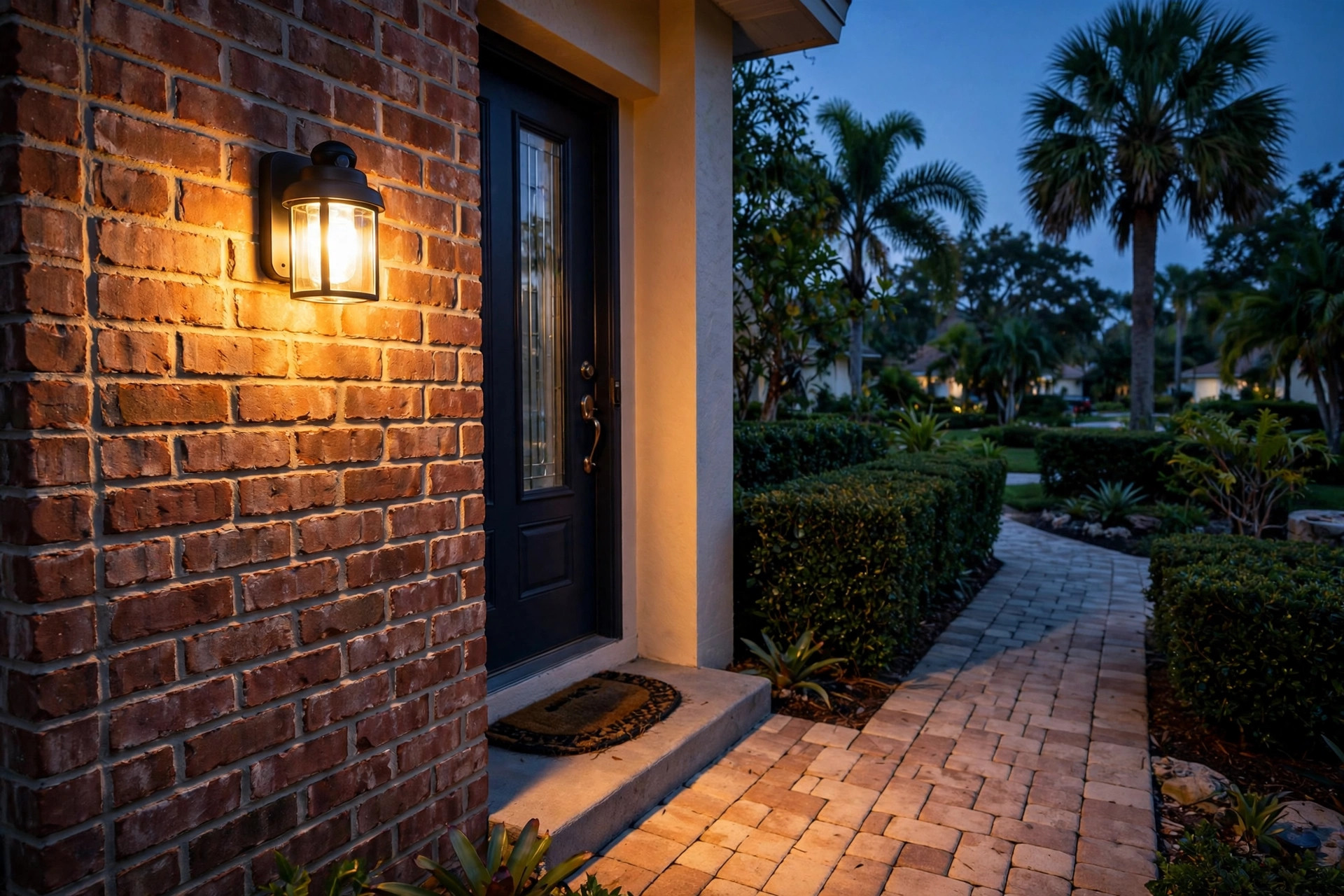

The front porch is the face of a Florida home. It greets guests after dark. It lights the path for family members who come home late. Sensor porch lights Florida homes USA buyers choose today do this job without a wall switch. A built in motion or light sensor turns the lamp on when it is needed. It turns the lamp off when it is not. The result is safety and savings in one simple fixture.
Florida weather adds its own demands. Heat, heavy rain, and salt air near the coast wear down cheap outdoor fixtures fast. A good sensor porch light stands up to that climate for years. It also keeps insects under better control when paired with the right bulb. This guide walks through how these lights work, what to look for, what they cost, and how to care for them.
Why Sensor Porch Lights Matter in Florida
Safety comes first. A dark entryway invites trips and falls. It also invites unwanted visitors. A motion sensor light answers both problems. It floods the porch with light the moment someone steps near. Most trespassers prefer darkness and move on. Homeowners who value this layer of protection often pair porch lighting with broader smart home security planning for the whole property.
Energy savings come second. Florida utility bills run high in the cooling season. A porch light left burning all night wastes power for hours when nobody is near the door. A motion sensor fixture burns only a few minutes per trigger. Over a year, the savings add up. The U.S. Department of Energy notes that efficient lighting choices cut home energy use in real ways (energy.gov).
Comfort comes third. Nobody wants to fumble for a switch with arms full of groceries. Nobody wants to dig for keys on a dark porch. The light simply appears when you walk up. That small comfort is felt every single night.
How Sensor Porch Lights Work: Sensor Porch Lights Florida Homes Usa
Most fixtures use one of two sensor types. A motion sensor uses passive infrared technology. It detects body heat that moves across its field of view. When a person or a large animal enters the zone, the light switches on. After a set time with no more movement, it switches off again.
A photocell sensor reads the level of ambient light. It turns the fixture on at dusk and off at dawn. Many porch fixtures combine both. The photocell arms the motion sensor only after dark, so the light never fires in bright daylight. Homeowners can learn more about efficient outdoor lighting from the ENERGY STAR program, which rates qualifying fixtures.
The detection range on most models runs from twenty to seventy feet. The angle of coverage runs from one hundred to two hundred seventy degrees. Both can be adjusted on better models. Sensitivity controls also let you tune out small animals and swaying palm fronds.
What to Look for When You Choose
Start with the Florida climate. Look for a fixture rated for wet locations. This rating means the housing and seals stand up to direct rain. A damp rating is not enough for an exposed porch. Near the coast, choose corrosion resistant materials such as aluminum or stainless steel. Salt air eats painted steel fast.
Check the brightness. Porch fixtures are measured in lumens. Two hundred to eight hundred lumens suits most porches. A small entry needs less. A wide wraparound porch needs more. Warmer color temperatures, around 2700K, give a welcoming glow and attract fewer insects than cool white light.
Look at the sensor settings. Adjustable time delay matters. You want the light to stay on long enough for a visitor to find the doorbell. Adjustable range matters too. A sensor that reaches into the street will fire all night long. Pick a model with a narrower or aimable field of view.
Consider the power source. Hardwired fixtures tie into the home wiring and never need charging. Solar models avoid wiring work but need real sunlight to charge. Battery models work anywhere but need battery changes. Retailers such as The Home Depot and Lowe’s stock all three types, and their buying guides compare the tradeoffs.
Check for Florida friendly features. Some fixtures carry a high IP rating against dust and water. Models with sealed LED modules last longer in humidity than models with replaceable bulbs. A dusk to dawn photocell built into the fixture saves the extra cost of a separate sensor.
Types and Options
Hardwired Motion Sensor Fixtures
These connect to the home electrical circuit. They offer the brightest output and the most reliable sensor performance. An electrician installs most of them in under an hour. They cost more up front but cost little to run. For a primary front door, this is the standard choice.
Solar Powered Sensor Lights
A small panel charges a battery during the day. At night, the sensor draws from that charge. Installation takes minutes and needs no wiring. Performance depends on sun exposure. A shaded north facing porch will disappoint. In sunny Florida, a south or west facing porch charges well most of the year.
Battery Operated Sensor Lights
These mount anywhere with screws or adhesive. They suit renters and porches without wiring. Expect to change or recharge batteries every few months. Brightness tends to be lower than hardwired models. They work best as accent lights beside a main fixture.
Dusk to Dawn Photocell Lights
These stay on all night at low or full brightness. No motion detection is needed. They suit rural properties where a constant glow marks the house. They use more energy than motion models. Pairing them with efficient LED bulbs keeps the cost down. Lighting maker Philips publishes helpful guides on LED efficiency for outdoor use.
Cost and Price
Prices vary by type and quality. Battery and solar models run from about fifteen to sixty dollars. Hardwired motion sensor fixtures run from about forty to one hundred fifty dollars. Premium designer fixtures with dual sensors can reach two hundred fifty dollars or more.
Installation adds to the total. A simple swap of an old fixture for a new one may take a handy homeowner thirty minutes. Running new wiring to a porch that never had a fixture costs more. Most electricians charge between one hundred and two hundred fifty dollars for that job in Florida.
Running costs stay low. A modern LED fixture draws ten to twenty watts when lit. Because it runs only a few minutes per night, the yearly electricity cost often lands under five dollars. The fixture pays for itself against an all night incandescent lamp within a year or two. Shoppers can compare current fixture prices at specialty retailers such as Lamps Plus and Lumens.
Installation Tips
Turn off power at the breaker before touching any wiring. Mount the fixture at least six to eight feet above the ground. This height keeps the sensor field wide and puts the light out of easy reach. Aim the sensor slightly downward so it catches movement on the walkway, not in the sky.
Keep the sensor away from heat sources. A nearby dryer vent or air conditioner exhaust can fool an infrared sensor. Keep it out of direct sprinkler spray too. Point the sensor head toward the approach path so visitors trigger the light early.
Test at night before you finish. Walk the path from the street to the door. Note where the light fires and where it misses. Adjust the aim and sensitivity until the whole path is covered. A ten minute test saves weeks of annoyance.
Care and Upkeep
Outdoor fixtures need a little attention each year. Wipe the sensor lens with a soft cloth every few months. Dust and spider webs block the infrared signal and cause false triggers. Clear webs from around the fixture as well.
Check the seals and gaskets yearly. Florida rain finds every weak point. Tighten loose mounting screws. Replace cracked gaskets before water gets inside. In coastal areas, rinse the fixture with fresh water twice a year to wash off salt film.
For solar models, clean the panel monthly. Dust and pollen cut charging power fast in Florida. Trim back plants that shade the panel. For battery models, set a calendar reminder to check the charge level each season.
Safety
Choose fixtures listed by a recognized testing lab such as UL or ETL. The listing means the fixture passed safety tests for wet outdoor use. Never install an indoor rated fixture on an exposed porch, no matter how sheltered it looks. Rain blows sideways in a Florida storm.
Respect the electrical code. Outdoor wiring needs proper weatherproof boxes and covers. When in doubt, hire a licensed electrician. The cost of a professional visit is small next to the risk of faulty wiring.
Mind wildlife. Sea turtles nest on Florida beaches from spring through fall. Bright white porch lights near the coast can disorient hatchlings. If you live near the shore, choose amber or turtle friendly lighting and aim fixtures downward. State guidance on wildlife friendly lighting helps homeowners pick correctly.
Frequently Asked Questions
Do sensor porch lights work in heavy rain?
Yes. Quality fixtures rated for wet locations work fine in rain. Heavy downpours can trigger cheaper motion sensors because the sensor reads the moving water as motion. Better models with adjustable sensitivity let you tune this out. A photocell only model never fires on rain at all.
Will the sensor light fire every time a cat walks by?
It can, but most models offer a sensitivity control. Turn the sensitivity down until small animals no longer trigger it. Mounting the fixture higher also narrows the detection field at ground level. Some advanced models use dual zone detection that ignores low moving objects.
How long do LED sensor porch lights last?
The LED module in a sealed fixture often lasts twenty thousand to fifty thousand hours. In real terms, that means ten to twenty years of normal porch use. The sensor electronics usually wear out before the LEDs. Buying from an established brand makes warranty service easier.
Can I use a smart bulb in a sensor fixture?
You can, but the pairing needs care. The sensor controls power to the bulb. If the fixture cuts power, the smart bulb loses its connection. Many homeowners use a plain efficient LED bulb in the sensor fixture instead. Those who want app control often explore smart bulbs as a separate project, much like the advice found in a wifi smart bulbs reviews buying guide usa.
Do porch lights keep burglars away?
Lighting helps, but it is not a full security system. Studies and police departments agree that a well lit entry deters casual intruders. Pair the light with solid locks, trimmed shrubs near windows, and neighbors who watch the street. Think of the sensor light as one strong layer among several.
Should the porch light stay on all night or use motion only?
Motion only saves more energy and disturbs neighbors less. All night light gives a steadier sense of security. Many homeowners split the difference. They run a low brightness dusk to dawn lamp near the door and add a bright motion flood for the driveway. Inside the home, the same layered thinking applies to fixtures like indoor wall sconces texas homes usa buyers pair with overhead lighting, or ceiling fans lights florida homes usa combinations that cool and light a room at once.
A Final Word
Sensor porch lights Florida homes USA owners install today solve an old problem with simple technology. They light the way only when someone is there. They stand up to heat, rain, and salt air when chosen well. They cut energy waste night after night. Measure your porch, check the wet location rating, and test the sensor aim before you call the job done. For wider room by room ideas, the long form advice in a led recessed lights american homes guide makes a fine next read. A well chosen fixture will greet you at the door for many years.
References
ENERGY STAR. (n.d.). Energy efficient products. https://www.energystar.gov Lamps Plus. (n.d.). Lighting and home decor. https://www.lampsplus.com Lowe’s. (n.d.). Home improvement products. https://www.lowes.com Lumens. (n.d.). Lighting and ceiling fans. https://www.lumens.com Philips. (n.d.). Lighting products. https://www.philips.com The Home Depot. (n.d.). Home improvement products. https://www.homedepot.com The Spruce. (n.d.). Home and garden advice. https://www.thespruce.com U.S. Department of Energy. (n.d.). Energy efficiency and renewable energy. https://www.energy.gov
Was this guide helpful?

About James Carter
The My Garden US editorial team writes practical, in-depth home and garden guides for American homeowners — tested advice, no fluff.
You May Also Like
Deck Cap Lights for Sale USA: A Plain Guide to Bright, Safe Decks
March 17, 2026 0 views
Reading Floor Lamps Where to Buy USA: A Complete Home Guide
September 4, 2026 0 views
Solar Path Lights American Homes Guide
April 24, 2026 0 views