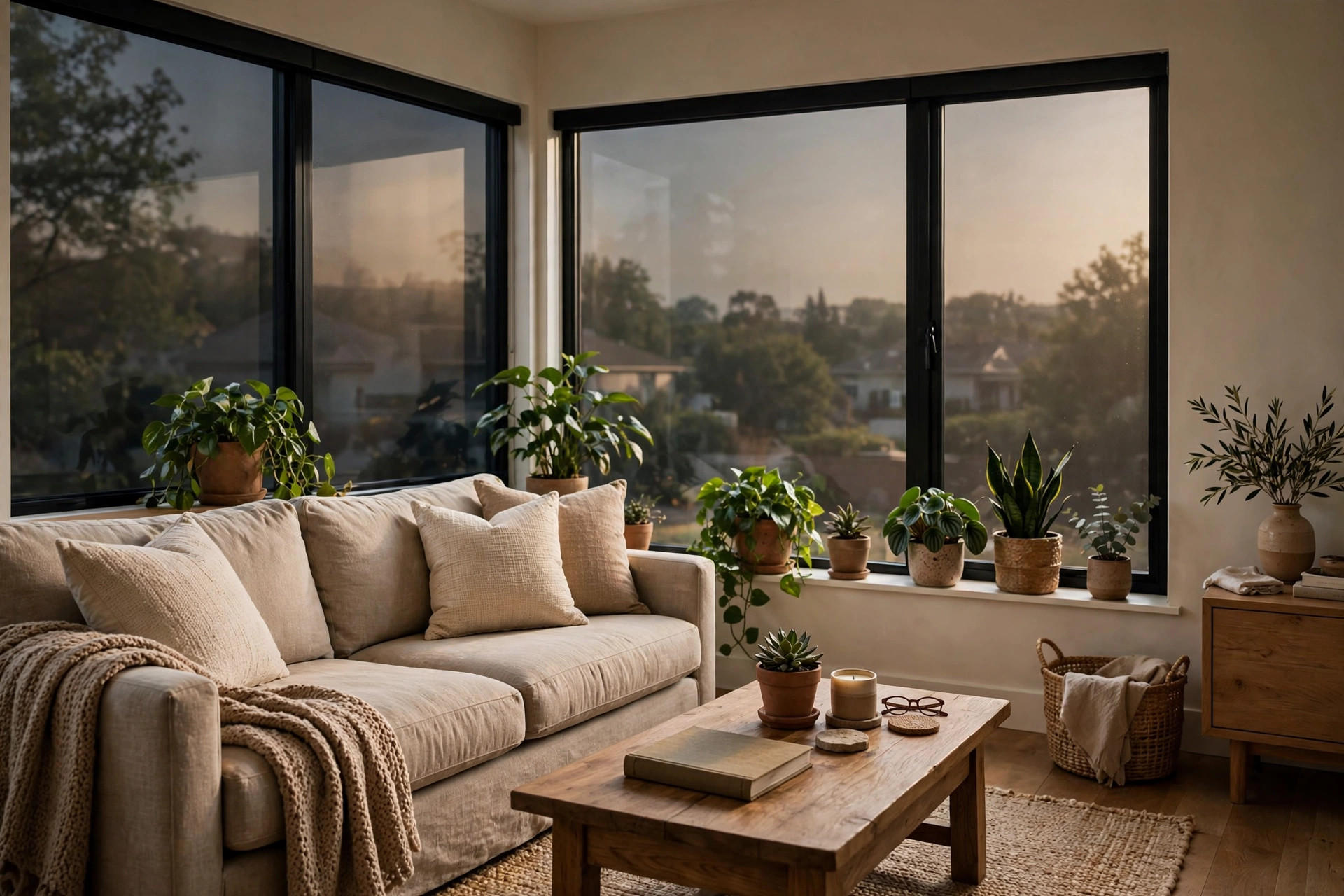

Glass is the weakest point in most homes. In summer, sun pours through the panes and heats each room. In winter, warmth slips out the same way. Neighbors and people on the street can see straight in when the lights are on at night. Finding thermal window film privacy tint with free shipping solves three problems at once. It cuts heat, adds privacy, and ships to your door at no extra cost. This guide explains what the film is, how to pick the right roll, what it costs, and how to put it up yourself.
Why Thermal Privacy Film Matters
Most homes lose a large share of their heating and cooling energy through bare windows. The U.S. Department of Energy notes that windows are responsible for a major part of wasted energy in American homes. A thin layer of film cannot turn a single pane into a double pane, but it does block solar heat and slow the flow of warm air. Rooms stay cooler in July and warmer in January. That comfort has a price tag too. A steadier room temperature means the air conditioner and furnace run less, and the monthly bill falls.
Privacy is the second gain. Standard thermal film often comes with a tint. From the outside, the glass looks dark or mirrored in daylight. People walking past cannot see your furniture, your television, or your children playing. From the inside, you still see out clearly. That one-way effect works best in the daytime. At night, when indoor lights are brighter than the street, the effect reverses, so you still need blinds or curtains after dark. The U.S. Consumer Product Safety Commission reminds homeowners that any change to a window should never block a fire escape or a child safety latch.
The third gain is simple money sense. Film is far cheaper than new windows. A full house of new double-pane windows can cost thousands of dollars. A box of film that covers the same windows may cost less than fifty dollars, and when the order ships free, the savings grow. Shoppers who also like fabric answers can compare film with thermal energy efficient window treatments for sale before they decide.
How to Choose the Right Film: Thermal Window Film Privacy Tint with Free Shipping
Check the Heat Rejection Number
Every film has ratings. The most useful one is total solar energy rejection. It tells you what share of the sun’s heat the film blocks. A value of fifty percent is fine for a mild climate. Homes in the hot South often need sixty percent or more. Look for the number on the box or the product page before you buy.
Pick the Right Level of Privacy
Tints range from light smoke to dark limo black. Light tints dim the room a little and give modest privacy. Dark tints give strong daytime privacy but make the room feel darker. If you want the room to stay bright, choose a ceramic or spectrally selective film. These block heat while staying nearly clear.
Measure Before You Order
Measure each pane, not the whole window frame. Add two inches to each side so the film overlaps the glass edge. Write down the width and height of every pane you plan to cover. Film often comes in rolls of 24, 36, or 48 inches wide. Pick the roll width that wastes the least material.
Confirm the Free Shipping Terms
Free shipping is common, but the fine print differs. Some stores ship free on every order. Others set a minimum, often thirty-five or fifty dollars. A few exclude Alaska and Hawaii. Check the shipping policy on the checkout page before you pay. Reading general buying advice on The Spruce can also help you spot honest shipping terms and fair return policies.
Make Sure It Fits Your Glass
Most films work on plain flat glass. Low-emissivity glass, also called Low-E, needs care. Some dark films trap too much heat and can stress the glass seal. If your windows have a Low-E coating, choose a film marked safe for Low-E glass or ask the maker first.
Types of Privacy and Thermal Film
Dyed Film
Dyed film is the oldest type. Color is mixed into the plastic layers. It looks good and costs little. It fades over a few years in strong sun, and it blocks less heat than newer types. It suits renters and budget projects.
Metalized Film
Tiny metal particles give this film its shine and its strength. It reflects heat well and lasts long. The metal can block cell phone and radio signals in some homes. It also gives a mirror look that some streets and housing groups do not allow.
Ceramic Film
Ceramic film uses tiny ceramic beads instead of metal or dye. It blocks heat without a mirror look and does not block signals. It costs more than dyed film but lasts much longer. Many buyers find it the best balance of price and comfort.
Security Privacy Film
Thicker than standard film, this type holds broken glass together. It still gives privacy and heat control. It is a smart pick for ground-floor windows near busy streets. Heavy-duty product reviews on Consumer Reports often cover this class of film, though I linked their homepage here for reference.
Decorative Privacy Film
Frosted, etched, and patterned films blur the view without dark tint. They work well in bathrooms and front doors. They give privacy day and night because the pattern itself hides the view. They block less heat than true thermal film, so they suit windows where heat is not the main worry.
Shoppers who want fabric instead of film can read the affordable window film privacy tint buying guide for side-by-side comparisons, or look at custom thermal insulated curtains for small apartments if curtains fit the room better.
Cost and Price
Price depends on type, size, and brand. A basic dyed roll that covers two or three windows often costs fifteen to twenty-five dollars. A ceramic roll of the same size can cost forty to seventy dollars. Static cling film, which peels off without glue, sits in the middle. Tools are cheap. A basic kit with a squeegee, a spray bottle, and a trim knife often costs under ten dollars, and many kits come free with the roll.
Bulk buying brings the price down. Rolls of one hundred square feet can cut the cost per window nearly in half. Free shipping makes bulk buying even better, since heavy rolls would cost a lot to ship. Watch the big home stores for seasonal sales. Home Depot and Lowe’s both run spring and fall sales on window products, and both sell film online with store pickup as an option.
Do not forget the hidden costs. If you hire a pro to install the film, labor can add five to eight dollars per square foot. Doing it yourself keeps the job cheap. If a window is high or hard to reach, a pro may still be worth the price.
Installing and Caring for the Film
Most homeowners can install film in an afternoon. The steps are simple and need no special skill.
First, clean the glass. Wash the pane with soap and water, then scrape it with a razor blade to lift paint flecks and old stickers. Any speck left on the glass will show under the film. Wipe the edges dry.
Second, cut the film. Lay the roll on a clean table and cut a piece two inches wider and taller than the pane. Keep the clear liner on while you cut.
Third, wet the glass. Fill a spray bottle with water and a few drops of baby shampoo. Mist the whole pane until it is dripping wet. The soapy water lets you slide the film into place.
Fourth, peel and place. Pull the clear liner off the film and spray the sticky side too. Lay the film on the wet glass and slide it until it sits straight. Squeegee from the middle out to push the water and air bubbles to the edges. Trim the extra film along the frame with a sharp knife.
Fifth, let it cure. The film needs three to thirty days to fully bond, depending on the weather. Small water bubbles often vanish on their own during this time. Do not clean the film until it is fully cured.
For care, wash the film with a soft cloth and mild soap. Never use ammonia-based cleaners, since ammonia can break down the film layers. A gentle wipe twice a year keeps it clear. Quality film lasts eight to fifteen years. When it starts to peel at the corners or turn purple, it is time to replace it.
Design sites such as HGTV and Wayfair show how tinted windows can fit many room styles, while IKEA and Blinds.com sell curtains and blinds that pair well with film for nighttime privacy. The ENERGY STAR program also lists window products that meet set efficiency marks.
Safety Notes
Film itself is safe, but a few rules keep the job safe too. Never cover a window that serves as a fire escape. Many bedrooms must have an openable window for escape by law. Film that makes the glass hard to break, like thick security film, should never go on such windows unless the window still opens fully.
Use care with a razor blade when trimming. Cut away from your body and keep fingers clear of the blade path. Work on a stable stool or ladder for high windows, and have someone hold the ladder. Keep small children and pets out of the room while you work with sharp tools and soapy water on the floor.
Check local rules before you buy a dark tint. Some towns and housing groups limit how dark window film may be on street-facing windows. A quick call to the town office avoids a fine later.
Frequently Asked Questions
Will window film really lower my energy bill?
It can, but the gain depends on your windows and your climate. Homes with large single-pane windows in hot states see the biggest drop. Expect a modest but real saving on summer cooling. Pair film with good shades or curtains for the best result.
Does privacy film work at night?
One-way mirror and dark tints work best in daylight. At night, a bright room behind the glass becomes visible from outside. For full nighttime privacy, add blinds, shades, or curtains. Frosted decorative film is the exception, since its pattern hides the view at all hours.
Can I put film on double-pane windows?
Yes, with care. Choose a film rated safe for double-pane or Low-E glass. Very dark films can trap heat between the panes and stress the seal. When in doubt, pick a lighter ceramic film and check the maker’s guidance.
How long does the film last?
Most quality films last eight to fifteen years. Dyed film fades sooner in harsh sun. Ceramic and metalized films last the longest. Peeling edges, bubbles that will not flatten, and purple color are signs it is time to replace the film.
Is static cling film as good as adhesive film?
Static cling film is easy to put up and take down, which suits renters. It seals less tightly and may peel at the edges over time. Adhesive film bonds harder and lasts longer but is harder to remove. Pick cling for short-term use and adhesive for a long-term fix.
Why do sellers offer free shipping on film?
Film rolls are light and flat, so they cost little to ship. Stores use free shipping to win orders against rivals. It is a real saving for the buyer, especially on bulk rolls. Just confirm the minimum order and the delivery area before you check out.
A Final Word
Thermal window film privacy tint is one of the cheapest upgrades a homeowner can make. It trims heat, adds daytime privacy, and guards furniture from fading sun. Ordered with free shipping, it arrives at your door for little more than the price of the roll. Measure twice, pick the right type for your glass, and follow the steps above. In one weekend, your rooms can feel cooler, calmer, and more private.
References
Blinds.com. (n.d.). Window blinds, shades, and shutters. https://www.blinds.com Consumer Reports. (n.d.). Product reviews and ratings. https://www.consumerreports.org ENERGY STAR. (n.d.). Energy efficient products. https://www.energystar.gov HGTV. (n.d.). Home and garden ideas. https://www.hgtv.com IKEA. (n.d.). Home furnishings. https://www.ikea.com Lowe’s. (n.d.). Home improvement products. https://www.lowes.com The Home Depot. (n.d.). Home improvement products. https://www.homedepot.com The Spruce. (n.d.). Home and garden advice. https://www.thespruce.com U.S. Consumer Product Safety Commission. (n.d.). Product safety information. https://www.cpsc.gov U.S. Department of Energy. (n.d.). Energy efficiency and renewable energy. https://www.energy.gov Wayfair. (n.d.). Furniture and home goods. https://www.wayfair.com
Was this guide helpful?

About Sarah Mitchell
The My Garden US editorial team writes practical, in-depth home and garden guides for American homeowners — tested advice, no fluff.
You May Also Like

Budget Friendly Window Film Privacy Tint Buying Guide
September 19, 2026 0 views
Premium Zebra Dual Layer Shades Buying Guide
September 2, 2026 0 views
The Top Rated Decorative Window Film Buying Guide for American Homes
July 5, 2026 0 views