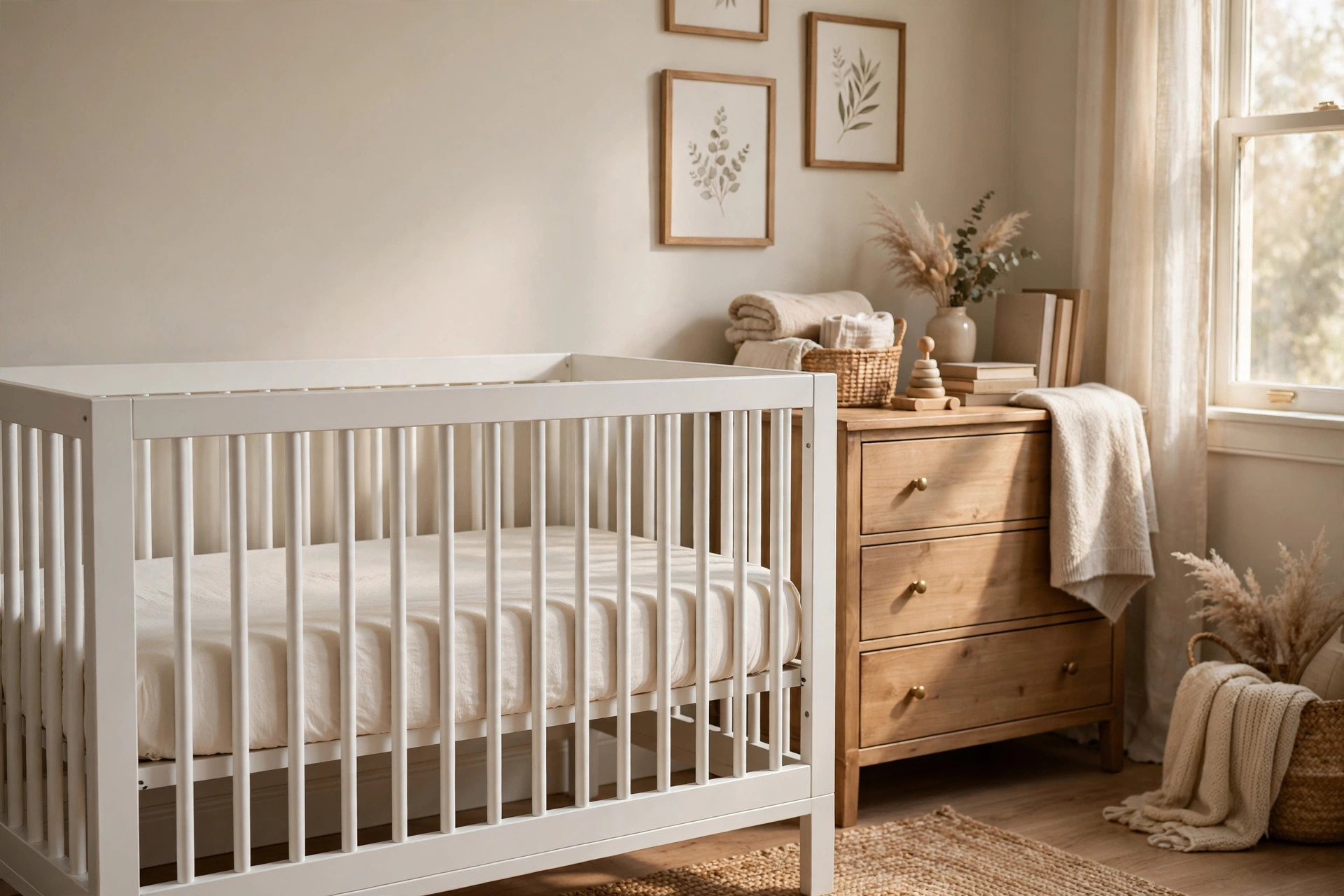

A crib sheet set organic cotton for sensitive skin is one of the first things a new parent places in the nursery. A baby spends up to sixteen hours a day in the crib. The fabric that touches that small body matters. Babies with sensitive skin can wake up with red patches, dry spots, or heat rash. Many parents find that plain organic cotton sheets help calm these problems. This guide explains why organic cotton works, how to choose a set, what it costs, and how to keep it soft wash after wash.
Why It Matters
Newborn skin is thin. It is about thirty percent thinner than adult skin. It dries out faster and reacts more strongly to chemicals left in fabric. Regular cotton sheets are often treated with dyes, softeners, and wrinkle-resistant finishes. These treatments can bother a sensitive baby.
Organic cotton grows without synthetic pesticides or fertilizers. The fibers are processed with fewer harsh chemicals. The result is a cleaner, softer fabric. For babies with eczema or contact rashes, this can make a real difference. Many parents report fewer red spots after switching to organic bedding.
A crib sheet set made from organic cotton also breathes better than many man-made fabrics. Air moves through the weave. Heat escapes. The baby stays at a more even temperature through the night. Overheating is linked to restless sleep and, in rare cases, to serious risk. A breathable sheet is a simple safety step.
There is also the matter of touch. A baby learns the world through touch. A rough or scratchy sheet can wake a light sleeper. A soft, smooth sheet gives comfort. Organic cotton, once washed, develops a soft hand that many parents prefer over blends.
What to Look for When You Choose: Crib Sheet Set Organic Cotton for Sensitive Skin
Not every sheet that says “organic” is the same. Labels vary. Here is what to check before you buy.
Fabric and Weave
Look for one hundred percent organic cotton. Some sets mix cotton with polyester. The blend may cost less, but it breathes less well and can feel rougher. Percale weave gives a crisp, cool feel. Sateen weave feels silky and smooth. For sensitive skin, many parents like a tight sateen because it has no raised texture to rub against the skin.
Thread count is less important than the quality of the fiber. Long-staple cotton makes a stronger, smoother sheet. Very high thread counts can be a marketing claim. A count between two hundred and four hundred is fine for a crib sheet.
Certifications
A GOTS label, which stands for Global Organic Textile Standard, is the strongest proof. It covers how the cotton is grown and how the fabric is made. An OEKO-TEX label is also useful. It means the finished fabric was tested and found free of harmful substances. When you shop for a crib sheet set organic cotton for sensitive skin, these two labels give real peace of mind.
Fit
A crib sheet must fit the mattress snugly. A loose sheet can bunch up and pose a hazard. Standard crib mattresses in the United States measure about fifty-two inches by twenty-eight inches. Check the sheet’s pocket depth. Deep pockets with strong elastic hold the sheet in place. Pull the corners tight and run your hand across the surface. If it stays smooth, the fit is good.
Color and Dye
For sensitive skin, undyed or lightly dyed sheets are best. Natural, ivory, and soft white are safe choices. If you want color, look for low-impact or fiber-reactive dyes. These bond well to cotton and wash out less. Avoid sheets with strong chemical smells when you open the package. A sharp smell can mean leftover finishing agents.
Types and Options
Crib sheet sets come in several forms. Each has its place.
Fitted sheet singles. The most common choice. One fitted sheet with elastic edges. Buy at least three. Babies have leaks and spills. A spare sheet saves a midnight trip to the laundry.
Sets with extras. Some sets add a quilt or a bumper. Skip the quilt for sleep. Health experts say a bare crib is safest. A bumper pad is also not advised for young babies. A simple fitted sheet set is enough.
Waterproof layers. Some parents place a thin waterproof pad under the sheet. This protects the mattress. If you use one, choose a thin, breathable layer. It should not change how the sheet fits. Thick pads can make the surface too soft, which is unsafe.
Crib sheet saver for quick diaper changes. A crib sheet saver for quick diaper changes is a small pad that sits on top of the fitted sheet. It catches small leaks. You can change it without stripping the whole crib. Many parents keep one or two of these on hand for night feeds.
Muslin sheets. Muslin is a loose, airy weave of cotton. It is very breathable and good for warm rooms. It wrinkles easily but stays soft. Some organic lines offer muslin as an option for summer months.
Cost and Price
Organic cotton crib sheets cost more than regular cotton. Expect to pay between fifteen and forty dollars for a single fitted sheet. A set of two or three sheets may cost between thirty and seventy dollars. Premium brands with strong certifications sit at the top of that range.
The higher price comes from farming and testing costs. Organic cotton yields less per acre. Certification costs money. But sheets are a small part of the nursery budget. Compared with a crib or a glider, sheets are a modest spend.
Think in terms of cost per use. A sheet gets used every night for a year or more. Three sheets in rotation will last through one child and often a second. The price per night of sleep is tiny.
You can save money by buying sets instead of singles. Multi-packs of two or three bring the per-sheet price down. Watch for sales in late summer and after the holidays. Neutral colors also tend to cost less than licensed prints.
If you plan to hand sheets down to a second child, buy the full set in the same color. A matched set hides small differences in fade. Store unused sheets in a cotton bag, not plastic. Plastic traps moisture and can leave a stale smell. A clean, dry shelf keeps organic cotton fresh until you need it.
Care and Upkeep
Organic cotton needs simple care. Wash new sheets before first use. This removes any dust from the factory and softens the fabric. Use a mild, fragrance-free detergent. Baby-safe detergents work well. Avoid fabric softeners and dryer sheets. They leave a coating that can bother sensitive skin and reduce how well the fabric breathes.
Wash in warm water, not hot. Hot water can shrink cotton and wear the elastic. Tumble dry on low or hang the sheets to dry. Line drying in fresh air gives a clean smell and costs nothing. The sun also helps kill germs, but do not leave white sheets out all day. Long sun exposure can yellow them.
Sheets will soften with each wash. Organic cotton often feels best after three or four washes. Replace a sheet when the elastic loosens, when the fabric thins, or when stains will not lift. With normal rotation, a good sheet lasts twelve to eighteen months.
Keep the nursery storage simple. Fold sheets and stack them in a drawer near the changing area. If you bought a nursery crib with drawer underneath storage, that drawer is a handy spot for spare sheets. Keep one spare sheet, a diaper, and a change of clothes together for fast night changes.
Safety
Safety comes first in the crib. Follow these rules every time.
Keep the crib bare. A fitted sheet, a firm mattress, and the baby are all that should be in the crib. No pillows, blankets, quilts, or stuffed animals for infants under one year. These items can block a baby’s airway.
Place the baby on the back to sleep. The mattress should be firm and flat. It should fit the crib frame with no gaps wider than two fingers. A sheet that fits well will not bunch or fold.
Check the sheet before each use. Look for tears, loose threads, or stretched elastic. A torn sheet can wrap around small fingers or toes. Throw out damaged sheets at once.
The U.S. Consumer Product Safety Commission sets rules for cribs and bedding. Reading their nursery safety pages can help you set up the room the right way. You can learn more at the U.S. Consumer Product Safety Commission website.
Room temperature matters too. Keep the nursery between sixty-eight and seventy-two degrees. Dress the baby in light sleep clothing. A breathable organic cotton sheet helps prevent overheating. Health guidance on infant sleep and skin care is also available from the American Academy of Pediatrics and HealthyChildren.org.
Where to Buy
You do not need a specialty store. Many large retailers carry certified organic crib sheets. IKEA and Wayfair sell nursery bedding at a range of prices. Pottery Barn Kids focuses on children’s rooms and often lists fabric details and certifications on each product page.
For advice on choosing nursery items, The Spruce publishes room guides and bedding comparisons. What to Expect offers parent-tested notes on what worked for real families. For sleep science, the Sleep Foundation explains how bedding and room conditions affect rest.
FAQ
How many crib sheets do I need?
Three is a good number. One is on the crib, one is in the wash, and one is clean and ready. Some parents keep four for the newborn months, when leaks are more common.
Can I use organic cotton sheets with eczema-prone skin?
Many parents of children with eczema choose organic cotton. The fabric has fewer chemical residues and feels smooth. Still, eczema care is a medical matter. Ask your child’s doctor if rashes do not improve.
Do organic crib sheets wrinkle more?
They can. Organic cotton is often sold without wrinkle-resistant finishes. That is part of what makes it gentle. A few wrinkles do not hurt. Pull the sheet tight and smooth it by hand, and it will look fine.
Are printed organic sheets safe for sensitive skin?
Low-impact dyes used by certified brands are generally safe. If your baby reacts, switch to undyed white or ivory sheets. Watch for any new redness in the first week of use.
How do I know the sheet is truly organic?
Look for the GOTS label or an OEKO-TEX label on the package or product page. A brand that is truly organic will show the certificate number. If a seller will not name its certifier, be cautious.
Can I use a crib sheet set organic cotton for sensitive skin in a warm climate?
Yes. Organic cotton breathes well and suits warm rooms. Choose a lighter weave, such as percale or muslin, for summer. Keep the room between sixty-eight and seventy-two degrees and dress the baby lightly.
A Final Word
A crib sheet set organic cotton for sensitive skin is a small choice that touches every night of your baby’s first year. It will not solve every skin problem. But soft, clean, breathable fabric removes one common source of irritation. Choose certified cotton, check the fit, wash it gently, and keep the crib bare and safe. Once the bedding is settled, you can turn to the rest of the nursery, from a best nursery glider for plus size moms for late-night feeds to the lighting and wall color. The calm room you build starts with the sheet your baby sleeps on.
References
American Academy of Pediatrics. (n.d.). Child health resources. https://www.aap.org American Academy of Pediatrics. (n.d.). HealthyChildren.org. https://www.healthychildren.org IKEA. (n.d.). Home furnishings. https://www.ikea.com Pottery Barn Kids. (n.d.). Kids furniture and decor. https://www.potterybarnkids.com Sleep Foundation. (n.d.). Sleep information and guidance. https://www.sleepfoundation.org The Spruce. (n.d.). Home and garden advice. https://www.thespruce.com U.S. Consumer Product Safety Commission. (n.d.). Product safety information. https://www.cpsc.gov Wayfair. (n.d.). Furniture and home goods. https://www.wayfair.com What to Expect. (n.d.). Pregnancy and parenting guidance. https://www.whattoexpect.com
Was this guide helpful?

About Sarah Mitchell
The My Garden US editorial team writes practical, in-depth home and garden guides for American homeowners — tested advice, no fluff.
You May Also Like

Kids Nightstand Lamp for Bedtime Reading: How to Choose the Right One
April 27, 2026 1 views
Best Kids Bed Rail for Top Bunk Safety: A Parent’s Guide
February 17, 2026 0 views
Best Nursery Dresser for Cloth Diaper Storage
April 17, 2026 0 views