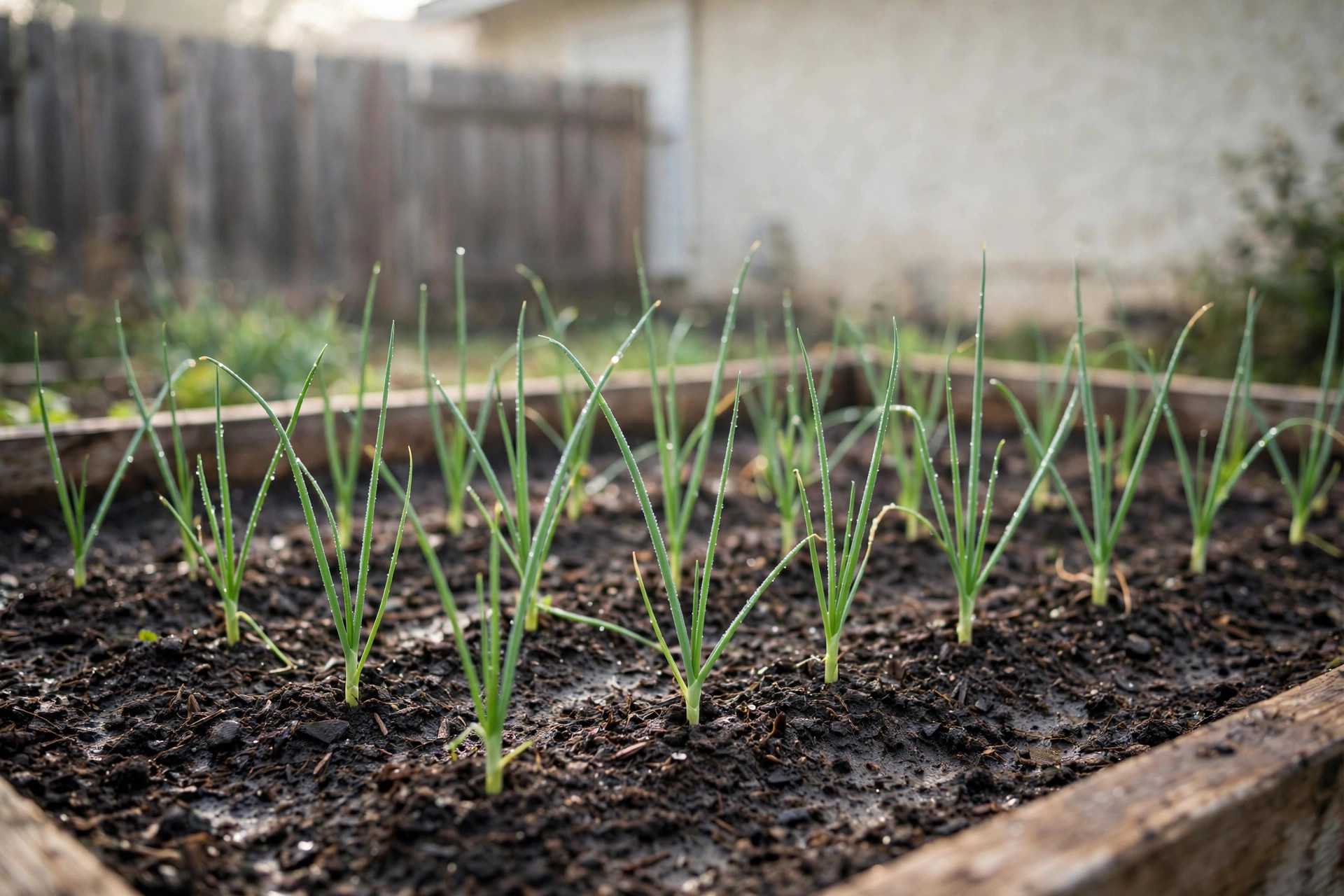
Home gardeners across California have planted onion sets for many years. An onion set is a small, half-grown onion bulb, no bigger than a marble. When it goes into the ground at the right time, it grows into a full bulb. This guide to onion sets planting california homes usa explains when to plant, how to plant, and what to do after. The words here are plain. The steps are simple. A first-time gardener can follow them without trouble.
California is a wide state, and its weather is not the same in every town. The coast stays cool and damp. The valleys run hot in summer. The deserts grow warmer still. Yet onion sets planting california homes usa follows one main rule everywhere in the state: choose the right onion type for the day length in your part of California, and plant at the right time of year. The rest is care.
Why Onion Sets Are Worth Planting
Onions are one of the oldest garden crops. People have grown them for thousands of years. They store well, they cost little, and they are used in nearly every kitchen. For a home gardener, they ask little and give much.
There are three ways to start onions: from seed, from plants, and from sets. Seed takes longest and needs an early start indoors. Plants are young green starts sold in bunches. Sets are the small dry bulbs sold by the bag in late winter. Onion sets planting california homes usa is the easiest of the three ways. The bulbs are firm, simple to handle, and simple to space in a row. There is no thin seed to scatter and no tender roots to protect.
Sets also give a fast harvest. Many sets grow into green onions within a few weeks. Full bulbs take longer, often three to five months, but the work is light. Once they are in the ground, they need sun, loose soil, and steady water. The gardener who wants a crop with few problems and a good reward will find onion sets a sound choice.
Day Length: The Main Thing to Know: Onion Sets Planting California Homes Usa
Onions form bulbs in answer to day length. This is the single most important fact in this guide.
Short-day onions begin to form bulbs when days reach about 10 to 12 hours of light. They are the right choice for southern and central California, where winters are mild and spring days lengthen early. Many gardeners in the south plant them in late fall or early winter and harvest in spring.
Long-day onions need about 14 to 16 hours of light to form bulbs. They suit northern California, where summer days are longer. Northern gardeners plant them in early spring and harvest in late summer.
Intermediate or day-neutral onions sit between the two and do well in much of the state, including the central coast and inland valleys.
When you buy onion sets, the bag should name the variety. If it does not, ask at the store. A guide to onion sets planting buying guide usa can help you read labels and choose a variety with care. If you wish to buy bulbs by mail, see onion sets planting for sale usa for ideas on what to look for.
What to Look For When Buying Onion Sets
The quality of the sets matters more than the brand name. Look for these points in the store.
Firm, Dry Bulbs
A good set is hard and dry, with tight papery skin. It should feel firm between the fingers. Do not buy sets that are soft, wet, or moldy. Do not buy sets with green shoots already growing from the top, unless you plan to plant them at once. Soft sets rot in the ground.
Size
Most sets are about half an inch to three quarters of an inch wide. This size is best for bulb onions. Very small sets are slow to grow. Very large sets, more than three quarters of an inch, are more likely to bolt. To bolt means to send up a flower stalk instead of forming a bulb. A bolted onion has a hard center and stores poorly.
Variety Name
The bag should name the variety, such as Granex, Texas Sweet, Walla Walla, or Red Burgundy. If the bag says only “onion sets” with no name, you cannot know whether the type suits your day length. A seed supplier like Burpee lists variety names and types clearly. Gardening advice from Gardening Know How also explains how variety and day length work together.
When to Plant in California
Timing shifts with the region.
In southern California, from San Diego to Los Angeles and the low desert, gardeners plant short-day onion sets from November to January. The mild winter lets the roots settle while the weather is cool. Bulbs form as days lengthen in spring. Harvest often comes in April or May.
In central California, including the Bay Area, the central coast, and the Central Valley, planting runs from late January to March for long-day and intermediate types. Some coastal gardeners plant short-day sets in late fall as well. The old planting calendar in The Old Farmer’s Almanac gives town-by-town dates that many California gardeners still use.
In northern California, from Sacramento north, plant long-day sets in March or April, as soon as the soil can be worked. Harvest comes in July or August.
A simple rule: plant short-day sets in fall where winters are mild, and plant long-day sets in spring where winters are cold. If you are unsure, intermediate types are the safe pick.
Preparing the Soil
Onions have shallow roots. They want loose soil that drains well. Heavy clay holds water and rots the bulbs. Pure sand dries too fast and gives poor growth.
Work the bed before planting. Dig or fork the soil to a depth of six to eight inches. Break up lumps. Mix in two to three inches of compost or aged manure. The soil should feel crumbly in the hand. A soil pH between 6.0 and 7.0 is best. Home test kits are sold at garden centers and can guide you.
Onions are heavy feeders of nitrogen early in life. A balanced vegetable fertilizer mixed into the bed before planting helps. Follow the label amounts. More is not better. Too much nitrogen late in the season delays bulb ripening.
For raised beds, use a mix of good garden soil and compost. Raised beds warm sooner in spring and drain well, which suits onion sets. Guidance on bed building appears in many garden guides, including articles from The Spruce and Monrovia.
How to Plant Onion Sets
The steps are few.
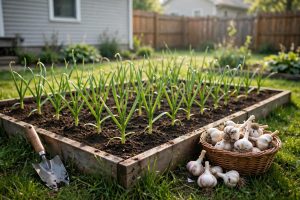
1. Loosen the bed and rake it smooth. 2. Push each set into the soil point side up. The tip should sit just at or just above the soil surface, no more than one inch deep. If a set is planted too deep, the bulb grows small. 3. Space sets four to six inches apart for bulb onions. For green onions, space them one to two inches apart and harvest young. 4. Space rows twelve to eighteen inches apart, so you can weed between them. 5. Water gently after planting so the soil settles around each set.
A ten-foot row with four-inch spacing holds about thirty sets. A bag of sets usually plants several rows. Planting an extra row for green onions is wise. They are ready in weeks and fill the kitchen while the main crop grows.
Some gardeners plant onion sets in wide beds instead of rows. Either way works, as long as the spacing holds. Wide beds need firm paths around them so the soil is not walked on.
Watering
Onions need steady water, not deep soaking followed by drought. In California, where dry spells are common, this point matters.
Water so the top two to three inches of soil stay evenly moist. In cool weather, once a week may be enough. In hot weather, water two or three times a week. Mulch with two inches of straw or shredded leaves to hold moisture and keep weeds down. Keep mulch back from the necks of the plants so the stems stay dry.
When the bulbs begin to mature, the tops fall over on their own. This is the sign to stop watering. After the tops have fallen, leave the bulbs in the dry ground for one to two weeks. Then pull them. Stopping water at this point is what makes bulbs cure well and store long. Growers of proven varieties, such as those sold by Proven Winners, note the same rule in their plant care notes.
Feeding and Weeding
Onions do not compete well with weeds. Their roots are shallow and their leaves are thin. A bed full of weeds starves the crop. Weed often, but weed gently. Use a hand tool and stay shallow. Deep hoeing cuts the roots.
Feed lightly during growth. A side dressing of nitrogen fertilizer three to four weeks after planting helps leaf growth. Leaves make bulbs, so strong early leaves mean large bulbs later. Stop feeding once bulbs begin to swell. Late feeding makes thick necks and soft bulbs that store poorly.
Rotate the bed. Do not plant onions or their kin, such as garlic, where onions grew the year before. Rotation cuts disease. Garlic is a close cousin of the onion, and a guide to garlic bulbs planting buying guide usa shows how alike their needs are. Plant onions after beans, peas, or leafy greens when you can.
Common Pests and Problems
California gardeners meet few pests on onions, but some appear.
Thrips are tiny insects that suck sap from leaves. Leaves look silvery or streaked. Strong jets of water from a hose knock them off. Row covers placed at planting keep them away.
Onion maggots live in the soil and attack the bulbs. Crop rotation and clean beds are the best guard. Do not plant sets near old onion ground.
Pink root is a soil disease that turns roots pink and stunts plants. It thrives in warm soil. Resistant varieties help where it has been a problem.
Bolting was named earlier. It comes from stress: very cold weather after planting, or very large sets. Choose the right size of set, plant at the right time, and water steadily.
If disease strikes, pull and destroy the sick plants. Do not compost them. Home garden advice from sources such as Park Seed and Gurneys lists resistant varieties worth seeking.
Harvest and Storage
Harvest comes in two stages.
Green onions can be pulled at any size, from pencil-thin to half grown. Pull gently and rinse.
For bulb onions, wait until most tops have fallen over. This means the bulbs are ripe. Loosen them with a fork and lift them out. Lay them in a warm, dry, airy place out of direct sun for two to three weeks to cure. The necks will dry and the outer skins will turn papery.
After curing, trim the tops to one inch and store the bulbs in a cool, dry place with good air flow. A mesh bag or open crate works. Sweet short-day onions store for a few weeks to a few months. Pungent long-day onions can store for six months or more. Check stored onions monthly and use any soft ones first.
Cost and Price
Onion sets are among the cheapest crops to start. A bag of sets that plants a ten-foot row often costs less than a few dollars at garden centers in California. Seed catalogs sell larger bags at lower prices per set. When you count the bulbs harvested, the return is many times the cost of the sets.
The rest of the cost is small. Compost may be free if you make it. Fertilizer for one bed is a few dollars. Water use is modest compared with thirsty crops like corn or squash. For a family that eats onions daily, a single bed can supply months of bulbs at far less than store prices.
Safety
Onion sets are a safe crop for the home garden. A few points still deserve care.
Wear gloves when working soil and compost. Soil can hold sharp bits and germs. Wash hands after gardening.
Read fertilizer labels and follow the amounts. Store fertilizer and any pest products away from children and pets, in closed containers.
Onion tops and bulbs are toxic to dogs and cats. If pets roam the garden, keep them from chewing plants and dropped bulbs. Fencing a vegetable bed is cheap insurance.
Garden tools are sharp. Store hoes and forks with tines down or hung on a wall.
FAQ
How deep should onion sets be planted in California soil? Plant sets so the pointed tip sits at or just above the soil surface, about half an inch to one inch deep. Deeper planting makes small bulbs.
Which onion type is best for southern California homes? Short-day varieties are best in the south, where they are planted in late fall and harvested in spring. Ask for short-day names such as Granex or Texas Sweet at the garden center.
Can I grow onion sets in containers on a patio? Yes. Use a pot at least eight inches deep with drainage holes. Fill it with potting soil mixed with compost. Space sets four inches apart and water steadily. Containers suit patios and small yards across California.
Why did my onions grow flowers instead of bulbs? That is bolting. It often comes from cold stress after planting or from planting very large sets. Use medium sets, plant at the right time, and keep water steady.
How long do onion sets take to become full bulbs? Most sets need three to five months from planting to ripe bulbs. Green onions can be pulled in a few weeks. The exact time depends on variety, weather, and water.
Do onion sets need full sun? Yes. Give them at least six hours of direct sun each day. Shaded onions grow thin tops and small bulbs.
A Short Final Word
Onion sets planting california homes usa is one of the simplest garden projects a home gardener can take on. Buy firm sets of a named variety. Match the type to your day length. Plant at the right season, give loose soil and steady water, weed with care, and stop watering when the tops fall. The reward is a bed of your own onions, grown by your own hands, at a cost of a few dollars. It is honest work with an honest harvest.
References
Burpee. (n.d.). Seeds, plants, and gardening supplies. https://www.burpee.com Gardening Know How. (n.d.). Gardening guides and plant care. https://www.gardeningknowhow.com Gurney’s Seed & Nursery Co. (n.d.). Seeds, plants, and garden supplies. https://www.gurneys.com Monrovia. (n.d.). Plants for home gardens. https://www.monrovia.com Park Seed. (n.d.). Seeds, plants, and gardening supplies. https://www.parkseed.com Proven Winners. (n.d.). Plants and gardening inspiration. https://www.provenwinners.com The Old Farmer’s Almanac. (n.d.). Gardening calendars and advice. https://www.almanac.com The Spruce. (n.d.). Home and garden advice. https://www.thespruce.com
Was this guide helpful?

About Robert Taylor
The My Garden US editorial team writes practical, in-depth home and garden guides for American homeowners — tested advice, no fluff.