A good lavender seed packets buying guide usa gardeners can rely on begins with one simple fact. Lavender is not hard to grow, but buying the right packet matters more than most people think. Seed packets differ in variety, freshness, seed count, and the instructions printed on the back. A packet that looks fine on the store shelf may hold old seed with poor germination. This guide walks through each choice in plain terms so you can buy with confidence and grow strong, fragrant plants.
Why Growing Lavender From Seed Makes Sense
Lavender plants from a nursery can cost ten dollars or more each. A single seed packet, often priced under six dollars, can start dozens of plants. For a long border, a hedge row, or a cutting garden, seed is by far the cheapest path.
Seed also gives choice. Nurseries carry only a few common kinds. Seed catalogs and online shops offer many more varieties, including English types known for scent and French types known for showy flowers. When you start a flower border from seed mixes or plan a pollinator garden, lavender fits well alongside other seed-grown flowers.
Home gardeners in the United States grow lavender from the Pacific Northwest to the Southeast. It needs full sun, sharp drainage, and lean soil. It does not need rich earth or heavy feeding. Once established, it handles heat and drought with little care. Bees and butterflies love the flowers, and the dried buds scent rooms and closets for months.
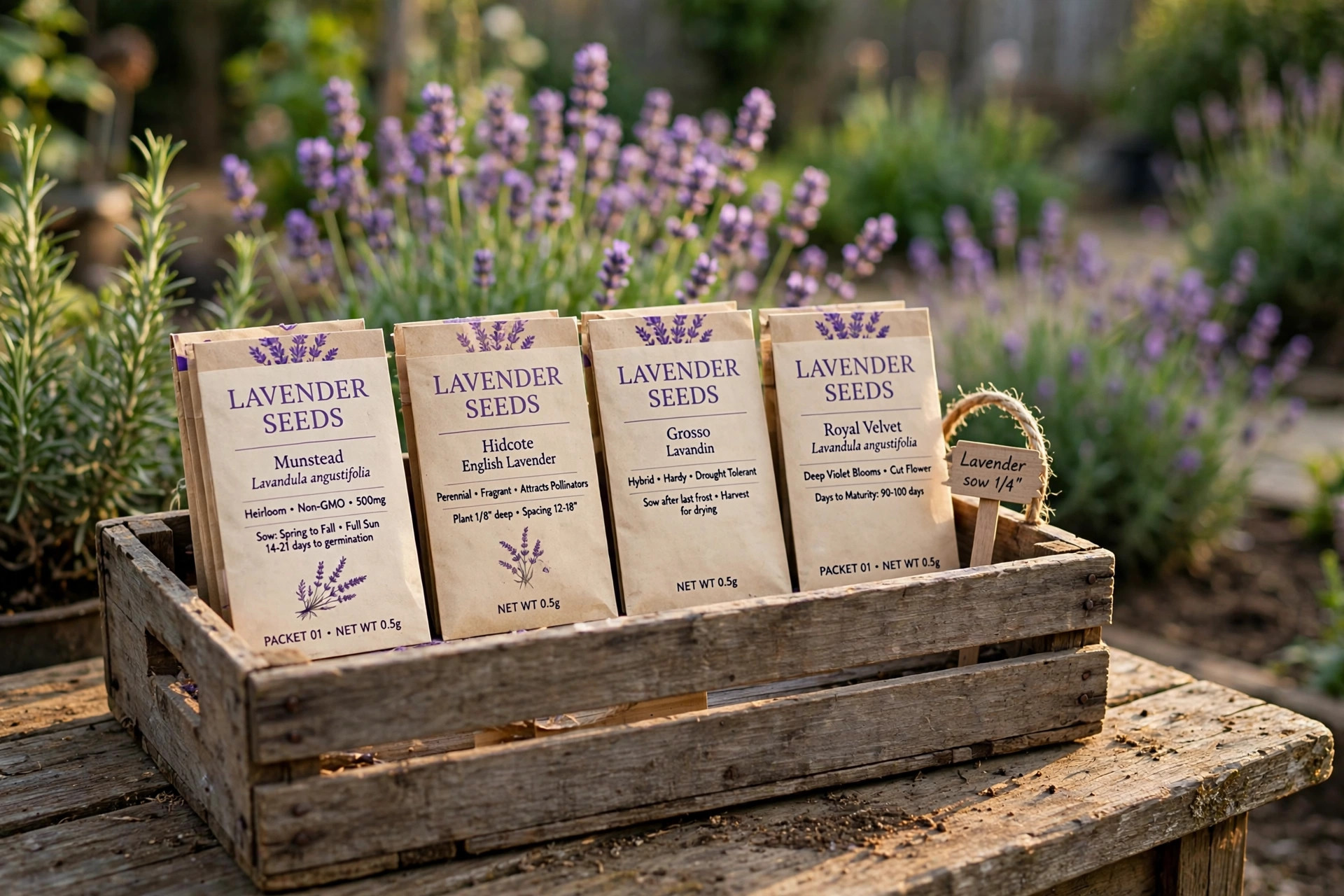
Understanding the Packet Label: Lavender Seed Packets Buying Guide Usa
Every seed packet in the USA carries key facts by law or custom. Learning to read them is the first step in this lavender seed packets buying guide usa readers should master.
Variety Name
Look for the exact variety, not just the word lavender. English lavender is usually Lavandula angustifolia. French or Spanish lavender is Lavandula stoechas. Each grows differently. English types are hardier in cold winters. French types flower earlier and tolerate heat. The packet should name the variety, such as Hidcote, Munstead, or Vera. If the packet only says lavender with no variety name, quality may be poor.
Seed Count or Weight
Packets state either a seed count or a weight in grams. Lavender seed is tiny, so a packet may hold one hundred seeds or more. A higher count gives you room to lose some seedlings. For a full hedge, buy two or three packets rather than one.
Pack Date and Germination
Many packets print a pack year or a sell-by date. Seed loses power with age. Buy the current season pack. Germination rates for fresh lavender seed often run near seventy to eighty percent, but only when the seed is fresh and stored well. Advice on reading seed catalogs and sowing calendars from The Old Farmer’s Almanac can help you plan the right start date for your region.
Growing Instructions
The back of the packet should tell you when to sow, how deep to plant, and how long germination takes. Lavender needs light to germinate, so seed goes on the soil surface with only a dust of covering. It also needs warmth, around seventy degrees Fahrenheit, and patience. Some seed takes two to four weeks to sprout. A packet with no instructions is a warning sign.
Types of Lavender Seeds to Consider
English Lavender
English lavender, Lavandula angustifolia, is the classic fragrant kind. Varieties such as Hidcote and Munstead grow compact, with deep purple flowers and strong scent. They handle cold winters down to zone five. They are the best choice for drying, for sachets, and for cooking use. Most packets sold in the USA belong to this group, and experienced growers at Burpee and Park Seed have long offered these reliable types.
French and Spanish Lavender
Lavandula stoechas carries showy top petals that look like little flags. It blooms early and grows well in hot climates. It is less hardy in cold zones and has a sharper, less sweet scent. Gardeners in warm states often choose it for long color. Plants from Monrovia nurseries show how large these can grow in mild winters.
Lavandin
Lavandin is a hybrid with tall spikes and very strong scent. It is often grown for oil and for large hedges. Seed packets of lavandin are less common, but some suppliers carry them. They grow larger than English types, so give them more space.
Dwarf and Container Types
Small varieties suit pots and window boxes. Munstead is a natural dwarf. Some newer compact lines were bred for containers. If you garden on a balcony, choose a packet that names a compact variety and says container friendly. Warm-climate gardeners who also grow succulents indoors in Florida homes often pair dwarf lavender with other sun lovers on the patio.
Where to Buy Lavender Seed Packets in the USA
You have three main choices.
Local garden centers sell packets from well-known brands. The staff can answer questions. The seed is usually fresh because stock turns over each spring. The variety choice is limited.
Big box stores carry many packets at low prices. Check the dates. Stock may sit on warm shelves, which hurts seed life. Buy early in the season for the freshest packets.
Online seed houses offer the widest choice and detailed variety notes. Trusted names such as Gurney’s, White Flower Farm, and Proven Winners describe each variety with care. You can compare English and French types side by side. Shipping is quick, and packets arrive sealed. Many growers share growing advice on The Spruce, which covers lavender seed starting in plain steps.
Cost and Price: What Packets Should Cost
Lavender seed packets in the USA usually cost between one and six dollars. A basic packet from a common brand sits near three dollars. Heirloom or organic packets may reach five or six dollars. Bulk seed for large plantings costs more per order but less per seed.
Price does not always mean quality. A two-dollar packet from a fresh lot can outgrow a five-dollar packet that sat in a hot warehouse. What matters is the pack date, the variety name, and the seller’s name. Research programs through NIFA at the U.S. Department of Agriculture remind growers that seed freshness and proper storage decide success more than brand price.
Buy enough for your plan. One packet sows a small bed. A long hedge of fifty plants needs three to five packets, since not every seed becomes a plant. If you are also sowing sunflower seeds for a sunny border, budget for both at the same time so your sowing calendar stays on track.
How to Choose: A Step-by-Step Checklist
Use this checklist from our lavender seed packets buying guide usa gardeners follow each spring.
1. Match the variety to your zone. Cold zones need English lavender. Warm zones can use French types. 2. Pick the use. Drying and cooking call for English types with strong scent. Long color calls for French types. 3. Read the packet back. Confirm the variety name, the seed count, and the pack year. 4. Check the sell-by date. Choose the current season. 5. Compare seed counts. More seed gives more chances. 6. Read the sowing notes. Good packets explain light, warmth, and timing. 7. Buy from a known seller. Fresh stock from a trusted brand beats a bargain from a dusty shelf.
Starting Lavender Seed Indoors
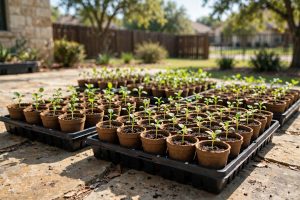
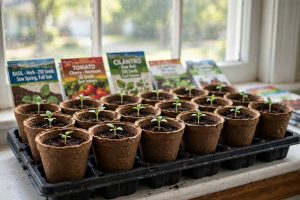
Lavender seed starts best indoors, six to eight weeks before the last frost. Use a light seed-starting mix. Fill small pots or cell trays. Press the seed onto the surface and cover with only a whisper of mix. Mist gently.
Cover the tray with a clear lid to hold moisture. Place it in warmth, near seventy degrees. A heat mat helps. Check daily. Remove the lid once sprouts appear. Move the seedlings to bright light. A sunny window or a simple shop light works.
Lavender seedlings grow slowly. They may look weak at first. Do not rush to move them outside. Wait until nights stay above fifty degrees. Harden them off over one week, giving them longer outdoor time each day.
Transplanting and Care
Plant lavender in full sun, at least six hours a day. Dig a hole as deep as the root ball. Space English types twelve to eighteen inches apart. French types need more room. Water after planting, then let the soil dry between waterings.
Lavender hates wet feet. Heavy clay soil kills it. If your soil holds water, plant on a low mound or in a raised bed. Mix sand or small gravel into the planting hole. Do not add rich compost or heavy fertilizer. Lean soil makes stronger plants with better scent.
Prune lightly after flowering. Cut back the spent flower stems but do not cut into old wood. A light trim each year keeps plants dense. Every few years, replace old woody plants with fresh ones from seed.
Care and Upkeep Through the Year
Spring: clean dead stems. Check for winter damage. Start new seed indoors.
Summer: deadhead spent blooms for more flowers. Water only in long dry spells. Harvest stems for drying when the buds are full but not yet open.
Fall: give a final light trim. Do not fertilize late in the season. Mulch lightly with gravel, not bark, to keep crowns dry.
Winter: protect young plants in cold zones with a breathable cover. Avoid heavy mulch that traps moisture. Mature English types usually survive with no help.
Common Problems
Poor germination is the most common trouble. Old seed, cold soil, or buried seed causes most failures. Sow on the surface in warmth.
Damping off kills seedlings at the soil line. Use clean mix and do not overwater. Good air flow helps.
Root rot comes from wet soil. Fix the drainage before you replant. Raised beds and gravel mulch solve most cases.
Few flowers may mean too much shade or too much food. Move plants to full sun and skip the fertilizer. Lavender flowers best when slightly stressed.
Safety
Lavender is safe for most gardens. The essential oil is strong and should not be eaten in large amounts. Keep oil away from small children and pets. The plant itself is not toxic to people, but dogs that chew large amounts may feel ill. If you grow lavender for cooking, use only food-safe varieties and wash the buds well. Store dried buds in sealed jars away from heat and light.
FAQ
How long do lavender seeds stay good? Fresh seed lasts two to three years if kept cool and dry. After that, germination drops. For best results, buy a new packet each season.
Can I sow lavender seed straight outdoors? Yes, in warm climates after the soil warms. In cold regions, indoor sowing gives stronger plants. Outdoor sowing needs steady warmth and even moisture.
How long until lavender flowers from seed? Most English types flower in their first summer if sown early indoors. Some plants wait until the second year. French types often flower sooner.
Do lavender seeds need light to germinate? Yes. Press them onto the soil surface and cover only lightly. Keep the tray in bright light or under a grow light.
How many packets do I need for a hedge? Plan one plant per foot of hedge. Since not every seed becomes a plant, buy three to five packets for a fifty-foot row. Sow extra and thin later.
Is organic lavender seed worth the price? Organic seed suits growers who avoid treated seed. For home gardens, both kinds grow well. Freshness matters more than the organic label.
A Short Final Word
A little care at the buying stage saves a season of trouble. Read the packet. Match the variety to your climate. Buy fresh seed from a trusted seller. Start it warm and bright, plant it in sun and sharp drainage, and leave it mostly alone. Few plants reward so little work with so much scent and color. This lavender seed packets buying guide usa gardeners keep on hand should make that first purchase an easy one.
References
Burpee. (n.d.). Seeds, plants, and gardening supplies. https://www.burpee.com Gurney’s Seed & Nursery Co. (n.d.). Seeds, plants, and garden supplies. https://www.gurneys.com Monrovia. (n.d.). Plants for home gardens. https://www.monrovia.com National Institute of Food and Agriculture. (n.d.). Agricultural research and extension. https://www.nifa.usda.gov Park Seed. (n.d.). Seeds, plants, and gardening supplies. https://www.parkseed.com Proven Winners. (n.d.). Plants and gardening inspiration. https://www.provenwinners.com The Old Farmer’s Almanac. (n.d.). Gardening calendars and advice. https://www.almanac.com The Spruce. (n.d.). Home and garden advice. https://www.thespruce.com White Flower Farm. (n.d.). Plants, bulbs, and garden supplies. https://www.whiteflowerfarm.com
Was this guide helpful?

About James Carter
The My Garden US editorial team writes practical, in-depth home and garden guides for American homeowners — tested advice, no fluff.