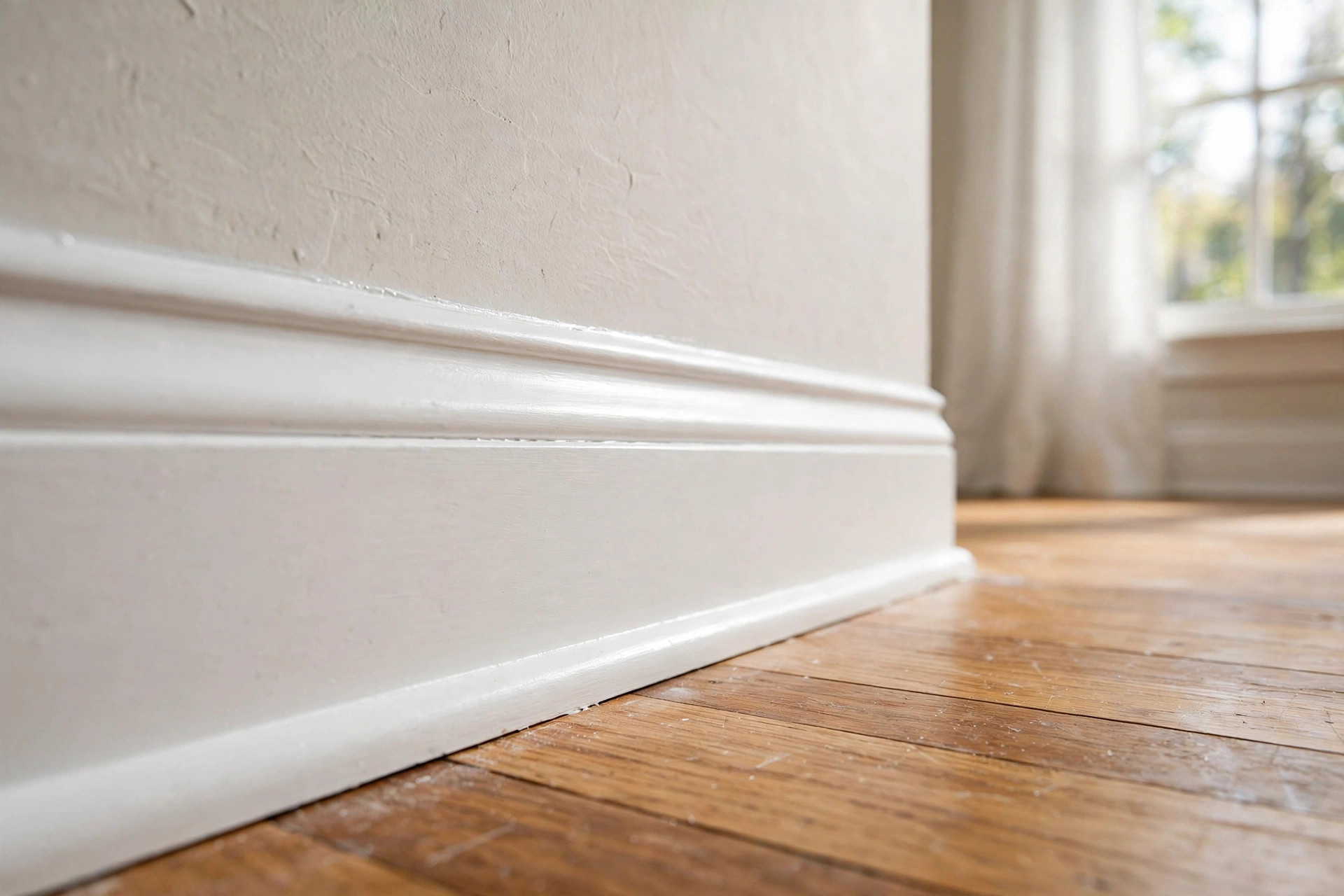

Most buyers who search for the best caulk for baseboards reviews usa want the same simple thing. They want a clean line where the baseboard meets the wall. They want a seal that takes paint. And they want it to last for years without cracking or pulling away. This guide walks through the main types of caulk used for baseboards, what to look for on the label, and how much you should expect to pay. You will also find step-by-step tips for getting a neat bead, plus answers to the questions shoppers ask most often.
Why Caulking Baseboards Matters
Baseboards sit at the bottom of your walls. They take knocks from vacuum cleaners, shoes, and chair legs. Even in a well-built home, small gaps open up between the baseboard and the wall. The trim can shift a little with changes in heat and moisture through the year. Walls are rarely perfectly flat. The result is a thin shadow line along the top of the trim.
Caulk fills that line. It seals the joint so dust and insects cannot slip behind the trim. It gives the wall a finished look that paint alone cannot give. Painters call this step “cutting in the trim.” When it is done well, the baseboard and the wall look like one clean piece.
There is another reason to caulk before you paint. Fresh paint sticks best to a smooth, sealed surface. If you paint over an open gap, the gap only stands out more. A bead of paintable caulk smooths the joint first. Then the paint flows over it and hides the repair.
Skipping this step costs more than it saves. Unsealed gaps let moist air reach the drywall behind the trim. Over time that moisture can stain paint and soften drywall paper. In a laundry room or bathroom, the damage shows faster. A four-dollar tube of caulk can prevent a repair that costs hundreds.
What to Look for When You Choose Caulk: Best Caulk for Baseboards Reviews Usa
Store shelves hold dozens of tubes. The labels use similar words. Here is what each point means in plain terms.
Paintability
The most important point for baseboards is paintability. The caulk must take paint well. Acrylic latex caulk and acrylic latex caulk with silicone both accept paint. Pure silicone caulk does not accept paint. Paint beads up and peels off silicone within weeks. For baseboards that you plan to paint, never buy 100 percent silicone.
Look for the words “paintable” on the front of the tube. Test reviews from United States homeowners confirm this point again and again. The best-rated products in the best caulk for baseboards reviews usa roundups are always paintable types.
Flexibility and Shrinkage
Wood trim moves. It swells a little in humid months and shrinks in dry months. The caulk must stretch with that movement. Cheap caulk cracks when the wood moves. A tube labeled “40-year” or “50-year” paint is not a promise of 50 years of service. But it does signal a better formula with more flex and less shrink.
Shrinkage matters too. Thin, cheap caulk can shrink as it dries and leave a small valley along the joint. A second bead may be needed. Mid-priced and top-priced caulk holds its shape better as it cures.
Dry Time and Cleanup
Water cleanup is the friend of the home painter. Latex and latex-with-silicone caulk clean up with a damp cloth and plain water. Silicone needs solvents. Dry time matters when you plan to paint the same day. Most latex caulk forms a skin in about 30 minutes and can be painted in about two hours. Cold or damp rooms slow the cure. Read the tube for the exact times.
Types of Caulk for Baseboards
Three types show up most in reviews and on store shelves. Here is how each one behaves on baseboard trim.
Acrylic Latex Caulk
Acrylic latex caulk is the old workhorse. It costs the least. It is easy to tool with a wet finger. It takes paint well. It works fine for baseboards in dry rooms such as bedrooms and living rooms.
The weak point is flexibility. In rooms with wide temperature swings, it can crack sooner than the other types. It also shrinks more. Many painters keep a tube on hand for small touch-ups but choose a step up for full rooms.
Acrylic Latex Plus Silicone
This blend is the most common pick in the best caulk for baseboards reviews usa lists. It mixes the easy cleanup of latex with the flex and water resistance of silicone. It takes paint well. It stays flexible longer than plain latex. It shrinks less.
For most American homes, this is the type the pros reach for. It costs a dollar or two more per tube than plain latex. The extra money buys a longer-lasting seal. If you want one tube that handles baseboards in every room, this is the one.
Silicone Caulk
Pure silicone caulk is tough and waterproof. It lasts a long time. But it will not take paint. That single fact rules it out for painted baseboards. Paint will not bond to it.
Silicone has its place. It works well where the baseboard meets a tile floor in a bathroom, or around a tub where the trim stays unpainted. For painted wood trim, choose one of the paintable types above instead.
Cost and Price: What You Will Pay
Caulk is one of the cheapest supplies in a paint job. Here are the typical shelf prices in United States stores:
– Plain acrylic latex caulk: about two to four dollars per 10-ounce tube. – Acrylic latex plus silicone: about five to eight dollars per tube. – Top-rated specialty trim caulk: about eight to twelve dollars per tube.
One 10-ounce tube seals roughly 25 to 50 feet of baseboard, depending on the size of the gap. A small bedroom needs one tube. A whole house may need six to ten tubes. Buying a case of twelve tubes can cut the per-tube price at contractor supply stores.
Do not judge a tube by the price alone. The cheapest tube often needs a second coat, which doubles your labor. A mid-priced tube that goes down smooth the first time is the better value. Reviews from United States buyers make this point often. The highest-rated products are rarely the cheapest on the shelf.
How to Caulk Baseboards the Right Way
A neat bead comes from method, not magic. Follow these steps for a clean result.
First, gather your tools. You need a caulk gun, a sharp utility knife, a damp rag, and painter’s tape. Some people skip the caulk gun and buy squeeze tubes. Squeeze tubes work for short runs. A gun gives steadier flow for long walls.
Second, cut the tip of the tube. Cut it small. You can always make the hole bigger. You cannot make it smaller. Cut the tip at a slight angle, about 45 degrees. Pierce the inner seal with a long nail or the poker on the caulk gun.
Third, run a test bead on a scrap board. Get a feel for the trigger. The bead should be thin and steady.
Fourth, apply tape if you are new to the work. Run painter’s tape along the wall just above the gap and along the top edge of the baseboard. The tape keeps the bead narrow and clean. Experienced painters often skip tape, but tape helps a beginner.
Fifth, lay the bead. Hold the gun at a 45-degree angle. Move at a steady pace. Do not stop and start. One smooth pull gives the best line. Keep the bead thin. More caulk does not mean a better seal. It only means more mess to clean up.
Sixth, smooth the bead right away. Wet your finger and run it along the bead in one pass. Wipe your finger on the damp rag as needed. This step presses the caulk into the gap and removes the excess. Pull off the painter’s tape before the caulk skins over.
Seventh, let it cure before you paint. Check the tube for the wait time. Most paintable caulk is ready for paint in about two hours. Rushing this step can pull the bead loose when you brush over it.
Shoppers comparing best paintable caulk for baseboard trim options in reviews often ask whether to caulk before or after painting. The standard order is: caulk first, then paint. The paint hides the bead and blends the trim into the wall.
Care and Upkeep
Caulked baseboards need little care. Wipe them with a damp cloth during regular cleaning. Check the joints once a year, especially in rooms with big humidity swings. Small cracks can be touched up with a fresh thin bead over the old line.
If a long section cracks or pulls loose, cut out the failed bead with a utility knife. Clean the gap with a damp rag. Let it dry. Then lay a fresh bead and paint to match. A repair takes minutes and costs almost nothing.
Related trim projects use the same skills. Many homeowners who caulk baseboards go on to add wainscoting or wall paneling in the same room. The caulk work you learn here applies to every trim joint in the house. It also comes in handy with decorative trim and millwork projects like board and batten walls.
Safety
Caulk is safe when used with common sense. Work in a room with the window open or a fan running. Do not eat or drink while you handle an open tube. Keep tubes away from small children and pets. If caulk gets on your skin, wash it off with soap and water before it dries. Wear gloves if you have sensitive skin.
Do not burn old caulk or throw tubes into a fire. Dispose of empty tubes with normal household trash. If a tube is half full, squeeze the rest onto newspaper, let it dry, and throw it away. Many cities have rules about paint waste. A quick check with your local waste office will tell you the right method.
FAQ
Can I use silicone caulk on painted baseboards?
No. Pure silicone caulk will not hold paint. The paint will peel off within weeks. Use a paintable acrylic latex or latex-with-silicone caulk on any trim you plan to paint. Save silicone for spots that stay unpainted, such as around a tub.
How long does baseboard caulk last?
A good bead of latex-with-silicone caulk lasts five to ten years on interior baseboards. Dry rooms last longer. Bathrooms and laundry rooms see shorter life because of moisture and heat swings. Check the joints once a year and touch up as needed.
Should I caulk the bottom of the baseboard where it meets the floor?
Most painters say no. The bottom edge takes foot traffic and floor cleaners, which break the seal fast. Caulk the top edge where the trim meets the wall. Leave the bottom edge alone unless you have a draft problem. In that case, check guides on draft-proofing and air sealing ideas for trim before you seal the floor line.
How soon can I paint over caulk?
Check the tube. Most paintable caulk accepts paint after about two hours. In cold or damp rooms, wait longer. Some premium tubes claim a 30-minute paint time. Give it a little extra time if you can. Painting too soon can drag and wrinkle the fresh bead.
Why is my caulk cracking after a few months?
Cracks come from three main causes. The gap was too wide for caulk alone. The caulk was cheap and lacked flex. Or the bead was painted before it cured. Gaps wider than a quarter inch need backer rod or wood filler first. For normal joints, a mid-priced latex-with-silicone caulk cures the problem.
Is expensive caulk worth it for baseboards?
For most homes, yes, within reason. The jump from a two-dollar tube to a six-dollar tube buys better flex, less shrink, and easier tooling. Past about twelve dollars a tube, the gains get small. Read the best caulk for baseboards reviews usa roundups and pick a mid-priced tube with strong marks for paintability and smooth flow.
Final Word
Choosing caulk for baseboards is not hard. Pick a paintable latex-with-silicone tube. Cut the tip small. Lay a thin bead. Smooth it with a wet finger. Let it cure before you paint. That is the whole job. The best caulk for baseboards reviews usa shoppers rate highest all follow this same simple formula. Spend a few extra dollars on the tube, take your time on the bead, and your trim will look like a pro did it.
For more background, see Bob Vila, The Spruce, and HGTV. For more background, see Sherwin-Williams, Behr, and Benjamin Moore. Buying guides are also published by The Home Depot and Lowe’s.
References
Behr. (n.d.). Paints, primers, and stains. https://www.behr.com Benjamin Moore. (n.d.). Paints and stains. https://www.benjaminmoore.com Bob Vila. (n.d.). Home improvement advice. https://www.bobvila.com HGTV. (n.d.). Home and garden ideas. https://www.hgtv.com Lowe’s. (n.d.). Home improvement products. https://www.lowes.com Sherwin-Williams. (n.d.). Paints and coatings. https://www.sherwin-williams.com The Home Depot. (n.d.). Home improvement products. https://www.homedepot.com The Spruce. (n.d.). Home and garden advice. https://www.thespruce.com
Was this guide helpful?

About Sarah Mitchell
The My Garden US editorial team writes practical, in-depth home and garden guides for American homeowners — tested advice, no fluff.
You May Also Like

Wallpaper for Powder Room Ideas USA: A Practical Guide for Homeowners
March 10, 2026 0 views
How to Use a Two Story House Painting Cost Calculator USA Homeowners Trust
February 24, 2026 0 views
Gallery Wall Frame Sets for Sale USA: A Simple Buying Guide
July 17, 2026 0 views