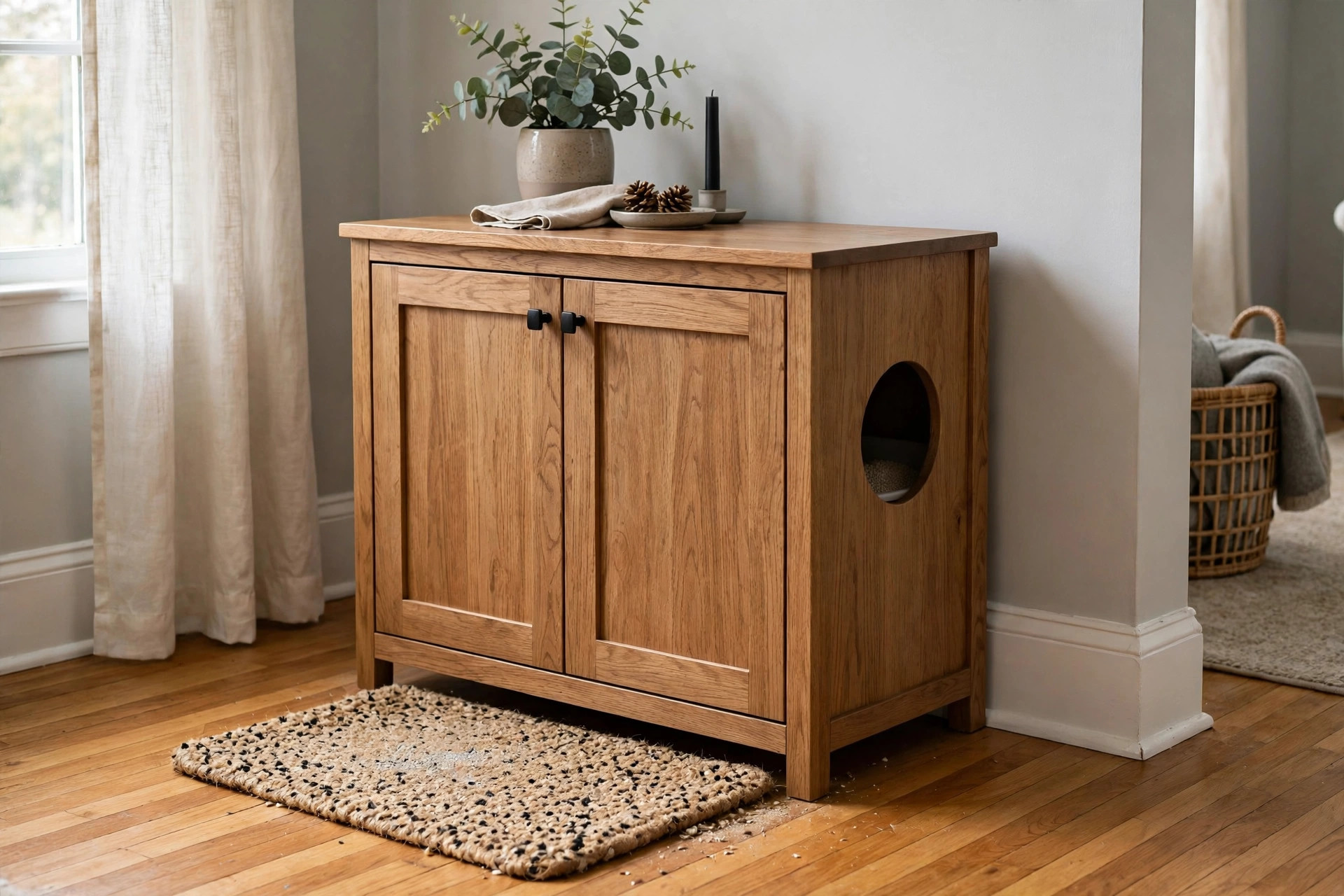

The best litter box enclosure furniture for cats solves a problem that nearly every cat owner knows. A litter box is needed in the home. But it is not pleasant to look at. It can smell. It can throw litter across the floor. An enclosure hides the box inside a piece of furniture. Guests see a cabinet, a bench, or a side table. The cat steps inside and uses the box in private. This guide explains what these pieces do, what to look for, and how to pick the right one.
Why It Matters
A bare litter box sits in the open. It draws the eye. It can make a room feel untidy even when the room is clean. An enclosure covers the box and gives the room a finished look. The furniture becomes part of the home. A cabinet in the hallway or a bench in the laundry room can hold a litter box without announcing it.
Odor is another reason. Litter boxes smell, most of all in small homes. An enclosure holds the odor inside the cabinet for a time. Many models add vents or filters. The smell does not drift as far. This helps in apartments and in homes where the box sits near the kitchen or the living room. No box is odor free. But an enclosure cuts the smell in a clear way.
Scatter is a third reason. Cats kick litter when they dig. The grains land on the floor around the box. A bare box throws litter in every direction. An enclosure has walls on most sides. The litter stays inside. A mat at the door of the enclosure catches what sticks to the paws. Less litter on the floor means less sweeping each day.
Privacy matters to cats too. Many cats like a quiet spot to do their business. An enclosure gives a dark, calm space. Nervous cats may use the box more often when it feels hidden. That is good for the cat and good for the owner. A cat that avoids the box can soil the carpet. A box that feels safe helps stop that problem.
What to Look For: Best Litter Box Enclosure Furniture for Cats
A good enclosure fits three needs at once. It must fit the box. It must fit the cat. It must fit the room. Check each point before you buy.
Size and Fit
The inside space is the key measure. The box should fit with room to spare. The cat should be able to turn around inside the box. A rule that works for most cats: the box should be as long as the cat from nose to the base of the tail, plus half again. Then the enclosure must be larger than the box on all sides. Leave at least two inches of air around the box. This gives room for a mat and for easy cleaning.
Think about the door opening. The cat must pass through it with ease. A small round hole may suit a small cat. A large cat may find it tight. Look at the width and the height of the entry. The best designs let the cat step in without a jump. Older cats and heavy cats do best with a low entry.
Also think about the outside size. Measure the spot where the piece will stand. Hallways are narrow. Laundry rooms are small. Leave room for the door of the cabinet to open. Leave room for you to reach the box each day. A litter box cabinet for large cats needs extra depth, so check the floor plan twice.
Ventilation and Air Flow
A closed box traps smell and heat. Air must move. Good enclosures have vents on the back or on the sides. Some have a small fan. Some have a spot for a carbon filter. Filters do not last forever. Plan to change them every few weeks.
Do not seal the piece air tight. A cat needs fresh air inside. A stuffy box may turn a cat away from it. One or two vents near the top are often enough. Place the enclosure away from heating vents and from direct sun. Heat builds up fast in a closed cabinet.
Types of Enclosure Furniture
Most enclosures fall into three broad types. Each type fits a different room and a different style.
Cabinet Style
The cabinet looks like a small cupboard or a nightstand. It has doors on the front. The litter box sits inside. The cat enters through a hole cut in the side or through a pet door. Many cabinet models offer hidden litter box furniture with storage. One side holds the box. The other side holds bags, scoops, and spare litter. This is a clean way to keep all supplies in one place.
Cabinets suit living rooms and bedrooms. They come in white, gray, brown, and wood tones. Some have a top that can hold a lamp or a plant. Do not place heavy items on a light cabinet. Check the weight limit before you use the top as a shelf.
Bench and Side Table Style
The bench is long and low. It looks like a storage bench at the foot of a bed or in an entryway. The top lifts or the front opens to reach the box. The cat enters from the side or from the end. A bench can hold a large box with ease. The long shape gives the cat plenty of room.
The side table style is a cube with a flat top. It can sit next to a sofa or an armchair. The top works as a table for a book or a drink. The box hides below. This style fits small rooms where every piece must do two jobs. A wooden cat litter box enclosure in side table form can match wood floors and wood trim.
Corner and Multi Level Designs
Corner units fit into a corner of the room. They use space that often goes to waste. The shape is a triangle or a half circle. The cat enters from the open side. Corner units are handy in bathrooms and in small bedrooms.
Multi level designs have two floors. The box sits on the lower floor. The upper floor holds a bed or a rest area. The cat climbs a small ramp or steps to reach the top. These pieces work as both a litter box cabinet and a cat tree for large cats. They save floor space. But they are tall, so place them against a wall for safety.
Cost and Price
Prices run from low to high. A simple particle board cabinet may cost between forty and eighty dollars. It will do the job for a year or two. A solid wood bench may cost between one hundred and two hundred dollars. It will last much longer. High end models with filters, fans, and fine finishes can cost three hundred dollars or more.
Material sets the price. Pressed wood is cheap but swells if it gets wet. Solid wood costs more and stands up to cleaning. Bamboo is strong and light, and it resists moisture. Metal frames with wood panels sit in the middle of the range.
Think about the total cost, not just the price tag. A cheap unit may need new filters each month. A well built unit may need only soap and water. A unit that the cat rejects is wasted money at any price. If you can, pick a design with a return policy. Give the cat a week to get used to it. Pet supply retailers such as Chewy and stores like PetSmart or Petco often carry several styles at different price points.
Care and Upkeep
Clean the box as usual. The enclosure does not change that rule. Scoop every day. Change the litter on a set schedule. Wipe the inside of the cabinet once a week with a damp cloth and mild soap. Do not use strong cleaners with heavy scents. Cats dislike strong smells. A cat may stop using a box that smells of cleaner.
Check the vents and the filter each month. Dust blocks air flow. A blocked vent makes the inside stuffy. Replace carbon filters when the smell starts to return. Keep a mat at the entry and shake it out each day. Wash the mat once a week.
Watch the wood for damage. Litter dust holds moisture. Urine can seep into raw wood if the cat misses the box. Line the floor of the cabinet with a washable tray or a plastic sheet. This guards the wood and makes cleanup simple. Tighten screws twice a year. Hinges and doors get loose with daily use.
Safety Notes
The enclosure must be safe for the cat first. The door hole must not pinch or trap. Run your hand along every edge. Sand or file any rough spot. The piece must not tip. Tall units need a wall anchor. Do not let a child climb on it.
Air flow is a safety point too. Never block the vents. Never wrap the cabinet in plastic or blankets to hide the smell. The cat must always have fresh air and a clear way out. If you use a pet door with a flap, make sure the flap swings both ways and does not lock.
Watch for chewing. Some cats chew wood or press board. Press board can hold glue and chemicals. If your cat chews, pick solid wood or a coated surface. Animal welfare groups such as the ASPCA and veterinary advice at PetMD stress that a safe, clean litter area helps a cat stay healthy. General pet care guidance from sources like the AKC and pet care guides at The Spruce Pets also note that stress around the litter box can lead to health issues.
FAQ
Will my cat use an enclosed box?
Most cats will. But some cats dislike closed spaces. Move the old box next to the new enclosure for a few days. Let the cat explore the open cabinet first. Place treats near the door. Do not force the cat inside. Take the doors off at the start if the cat seems unsure. Most cats accept the change within a week.
What size box fits inside?
Measure first. Write down the length, width, and height of your box. Then check the inside size of the enclosure. Leave at least two inches on each side. If you use a self cleaning litter box for busy cat owners, note that these units are often taller than standard boxes. Check the height with care.
How do I control odor?
Scoop daily. That is the best step. A good clumping litter helps too. Many owners pair an enclosure with the best cat litter for odor control in multi cat homes. Add a carbon filter if the unit has a slot for one. Vent the room each day. No product beats daily scooping.
Can I build one myself?
Yes. Many owners turn a storage cabinet into an enclosure. Cut a cat sized hole in the side. Sand the edges smooth. Line the floor with a tray. Flat pack furniture from IKEA is a common base for such projects. Make sure the finished piece is stable and well aired.
Where should I put it?
Pick a quiet spot with low foot traffic. A laundry room, a spare bedroom, or a hallway corner all work. Keep it away from the food and water bowls. Cats like to eat far from the toilet area. Keep it away from loud machines like washers when they run.
Is one box enough for two cats?
The common rule is one box per cat, plus one extra. Two cats do best with three boxes. If you use enclosures, you may need more than one piece. Some owners place two cabinets side by side. That can look neat and keep both cats happy.
A Final Word
The best litter box enclosure furniture for cats is the one that fits your cat, your box, and your room. Measure with care. Pick a design the cat can enter with ease. Keep it clean and aired. A good enclosure hides the mess, cuts the smell, and gives the cat a private spot. It is a small change that makes daily life better for both of you.
References
American Kennel Club. (n.d.). Dog care and training resources. https://www.akc.org ASPCA. (n.d.). Pet care and animal welfare resources. https://www.aspca.org Chewy. (n.d.). Pet supplies. https://www.chewy.com IKEA. (n.d.). Home furnishings. https://www.ikea.com Petco. (n.d.). Pet supplies and services. https://www.petco.com PetMD. (n.d.). Pet health information. https://www.petmd.com PetSmart. (n.d.). Pet supplies and services. https://www.petsmart.com The Home Depot. (n.d.). Home improvement products. https://www.homedepot.com The Spruce Pets. (n.d.). Pet care guides and product reviews. https://www.thesprucepets.com Wayfair. (n.d.). Furniture and home goods. https://www.wayfair.com
Was this guide helpful?

About Robert Taylor
The My Garden US editorial team writes practical, in-depth home and garden guides for American homeowners — tested advice, no fluff.
You May Also Like
Best Cat Calming Diffuser for Multi Cat Homes
February 22, 2026 0 views
Cat Climbing Wall Shelves for Vertical Space: A Practical Guide
August 6, 2026 0 views
Pet Food Storage Container Airtight Large: A Complete Guide for American Pet Owners
April 24, 2026 0 views