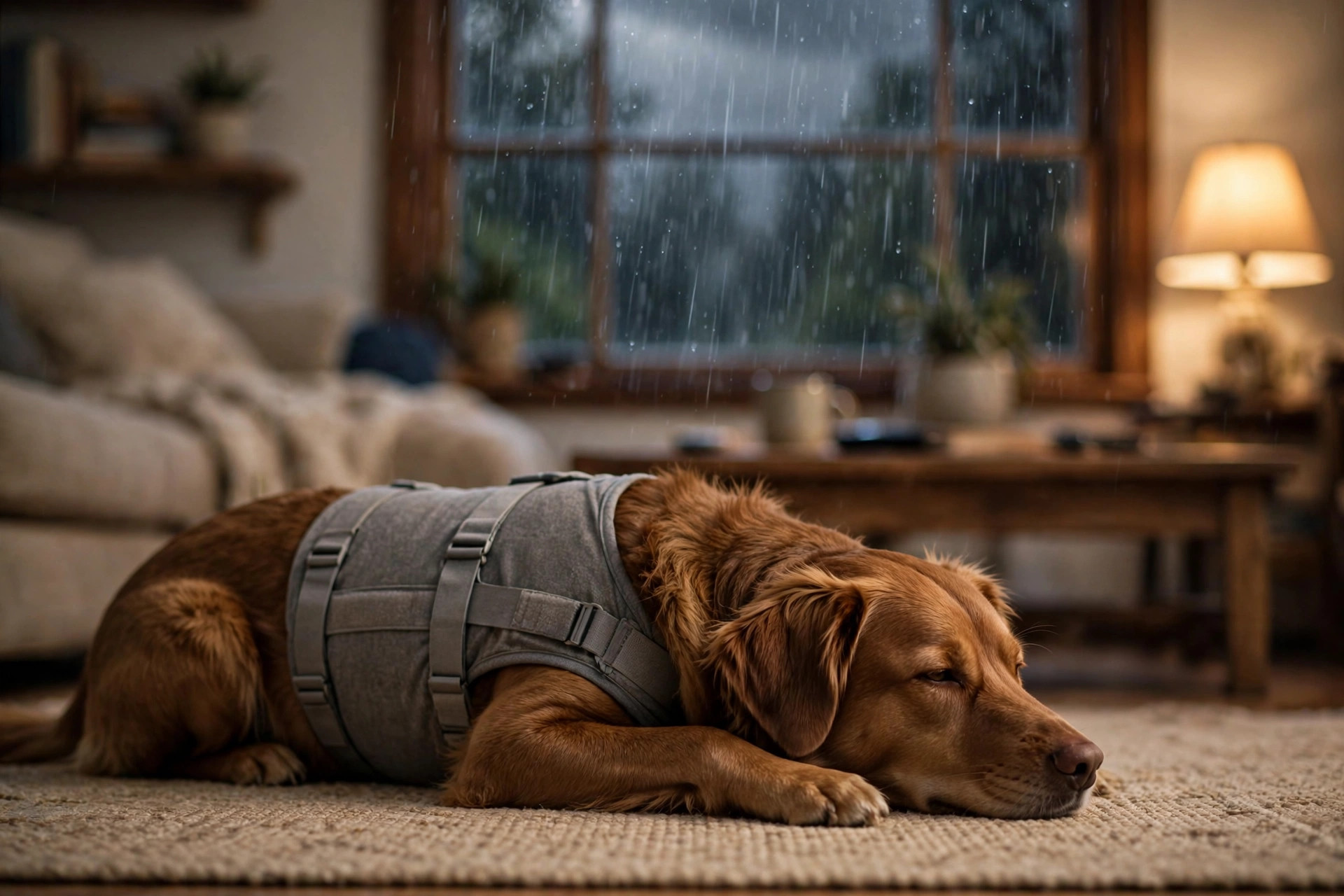

Many owners know the scene. The sky darkens. Thunder rolls. The dog starts to shake, paces the floor, and hides behind the sofa. A dog anxiety vest for thunderstorms and fireworks is a simple tool made for this problem. It is a snug wrap that fits around the dog’s torso and applies steady, gentle pressure. The idea is much like swaddling a restless infant. The constant pressure feels safe, and many dogs settle once the vest is on.
Noise fear is one of the most common troubles in pet dogs. A large share of dogs react to thunder and fireworks with real distress. Some only whine or cling to their owners. Others try to flee the house, scratch at doors, or jump through windows, and they can hurt themselves. In the United States, the Fourth of July weekend brings one of the year’s biggest spikes in lost-dog reports at shelters.
A vest does not replace training or veterinary care. It is one tool among several. But for many families it is the first tool that brings real relief. This guide explains how the vest works, how to choose and fit one, and how to care for it. It also covers cost, safety, and the questions owners ask most.
Why Thunderstorms and Fireworks Frighten Dogs
Dogs hear sounds that people cannot hear. A thunderclap that startles a person can overwhelm a dog. Fireworks are worse in some ways. They are sudden and unpredictable, and the flashes of light come with each blast. The dog cannot see where the noise comes from, and it cannot make it stop.
Storms add triggers beyond sound. Dogs may sense drops in air pressure and the smell of ozone that comes with lightning. Static electricity also builds up in the coat, which may add to the panic.
Age and past events shape the fear. A young dog may learn it from an older dog in the house, and a rescue dog may carry a bad memory of noise. Once the pattern sets in, each storm confirms it, so early help matters. A dog anxiety vest for thunderstorms and fireworks works best before the fear becomes deep and fixed.
How the Vest Works: Dog Anxiety Vest for Thunderstorms and Fireworks
The vest uses a principle called maintained pressure. Fitted snugly around the chest and sides, it gives a steady squeeze that does not change, and the nervous system reads it as a calm signal. This is the same idea behind holding a crying child close. Constant touch can lower the heart rate, slow rapid breathing, and reduce shaking.
Veterinarians call this a calming response. The body moves out of the fight-or-flight state. Studies of pressure wraps show mixed but hopeful results. In several trials, most dogs showed less panting, pacing, and whining while wearing a snug wrap during storms or recorded thunder. A smaller share showed no change. Very few grew more anxious.
The vest does not drug the dog or change its nature. It is a passive aid, and that is its main appeal. Owners who wish to avoid sedatives often try it first. Many pair it with other calm routines, such as soft music or closed curtains to block the flashes.
Set fair hopes: the vest helps many dogs but not all, and severe cases may need training plus a vet’s plan.
How to Choose the Right Vest
Measure Before You Buy
Most brands size by chest girth. Wrap a soft tape around the widest part of the rib cage, just behind the front legs, and note the number. Then check the brand’s chart. When the dog falls between sizes, makers usually advise the smaller one. The vest must be snug to work. A loose wrap slides and gives no steady pressure.
Also weigh the dog, since some charts list weight as a second guide. For deep-chested or very broad breeds, check the brand’s breed notes.
Look at the Fabric
Most vests use a stretchy blend that should feel soft on the skin and spring back after each use. Flat seams are best, since raised seams can rub under the arms.
Breathability matters in summer. Storms in July and August are hot, and a thick wrap can overheat the dog. Many vests use light mesh panels for this reason. If your storm season is warm, treat this as a real concern.
Check the Closure
Vests close with hook-and-loop fasteners, buckles, or snap straps. Hook-and-loop is most common and allows fine tuning, though it can wear out with heavy use. Buckles are stronger but offer fewer size steps. The closure should be easy to fasten while the dog stands, since fumbling with straps while the dog shakes only adds stress.
Also note the noise of the closure. Ripping velcro can startle a sensitive dog, so test this at home before the next storm.
Types of Dog Anxiety Vests
Standard pressure wraps. The classic design is a simple fabric wrap around the torso. It is the most common type, light and easy to wash. For mild to moderate noise fear, it is often enough.
Full-body calming coats. Some vests run further, covering the shoulders and part of the neck, sometimes with a light hood over the ears to dull the sound. They cost more and suit dogs whose fear is severe.
Vests with scent pockets. A newer style adds small chest pockets for calming wipes or scent pads, usually plant-based blends made for pets. The proof for the scents alone is thin, but some owners like the option.
Weighted and padded designs. A few vests add light shoulder padding for a held feeling. They are heavier and warmer, best in cool climates.
For most owners, the standard wrap is the right start. It is the design with the most owner reports behind it. If it does not help enough, the fuller coat is the next step.
How to Fit the Vest
A poor fit is the most common reason a vest fails. Follow these steps on a calm day, never during a storm.
1. Lay the vest on the floor and let the dog sniff it. Reward calm interest with a small treat. 2. Drape it over the dog’s back without fastening and speak in a low, calm voice. 3. Fasten it loosely at first. Do not pull it tight on the first try. 4. Walk the dog around the room for a few minutes so it learns the feel. 5. Tighten one notch at a time. The vest should be snug; you should slide two fingers under the fabric at the chest. If your whole hand fits, it is too loose. 6. Watch the dog’s body. A good fit lets the dog walk, sit, and lie down as usual. If the dog freezes or bites at the vest, loosen it and try again later.
Put the vest on during pleasant times first, such as meals or quiet evenings. Build a neutral link before storm season. If you first fit it while thunder shakes the house, the dog will tie the vest to the fear.
Training Alongside the Vest
The vest works best inside a wider calm plan. Keep storm routines dull. If you rush to close windows and soothe the dog in a high voice, the dog reads your tension. Move slowly, speak little, and act as if nothing is wrong.
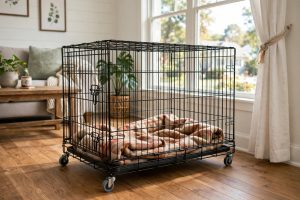
Give the dog a safe spot, such as a best dog crate for anxious dogs escape proof with a soft blanket and the door left open. Never drag the dog from its chosen spot.
Use background sound. A fan, radio, or white noise machine softens the sharp edge of thunder. It will not hide a close strike, but it takes the edge off distant rumbles.
Practice with recorded sounds. Play storm audio at very low volume while the dog wears the vest, and pair it with treats. Raise the volume a little over many sessions. This slow desensitization takes weeks but can shrink the fear over a season.
For dogs that also panic at grooming, a best dog nail grinder quiet for nervous dogs can ease a second common fear. And for older dogs that need comfort between storms, a best orthopedic dog bed for senior large dogs gives them a soft place to settle.
Cost and Price
A dog anxiety vest for thunderstorms and fireworks is one of the cheaper tools in pet care. Typical United States prices run as follows: basic pressure wraps, 20 to 40 dollars; mid-range vests, 40 to 60 dollars; full-body coats with ear coverage, 60 to 100 dollars; vests with scent pockets or padding, 50 to 80 dollars.
Price does not always track quality. Some of the simplest wraps have the most loyal users, and fit matters most. A well-fitted 30-dollar wrap beats a loose 80-dollar coat every time.
Most vests last two to four years with normal use. Puppies outgrow them, so buy for the expected adult size and check the fit each spring. Many owners compare size charts and reviews on Chewy and PetSmart.
Care and Upkeep
Wash the vest often. Skin oils build up in the fabric, and a dirty wrap can smell and irritate the skin. Most vests take a gentle machine cycle in cold water with a mild, unscented detergent. Skip fabric softener, which coats fibers and weakens stretch, and close all hook-and-loop strips before washing so they do not snag.
Air dry when you can. Dryer heat breaks down elastic fibers, so use the lowest heat setting if you must use a dryer.
Check the fasteners every few months. Hook-and-loop strips gather hair and lint, so clean them with an old toothbrush. When the strips no longer hold firm, replace the vest.
Store the vest where you can reach it fast, such as on the same hook as the leash.
Safety Notes
Do not leave the vest on all day. Most makers advise two to four hours at a time. Long wear can chafe the skin, above all under the front legs. Take it off once the storm has passed and the dog has settled.
Check the skin after each use for red marks or rubbed patches at the edges. If you see them, the fit may be too tight or the session too long.
Never use the vest over an open wound, a fresh surgical site, or a skin infection in the wrap area. Pressure and warmth can make these worse.
Watch for overheating. In hot weather, pair the vest with a cool room, a fan, or fresh cold water. If the dog pants harder with the vest on than without it, remove the vest and cool the dog first.
The vest is not a muzzle or a restraint. Never use it to hold a dog still for grooming or vet work. It is a calming aid, nothing more.
For general pet safety guidance, the ASPCA keeps clear fact sheets for owners, and the Humane Society of the United States posts storm-season advice each year.
When to Call Your Veterinarian
Some dogs need more than a vest. Call your vet if the dog tries to escape and has hurt itself, refuses food or water for hours around storms, or grows more fearful each season despite the vest and training. Also call if the fear spreads to everyday sounds like the vacuum, or if you are weighing calming drugs.
A vet can rule out pain or hearing trouble that may feed the fear, and can discuss short-term calming medicine for the worst nights. Medicine and a vest can be used together. The American Kennel Club notes that severe noise phobia sometimes needs a full behavior plan, and the earlier it starts, the better.
For vet-reviewed background on canine anxiety, see PetMD. Buying guides appear on The Spruce Pets and Whole Dog Journal. The original pressure-wrap design is sold at ThunderShirt, which also posts fitting videos, and big-box stock can be checked at Home Depot.
Frequently Asked Questions
How long before a storm should I put the vest on?
Put it on at the first sign: dark skies, distant rumbles, or weather alerts. Many owners fit it 20 to 30 minutes before the expected start. Do not wait until the dog is in full panic.
Can my dog sleep in the vest overnight?
Better not. Night storms last for hours, and long wear risks chafing and heat. Remove the vest once the dog has slept calmly for an hour or two, and check the dog between storm bands.
Does it work for fireworks as well as thunder?
Yes. Both trigger the same stress response, and the pressure works the same way. Many owners buy the vest mainly for the Fourth of July and New Year’s Eve.
What if my dog hates wearing clothes?
Go very slowly. Let the dog wear the vest unfastened for treats, then fastened for one minute, then five, over several days. Some dogs never accept one, and that is fine. A snug den, background noise, and a vet-made plan can still help.
Can I layer two vests for more pressure?
No. Layering adds bulk and heat without useful extra pressure. One well-fitted vest is the right approach. If one vest is not enough, ask your vet about adding training or short-term medicine.
Will the vest stop working over time?
Most owners report steady results across seasons. The fabric can stretch with age and weaken the pressure, so replace the vest when fasteners no longer hold snug and re-check the fit each spring.
A Final Word
A dog anxiety vest for thunderstorms and fireworks will not silence the sky. But for many dogs it turns a night of panic into a night of rest. It is cheap, simple, drug-free, and low risk. Fitted well and paired with a calm routine, it gives a fearful dog the steady sense of being held when the world outside is loud.
References
American Kennel Club. (n.d.). Dog care and training resources. https://www.akc.org ASPCA. (n.d.). Pet care and animal welfare resources. https://www.aspca.org Chewy. (n.d.). Pet supplies. https://www.chewy.com PetMD. (n.d.). Pet health information. https://www.petmd.com PetSmart. (n.d.). Pet supplies and services. https://www.petsmart.com The Home Depot. (n.d.). Home improvement products. https://www.homedepot.com The Humane Society of the United States. (n.d.). Animal protection and care. https://www.humanesociety.org The Spruce Pets. (n.d.). Pet care guides and product reviews. https://www.thesprucepets.com ThunderShirt. (n.d.). Calming wraps for dogs and cats. https://www.thundershirt.com Whole Dog Journal. (n.d.). Dog training and care magazine. https://www.whole-dog-journal.com
Was this guide helpful?

About Emily Rodriguez
The My Garden US editorial team writes practical, in-depth home and garden guides for American homeowners — tested advice, no fluff.
You May Also Like
Best Cat Carrier Backpack with Bubble Window
June 3, 2026 0 views
Best Pet Hair Vacuum for Hardwood Floors: A Simple Buying Guide
June 15, 2026 0 views
Best Dog Shampoo for Dry Flaky Skin Relief
August 29, 2026 0 views