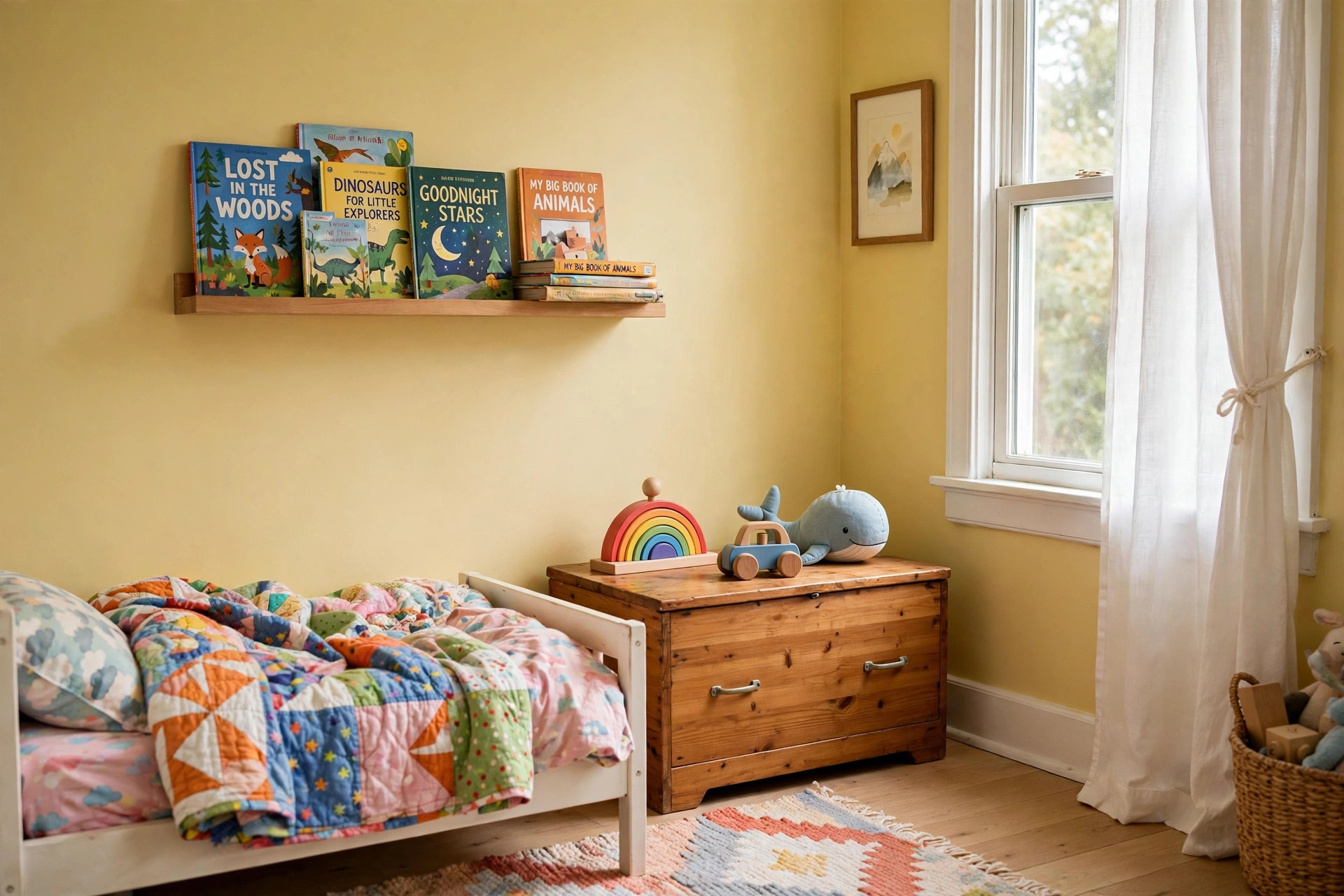

Every parent knows the moment. Your child finds a crayon. The wall looks like a canvas. Or a cup of juice tips over, and purple stains bloom across the paint. The question comes fast: why did I not buy the best washable paint for kids rooms usa offers when I had the chance?
A child’s bedroom takes more abuse than any other room in the house. Fingers touch the walls all day. Stickers are pressed on and torn off. Toys crash into corners. A standard flat paint gives up quickly under this kind of life. It holds stains. It scuffs. When you try to clean it, the color can wipe away along with the dirt.
Washable paint changes the story. It is made to stand up to soap, water, and a soft sponge. The film is tougher. Marks come off without taking the finish with them. In a child’s room, that one trait matters more than almost any other. This guide walks through what to look for, which types work best, what they cost, and how to keep them safe for your family.
Why Washable Paint Matters in a Child’s Room
Walls in kids’ rooms are not just walls. They are backdrops for play. Children lean against them. They tape drawings to them. They roll toy cars along the baseboards. A paint that cannot be cleaned will look tired within months.
A washable finish protects your time as well as your walls. Instead of repainting every year or two, you wipe the wall down and it looks fresh again. Parents with toddlers or school-age children often say the same thing: the paint job stopped being a worry once they chose a finish that could take a sponge.
There is a money side to it too. Repainting a room costs real dollars, whether you do it yourself or hire help. A good washable paint lasts longer between jobs. Fewer repaints mean less disruption for the child and less cost for the household.
The health angle matters as well. When paint can be cleaned, there is less need for harsh chemical cleaners. A damp cloth with mild soap does the job in most cases.
How Washable Paint Works: Best Washable Paint for Kids Rooms Usa
All paint forms a film as it dries. The type of film decides whether the paint can be washed. Flat paint dries with a soft, chalky surface. It hides wall flaws well, but water and rubbing break it down fast.
Washable paints use stronger resins and more of them. The dried film is tighter and smoother. Dirt sits on top of the surface instead of sinking in. When you wipe it, the film stays whole. Higher-sheen paints, like satin or eggshell, add to this effect because their smoother surface gives dirt less to grip.
Two terms come up again and again: washable and scrubbable. Washable means the paint stands up to gentle cleaning with soap and water. Scrubbable means it stands up to firmer scrubbing without damage. Most top kid-room paints claim both. For a child’s bedroom, look for products that list both traits on the label.
Finishes That Work Best for Kids’ Rooms
Not every finish belongs on a child’s wall. Each has its place, but some hold up far better under small hands.
Eggshell
Eggshell is the sweet spot for most children’s rooms. It has a soft, low glow, like the shell of an egg. It hides minor wall flaws better than shinier finishes. It also wipes clean far better than flat paint. Most paint makers point parents toward eggshell first.
Satin
Satin sits one step above eggshell in sheen. It is smooth and slightly glossy. It cleans very easily, and it resists moisture well. It is a strong choice when your walls are in good shape.
Semi-Gloss
Semi-gloss is very tough and very easy to wash. It is common on trim, doors, and baseboards, and it takes a beating there. On full walls it can look too shiny. Many families use it on the room’s woodwork and keep eggshell or satin on the walls.
Flat and Matte
Flat paint is not washable in most cases. Some newer matte paints claim to be washable, and a few perform well. But as a rule, skip flat paint in a child’s room if cleaning matters to you.
What to Look for When You Buy
The label tells you more than the display card. Here is what to check before the paint goes in your cart.
First, look for the words washable or scrubbable on the can or the product page. Makers test these claims. A paint that carries the claim has passed repeat-cleaning trials.
Second, check for low odor and low VOC. VOC stands for volatile organic compound. These are gases paint gives off as it dries. Many are now kept to very low levels. For a child’s room, choose a paint marked low-VOC or zero-VOC. The room will smell less, and the air will clear faster after the job.
Third, think about color coverage. Bold colors often need more coats. That adds cost and time. Lighter or mid-tone colors usually cover in two coats. If your child wants a deep red wall, be ready for a primer coat plus two or three finish coats.
Fourth, match the product to the surface. Most interior paints work on drywall, plaster, and primed wood. If the walls were painted with oil-based paint long ago, check that your new water-based paint can go over it, or use a primer first.
Fifth, look at dry time. Water-based latex paints dry to the touch in about an hour and take a second coat in four hours. Plan the job so the child sleeps somewhere else that night.
Types and Options Worth Knowing
Paint makers sell many lines. A few broad types stand out for children’s rooms.
Premium interior latex paints sit at the top of most store shelves. Names like those sold by Sherwin-Williams, Behr, and Benjamin Moore lead this group. They cost more per gallon, but they cover better and clean more easily. For one room, the price gap is often worth it.
Kid-specific lines exist at several makers. These are marketed directly to parents. They stress stain resistance, scrubbing power, and easy cleanup. Read the label closely. The claims are real, but the base product is often a strong eggshell or satin from the maker’s main line.
Primer-and-paint in one products save a step on bare drywall or patched walls. They work well for a child’s room repaint when the old paint is sound. On bare or heavily patched walls, a separate primer still does a better job of sealing the surface.
Chalkboard and magnetic paints are fun extras. Chalkboard paint lets children draw on the wall with chalk, then erase it. Magnetic paint, used under a topcoat, lets magnets stick to the wall. Both need several coats to work well. They are best for one accent area, not the whole room.
If you like the idea of a bold accent wall, read up on accent wall painting ideas for living rooms for color lessons you can bring into the child’s room too. And if the rest of the house needs fresh paint, the guide to the best white paint for interior walls usa homes use can help you keep a clean look outside the bedroom door.
Cost and Price
Paint prices vary by brand, line, and store. In the United States, a gallon of good washable interior paint usually runs between 30 and 70 dollars. Premium lines sit at the top of that range. Store brands and mid-tier lines sit lower.
A typical child’s bedroom, about 10 by 12 feet, needs roughly two gallons for two coats on the walls. That puts the paint cost between 60 and 140 dollars for the room. Add primer if the walls are bare or dark, at 20 to 40 dollars a gallon.
A basic kit of rollers, brushes, tape, and drop cloths runs 30 to 60 dollars if you do not already own them.
Hiring a painter raises the bill a great deal. A professional repaint of one bedroom often costs 300 to 800 dollars, depending on where you live and the condition of the walls. Doing it yourself is the common path for a child’s room, and washable paint makes the job forgiving.
Buy from a store with a good return policy for tinted paint. Home Depot and Lowes both sell the major brands, and their paint desks can answer questions about washability. Advice columns at This Old House and Bob Vila also cover which finishes suit busy households.
How to Paint the Room Right
Good paint cannot fix a rushed job. A little prep goes a long way.
Start by moving furniture to the center and covering it. Tape the trim, windows, and outlets. Wash the walls with a mild soap solution and let them dry. Fill nail holes and dents with spackle, then sand smooth.
If the old paint is glossy, scuff it lightly with fine sandpaper so the new paint grips. If the walls are bare drywall, use a primer. If the old color is much darker than the new one, use a primer too.
Roll in a W pattern to spread the paint evenly. Work from the top of the wall down. Keep a wet edge so the paint blends without lines.
Open the windows while you work. Fans help move the air. Keep the child and any pets out of the room until the paint is dry and the smell has faded, usually a full day.
Care and Upkeep
Washable paint earns its name only if you clean it the right way. Harsh treatment will wear down even the toughest finish.
For everyday marks, use a soft sponge or cloth with warm water and a drop of mild dish soap. Wring the cloth well. Wipe gently, then rinse with a clean damp cloth. Most crayon, pencil, and food marks come off this way.
For tougher spots, a paste of baking soda and water works as a mild scrub. Test any cleaner on a hidden spot first, such as behind the door. Avoid scouring pads and strong bleach cleaners. They can dull the finish or take the color off.
Teach children the rules of the room early. Chalkboards and paper pads give them a place to draw, and a washable paint forgives the rest.
Repaint touch-ups are simple. Keep a small jar of the leftover paint, labeled with the color name and the date. Dab it on chips and scuffs as they appear. Because the finish is uniform, small touch-ups blend well.
Style notes for the rest of the house can be found at HGTV and The Spruce. If kitchen work is also on your list, the best paint for kitchen cabinets usa reviews roundup covers durable finishes for that tougher job.
Safety in the Child’s Room
Paint safety starts before the first coat and lasts for years after.
Choose low-VOC or zero-VOC paint, as noted above. Ventilate well during and after the job. Keep children out until the room airs out. If anyone in the house has asthma or strong chemical sensitivity, wait longer and run a fan with the windows open.
Old homes need extra care. Houses built before 1978 may have lead paint under newer coats. If you suspect lead, have the paint tested before you touch it. Your state health department can point you to testing services.
Store leftover paint out of reach. Even low-VOC paint is not safe for children to drink or play with. Keep cans sealed, labeled, and locked away in a garage or high shelf.
Once the paint cures, which takes about two to four weeks, the film is at full strength. Try to hold off on heavy scrubbing until then. Gentle wiping is fine after a few days.
Frequently Asked Questions
What is the best paint finish for a kid’s bedroom?
Eggshell is the best all-around choice. It cleans well, looks soft, and hides small wall flaws. Satin is a close second and cleans even more easily, but it shows imperfections more.
Is washable paint safe for children?
Yes, when you choose a low-VOC or zero-VOC interior paint and let it dry and air out fully. Keep children out of the room during painting and for a full day after.
Can I wash crayon off washable paint?
In most cases, yes. A damp cloth with mild soap removes crayon from a good washable finish. For stubborn marks, a baking soda paste helps. Test in a hidden spot first.
How many coats do I need?
Two coats over a sound surface is the standard. Use a primer first if the walls are bare, patched, or much darker than the new color. Deep or bold colors may need a third coat.
How long does washable paint last in a kid’s room?
A quality job often lasts five to seven years in a child’s room, depending on the child’s age and habits. Regular gentle cleaning stretches its life. Keep leftover paint for touch-ups along the way.
Does washable paint cost more than regular paint?
It can. Premium washable lines run 10 to 20 dollars more per gallon than basic flat paint. But the paint lasts longer and cleans up, so most families find it cheaper over time.
A Short Final Word
The best washable paint for kids rooms usa families buy is not a single magic product. It is the right finish, chosen with care: usually eggshell or satin, low in VOC, from a trusted maker, applied over good prep. That combination takes crayons, juice, and small hands in stride.
Pick a color your child loves. Take a weekend to do the job right. Then let the room live its life. When the marks come, and they will, a damp sponge will set things right again.
References
Behr. (n.d.). Paints, primers, and stains. https://www.behr.com Benjamin Moore. (n.d.). Paints and stains. https://www.benjaminmoore.com Bob Vila. (n.d.). Home improvement advice. https://www.bobvila.com HGTV. (n.d.). Home and garden ideas. https://www.hgtv.com Lowe’s. (n.d.). Home improvement products. https://www.lowes.com Sherwin-Williams. (n.d.). Paints and coatings. https://www.sherwin-williams.com The Home Depot. (n.d.). Home improvement products. https://www.homedepot.com The Spruce. (n.d.). Home and garden advice. https://www.thespruce.com This Old House. (n.d.). Home renovation guidance. https://www.thisoldhouse.com
Was this guide helpful?

About Jennifer Lee
The My Garden US editorial team writes practical, in-depth home and garden guides for American homeowners — tested advice, no fluff.
You May Also Like

Antimicrobial Wall Paint for Kitchens USA: A Plain Buyer’s Guide
July 19, 2026 0 views
Best Paint for Exterior Doors Fiberglass USA: A Simple Guide to Color That Lasts
July 20, 2026 0 views
Board and Batten Installation Cost USA: What Homeowners Should Expect to Pay
September 16, 2026 0 views