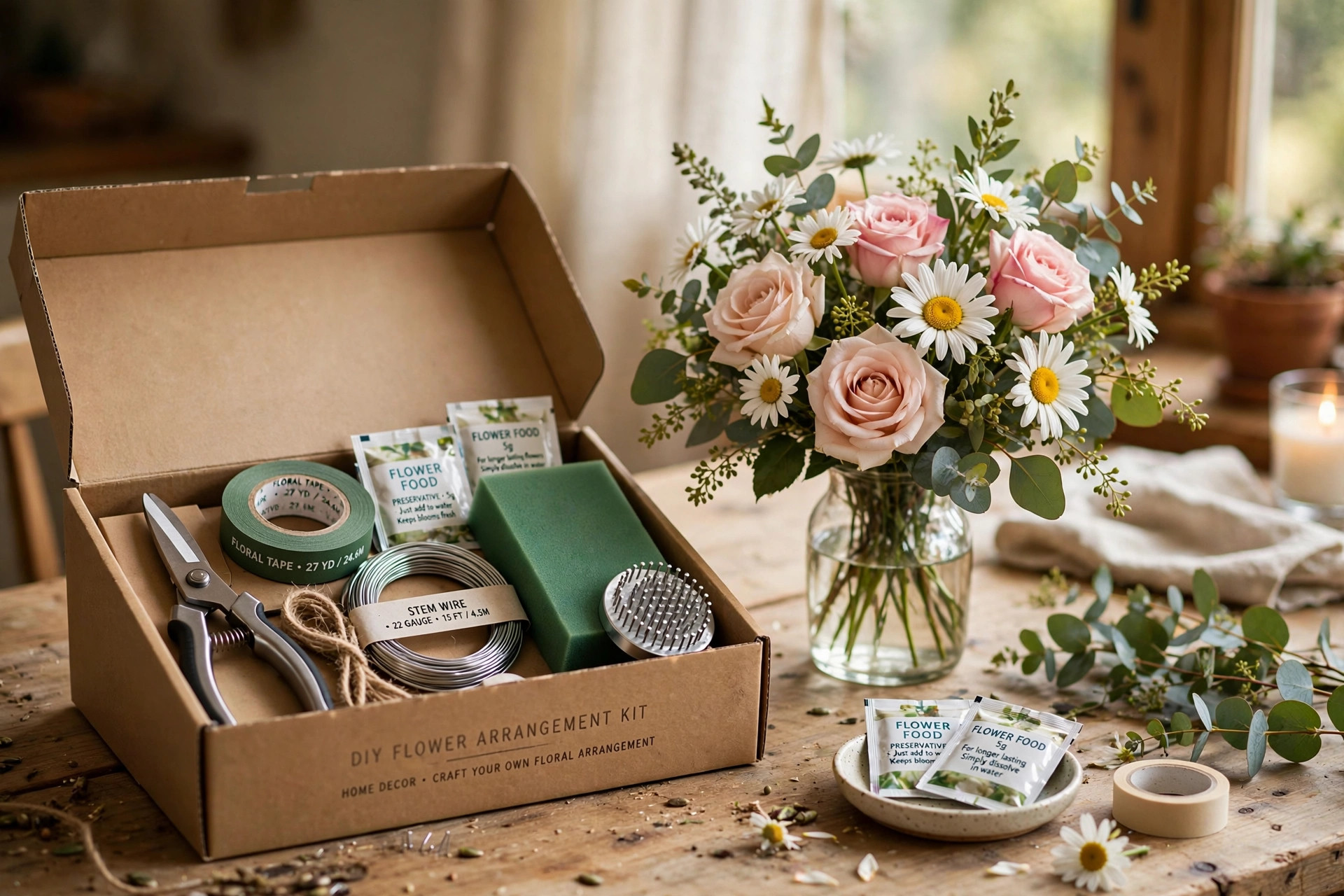

A diy flower arrangement kit for home decor is one of the simplest ways to bring flowers into a house. It is a boxed set that holds the tools and supplies needed to cut, shape, and hold fresh or silk flowers in a vase. With one kit, a person can make centerpieces for a dining table, a bright bunch for a hall, or a calm display for a bedroom. The flowers look fresh and natural. The work itself is pleasant and calm.
Many people buy cut flowers and drop them into a vase with no plan. The result often looks flat. A kit gives structure to the work. It holds floral foam, wire, tape, shears, and a guide. These small items turn a casual bunch into a real arrangement. The cost is low. The skill is easy to learn. And the result can last for days when cared for with care.
This guide explains what a kit is, why it helps, what to look for when you buy one, the types on the market, what they cost, how to keep arrangements fresh, and how to work with tools with safety in mind.
Why a Flower Kit Matters for Home Decor
Flowers change a room. A plain shelf becomes warm with a small bunch of daisies. A dining table feels set and ready with a low centerpiece of roses. Home decor books from past decades often said that fresh flowers were the final touch of a well kept home. That idea still holds true today.
A kit matters because it removes the guesswork. The tape holds stems in place. The foam gives a base that grips each stem. The shears cut at a clean angle so the flowers drink water well. Without these tools, stems slip, fall flat, and rot fast. With them, a beginner can reach a good result on the first try.
There is also a money angle. A finished arrangement from a flower shop can cost forty dollars or more. A diy flower arrangement kit for home decor often costs less than one shop arrangement, and the tools can be used many times. Fresh flowers from a grocery store then cost only a few dollars a bunch. Over a year, the savings add up.
Finally, there is the joy of the craft itself. Many people find that working with flowers calms the mind. The hands stay busy. The colors lift the mood. Craft supply stores such as Michaels report steady demand for floral supplies, which shows how many homes keep this hobby alive.
What to Look For When You Choose a Kit: Diy Flower Arrangement Kit for Home Decor
Not all kits are equal. A good kit should have a solid set of basics and clear instructions. Here is what to check before you buy.
Tools in the Box
A useful kit should hold sharp floral shears or scissors, floral tape, stem wire, and a block of floral foam or a flower frog. Shears matter most. Dull blades crush stems instead of cutting them. A crushed stem drinks little water and dies fast. Hold the shears in your hand if you can. They should feel firm and balanced.
Floral tape is a thin, stretchy tape that sticks to itself. It is used to bind stems and to make a grid over a vase mouth. Good tape stretches without tearing. Floral foam, often called oasis, soaks up water and holds stems at any angle. A flower frog is a heavy metal base with pins that grip stems. Both work well for different styles.
Instructions and Guides
A beginner needs a guide. Look for a kit that holds a booklet with pictures. The booklet should show how to cut stems, how to place a grid, and how to build layers. Some kits hold a small book of designs for holidays and seasons. A clear guide makes the first arrangement far easier. Craft retailers like Joann often list what guides come with each kit on the product page.
Quality of Materials
Check the foam. Cheap foam crumbles and sheds dust. Good foam soaks in under two minutes and holds its shape. Check the wire. It should bend with ease but spring back enough to hold a stem. Check the tape. Old or dry tape will not stick. Fresh stock matters, so buy from stores with steady turnover, such as The Home Depot, which moves craft and floral goods in high volume.
Size and Storage
Kits range from small boxes that fit in a drawer to large cases with trays. Think about your space. A small apartment needs a compact kit. A house with a craft room can hold a larger one. A craft storage organizer for small rooms pairs well with a kit and keeps foam, tape, and wire in order.
Types of Kits and Options
Kits come in several forms. Each suits a different goal and skill level.
Beginner All-in-One Kits
These are the most common. They hold shears, tape, wire, foam, a frog, and a guide. Some add silk flowers so the user can practice before buying fresh blooms. These kits suit a person who has never arranged flowers before. They give everything in one box. Prices are modest.
Fresh Flower Starter Kits
These kits focus on fresh blooms. They hold tools plus flower food packets, a water mister, and stem strippers that pull thorns and leaves. They may skip silk flowers, since the goal is real arrangements. Flower food extends vase life by a few days. A mister keeps petals fresh between water changes.
Silk and Dried Flower Kits
Some people want arrangements that last for months. Silk and dried flower kits hold artificial blooms, dried grasses, wire, and hot glue. A hot glue gun for craft projects is often part of these sets, since glue bonds silk stems to picks and wreath frames. Dried arrangements need no water and little care. They suit entry halls and offices where upkeep is hard.
Seasonal and Holiday Kits
These kits are built around a theme. A spring kit may hold pastel silk tulips and a painted vase. An autumn kit may hold dried wheat, berries, and warm-toned leaves. A winter kit may hold pine sprigs, red berries, and wire for a wreath. These kits make good gifts. They also help a home change its look with the seasons.
Professional Upgrade Kits
For the serious hobbyist, upgrade kits hold better shears, a full set of frogs in several sizes, ribbon, decorative wire, and foam in brick and ball shapes. These cost more but last for years. Florists in training often buy these after outgrowing a beginner box.
Art supply specialists such as Blick carry higher grade tools for those who want to move past the basics.
Cost and Price
A diy flower arrangement kit for home decor fits most budgets. Prices follow the quality of tools and the number of pieces.
Basic beginner kits sell for about fifteen to thirty dollars. They hold the core tools and a simple guide. They are a fine start for a first project.
Mid-range kits sell for about thirty to sixty dollars. They hold better shears, more foam, extra tape and wire, and sometimes a small book of designs. Most home crafters find this range gives the best value.
Deluxe and professional kits sell for about sixty to one hundred twenty dollars. They hold top grade shears, a full set of frogs, specialty foam shapes, and rich guides. A person who arranges flowers each week will feel the difference.
Beyond the kit, plan for fresh flowers. A grocery bunch costs about five to fifteen dollars. A farmers market bunch may cost ten to twenty dollars. Flower food costs only pennies per packet when bought in bulk. Vases can be found at low cost, though a good heavy vase is worth the price since it will not tip with a tall arrangement.
Watch for sales. Craft stores run frequent discounts on floral goods. Buying a kit on sale can cut the price by a third or more. Price guides from home sources such as Bob Vila often note that craft supplies are among the easiest home goods to buy at a discount.
How to Build Your First Arrangement
A simple method works for most designs. Follow these steps.
First, soak the foam. Place the block in a bowl of water and let it sink on its own. Do not push it down. Pushing traps air inside. Soaking takes one to two minutes.
Second, trim the foam to fit the vase. It should sit snug, about one inch above the rim. A snug fit keeps it from shifting.
Third, make a tape grid if you skip foam. Stretch floral tape across the mouth of the vase in a grid pattern. Press the ends to the rim. The grid holds each stem in place.
Fourth, strip the lower leaves from each stem. Leaves below the water line rot and foul the water. Use a stem stripper or your fingers.
Fifth, cut each stem at an angle. Cut under running water when you can. A fresh angled cut opens more surface for drinking. Cut stems a bit long at first. You can trim more later.
Sixth, build in layers. Place the tallest stems first to set the height. Add the main flowers next in a triangle or dome shape. Fill gaps with small blooms and greens. Step back and look from all sides.
Seventh, add water mixed with flower food. Keep the foam wet. For a tape grid, fill the vase to the rim. Change the water every two days for fresh arrangements.
Home and garden references like The Spruce offer step by step photo guides that pair well with a first kit.
Care and Upkeep
A fresh arrangement needs small, steady care. With care, many blooms last seven to ten days.
Change the water every two days. Rinse the vase and refill with fresh water and a new packet of flower food. Warm water helps most flowers drink, though bulbs like tulips prefer cold water.
Trim the stems each time you change the water. Cut off half an inch at an angle. This opens a fresh surface and removes the sealed end.
Keep arrangements away from direct sun and heat. A sunny window shortens vase life fast. Heat from a stove or a heating vent dries petals. A cool room with soft light is best.
Mist the petals once a day in dry homes. Use a fine spray. Do not soak the blooms. A light mist keeps them plump.
For silk and dried arrangements, dust them once a month. A soft brush or a cool hair dryer works well. Keep them out of strong sun, since dyes fade with time.
Clean your tools after each use. Wipe shears with a damp cloth and dry them well. Store tape in a cool place so it stays fresh. Good upkeep of tools is part of good home maintenance, and craft sites like Family Handyman stress that clean tools last far longer.
Safety
Flower arranging is a safe hobby, but a few rules keep it fully safe.
Shears are sharp. Cut away from your body. Keep fingers clear of the blades. Close the shears and put them away when you pause. Store them out of reach of small children.
Floral foam dust can irritate the lungs. Soak foam in water before cutting it. Wet foam makes little dust. Work in a room with fresh air.
Some flowers are toxic if eaten. Lilies, daffodils, and foxglove can harm pets and small children. Place arrangements with these flowers where pets cannot reach them. If a pet chews a stem, call a vet at once.
Hot glue burns. If your kit uses a glue gun, let the gun heat on a safe surface. Touch only the handle. Keep a small bowl of cold water near for a quick dip if glue touches skin.
Wash your hands after handling foam and wire. The dust and metal coatings are not meant to be eaten or rubbed into eyes.
General home safety guides from sources like HGTV and Good Housekeeping echo these same simple rules for all home crafts.
FAQ
How long does a fresh arrangement last?
Most fresh arrangements last five to ten days. Roses and carnations often reach the longer end. Tulips and daffodils last about five to seven days. Fresh water, flower food, and cool air extend the life of every bloom.
Can I reuse the floral foam?
Dry foam for silk work can be reused. Wet foam for fresh flowers should not be reused. Once stems punch holes in wet foam, it loses its grip and holds germs. Use a fresh block for each new fresh arrangement.
Do I need flower food, or is plain water enough?
Flower food helps a great deal. It feeds the blooms, keeps the water clear, and slows germ growth. Plain water works in a pinch, but blooms fade faster. A homemade mix of one teaspoon of sugar and a few drops of bleach per quart of water is a fair stand-in.
What flowers are easiest for a beginner?
Carnations, daisies, alstroemeria, and mums are forgiving. Their stems are firm and their blooms last long. Roses are lovely but need more care with thorns and water. Start with firm, long lasting blooms while you learn.
Can I mix fresh and silk flowers in one arrangement?
You can, and many people do. Use fresh blooms as the stars and silk greens or filler as support. Keep the silk parts dry where they meet wet foam, or the dyes may bleed. This trick stretches a bunch of fresh flowers further.
Where should I display the finished arrangement?
A dining table, a hall console, or a bedroom dresser all suit a finished piece. Avoid the top of a television or a spot near a heating vent. Low, wide designs suit tables where people sit and talk. Tall designs suit entry halls and corners.
Paint and color choices around the display matter too. An acrylic paint set for beginners can help you paint a vase to match the room, which ties the whole decor together. Design notes from This Old House often show how one floral piece can anchor a whole room.
A Final Word
A diy flower arrangement kit for home decor is a small box with a large payoff. It gives a beginner the right tools, a clear path, and the freedom to try. The first arrangement may be simple. The fifth will show real skill. Each one makes the home a warmer place.
Start with a modest kit. Practice with grocery store blooms. Care for your tools and your flowers with steady habits. In time, you will read a room and know just what it needs: a tall spray of lilies for the hall, a low bowl of mums for the table, or a wild bunch of daisies for the kitchen sill. The kit is only the start. The eye you build is the real reward.
References
Blick Art Materials. (n.d.). Art and craft supplies. https://www.dickblick.com Bob Vila. (n.d.). Home improvement advice. https://www.bobvila.com Family Handyman. (n.d.). DIY home repair and maintenance. https://www.familyhandyman.com Good Housekeeping. (n.d.). Product reviews and home advice. https://www.goodhousekeeping.com HGTV. (n.d.). Home and garden ideas. https://www.hgtv.com JOANN. (n.d.). Fabric and craft supplies. https://www.joann.com Michaels. (n.d.). Arts and crafts supplies. https://www.michaels.com The Home Depot. (n.d.). Home improvement products. https://www.homedepot.com The Spruce. (n.d.). Home and garden advice. https://www.thespruce.com This Old House. (n.d.). Home renovation guidance. https://www.thisoldhouse.com
Was this guide helpful?

About Robert Taylor
The My Garden US editorial team writes practical, in-depth home and garden guides for American homeowners — tested advice, no fluff.
You May Also Like
Knitting Needles Set for Beginners: A Plain Guide to Bamboo Sets in the USA
August 19, 2026 0 views
Macrame Cord Kit for Wall Hanging DIY: A Beginner’s Guide to Handmade Decor
June 30, 2026 0 views
Best Rotary Cutter for Quilting Fabric Crafts
July 16, 2026 0 views