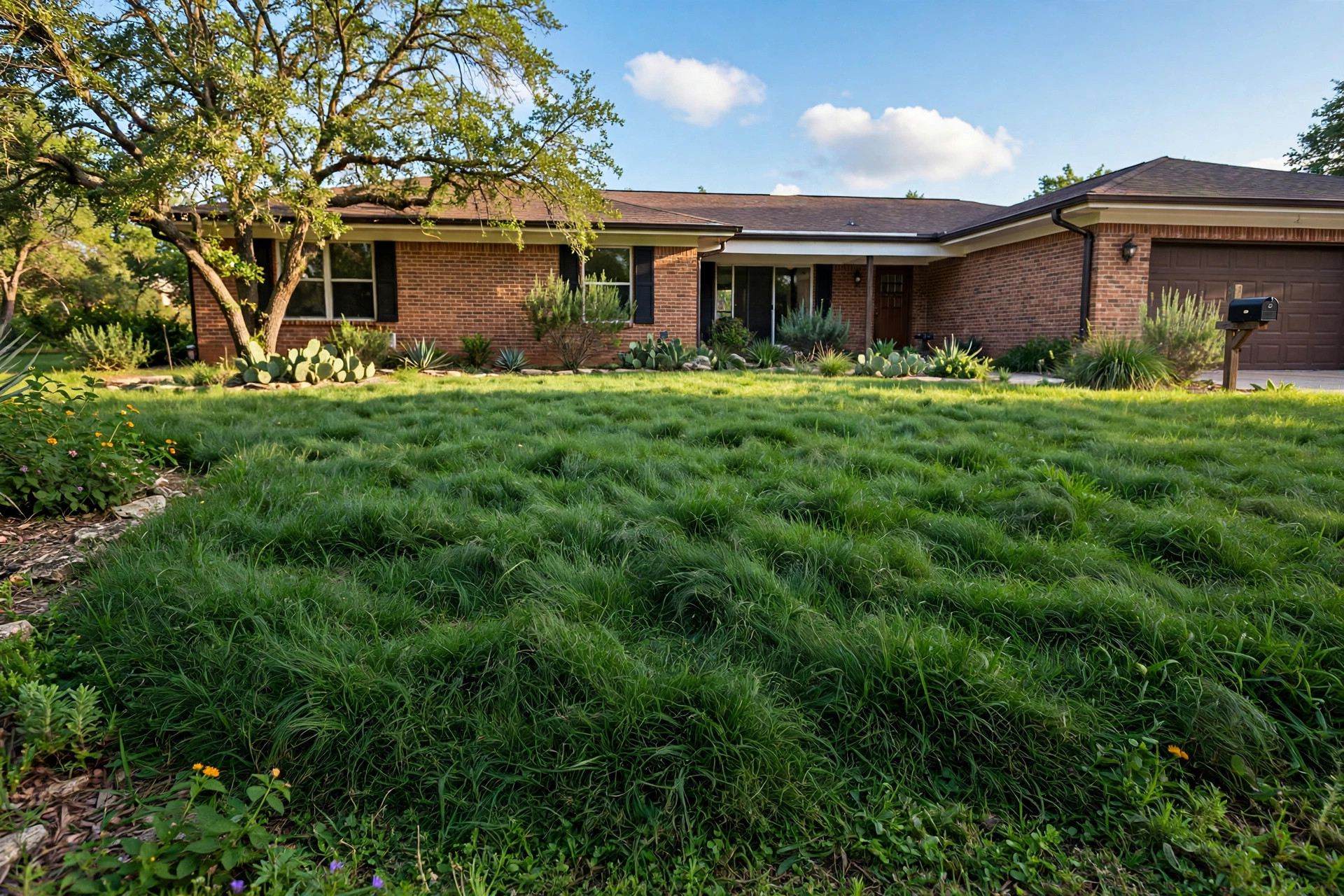

Many Texas homeowners dream of a green lawn that does not drink the water bill dry. Buffalo grass seed for texas lawns may be the answer they have been looking for. This is a native warm season grass that once covered the great plains. It knows how to live through Texas heat, long dry spells, and poor soil. It grows slower than common turf grasses, so it needs less mowing and less food.
This guide explains buffalo grass in plain terms. You will learn why it fits Texas, how to choose seed, what it costs, how to plant it, and how to keep it healthy. If you want a lawn that asks little and gives much, read on.
Why Buffalo Grass Matters in Texas
Texas summers are hard on lawns. Day after day of heat over 95 degrees. Weeks without rain. Water rules in many cities that limit how often you may water. Common grasses such as St. Augustine and Bermuda need a lot of water to stay green. Many yards turn brown by August.
Buffalo grass is different. It is a true native of North America. Long before lawns existed, it held the plains together through drought and wind. Its roots reach deep into the ground, often six feet or more when the stand is old. Deep roots pull water from far below the surface. That is why a mature buffalo lawn can stay alive on very little rain.
The grass also handles Texas soil. Much of the state has heavy clay or thin, rocky ground. Buffalo grass grows fine in both.
There is also the matter of work. A buffalo lawn grows slowly. Many owners mow once a month, or even less. Some never mow at all and let it grow into a soft meadow.
What to Look for When You Buy Seed: Buffalo Grass Seed for Texas Lawns
Not all seed bags are equal. The market for buffalo grass seed for texas lawns holds many products, and labels can confuse a buyer. Here is what to check.
First, look at the seed type. You will see “hulled” and “unhulled” seed. Hulled seed has the hard outer coat removed. It sprouts faster, in about seven to ten days. Unhulled seed still wears its coat. It sprouts slower, in two to three weeks, but it is cheaper and it stands up better to dry soil. For Texas spring planting, hulled seed is the common pick because warm, wet soil gets it going fast.
Second, check the germination rate on the bag. Good seed should show a rate of 80 percent or higher. Old seed stored in a hot shed may test much lower.
Third, read the variety name. Breeders have made named varieties such as Texoka, Topgun, and Bowie, picked for even color, dense growth, and good drought response. A named variety often costs more than plain common seed, but it gives a more even lawn.
Fourth, make sure the bag is pure buffalo grass unless you want a mix. Some bags mix in other seeds to cut cost. Mixes can leave patchy color. For a true buffalo lawn, buy 100 percent buffalo grass seed.
Types and Options for Your Yard
Buffalo grass offers a few choices. Each suits a different yard and a different goal.
Seeded lawns. This is the most common route. You buy bags of seed and spread them over prepared soil. It is the cheapest way to start a large yard. An acre of seed costs far less than an acre of sod. The trade off is time. A seeded lawn needs a full season to fill in.
Sod and plugs. Some farms sell buffalo grass as sod or plugs. Sod gives instant cover but costs many times more than seed. Plugs are small squares of turf that you set into the ground on a grid. They fill in over one or two seasons. Plugs fit small yards and steep banks where seed might wash away.
Named varieties versus common seed. Named varieties were bred on test plots. Topgun was bred for dark green color and dense turf. Texoka was bred for the plains and stands heat well. Bowie was bred to resist weeds and stay low. Common seed is the plain wild type. It is cheap and tough, but color varies from plant to plant. Many Texas ranch yards use common seed with good results.
Treated seed. Some bags carry seed coated with a light fungicide. The coat protects the young plant from soil disease during the first wet weeks. Treated seed costs a bit more. In Texas, where spring soil is warm and damp, the extra safety can be worth it.
If your yard is large and open, seed makes the most sense. If you want the fastest result in a small yard, look at plugs.
Cost and Price
Buffalo grass is one of the cheapest lawns a Texan can grow. Let us look at real numbers in plain form.
Seed prices run from about 20 to 45 dollars per pound at retail. Unhulled common seed sits at the low end. Hulled named varieties sit at the high end. For new lawns, you need about two to four pounds of hulled seed per 1,000 square feet. A 5,000 square foot yard, a common city lot size, needs 10 to 20 pounds of seed. That is roughly 200 to 900 dollars for seed, based on what type you buy.
Compare that with sod. St. Augustine sod in Texas often runs 300 to 500 dollars per pallet, and a 5,000 square foot yard needs about ten pallets.
Soil prep adds cost. You may need a soil test, 20 to 30 dollars through your county extension office. You may need to rent a tiller for a day, about 50 to 80 dollars, and buy a starter fertilizer, about 15 to 25 dollars per bag. If you hire the job done, land prep and seeding for a 5,000 square foot yard often runs 1,000 to 2,000 dollars.
Yearly care is cheap. Buffalo grass wants little fertilizer, one light feeding a year, or none at all. Water bills stay low because the grass needs far less water than common turf. Over five years, a buffalo lawn often costs far less than a St. Augustine or Bermuda lawn of the same size.
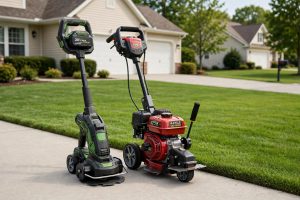
For price checks on spreaders, tillers, and other gear, the makers publish their lines at Toro and John Deere. If you plan to mow less, a simple walk mower is often all you need, and you can read more in our guide to self propelled mower deals for usa homeowners.
Planting Step by Step
Good planting decides the fate of the lawn. Buffalo grass is tough, but seed still needs a fair start. Plant in late spring, when soil stays above 60 degrees day and night. In most of Texas that means April through June.
Step one: kill the old weeds. Mow the old grass short. Spray the yard with a non selective weed killer, or smother weeds with black plastic for two weeks. Wait until everything is dead. A clean bed gives the seed room to grow.
Step two: test the soil. Buffalo grass likes soil near neutral, pH 6.0 to 7.5. Your county extension office tests samples for a small fee.
Step three: loosen the ground. Till the top three to four inches. Rake it smooth and pull out rocks and roots.
Step four: spread the seed. Use a broadcast spreader. Walk the yard twice, north to south and then east to west, to get even cover.
Step five: press and water. Roll the ground lightly or walk it firm so seed touches soil. Water gently right away. Keep the top inch damp for the first two to three weeks. Light, frequent watering is right for seed. Once sprouts stand an inch tall, cut back to deep watering twice a week with a garden hose or an affordable lawn sprinkler.
Do not bury the seed deep. A quarter inch of soil cover is enough. Seed buried an inch deep may never come up.
New seed and fresh sprouts need steady water at first, so many owners add or fix a simple system before planting.
Care and Upkeep
Once the stand is set, buffalo grass asks little. Here is the yearly round.
Water. A mature stand needs only about half an inch to one inch of water per week in summer. Water deep and seldom. Deep watering pushes roots down. In a wet year, Texas rain alone may be enough.
Mow. Set the blade high, three to four inches. Tall grass shades the soil and keeps weeds down. Mow when the grass passes five inches. Most owners mow every two to four weeks in summer. If you like the meadow look, mow once in spring and once in fall.
Keep the blade sharp. Buffalo grass has a coarse leaf, and a dull blade tears it and leaves brown tips.
Feed. Buffalo grass is a light feeder. One pound of nitrogen per 1,000 square feet per year is plenty, and many lawns get by with half that. Feed once in late spring. Too much nitrogen makes the grass grow fast and invite weeds. That defeats the whole point of a low care lawn.
Weeds. A thick stand blocks most weeds. In the first year, hand pull weeds before they seed. A pre emergent weed killer in spring helps new lawns. Do not use weed killers made for cool season grass at full rates on buffalo, since some can harm it. Read every label.
Dethatch. Over years, dead stems can build a thatch layer. If thatch grows past half an inch, rent a dethatcher in spring and rake out the mat. Most buffalo lawns need this only every three to five years. See lawn dethatcher rental prices near me before you rent.
Overseed thin spots. If a dry summer thins the stand, scratch the bare spots and sow a little seed in late spring. Water until the new grass is up.
Safety
Buffalo grass seed and lawn products are safe for normal home use, but a few points matter.
Read the seed bag. Treated seed may carry a warning to keep it away from children and pets until it is in the ground and watered in. Wash your hands after handling seed and soil.
Store leftover seed in a cool, dry place. A sealed jar in a closet works. Keep it off the floor of a hot garage, where summer heat kills germination.
When you use weed killer or fertilizer, follow the label word for word. Wear gloves and closed shoes. Keep pets and children off the yard until sprays dry.
Watch for fire ants, common in Texas lawns. Their mounds can harm young stands and sting bare feet. Treat mounds with a labeled bait, not with gasoline or other home cures.
FAQ
How fast does buffalo grass seed grow in Texas? Hulled seed sprouts in seven to ten days in warm soil. The stand looks thin at first. It fills in over one full growing season. By the second summer, a well cared lawn looks full and even.
Does buffalo grass stay green all year in Texas? No. It is a warm season grass. It turns tan and sleeps from the first hard frost until spring. In South Texas it may stay green most of the winter. Dormant brown grass is not dead grass. It greens up when warmth returns.
Can buffalo grass grow in shade? It is a poor shade grass. It needs at least six hours of full sun each day. Under big oaks or on the north side of a house, it thins out. For shade, plant a shade tolerant ground cover instead.
How much water does a buffalo lawn really need? A set stand uses far less water than St. Augustine or Bermuda. In a normal Texas summer, half an inch to one inch per week keeps it green. It can rest through a dry month and come back with rain. That is its great gift.
Is buffalo grass good for dogs and kids? Yes. It is soft enough for play, and it does not need the heavy chemicals that some lawns get. Keep seed and garden chemicals stored away from both.
Where can I buy buffalo grass seed for texas lawns? Farm supply stores, garden centers, and seed dealers across Texas stock it in spring. Your county extension office can name local dealers. Buy early, since the best varieties sell out by May.
A Final Word
Buffalo grass seed for texas lawns is not a fancy product. It is an old native grass doing what it has done for ages: holding green through heat that breaks other lawns. It costs less to plant than sod, less to water than common turf, and less of your weekends than almost any lawn you can name.
The trade is honest. You get a lawn that sleeps brown in winter, dislikes shade, and takes a season to fill in. In return you get deep roots, low bills, and a yard that fits the land it sits on.
If you want a lawn that works with Texas instead of against it, buffalo grass earns a hard look. Plant it in warm spring soil, water it while it is young, then step back and let a native do its work.
References
Briggs & Stratton. (n.d.). Outdoor power equipment. https://www.briggsandstratton.com Deere & Company. (n.d.). Lawn and garden equipment. https://www.deere.com Toro. (n.d.). Lawn care and landscaping equipment. https://www.toro.com
Was this guide helpful?

About James Carter
The My Garden US editorial team writes practical, in-depth home and garden guides for American homeowners — tested advice, no fluff.
You May Also Like

How to Install Pop Up Sprinklers Yourself: A Complete Guide
February 3, 2026 1 views
How to Grow Grass in Shady Areas: A Simple Guide for Homeowners
April 6, 2026 0 views
Best Wheelbarrow for Yard Work Reviews
June 7, 2026 0 views