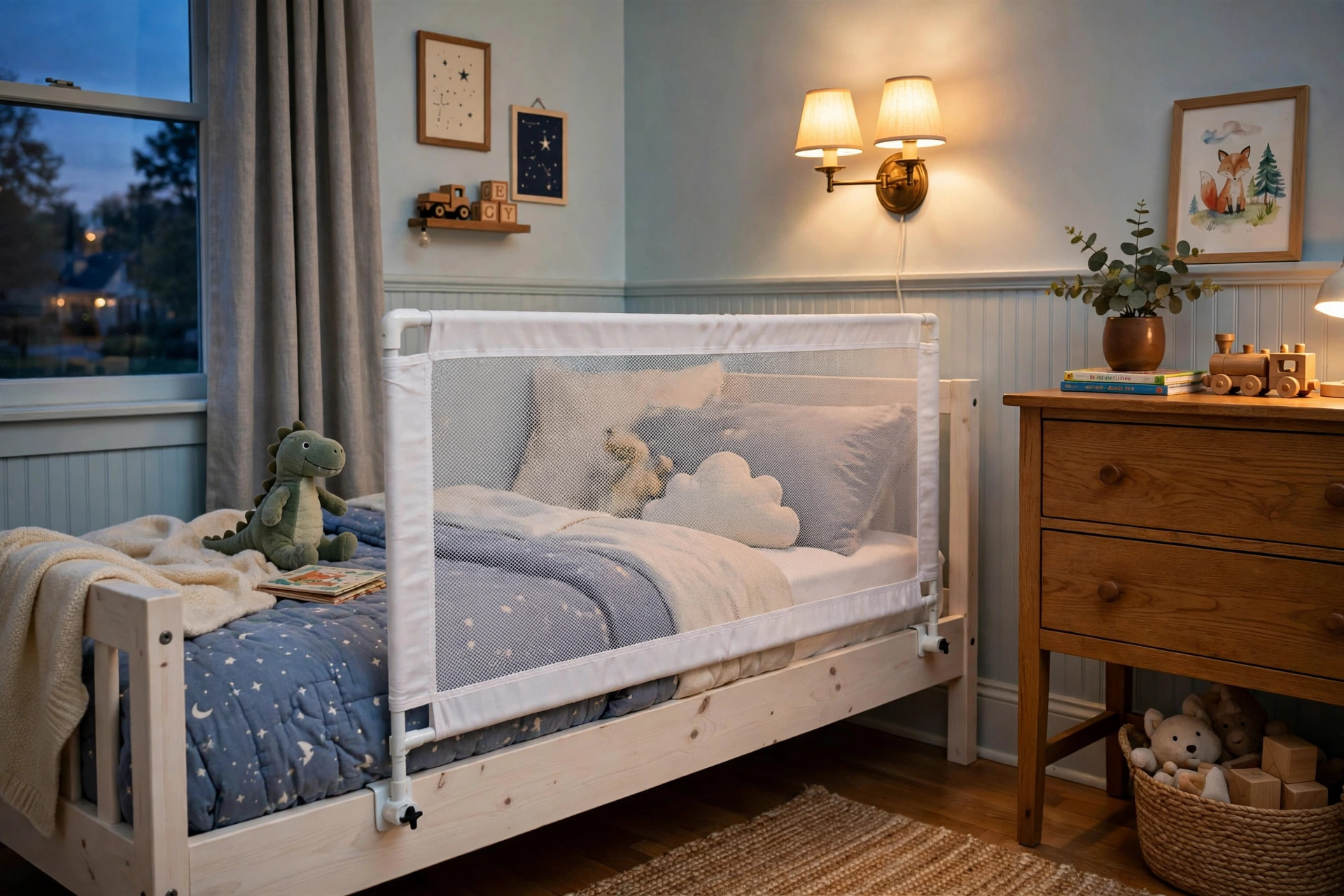

The move from crib to bed is a big step. Most children make this move between eighteen months and three years of age. The child is no longer boxed in by high crib rails. He or she can now roll freely during sleep. A toddler bed guard for preventing falls at night is a simple device that stops a small child from rolling out of bed while sleeping. It is a long rail that fixes to the side of the bed. It acts like a low wall. This article explains why a bed guard matters, how to choose one, what types exist, what it costs, how to care for it, and how to keep a child safe at night.
Why a Bed Guard Matters
Toddlers move a great deal in their sleep. Young children turn, kick, and shift many times each night. A standard mattress offers no edge to stop this movement. Without a guard, a sleeping toddler can roll right off the bed and hit the floor.
A fall from bed height may seem small to an adult. For a small child, it is not small. A toddler who lands wrong can suffer a bruised head, a cut lip, or a sprained arm. Many parents report that their child woke up crying after such a fall.
A toddler bed guard for preventing falls at night removes this risk. The rail blocks the open side of the bed. The child rolls against the rail and turns back toward the middle of the mattress.
A bed guard also helps the child adjust to the new bed. Children who leave the crib often feel uneasy in an open bed. A guard gives them a sense of boundary. Many parents find that children sleep longer once a rail is fitted.
How to Choose the Right Guard: Toddler Bed Guard for Preventing Falls Night
Choosing a toddler bed guard for preventing falls at night requires care. Not all guards fit all beds. Follow these points before you buy.
Measure the bed first. Take a tape measure to the mattress. Note the length, the width, and the thickness. Most guards fit standard toddler and twin mattresses.
Check how it fixes to the bed. Most guards have straps that run under the mattress. The straps hold the rail tight against the mattress edge. Others have bars that slide under the mattress and rest on the bed frame. Straps are common and easy to fit. Frame bars suit heavier children who lean on the rail.
Look at the height of the rail. The rail should rise at least five inches above the top of the mattress. A higher rail gives more safety for active sleepers. A rail that is too low lets a determined toddler roll over it.
Look at the length. Guards come in many lengths. A short guard covers part of the bed side. This leaves room for the child to climb in and out. A long guard covers most of the side. Long guards suit children who move a lot. Short guards suit older toddlers who are learning to get out of bed on their own.
Check the mesh. Most modern guards use a mesh panel. The mesh lets air pass through. It also lets the parent see the child. Mesh is better than solid panels for a small child. Make sure the mesh is tight and free of tears.
Look for safety marks. A good guard meets the safety standard for portable bed rails. In the United States, this standard is set by the U.S. Consumer Product Safety Commission. Look for a label that states the guard meets the current standard.
Consider folding and travel. Some guards fold flat. A folding model is easy to store when not in use. It also fits in a bag for travel. If the child sleeps at a grandparent house, a folding guard is a smart buy.
Many parents start with a toddler bed with guard rails for first bed as the base. Others add a separate guard to a regular twin bed. Either way, the guard must fit the exact mattress it will sit on. Never assume. Always measure.
Types of Toddler Bed Guards
There are several types of bed guards on the market. Each type suits a different bed and a different child.
Strap-on mesh rails. These are the most common type. A mesh panel sits on the mattress edge. Straps run under the mattress and tie the rail in place. They are light, cheap, and easy to fit. Most suit standard mattresses up to twelve inches thick.
Swing-down rails. These rails can fold down flat against the mattress. The parent can lower the rail during the day and raise it at night. This type is useful when the bed is used as a daybed for play. They cost more than basic rails.
Double-sided guards. These come as a pair. One rail fits each side of the bed. They suit beds that sit away from the wall. A child in the middle of a room needs a guard on both sides. Check that both rails fix firmly and leave no gap at the ends.
Bumper-style guards. These are low, soft bumpers rather than rails. They give a gentle edge rather than a firm wall. They suit calm sleepers who need only a light reminder of the bed edge. They are not the best choice for active rollers.
Guards built into the bed. Some toddler beds come with fixed side rails. A best convertible toddler bed with safety rail often includes rails that stay in place. These need no fitting and cannot slip.
Inflatable bed bumpers. These are air-filled tubes that sit under the fitted sheet at the mattress edge. They form a small ridge. They are cheap and pack small for travel. They work only for light sleepers and thin mattresses.
When choosing between types, think about the child first. An active sleeper needs a tall, firm rail with strong straps. A calm sleeper may do fine with a low bumper. Also think about the bed frame. Platform beds with low frames suit under-mattress bar types. Box spring beds suit strap types.
Cost and Price
The price of a toddler bed guard for preventing falls at night varies by type and brand. Basic strap-on mesh rails are the cheapest. They usually cost between twenty and forty dollars. They do their job well for most children.
Mid-range guards cost between forty and seventy dollars. These often have better padding, stronger straps, and a fold-down feature. They may also be longer or taller than basic models. Many parents find this range gives the best value.
Premium guards cost between seventy and one hundred and twenty dollars. These include swing-down models, long double-sided sets, and rails built for thick mattresses.
When comparing prices, look beyond the sticker price. Check what is in the box. Some guards come with extra straps or a storage bag. Also check the warranty. A one-year warranty is common for better brands.
Large stores such as Target and IKEA carry affordable options. Specialty stores like Pottery Barn Kids offer higher-end models. Online shops such as Wayfair and Babylist let you compare many brands side by side. The Spruce publishes hands-on reviews of bed rails and nursery gear that help with the choice.
Remember that a higher price does not always mean higher safety. A cheap guard that meets the safety standard is safer than a costly guard with no label. Always check the safety marking first, then compare features and price.
Care and Upkeep
A bed guard needs regular care to stay safe and clean. Set up a simple routine.
Check the straps weekly. Straps can loosen over time. Each week, pull the rail gently to see if it moves. If it shifts, tighten the straps. Loose straps create gaps between the rail and the mattress. Gaps are dangerous because a small child can slip into them.
Inspect the mesh. Look for holes, tears, or loose stitching. A damaged mesh panel should be replaced. Do not try to sew a large tear. The rail may not hold its shape after repair.
Clean the fabric. Most mesh panels wipe clean with a damp cloth. For deeper cleaning, check the care label. Many covers can be removed and washed in a machine on a gentle cycle. Let the cover dry fully before refitting it. A damp cover can grow mold.
Check the frame and joints. Folding rails have hinges and joints. Make sure they lock in the up position. Test the lock each night when you raise the rail.
Keep the area clear. Do not pile pillows or heavy blankets against the guard. Extra soft items can push the rail out of place. They can also trap a child. A nursery lamp with soft warm light for night helps you check the bed area during nighttime visits without waking the child fully.
Replace when outgrown. A guard is not forever. Most children stop needing a rail by age five or six. Signs of readiness include the child staying in the middle of the bed all night and asking to sleep without the rail. When the child is ready, remove the guard and keep the night light on for a while.
Safety at Night
A toddler bed guard for preventing falls at night is a safety device. It must be used with care. Follow these safety rules.
First, close the gap. The most common danger with bed rails is entrapment. A gap between the rail and the mattress can trap a small child. After fitting the guard, press it hard against the mattress. There should be no space where a child could slip through. The U.S. Consumer Product Safety Commission warns parents to check this fit every time the bedding is changed.
Second, use the right mattress. The guard is designed for a specific mattress size and thickness. A mattress that is too thin can let the child slide under the rail. Use only the sizes listed in the product guide.
Third, keep the bed away from hazards. Do not place the bed near a window with blind cords. Keep the bed away from heaters, lamps with hot bulbs, and sharp furniture edges. A night light on the wall, rather than on a table near the bed, is safer.
Fourth, never add extra padding. Do not stuff pillows or rolled towels into the gap between the rail and the mattress. This seems like a fix but it creates a new hazard. A child can roll into the soft padding and have trouble breathing. If the gap cannot be closed by tightening, the guard does not fit that bed. Replace it.
Fifth, teach the child. Show the toddler how the rail works. Explain that the rail keeps them safe. Show them which side of the bed to climb out on. Children learn fast when the rule is simple and steady.
For more on child sleep safety, HealthyChildren.org offers guidance from the American Academy of Pediatrics. What to Expect also has clear articles on the crib-to-bed move.
Frequently Asked Questions
At what age should I add a toddler bed guard for preventing falls at night? Most children move to a bed between eighteen months and three years. Add the guard from the first night in the new bed.
Can I use a bed guard on a regular adult bed? Yes, if the guard is made for that mattress size. Many guards fit twin and full mattresses. Check the product details for the maximum mattress thickness. Make sure the straps reach around the mattress. Never use a toddler-sized guard on a thick pillow-top mattress it was not made for.
How long does a child need a bed guard? Most children need a guard for two to three years. Many stop needing it between ages four and six. Watch the child. If the child sleeps in the middle of the bed for several weeks, try a few nights without it.
Is a mesh guard better than a solid guard? Mesh is usually better. It lets air flow freely and lets the parent see through to the child. It is also lighter. If the child sleeps warm, mesh is the clear choice.
Can I travel with a bed guard? Yes. Many guards fold flat or come apart into small parts. Always refit the guard carefully at the new location. Hotel and guest beds vary in size, so check the fit each time.
What should I do if the guard keeps slipping? First, recheck the straps. They must be tight and flat under the mattress. Second, check that the mattress size matches the guard. Third, make sure the fitted sheet is not too thick. A deep pocket sheet can push the rail out. If the guard still slips, it does not fit the bed. Buy a model made for that mattress.
Final Word
A toddler bed guard for preventing falls at night is a small buy with a big job. It keeps a sleeping child on the mattress. It gives the child a safe boundary. It gives the parent a quiet night. Choose a guard that fits the bed, meets the safety standard, and suits the child. Fit it tight, check it often, and teach the child how to use it. The nights will be calmer, and the child will be safer. That is money well spent.
References
American Academy of Pediatrics. (n.d.). HealthyChildren.org. https://www.healthychildren.org Babylist. (n.d.). Baby registry and gear guides. https://www.babylist.com IKEA. (n.d.). Home furnishings. https://www.ikea.com Pottery Barn Kids. (n.d.). Kids furniture and decor. https://www.potterybarnkids.com Target. (n.d.). Retail store. https://www.target.com The Spruce. (n.d.). Home and garden advice. https://www.thespruce.com U.S. Consumer Product Safety Commission. (n.d.). Product safety information. https://www.cpsc.gov Wayfair. (n.d.). Furniture and home goods. https://www.wayfair.com What to Expect. (n.d.). Pregnancy and parenting guidance. https://www.whattoexpect.com
Was this guide helpful?

About Michael Thompson
The My Garden US editorial team writes practical, in-depth home and garden guides for American homeowners — tested advice, no fluff.
You May Also Like
Crib Skirt Dust Ruffle for Nursery Style: A Plain Guide for New Parents
May 1, 2026 0 views
Toddler Pillow for First Bed Transition: How to Pick One That Is Safe
March 23, 2026 0 views
The Best Kids Bed with Slide for a Playroom Bedroom
April 14, 2026 0 views