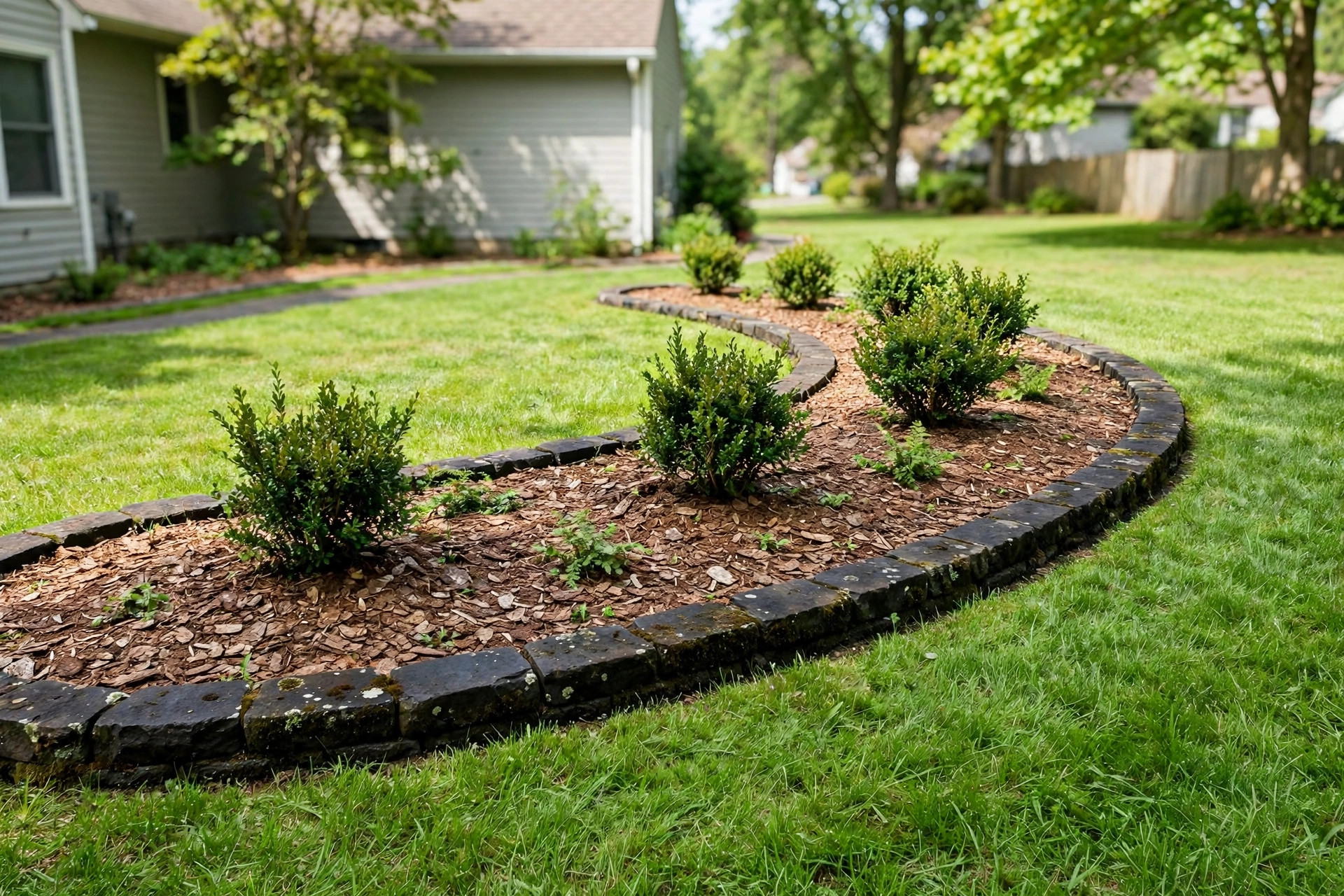
The best lawn edging for curved beds is edging that bends with the line of the bed and stays in place for years. A straight line is easy. A curve asks for more. The edge must follow the bend without gaps, without kinks, and without pulling out of the ground. This guide explains the kinds of edging that work on curves, what to look for when you buy, what they cost, and how to put them in.
Why It Matters
Grass does not respect borders. Left alone, it creeps into flower beds. Mulch does not stay put either. Rain and wind move it. A good edge draws a clean line between the two. It keeps grass on one side and mulch on the other.
Curved beds are common in American yards. A gentle bend around a tree. A wave along the front walk. These shapes look soft and natural. But they are hard to edge. Stiff materials fight the curve. They leave gaps where grass slips through. The wrong edging on a curved bed looks broken within a season.
The right edging changes the whole look of the yard. The border holds a smooth line. Mowing is easier because the mower wheel can ride along the edge. Weeding takes less time because mulch stays deep in the bed. A small border purchase pays back in hours saved.
What to Look for in Edging for Curves: Best Lawn Edging for Curved Beds
Start with bendability. Some edging comes in long rolls that follow any curve. Some comes in short pieces that can fan around a bend. Rigid straight lengths are the hardest to use on curves. Read the label. If it says it works on curves, it usually means the material is thin or jointed enough to bend.
Height matters too. The edge should rise an inch or two above the soil. That lip holds back mulch. It also blocks the roots of grass from running under the edge. Taller edges block more, but they can look harsh on a gentle curve. A low, smooth edge fits a curved bed best.
Anchoring is the next thing to check. Good edging has stakes or tabs that go into the ground. On a curve, the soil pushes back as the material tries to straighten. Strong anchors stop it from lifting. Look for stakes every few feet, or a product that takes landscape spikes.
The material must stand up to sun, water, and mowers. Cheap plastic turns brittle after two summers. Metal can rust if the coating fails. Stone and brick last for decades. Pick a material that fits your budget and your patience.
Color and style count as well. The edge frames the bed. Black steel or plastic all but disappears. Brick and stone add color of their own. For a curved bed, a quiet color often works best. It lets the plants be the star.
Types of Edging That Work on Curves
Flexible Plastic Edging
This is the most common choice. It comes in long rolls, often forty or sixty feet. You unroll it along the bed and stake it down. It bends to almost any curve. It is cheap. A homeowner can put it in with a spade and a mallet.
The weak point is life span. Thin plastic becomes brittle in the sun. Heavy versions last longer. Buy the thickest roll you can afford. A roll with a rounded top bead looks better and resists mower damage.
Aluminum and Steel Edging
Metal strips are thin and strong. They bend into smooth curves and hold the shape. Steel edges painted black are nearly invisible in the bed. Aluminum will not rust, which helps in wet climates.
Metal edging costs more than plastic. It also needs care at the ends. Cut edges can be sharp. Wear gloves. Steel can rust where the paint chips, so touch up any bare spots. When installed right, metal edging on a curved bed looks crisp for ten years or more. Many lawn care makers, from Toro to John Deere, build mowers that trim cleanly along these low metal edges.
Stone and Brick Edging
Stone and brick give a classic look. Short pieces follow a curve by fanning out slightly. You can use natural stone, cut stone, or brick pavers. Set them in a shallow trench, level them, and backfill with soil or sand.
This edging lasts for decades. It will not move in frost or rain. The cost is higher, and the work is heavier. Each piece must be set by hand. For a gentle curve, choose short pieces. They make a smoother line than long ones.
Concrete and Paver Borders
Poured concrete curbs are another option. A machine extrudes a low concrete curb right along the bed line. It follows curves well because it is laid in place. It is permanent and very neat.
This is not a do it yourself job. A contractor does the work. The cost per foot is high. But the result needs almost no care. It will not lift, rot, or rust.
Trench Edging
Some gardeners skip bought edging and cut a trench. A spade makes a V shaped cut between bed and lawn. The cut is clean and it bends to any curve. It costs nothing.
The catch is upkeep. The trench fills in with time. You must recut it two or three times a year. It works best for small beds and for gardeners who like steady yard work. If you mow with a cordless or gas edger, a crisp trench line gives you a clear guide to follow.
Cost and Price
Prices vary by material and by how much you buy. The figures below are rough United States averages for a recent year.
Flexible plastic edging runs from about fifty cents to two dollars a foot. A sixty foot roll of good heavy plastic costs between thirty and eighty dollars. Stakes are often included.
Aluminum edging runs from two to five dollars a foot. Steel is about the same, sometimes a bit less. End caps and stakes add to the cost.
Brick and stone cost more. Loose brick pavers run one to three dollars a foot of edge, but you need many of them. Natural stone can run five to fifteen dollars a foot or more. Sand and gravel for the base add a little.
Poured concrete curbs run eight to fifteen dollars a foot installed. The price depends on your region and the length of the run.
Do not forget the small costs. Landscape spikes, a bag of sand, and a new spade blade add twenty to forty dollars to a job. For most curved beds of forty to sixty feet, the total for a plastic edge stays under one hundred dollars. A stone edge of the same length may run three to five hundred dollars in materials.
How to Install Edging on a Curve
Plan the line first. Lay a garden hose where you want the edge. Step back and look. The hose shows you the curve the way the eye will see it. Adjust it until the shape pleases you. Mark the line with marking paint or small flags.
Cut a trench along the line. Use a flat spade. Cut straight down six to eight inches deep. Pull out the strip of sod. A clean trench makes the work go fast.
Set the edging in the trench. For rolled plastic, unroll it in the sun first. Warm plastic bends easier. Feed it into the trench along the curve. Keep the top lip about an inch above the lawn. For stone or brick, set each piece level and check the line often.
Anchor it well. Drive stakes every three to four feet. On tight bends, add extra stakes. The curve puts stress on the edge. Good anchors stop it from creeping out.
Backfill both sides. Pack soil against the lawn side. On the bed side, fill with mulch. Mulch delivery options make this step easy for large beds. Water the bed after the job. This settles the soil around the edge.
Care and Upkeep
Good edging needs little care. Walk the line once in spring and once in fall. Look for lifted stakes, gaps, and broken pieces. Push stakes back in with a mallet. Replace any cracked plastic sections.
Keep the mower off the edge. A mower wheel riding on plastic edging will crack it in time. Set the mower to cut at the right height and keep the wheel just outside the line. If the ground has settled and left dips along the bed, leveling uneven ground before the season starts keeps the edge line smooth.
Weeds will still find a way. Pull runners that cross the edge. A pre emergent weed killer applied in early spring helps, but follow the label. Keep mulch three inches deep on the bed side. Deep mulch smothers most weeds before they start.
For metal edging, check for rust each year. Sand any rust spots and paint them with rust proof paint. For stone, pull weeds from between the pieces and add sand to the joints if they wash out.
Safety
Edging work is light work, but it still calls for care. Wear gloves. Cut metal edges are sharp. Stone pieces are heavy. Lift with your legs, not your back.
Call before you dig. In the United States, dial 811 or use your state one call center. Buried lines for power, gas, water, and phone run through many yards. The service is free. It takes a few days, so plan ahead.
Watch for ticks and insects when you work in old mulch. Wear long sleeves and check yourself after. Drink water if you work in the heat. Most edging jobs take a few hours. Take breaks.
Engine driven tools need care too. Small engines from makers like Briggs & Stratton power many edgers and trimmers. Let a hot engine cool before you refuel it. Store fuel in an approved can, away from the house.
Frequently Asked Questions
What is the best lawn edging for curved beds on a tight budget?
Flexible plastic edging is the best cheap choice. A heavy roll costs under one hundred dollars for most beds. It bends to tight curves and a homeowner can install it in an afternoon. Buy thick plastic so it lasts.
Can I use straight brick on a curved bed?
Yes. Use short pieces. Lay each piece so it angles slightly from the last. The small angles add up to a smooth curve. A soldier course, where the bricks stand on end, makes tighter curves than a flat course.
How deep should the edging go?
Most edging should sit six to eight inches deep. The top should rise one to two inches above the soil. This blocks grass roots and holds mulch. Deeper is better in sandy soil where edges can shift.
Will edging stop all grass from entering the bed?
No edge stops every runner. Edging blocks most grass. Some tough grasses send runners under or over the edge. Pull them when you see them. A string trimmer pass along the edge each week keeps the line clean.
How long does plastic edging last?
Thin cheap plastic may last two to three years. Heavy commercial grade plastic can last eight to ten years. Sun is the main enemy. Edging buried with only the lip showing lasts longer than edging left fully exposed.
Should I use metal or plastic edging for a curved bed?
Metal gives a sharper line and lasts longer. Plastic costs less and is easier to install. For a small bed on a budget, plastic wins. For a front yard showpiece that must look perfect for years, metal is the better pick.
A Final Word
The best lawn edging for curved beds is the one that fits your curve, your budget, and your patience. Plastic bends easy and costs little. Metal lasts long and looks sharp. Stone and brick bring charm and stay for decades. Pick the line with a garden hose, set the edge deep, anchor it well, and the bed will hold its shape for years. A clean edge turns an ordinary yard into a cared for one.
References
Toro. (n.d.). Lawn mowers and yard equipment. https://www.toro.com Deere & Company. (n.d.). Lawn care and landscaping equipment. https://www.deere.com Briggs & Stratton. (n.d.). Small engines for outdoor power equipment. https://www.briggsandstratton.com
Was this guide helpful?

About Michael Thompson
The My Garden US editorial team writes practical, in-depth home and garden guides for American homeowners — tested advice, no fluff.