
Learning how to plant sod on slope ground is a skill worth having. A bare hill in the yard looks bad. It washes away in heavy rain. It turns to mud. Grass seed often fails on a slope because the seed and soil slide down before roots can form. Sod, which is grass already grown in rolls, gives faster cover. But sod on a slope has one great enemy: gravity. This guide shows how to lay sod on a hill so it stays in place and roots well.
Why a Slope Needs Special Care
Flat ground is easy. Water soaks in and stays. Sod rolls lie still. A slope is different. Rain runs down it. The top of the hill dries out fast. The bottom stays wet. Sod pieces can slide, curl, and dry out before they root.
The good news is that sod works better on slopes than seed does. Seed needs weeks to root, and one hard rain can wash it away. Sod arrives with roots already grown. With stakes and good care, it grips the soil in two to three weeks. Many homeowners use sod on slopes because it gives instant cover and stops erosion right away.
The slope angle matters. A gentle slope, like one foot of rise over six feet of run, is easy to handle. A steep slope, like one foot of rise over two feet of run, is hard and may need a wall or terracing instead. If you can walk up the hill without slipping, you can probably sod it.
What to Do Before You Start: How to Plant Sod on Slope
Measure the Area
Walk the slope and measure its length and width. Multiply to get square feet. Add ten percent extra for cutting and waste. Sod is sold by the pallet or by the roll. One pallet usually covers about 450 to 500 square feet. Order from a local sod farm so the grass arrives fresh.
Check the Soil
Soil on a slope is often thin and poor. The good topsoil has washed away over the years. Dig a small hole six inches deep. If the soil is hard clay or bare rock, the sod will struggle. Most experts say sod needs at least four inches of loose soil to root into. You may need to bring in topsoil to build up the slope.
A soil test is smart. Many county extension offices offer low-cost tests. The test tells you the pH and what the soil lacks. Grass likes a pH between 6.0 and 7.0. If the soil is too acid, you can add lime. This step takes little time and saves much trouble.
Plan Watering
New sod on a slope needs water every day for the first two weeks. The top of the slope dries out fastest, so it needs the most attention. A sprinkler that sends water gently is best. A hard stream will wash soil down the hill. Make sure your hose or sprinkler system can reach the whole slope before you start.
Materials and Tools You Will Need
– Sod rolls, ordered for the day you plan to lay them – A garden rake and a flat shovel – Topsoil or a mix of topsoil and compost, if the soil is poor – Starter fertilizer, with a formula made for new lawns – Wooden or plastic stakes, at least six inches long, or biodegradable sod staples – A hammer or mallet – A sharp knife or sod cutter for trimming – A wheelbarrow – A hose with a gentle sprinkler – A lawn roller, which you can rent
How to Plant Sod on Slope: Step by Step
1. Clear the Slope
Remove weeds, rocks, sticks, and old dead grass from the slope. Weeds left under sod will push through. Use a rake to clear loose debris. On a weedy slope, you may spray weeds with a weed killer two weeks before, then rake the dead weeds away. Give the chemicals time to work and fade.
2. Grade and Loosen the Soil
Rough up the soil with a rake so it is loose at least four inches deep. Sod roots need soft soil to grip. If the soil is hard packed, use a shovel or a tiller. On a slope, till across the hill, not up and down, so you do not make channels for water.
Smooth the surface but leave it a little rough. Tiny ridges help the sod grip. Remove any bumps that would keep the sod from lying flat.
3. Add Topsoil and Compost
If the soil is thin, spread two to three inches of good topsoil over the slope. Mix in an inch of compost. Compost adds food for the grass and helps the soil hold water. Rake it even. This is also the time to fix any low spots or dips.
4. Spread Starter Fertilizer
Starter fertilizer has extra phosphorus, which helps new roots grow. Spread it with a hand spreader at the rate on the bag. Water it in lightly. Do not overdo it. Too much fertilizer can burn young grass.
5. Water the Soil
Water the prepared soil so it is damp like a wrung sponge. Do not make mud. Sod placed on damp soil roots faster than sod placed on dry soil.
6. Lay the Sod from Bottom to Top
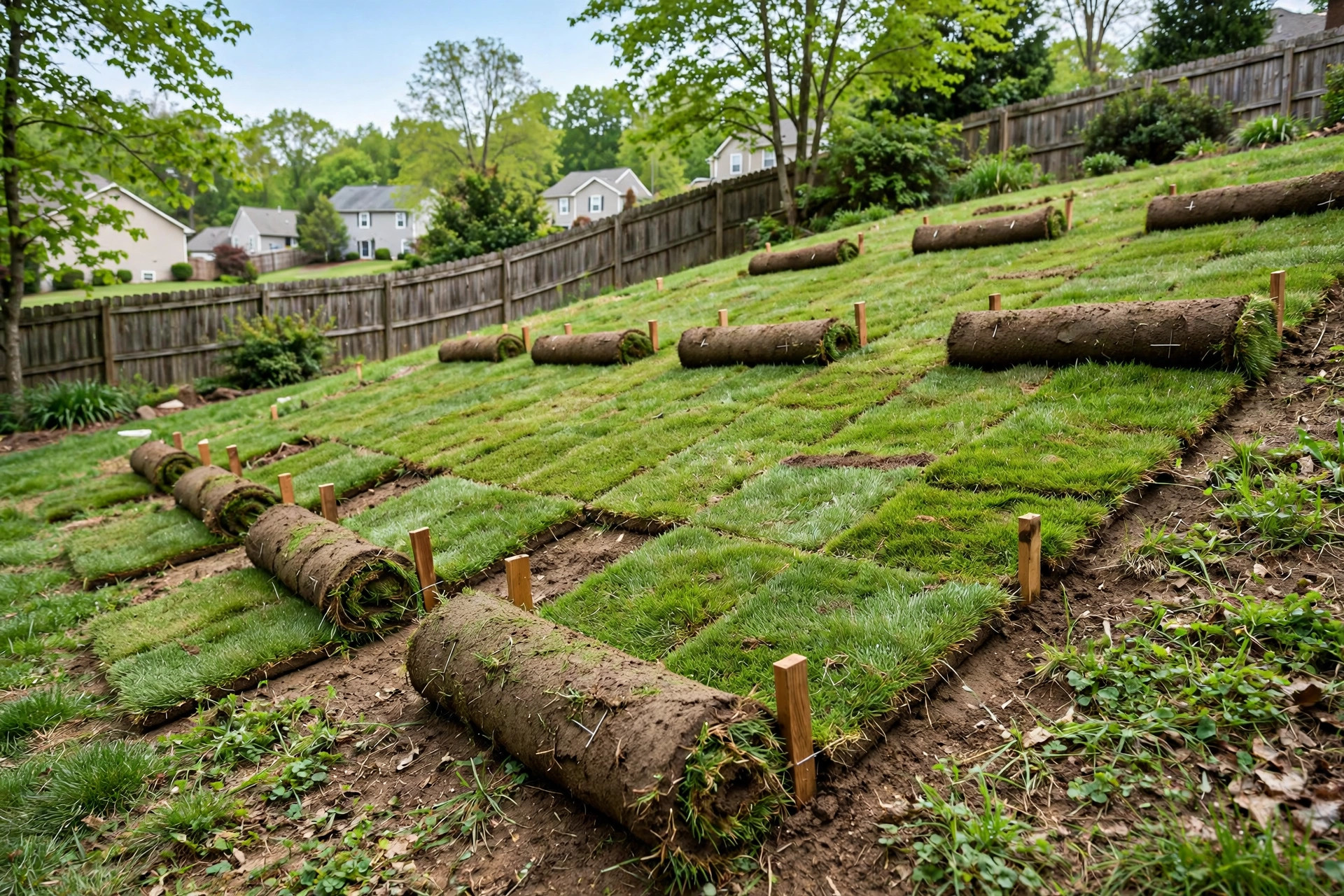
This is the key step in how to plant sod on slope land. Start at the bottom of the hill and work upward. Lay the first row of rolls across the slope, like steps, not up and down. Each row should sit tight against the one below it, with no gaps.
Stagger the joints between rolls, like bricks in a wall. A straight seam running down the slope gives water a path to wash soil away. Staggered seams hold better.
Press each roll firmly into the soil. Unroll it gently. Do not stretch or pull the sod, because stretched sod shrinks and leaves gaps. Trim edges with a sharp knife.
7. Stake Every Piece
On flat ground, stakes are not needed. On a slope, they are a must. Drive one stake through each roll into the soil, or two stakes for longer rolls. Place stakes near the top edge of each piece so gravity pulls the sod against the stake, not away from it.
Wooden stakes, plastic stakes, or metal sod staples all work. The staples are U-shaped pins made for this job. Leave the stake heads slightly above the sod so you can pull them out later. Stakes can usually be removed after three to four weeks, once the roots have gripped.
8. Roll the Sod
Roll the whole slope with a water-filled lawn roller. Rolling presses the sod against the soil and removes air pockets. Roll across the slope, not down it. A heavy roller on wet soil can cause the sod to slide, so roll gently and only once.
9. Water Right Away
Water the new sod within 30 minutes of laying it. Soak it well. The soil under the sod should be wet six inches deep. On a slope, water in short rounds. Water for ten minutes, wait twenty minutes, then water again. This lets water soak in instead of running off.
Watering New Sod on a Slope
Water is the hardest part of how to plant sod on slope ground. Too little and the top of the hill dies. Too much at once and the bottom drowns while soil washes away.
For the first two weeks, water every day. Use short, repeated rounds. The goal is to keep the sod and the top two inches of soil damp at all times. Check by lifting a corner of a roll. The soil beneath should be dark and moist.
In weeks three and four, water every other day, but water deeper. This trains roots to grow down. After the first month, water twice a week in dry weather, giving about one inch of water each time.
Morning is the best time to water. Evening watering leaves the grass wet all night, which can bring disease. Avoid watering in the heat of the day, when water evaporates fast and can scorch the leaves.
Mowing and First Care
Wait to mow until the sod has rooted. Test by tugging gently on a corner. If it resists, the roots have taken hold. This usually takes two to three weeks. Remove the stakes before mowing, or mark them clearly so the mower does not hit them.
Set the mower high for the first cut. Take off no more than one third of the grass height. Mowing across the slope is safer than mowing up and down. Keep the mower blades sharp, as you would with any lawn. For tips on keeping blades in shape, see our guide on where to buy lawn mower blades near me.
Do not fertilize again for six to eight weeks. The starter fertilizer is enough at first. After that, feed the lawn on a normal schedule for your grass type.
Sod Types That Do Well on Slopes
Not all grass holds a hill the same way. Warm-season grasses like Bermuda and Zoysia spread fast and grip slopes well in hot regions. They go brown in winter but green up in spring. Cool-season grasses like tall fescue and Kentucky bluegrass work in the north. Tall fescue has deep roots, which helps on slopes.
Ask your sod farm what they grow for slopes in your area. Local farms know which type handles local rain and heat. Buy sod that was cut within 24 hours of delivery. Old sod dries out and roots poorly.
Cost of Sodding a Slope
Sod itself costs about 30 to 60 cents per square foot, depending on grass type and region. A 1,000-square-foot slope might need 1,100 square feet of sod, costing 330 to 660 dollars for the material.
Add topsoil, compost, fertilizer, and stakes. These often add 100 to 300 dollars. Tool rental, like a roller, may add 50 to 100 dollars. Doing the work yourself keeps the cost low.
Hiring a crew costs more. Professional sod installation runs 1 to 2 dollars per square foot. A 1,000-square-foot slope might cost 1,200 to 2,500 dollars installed. Get two or three quotes before you choose.
Keeping the Slope Healthy Over Time
A sodded slope needs steady care. Fertilize in spring and fall. Overseed thin spots in the fall. Keep the soil from compacting by staying off it when it is wet.
Watch for erosion after heavy rain. If you see bare patches, fill them with topsoil and patch with small pieces of sod. Catching problems early keeps them small.
Some slopes are too steep for grass alone. If soil keeps washing away year after year, a retaining wall may be the answer. A wall holds the soil and creates a flat planting bed. If your hill is severe, read about affordable retaining wall builders near me to compare that option.
Edging the bottom of the slope also helps. A clean edge keeps the lawn neat and stops sod from creeping into beds. See how to install paver edging for lawn for a weekend project that pairs well with new sod.
Safety on the Slope
Working on a hill has risks. Wear boots with good grip. Do not work on the slope when it is wet and slick. Carry sod rolls with a partner, as a full roll can weigh 30 to 50 pounds. Lift with your legs, not your back.
Keep children and pets off the new sod for the first few weeks. Foot traffic on fresh sod breaks the roots and leaves bare spots. Put up a simple string barrier or a sign if needed.
Store fertilizer and chemicals away from children and pets. Follow the label for every product you use. Wash your hands after handling fertilizer or treated sod.
Frequently Asked Questions
How long does it take for sod on a slope to root?
Most sod roots in two to three weeks with daily watering. Steep slopes and hot weather can slow it down. Test by lifting a corner. If it resists your pull, the roots have taken hold and you can remove the stakes.
Can I lay sod on a very steep slope?
Sod works on moderate slopes. On very steep hills, where you can barely stand, sod may slide no matter how well you stake it. For those hills, consider terracing, ground cover plants, or a retaining wall. A landscape contractor can judge what your hill needs.
Do I really need stakes for sod on a slope?
Yes. On any slope you can see and feel, stakes are needed. Without them, rain and gravity will shift the rolls before roots form. Stakes are cheap and easy. Use one or two per roll and remove them after a month.
When is the best time of year to sod a slope?
Early fall is best in most regions. The soil is warm, rain is steady, and heat stress is low. Spring is second best. Avoid laying sod in the heat of summer, when daily watering is hard to keep up, and in winter, when grass does not grow.
How do I water sod on a slope without runoff?
Water in short rounds. Run the sprinkler for ten minutes, stop for twenty, then run it again. A gentle sprinkler head helps. Water early in the morning. Mulch or straw netting over the seams can also slow runoff in the first week, though it is not always needed with staked sod.
Should I use seed instead of sod on a slope?
Seed is cheaper but riskier. On slopes, seed often washes away before it sprouts. Erosion control blankets can help seed stay put, but they add cost and work. Sod gives instant cover and is the safer choice for most slopes, especially where erosion is already a problem.
A Final Word
Learning how to plant sod on slope ground comes down to a few firm rules. Prepare the soil well. Lay from bottom to top. Stagger the seams. Stake every roll. Water in short, steady rounds. Follow these steps and your hill can turn from a muddy washout into a firm green lawn within a month.
References
Toro. (n.d.). Lawn care equipment and irrigation. https://www.toro.com Deere & Company. (n.d.). Lawn and garden equipment. https://www.deere.com Briggs & Stratton. (n.d.). Small engines and outdoor power. https://www.briggsandstratton.com
Was this guide helpful?

About Sarah Mitchell
The My Garden US editorial team writes practical, in-depth home and garden guides for American homeowners — tested advice, no fluff.
You May Also Like

How to Pick the Best Garden Hose for Lawn Watering
January 15, 2026 0 views
Lawn Fertilizer for Sandy Soil Florida: A Plain Guide for Homeowners
June 8, 2026 0 views
Best Mulch for Flower Beds Bulk Delivery: A Complete Guide
April 13, 2026 0 views