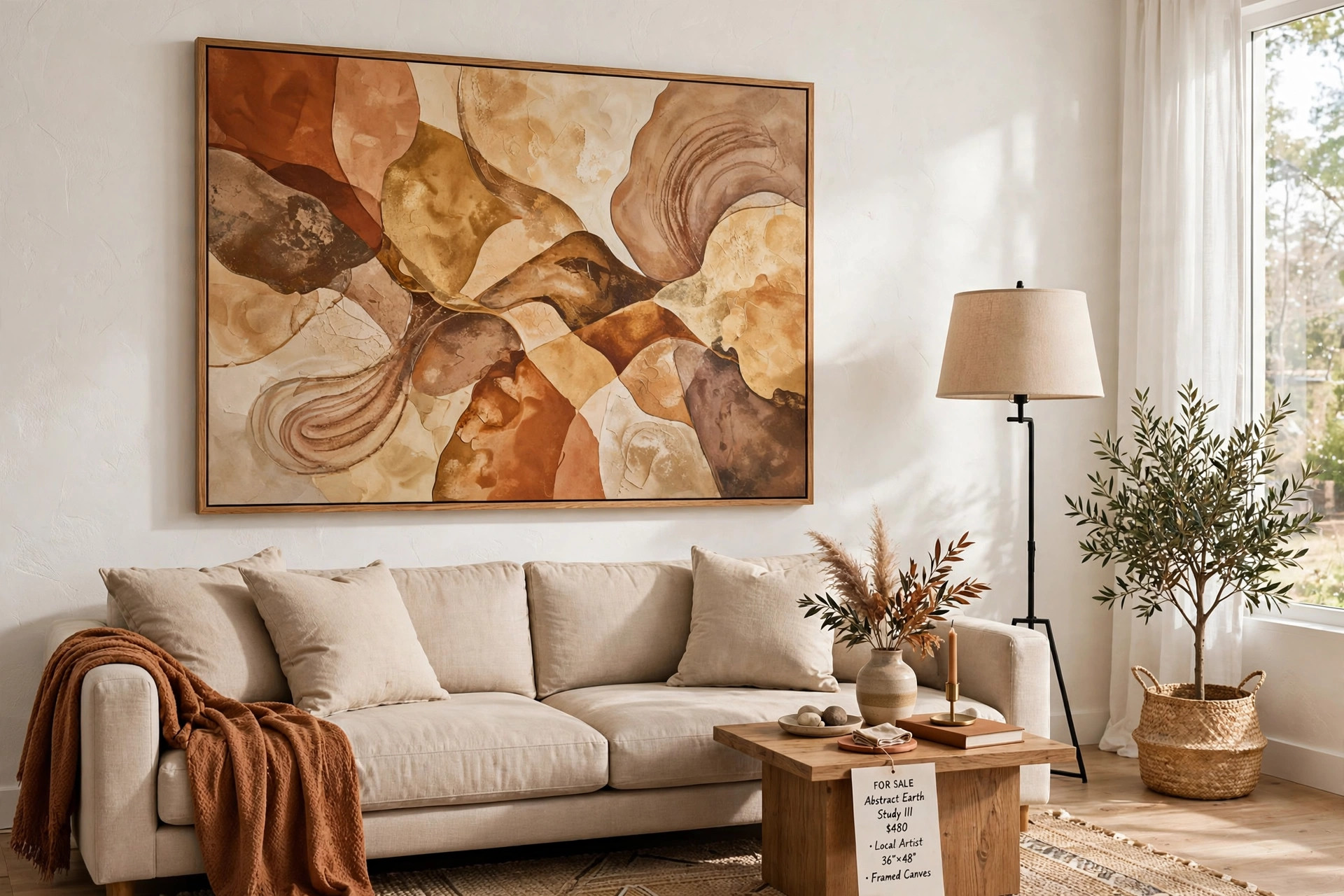

The market for living room wall art for sale in the USA is wide, rich, and full of choices. Shoppers today can pick from thousands of prints, canvases, frames, and original pieces without leaving the house. A plain wall can become a warm and finished space with one good piece of art. This guide explains what to buy, where to look, and how to spend wisely. It is written for the ordinary American buyer who wants clear facts and plain advice.
Why Living Room Wall Art Matters
The living room is the center of the home. Guests see it first. The family gathers there each day. Bare walls can make even a fine room feel cold and unfinished. A piece of wall art gives the room a focus. It draws the eye and sets the mood. Soft tones calm the room. Bold colors add life. A large landscape can make a small room feel wide and open.
Art also tells a story about the people who live there. A map print may show a love of travel. A quiet landscape may show a love of nature. When art reflects the family, the room feels honest and warm. Designers have long said that walls are the skin of a room, and art is what brings that skin to life. Ideas for the whole room often grow from one chosen piece, which is why many guides from Houzz start with a mood before they start with furniture.
Wall art is also one of the cheapest ways to renew a room. New paint costs time and money. New furniture costs far more. A single canvas or framed print can change the feel of a space in an afternoon. For renters, art is even more useful. Most landlords will not allow paint or new shelves, but they will allow a few hooks or picture hangers. Art gives renters a way to make the space their own without breaking the lease.
What to Look for When You Buy: Living Room Wall Art for Sale Usa
Buying wall art is easier when you know what matters. Four points guide most good choices: size, style, subject, and quality. Keep these in mind as you shop, and the search becomes much simpler.
Size and Scale
Size is the point where most buyers go wrong. Small art on a big wall looks lost. Large art in a tight spot feels heavy. A common rule holds that art above a sofa should span about two thirds of the sofa width. If your sofa is 84 inches wide, aim for art around 56 inches wide, including the frame. This keeps the piece and the furniture in balance.
For a single statement piece, go bigger than you think. The Spruce often advises buyers to measure the wall first and tape the outline on the wall with painter tape. Stand back and look. This small test saves many returns. A gallery wall of small frames works well on a narrow wall or a stair wall. Plan the layout on the floor before you hang anything. Keep gaps between frames even, about two to three inches.
Style and Subject
Style should match the room, or at least speak to it. A modern room with clean lines pairs well with abstract prints and bold graphics. A farmhouse room suits soft landscapes and muted tones. A classic room welcomes botanical prints and fine oil-style scenes. The Article catalog shows how modern furniture and simple art move together in one calm style.
Subject is a matter of taste. Landscapes are the most popular choice in America and work in nearly every home. Abstract art suits buyers who want color without a clear subject. Photography prints give a sharp and modern look. Maps, quotes, and line drawings add a personal touch. There is no wrong answer, but there is one strong rule: buy what you like to look at each day. Trends pass. Your own taste lasts.
Types of Living Room Wall Art for Sale
The phrase living room wall art for sale usa covers many kinds of products. Each type has its own price, feel, and upkeep. The main types are canvas prints, framed prints, original paintings, and multi-piece sets.
Canvas Prints
Canvas prints are among the most common items in the American wall art market. The image is printed on canvas and stretched over a wood frame. The edges may show the image wrapped around, which gives a clean look without a frame. Canvas art feels warm and soft. It suits landscapes, abstracts, and photographs alike.
Large canvas wall art for living rooms is easy to find online. Sizes from 24 by 36 inches to 48 by 72 inches are standard. Prices run from about 40 dollars for a small ready-made canvas to several hundred dollars for a large premium one. Canvas is light, which makes hanging easy. It does not need glass, so it never glares. Many sellers at Wayfair stock a wide range of canvas sizes with free shipping in the USA.
Framed Prints and Posters
Framed prints offer a crisp and finished look. The print sits behind glass or acrylic inside a frame. Wood frames suit classic rooms. Thin black or metal frames suit modern rooms. Posters are the cheapest entry point. A fine art poster in a good frame can look as strong as a costly print.
Affordable wall art prints for living room buyers often start with posters. A 24 by 36 inch poster may cost 15 to 30 dollars, and a simple frame may cost another 25 to 60 dollars. Glass adds weight, so use proper hangers. For bright rooms, choose acrylic or non-glare glass to cut reflections. IKEA is known for low-cost frames and ready-to-hang prints that suit this budget range.
Original Paintings
Original paintings cost more, but they carry a value that prints cannot match. Each piece is one of a kind. Local galleries, art fairs, and studio sales are good places to find original work at fair prices. Many American towns hold art fairs each spring and fall where painters sell direct.
An original oil or acrylic painting for a living room may cost from 200 dollars for a small study to several thousand for a large work. Ask the artist about the paint, the canvas, and the varnish. Buy from a seller who can show you the work in person or in clear photographs. Keep the receipt and any note about the artist, since this record helps if you ever resell.
Gallery Walls and Multi-Piece Sets
A gallery wall is a group of frames hung as one display. It works well on a large wall or around a doorway. Sets of two or three canvases, called diptychs and triptychs, give a similar effect with less planning. These sets are made to hang as a group, so the spacing and colors already work together.
When you plan a gallery wall, start with the largest piece in the center or just off center. Build outward with smaller pieces. Mix frame styles with care. Too many styles look messy. Two or three frame styles is enough. If you want a softer display, you can pair art with entryway decorative mirrors for sale usa to bounce light around the room.
Cost and Price Ranges in the USA
Prices for living room wall art in the USA vary widely. The table below gives a plain view of what buyers can expect.
– Posters: 10 to 40 dollars. Frame not included. – Ready-made canvas prints: 40 to 300 dollars, based on size. – Framed fine art prints: 80 to 400 dollars. – Multi-piece sets: 60 to 350 dollars. – Original paintings: 200 to several thousand dollars. – Custom framing: 50 to 300 dollars per piece, based on size and frame.
Shipping can add cost, but many large sellers now ship free inside the USA. West Elm and CB2 often run free-shipping events on wall decor. Watch for holiday sales in January, July, and November, when wall art prices often drop by 20 to 40 percent.
Set a budget before you shop. Decide the top price and stick to it. It is easy to spend more when the choices are endless. A 200-dollar budget can buy a strong canvas and a frame. A 500-dollar budget can fill a whole wall. Buyers who plan first rarely regret the purchase.
Care and Upkeep
Wall art needs little care, but a few habits keep it looking good for years. Hang art away from direct sun. Sunlight fades prints and weakens canvas over time. If the wall faces a sunny window, pick a spot on a side wall, or add sheer curtains to soften the light.
Dust frames and canvas with a soft dry cloth every few months. Do not use water or sprays on canvas or on unprotected prints. Clean glass with a damp cloth, not with heavy cleaners. In damp rooms, such as a living room near a pool door, choose acrylic instead of glass to avoid fog and weight. Keep art away from heat vents and fireplaces. Heat and dry air can crack paint and warp frames.
Check hanging hardware once a year. Wire can stretch. Hooks can loosen in soft drywall. A quick check takes five minutes and prevents a fall. For heavy pieces over 30 pounds, use wall anchors or hang from a stud. Safety notes from Apartment Therapy remind renters to use picture-hanging strips or small hooks that leave only a tiny hole.
Safety
Hanging wall art is safe work, but a few rules matter. Use a step stool or a steady ladder, not a chair. Wear work gloves when handling glass frames. Keep small children and pets away while you drill or hammer. A falling frame can break glass and cause cuts.
Heavy art above a sofa or a bed deserves extra care. Use two hooks and strong wire for wide pieces. If you rent, read the lease before you drill. Many leases allow small nail holes but not large anchors. In that case, use adhesive picture strips rated for the frame weight. Do not exceed the weight rating on the package.
Keep cords and plugs clear when you move furniture to hang art. Unplug lamps before you shift them. If you hang art near a fireplace, keep paper posters and thin canvas well away from heat. A few feet of space is enough for most homes.
Frequently Asked Questions
How do I choose living room wall art for sale in the USA without seeing it in person? Start with measurements. Measure the wall and the furniture below it. Read the size chart on the product page with care. Look at customer photos, not only the studio photos. Customer photos show the true color and size in a real home. Buy from sellers with free returns, so you can send the piece back if it does not suit the room.
What size wall art should go above a sofa? Aim for art that covers about two thirds of the sofa width. For a standard 84-inch sofa, that means about 56 inches of art, frame included. Hang the center of the art about 57 to 60 inches from the floor, which is eye level for most adults. If you hang a gallery wall instead, keep the center of the group at the same height.
Is canvas or framed art better for a living room? Both work well. Canvas is light, has no glare, and suits modern and casual rooms. Framed art looks crisp and formal, and it suits classic and traditional rooms. In a bright room with many windows, canvas avoids glass glare. In a formal room, a framed print with a mat looks more finished. Many buyers mix the two across different walls.
How much should I spend on living room wall art? Spend what fits your budget. A good canvas can be found for under 100 dollars. A framed fine art print often costs 100 to 300 dollars. Designers often suggest spending five to ten percent of the room furniture budget on art. Whatever you spend, the piece should please you each time you look at it.
Can I mix art with mirrors and shelves on one wall? Yes, and many designers do. Modern wall bookshelves for sale usa can share a wall with art if you keep a balance. Place the art at eye level and the shelves higher or lower. Leave clear space between the art and the shelf so each item has room to breathe. Mirrors near art add light, but keep them on a side wall to avoid odd reflections.
Where should I hang art in a room with a TV? Hang the main art on a wall away from the TV. Art next to a glowing screen fights for attention and loses. If the TV hangs above a console, keep that wall simple. Put your best piece on the opposite wall or a side wall. Soft art near reading chairs works well, since people look at it while they sit. Match art colors with couch throw pillows for sale usa to tie the whole room together.
A Short Final Word
The search for living room wall art for sale in the USA ends well when the buyer plans first. Measure the wall. Pick a style that fits the room. Set a budget. Then buy the piece that you like to see each day. One strong piece beats three weak ones. Hang it with care, keep it clean, and the room will feel complete for years. Good art is not about price or fashion. It is about the quiet pleasure of a wall done right. Browse trusted home decor sources such as HGTV and Crate and Barrel for ideas, then choose with a clear eye and a steady hand.
References
Apartment Therapy. (n.d.). Home design ideas and inspiration. https://www.apartmenttherapy.com Article. (n.d.). Modern furniture. https://www.article.com CB2. (n.d.). Modern furniture and decor. https://www.cb2.com Crate and Barrel. (n.d.). Furniture and home decor. https://www.crateandbarrel.com HGTV. (n.d.). Home and garden ideas. https://www.hgtv.com Houzz. (n.d.). Home design and remodeling. https://www.houzz.com IKEA. (n.d.). Home furnishings. https://www.ikea.com The Spruce. (n.d.). Home and garden advice. https://www.thespruce.com Wayfair. (n.d.). Furniture and home goods. https://www.wayfair.com West Elm. (n.d.). Modern furniture and home decor. https://www.westelm.com
Was this guide helpful?

About Sarah Mitchell
The My Garden US editorial team writes practical, in-depth home and garden guides for American homeowners — tested advice, no fluff.
You May Also Like

Window Curtain Panels Reviews: A Complete Buying Guide for USA Homes
April 2, 2026 0 views
Rustic Console Tables for California Homes
July 28, 2026 0 views
Modern Wall Bookshelves for Sale in the USA: A Complete Buyer’s Guide
March 19, 2026 0 views