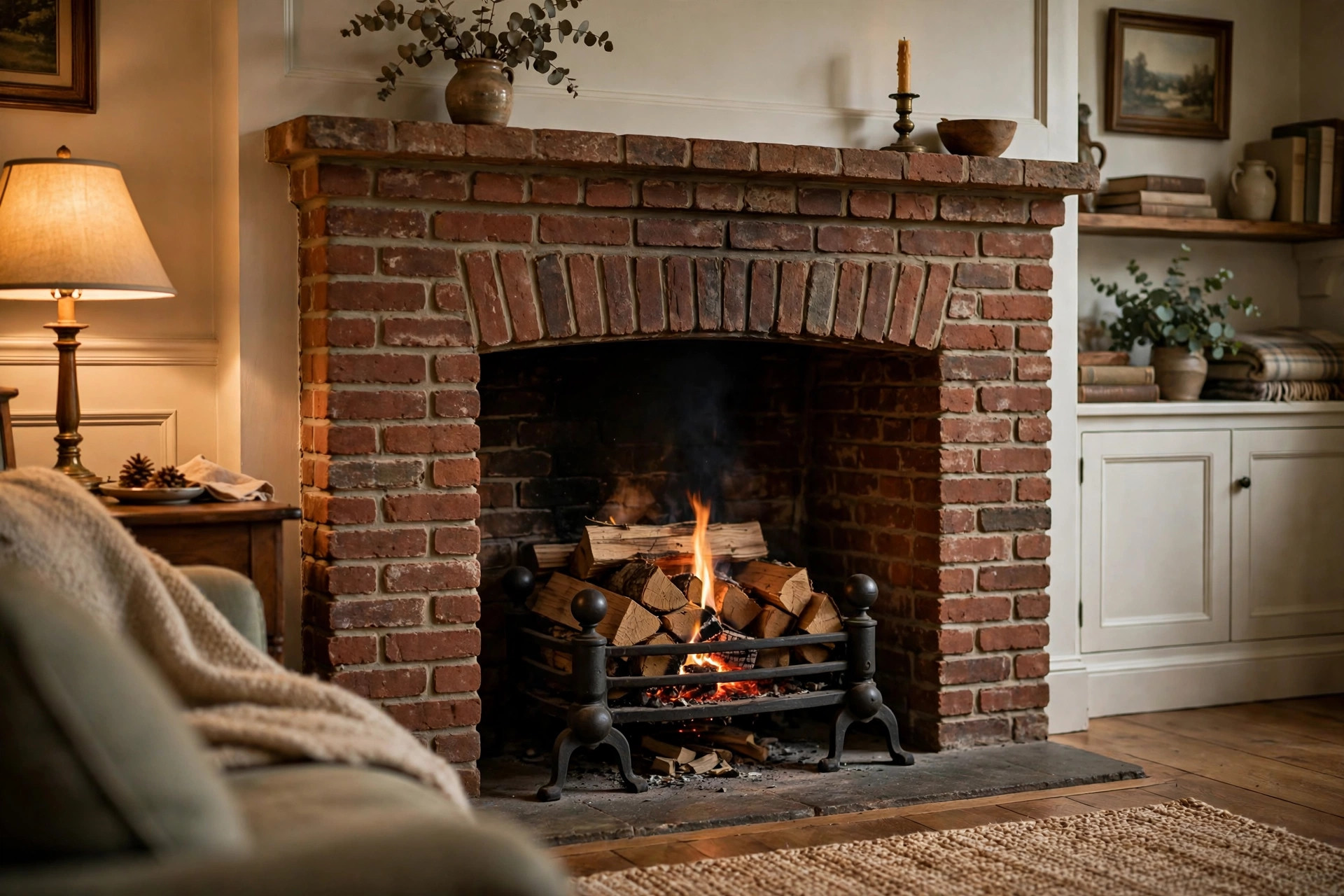
A fireplace gives a home more than heat. It gives a gathering place. It gives light on a cold night. It gives a reason to sit down and stay a while. But a fireplace can waste a great deal of wood if the fire is built on the bare hearth. This high efficiency andirons for fireplaces buying guide will show you why raising the logs matters, and how the right set of andirons can make your fire burn hotter, longer, and cleaner.
Andirons are the pair of supports that hold logs above the floor of the firebox. The word comes from an old French term for a fire dog, and many sets still show the classic dog or ball front. The important part is not the decoration. The important part is the grate. The grate lifts the wood so air can flow under and around each log. More air means a hotter flame. A hotter flame means less smoke and less creosote on your chimney walls. That is the simple secret of high efficiency andirons for fireplaces.
Why Raised Grates Matter
When logs rest flat on the hearth, only the top and sides get air. The bottom smolders. Smoldering wood makes smoke instead of heat. Smoke carries unburned fuel up the chimney, and that fuel sticks to the flue as creosote. Creosote is a fire hazard. It is also a sign of wasted money, because every bit of fuel that leaves as smoke is heat your room never felt.
A good andiron grate changes this picture. Logs sit an inch or two above the ash bed. Air feeds the fire from below. The coals gather in the basket instead of spreading thin across the hearth. The result is a fire that lights faster, burns steadier, and throws more heat into the room. Homeowners who study hearth heating basics often find that small changes to fire setup matter more than they expected.
Raised grates also help with longer burns. Logs roll toward the center of the basket as they burn down. They keep contact with the hot coals. You add wood less often. Many owners report that a proper grate adds thirty minutes or more to the time between loads. Over a full heating season, that adds up to real savings on firewood.
A good grate also makes the fire easier to start. Kindling placed under the raised bars catches fast because flames can wrap around it from below. Newspaper twists, fatwood sticks, and small splits all light with less effort when air can reach them from every side. Many people who struggle with smoky starts find that the grate, not the wood, was the missing piece.
There is one more gain that few shoppers think about: ash control. When wood burns on a flat hearth, ash spreads across the whole floor and blows into the room when you poke the fire. A grate holds the ash in a smaller pile under the basket. It is easier to scoop out, and less of it drifts into the living room. A cleaner hearth is a safer hearth, because stray embers have less loose ash to hide in.
What To Look For When You Choose: High Efficiency Andirons for Fireplaces Buying Guide
Not every andiron set earns the high efficiency label. Look past the front decoration and check the working parts.
Material and weight. Cast iron is the old standard. It takes heat well and lasts for decades. Heavy steel plate is also strong. Thin, light metal grates warp after a season or two. Pick up the set in the store if you can. A quality andiron feels heavy in the hand. That weight is a sign of thick metal that will stand up to repeated fires.
Bar spacing. The grate bars should sit close enough to hold small splits and kindling, but wide enough to let ash fall through. A spacing of about one to two inches works well for most homes. Bars that are too far apart let small pieces slip through into the ash. Bars that are too close choke the air flow that makes the grate useful.
Leg height. The lift under the logs should be at least one and a half inches. Two inches is better. This space is where the under-fire air moves. Some low-profile sets look fine but barely raise the wood. They add little to efficiency.
Firebox fit. Measure the inside of your firebox before you shop. Andirons should fill most of the width without pressing against the side walls. A set that is too wide will not sit flat. A set that is too narrow lets logs roll off the ends. Write down the depth as well as the width, so the front feet sit fully inside the hearth.
Front design. The front posts, often called fire dogs, hold the logs from rolling forward. Tall fronts work well with large loads. If you have a raised hearth with small children, look at child-safe hearth ideas and pair your andirons with a sturdy screen.
Types and Options
Andiron sets come in several styles. Each has a place.
Classic ball and dog fronts. These are the traditional look. Two decorative fronts with a crossbar grate between them. They suit brick and stone fireplaces in older homes. Quality ranges widely, so check the grate thickness.
Basket grates. A basket grate has side walls as well as front and back bars. It cradles the wood on all sides. Baskets keep small splits and round logs from rolling. They are a strong choice if you burn mixed sizes of wood.
Tubular steel grates. These use round steel tubes instead of flat bars. Air flows through and around the tubes, and some designs even preheat the air. They are lighter than cast iron but still strong when well made.
Elevated ember grates. These sit higher than standard grates, sometimes three inches or more. The extra lift feeds more air to the fire. They suit large fireboxes and big loads of wood.
Grate heaters and heat exchangers. Some grates include steel tubes that blow room air through the fire and back out as warm air. These promise higher heat output. They cost more and need a power source for the fan. They also need regular cleaning to keep the tubes clear.
If you live in a small apartment, size matters more than style. Look at premium andirons for fireplaces for small apartments for sets made to fit tight fireboxes.
Cost and Price
Prices for andiron sets cover a wide range. Simple steel grates start near twenty dollars. Mid-range cast iron sets run from sixty to one hundred fifty dollars. Large, heavy, or hand-forged sets can pass two hundred dollars. Heat-exchanger grates with fans often cost two hundred to four hundred dollars.
The EPA notes that clean wood burning practices save fuel and cut smoke. A better grate is one of the cheapest ways to move in that direction. A one hundred dollar set that saves a quarter cord of wood each winter pays for itself fast.
Do not judge a set by looks alone. A plain black grate of thick cast iron will outlast a pretty set of thin stamped metal. Read the weight on the box when you shop online. Good full-size sets often weigh fifteen to thirty pounds. Sets under ten pounds are usually too light for steady use, though they can work in a small decorative fireplace that sees only a few fires a year.
Shop carefully and compare. Big retailers such as Home Depot and Lowe’s carry common sizes, while specialty makers such as Napoleon and Heatilator focus on hearth products. If you are buying a grate in the Mountain West, check where to buy fireplace grates in Colorado for local options.
Care and Upkeep
Cast iron and steel andirons need little care, but they do need some.
Let the grate cool fully before you touch it. Scoop ash out of the firebox often. Ash buildup under the grate blocks the air flow that makes it work. A thin ash bed of one inch is fine. More than that should go.
Check the grate bars each fall before the burning season starts. Look for cracks, thin spots, or sagging bars. A cracked grate can drop a burning log. Replace it rather than risk it.
Brush off soot and wipe the fronts with a dry cloth. If you want to keep the black finish bright, use a high-heat stove polish made for hearth products. Never use regular paint. It will smoke and peel in the heat.
Store a spare poker, brush, and shovel near the hearth. You can find good guidance on EPA certified fireplace tool sets for sale when you want matched tools.
Guides from Family Handyman offer clear steps for hearth cleaning and seasonal checks.
Safety
Fire is useful and fire is dangerous. Keep these rules in mind.
Use a mesh screen or glass doors in front of the andirons whenever the fire is lit. Sparks can jump farther than you think. Keep rugs, paper, and kindling at least three feet from the opening.
Burn only dry, seasoned hardwood. Wet wood smokes and coats the chimney with creosote. Never burn trash, painted wood, or pressure-treated lumber. They release harmful fumes.
Have the chimney swept and inspected once a year by a trained sweep. A clean flue draws better, which makes your grate work better too. The EPA wood smoke guidance explains why clean burning protects both your home and your neighbors.
Keep a fire extinguisher in the room. Teach everyone in the house how the damper works. Never leave a fire burning when you leave the house or go to sleep.
FAQ
Do andirons really make a fireplace more efficient? Yes. By lifting logs off the hearth, they let air reach the whole fire. Better air flow means hotter flames, less smoke, and more heat from the same wood.
What size andirons do I need? Measure your firebox width and depth. Choose a set about two inches narrower than the firebox width. The grate should sit fully inside, with room for the front feet.
Are heavy grates better than light ones? In most cases, yes. Heavy cast iron or thick steel resists warping and lasts longer. Light grates bend under heat and may need replacing after one or two seasons.
Can I use andirons in a gas fireplace? No. Gas fireplaces use ceramic logs made for that unit. A wood grate does not belong there and can block the burner or damage the logs.
How often should I replace my andirons? A quality cast iron set can last twenty years or more. Replace it when bars crack, sag, or wear thin. A damaged grate is a safety risk.
Do I still need a chimney sweep if I use a high efficiency grate? Yes. Even the cleanest-burning fire leaves some deposits. Annual sweeping keeps the flue safe and the draft strong.
A Short Final Word
The right andiron set is a small purchase with a large return. It makes fires easier to light, hotter to sit by, and cheaper to feed. Measure your firebox, choose thick metal, and keep the grate clean. Your firewood will go further, your chimney will stay cleaner, and your winter nights will be warmer. For more hearth project ideas, browse the hearth and fireplace guides and the project library at This Old House.
References
Family Handyman. (n.d.). DIY home repair and maintenance. https://www.familyhandyman.com Heatilator. (n.d.). Fireplaces and fireplace products. https://www.heatilator.com Lowe’s. (n.d.). Home improvement products. https://www.lowes.com Napoleon. (n.d.). Fireplaces, grills, and heating products. https://www.napoleon.com The Home Depot. (n.d.). Home improvement products. https://www.homedepot.com The Spruce. (n.d.). Home and garden advice. https://www.thespruce.com This Old House. (n.d.). Home renovation guidance. https://www.thisoldhouse.com U.S. Environmental Protection Agency. (n.d.). Protecting human health and the environment. https://www.epa.gov
Was this guide helpful?

About Sarah Mitchell
The My Garden US editorial team writes practical, in-depth home and garden guides for American homeowners — tested advice, no fluff.