
Keeping a floor clean in Texas is a battle. Dust blows in from dry fields. Sand sticks to shoes. Pets track in grit after a run in the yard. Tile and stone floors show every mark. Homeowners who mop with an old string mop soon learn the truth. The work is slow and the floor stays dull.
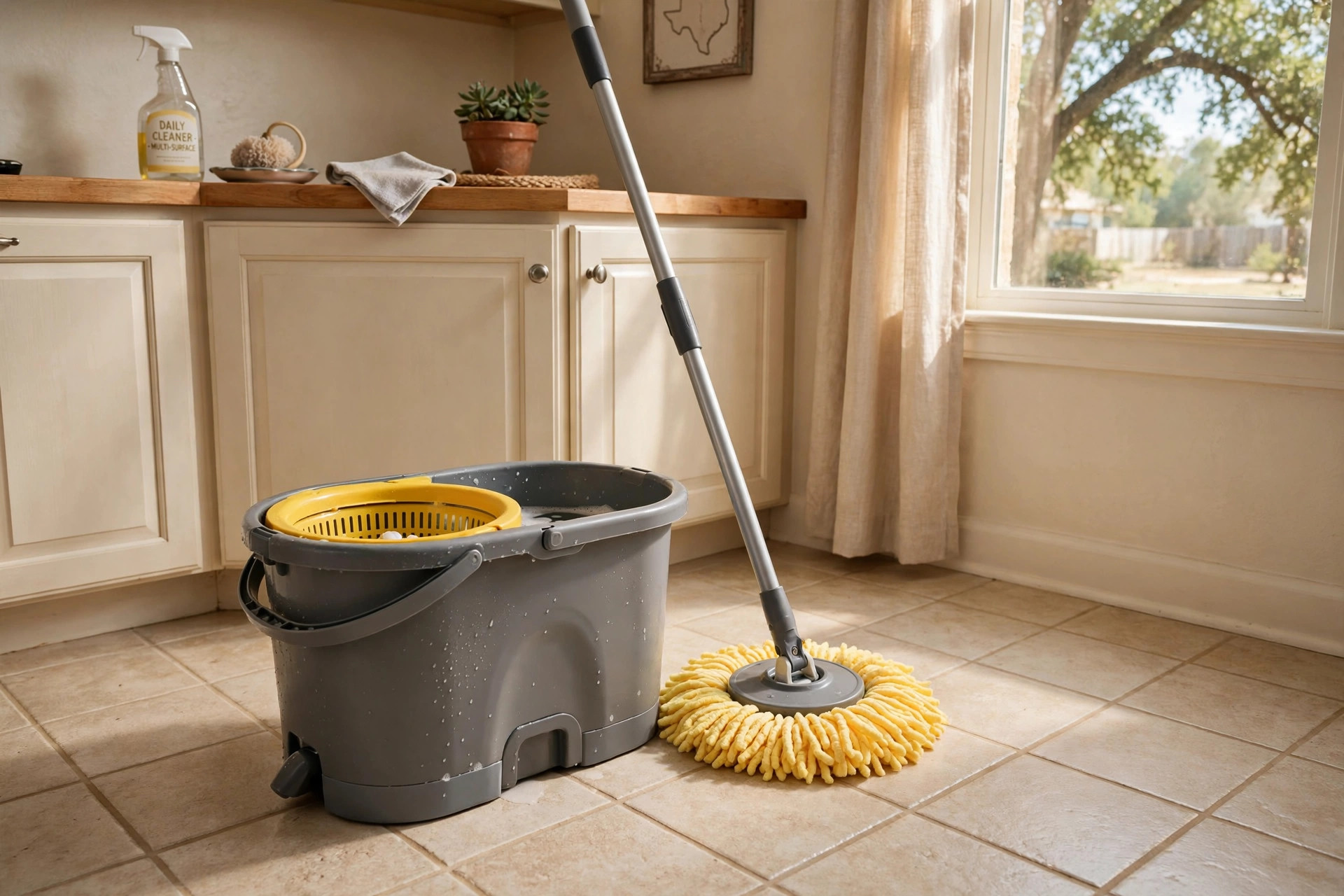
Powerful spin mop bucket systems for Texas homes offer a better way. A spin mop bucket holds a basket inside. The basket spins the mop head at high speed. The spin wrings out the water so the mop head is damp, not soaked. The user then guides a light mop across the floor. The result is a floor that dries fast and shines more.
This guide explains why these systems suit Texas homes, how to choose one, the types on sale, what they cost, and how to keep them working for years.
Why Spin Mop Bucket Systems Matter in Texas Homes
Texas homes face soil problems that homes in milder states do not. The land is dry for long months. Wind carries fine dust that settles on floors in a day. Many homes have large rooms with tile, sealed concrete, or vinyl plank floors. These hard floors need damp mopping, not a dry pass. A system that wrings the mop well matters more here than in a damp northern state.
The Texas Dust Problem
Open a door in West Texas and dust comes in. In Central Texas the red dirt clings to shoes. Along the Gulf Coast, sand tracks in from patios. Families with children and dogs multiply the traffic. A mop that leaves the floor too wet pushes dirt into grout lines. A mop that is wrung well lifts the dirt and leaves little water behind. That is the core gain of a spin mop bucket system. The wring is stronger than a hand wring. The floor dries in minutes.
Floors Common in Texas Houses
Builders in Texas favor hard floors. Tile rules in kitchens, halls, and baths. Many newer homes use luxury vinyl plank through the living areas. Sealed concrete appears in modern builds. Hardwood shows up in upscale homes, though it is less common than in the Northeast. Each of these floors benefits from a damp mop that is not dripping. The Consumer Reports guides on floor care make the same point. Water is the enemy of wood. A well wrung mop keeps wood safe.
How to Choose a Spin Mop Bucket System: Powerful Spin Mop Bucket Systems for Texas Homes
Shoppers face a shelf full of choices. The boxes look alike. The prices vary. A careful buyer checks a few points before paying.
Basket and Spin Method
Most systems use a foot pedal. The user steps on the pedal and the basket spins. Other models use a hand press on the mop handle. A few use a pull cord. Pedal systems feel sturdy and leave both hands on the mop. Hand press systems cost less. Buyers should test the pedal in the store if possible. It should press down smooth and return fast.
Mop Head Type
Microfiber heads do most of the work in these systems. The tiny fibers grab dust and hold water. Good heads detach from the pole for machine washing. Cheap heads shed fibers after two washes. Look for heads that fit tight on the pole disk. Loose heads slip and streak the floor.
Bucket Size and Build
A bucket that holds four to five gallons suits a full house. Small buckets need refilling for each large room. Check the wheels. A bucket with wheels moves room to room without lifting. Check the spout too. A pour spout makes emptying easy. The plastic should feel thick. Thin buckets crack within a year.
Handle Length and Comfort
The pole should reach from floor to chin without bending. Most poles adjust in length. Tall users need a longer pole. A foam grip keeps hands from slipping when wet.
Types of Spin Mop Bucket Systems
Stores carry several designs. Each suits a different home and budget.
Classic Two Chamber Buckets
These are the most common. One side holds the wash water. The other side holds the spin basket. The user dips the mop in the wash side, then spins it dry in the basket. This design keeps dirty water from touching the rinse water. It is simple and cheap. The Spruce home editors note that this split design is the best pick for beginners.
Pedal Drive Systems
A pedal on the bucket base drives the basket. These are the original style and still popular. They need no batteries. They wring as hard as the user pumps. Big families like them because the pedal stands up to hard use.
Electric Spin Systems
Some newer buckets use a small motor and a battery. The user presses a button and the basket spins on its own. These suit people with foot or leg trouble. They cost more and need charging. Battery life varies by brand.
Compact Systems for Small Homes
Apartments and small condos do not need a five gallon bucket. Compact systems use smaller buckets and shorter poles. They store in a closet corner. For a two bedroom Texas apartment, a compact set often proves enough. The Good Housekeeping lab tests rank compact sets well for ease of storage.
Cost and Price Guide
Prices range wide. Knowing the bands helps the buyer spend with sense.
Budget Sets
Basic spin mop bucket sets sell for fifteen to thirty dollars. They include one mop head and a simple bucket. They work, but the pedals may fail after a year of hard use. For a small home or a first try, a budget set serves well.
Mid Range Sets
Mid range sets run thirty to sixty dollars. They add wheels, a sturdier pedal, and extra mop heads. Most Texas homeowners land in this band. The extra heads save money since each head lasts two to four months of weekly use. Check Lowe’s and Home Depot for mid range sets with strong customer reviews.
Premium Sets
Premium systems cost sixty to one hundred twenty dollars. They use thick plastic, smooth pedals, and plush microfiber heads. Some include a carry handle and a drain plug. Buyers who mop three times a week find the premium build worth the price.
Long Term Costs
The heads wear out. New heads cost five to twelve dollars each. A family that mops weekly buys three to four heads a year. Over five years the heads can cost as much as the bucket. Buying a set that ships with two or three heads cuts the first year cost. The Target online store sells refill packs at fair prices.
What Not to Pay For
Some sellers push fancy add ons. A scented water tank adds cost but little value. A built in soap dispenser sounds nice, yet most users find it hard to clean. Stick to a plain, sturdy bucket and good heads. The money saved buys a year of refill heads.
Care and Upkeep
A spin mop bucket system lasts longer with simple care. Most owners skip this step and then blame the tool.
After Each Use
Empty the bucket at once. Do not let dirty water sit overnight. Rinse the bucket with clean water. Remove the mop head and wring it once more. Stand the bucket upside down to air dry. This stops mold from growing in corners.
Washing the Mop Heads
Microfiber heads need washing after every two or three uses. Put them in the washing machine on warm with a mild detergent. Skip fabric softener. Softener coats the fibers and ruins their grip. Skip bleach too. Bleach breaks down the fibers fast. Dry the heads on low heat or hang them to dry.
Deep Cleaning the Bucket
Once a month, fill the bucket with hot water and a cup of white vinegar. Let it sit for thirty minutes. Scrub the basket and corners with an old brush. Rinse and dry. This keeps smells away. The Family Handyman guides on tool care suggest the same vinegar soak for plastic buckets.
Storing the System
Store the bucket in a cool dry place. A garage works if it does not bake in summer heat. Keep extra heads in a sealed bag so they stay clean. Do not leave the mop head sitting in water. Soaking weakens the fibers.
Safety Tips
Spin mop buckets are simple tools, but a few cautions apply.
Wet Floor Safety
Wet tile is slippery. Mop in sections. Let one section dry before starting the next. Keep pets and children out of wet rooms. The Environmental Protection Agency pages on safer cleaning stress good ventilation too. Open a window or run a fan so floors dry fast.
Chemical Use
Many cleaners claim they boost shine. Harsh chemicals are not needed for most Texas floors. A few drops of dish soap or a mild floor cleaner in the water is enough. Strong acids and ammonia can harm tile grout and vinyl. Read the cleaner label first. Rinse the mop well if the cleaner feels strong.
Foot and Hand Care
The pedal needs firm pressure. Users with ankle trouble should pick a hand press or electric model. The spin basket moves fast. Keep fingers clear of the basket while it spins. Let it stop before lifting the mop.
Related Cleaning Tools Worth a Look
A spin mop bucket handles floors, but whole home care needs more tools. Homeowners often pair their mop system with other cleaners. A steam mop for tile floors suits deep grease in kitchens. A wet dry shop vacuum picks up the heavy grit before mopping. For wood floors, a quiet hardwood floor buffer brings back shine between deep cleans. The Bob Vila and This Old House sites cover these tools in depth.
Frequently Asked Questions
Do spin mop bucket systems work on tile floors?
Yes. Tile is the best floor for these systems. The wrung mop head leaves tile damp, not soaked. The grout lines stay clean because less water pools in them. Microfiber heads grab the fine Texas dust that sits on tile.
How often should I mop with a spin mop system?
Most Texas homes need mopping once or twice a week. Homes with dogs or many children may need three times a week. High traffic paths show dirt first. A quick pass with the wrung mop keeps them clean between full mops.
Can I use a spin mop on hardwood floors?
Yes, with care. The head must be well wrung. The floor should feel damp to the touch, not wet. Never let water pool on wood. Many wood floor makers warn against excess water. If in doubt, test a hidden corner first.
How long do the mop heads last?
A microfiber head lasts about two to four months with weekly washing. The fibers thin out and stop grabbing dirt. Replace the head when the floor looks streaky after a pass. Keeping two heads in rotation spreads the wear.
Do I need special soap for a spin mop bucket?
No. Mild dish soap or a standard floor cleaner works fine. Strong chemicals can damage the microfiber. Use less soap than the label says. Too much soap leaves a film that attracts dust faster.
Is a pedal or electric spin system better?
Pedal systems suit most homes. They need no power and cost less. Electric systems suit people who cannot press a pedal with ease. Both wring well. The choice comes down to budget and comfort.
A Short Final Word
Powerful spin mop bucket systems for Texas homes solve a real problem. Texas dust is steady and hard floors show it. A good wring makes the difference between a dull floor and a clean one. Buyers should pick a sturdy bucket, wash the heads often, and mop with care. The tool is simple. Used well, it keeps a Texas home bright week after week.
References
Bob Vila. (n.d.). Home improvement advice. https://www.bobvila.com Consumer Reports. (n.d.). Product reviews and ratings. https://www.consumerreports.org Family Handyman. (n.d.). DIY home repair and maintenance. https://www.familyhandyman.com Good Housekeeping. (n.d.). Product reviews and home advice. https://www.goodhousekeeping.com Lowe’s. (n.d.). Home improvement products. https://www.lowes.com Target. (n.d.). Retail store. https://www.target.com The Home Depot. (n.d.). Home improvement products. https://www.homedepot.com The Spruce. (n.d.). Home and garden advice. https://www.thespruce.com This Old House. (n.d.). Home renovation guidance. https://www.thisoldhouse.com U.S. Environmental Protection Agency. (n.d.). Protecting human health and the environment. https://www.epa.gov
Was this guide helpful?

About David Wilson
The My Garden US editorial team writes practical, in-depth home and garden guides for American homeowners — tested advice, no fluff.
You May Also Like
Top Rated Dryer Vent Cleaning Services Reviews: A Plain Guide to Hiring Right
July 9, 2026 0 views
Best Same Day Appliance Repair Services Near Me
January 22, 2026 0 views
Commercial Grade Pressure Washing Service Companies for Homeowners
September 11, 2026 0 views