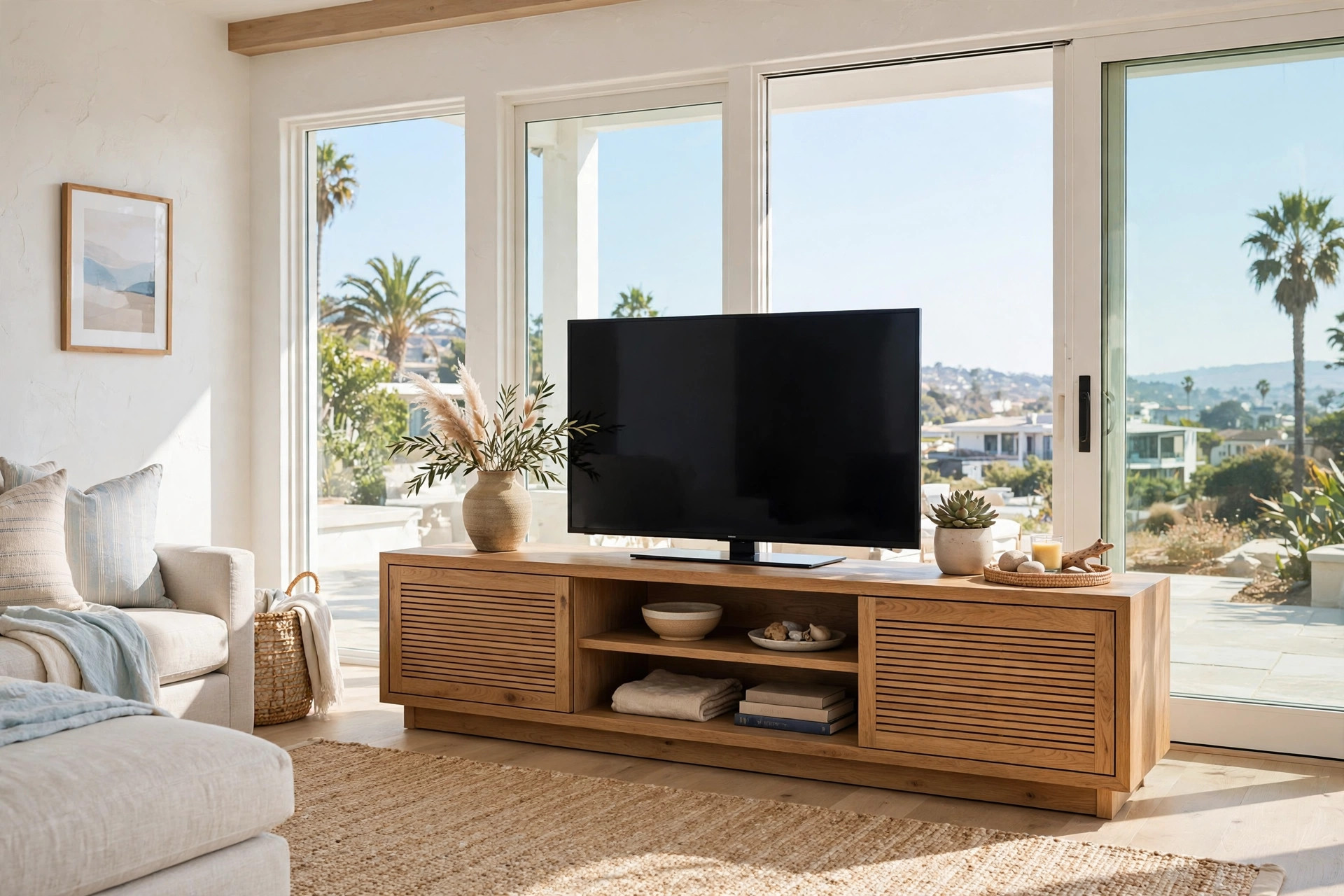

The television is often the center of the living room. In California homes, where open floor plans and large windows are common, the stand beneath the screen matters as much as the screen itself. Shoppers looking for living room tv stands california homes usa options want a piece that fits the space, holds the gear, and matches the relaxed style of the West Coast home. This guide explains what to look for, how much to pay, and how to keep the stand in good shape for years.
Why the Right TV Stand Matters
A TV stand does more than hold a screen. It hides wires and boxes. It gives the room a finished look. It keeps the television at a safe height for viewing.
In many California homes, the living room opens into the kitchen or dining area. The TV wall is seen from several angles. A stand that looks good from the side matters here. Open shelves can look airy, but they show every cable. Closed doors hide clutter but can block remote control signals.
A good stand also protects the equipment. Televisions, game consoles, and sound bars need air flow. A stand with proper ventilation keeps them cool. A stand that is too small can wobble. A stand that is too low can cause neck strain when viewers watch for hours.
How to Choose the Best TV Stand for a California Home: Living Room Tv Stands California Homes Usa
Choosing a stand starts with the room itself. California living rooms vary a great deal. A beach cottage near San Diego has different needs than a ranch house in the Central Valley or a city flat in San Francisco. Measure the room first. Then match the stand to the space.
Match the Stand to the Screen Size
The stand should be wider than the television. A common rule is to leave at least three inches of stand on each side of the screen. This keeps the television stable and looks balanced.
Most modern televisions list their width in the product details. Check that number before shopping. Retailers such as Wayfair and IKEA list stand widths clearly, which makes the match easy.
For a 55-inch television, look for a stand that is at least 54 inches wide. For a 65-inch screen, a 60-inch stand is a safe pick. Larger screens need wider stands, not just for looks but for safety. A top-heavy screen on a narrow base can tip.
Measure the Room Before You Buy
Tape the outline of the stand on the floor with painter’s tape. Walk around it for a day. This simple test shows whether the stand will crowd the room.
In California homes with open plans, the viewing distance matters. Sit in the main seat and measure to the TV wall. A seat that is six to ten feet from the screen suits most 55 to 65-inch televisions. The stand should sit flat against the wall or float in the open space without blocking walkways.
Note the window placement as well. A stand placed against a bright window wall can cause glare on the screen. Many homeowners in California choose the wall that faces away from the afternoon sun.
Pick a Style That Fits the Home
California style is relaxed and light. Many homes use natural wood, linen, and pale walls. A TV stand in warm oak or walnut fits this look. Designers at West Elm and Article often show media consoles in mid-century and coastal styles that suit the region.
White or light gray stands suit small rooms. They blend with pale walls and make the space feel larger. Dark wood stands suit larger rooms with high ceilings. They ground the space and add weight.
Modern stands with clean lines work in city flats. Rustic stands with thick tops work in farmhouses. Match the stand to the other pieces in the room for a calm, planned look. Homeowners who like mixing pieces can browse ideas on Houzz to see how different finishes work together.
Check Storage and Wire Management
Count the devices before choosing a stand. Most families have a cable box or streaming box, a game console, and perhaps a sound bar. Each needs a shelf and an outlet.
Look for stands with holes in the back panel for cables. Cord clips and cable sleeves keep the back tidy. Some stands have drawers for DVDs, remotes, and game controllers. Adjustable shelves help when a tall device needs more headroom.
Media experts at The Spruce advise keeping at least two inches of space above each device for air flow. Tight shelves trap heat. Heat shortens the life of electronics.
Types of Living Room TV Stands
The market offers many styles. Each has strengths and limits. Knowing the types helps narrow the search.
Console stands. These are the classic low cabinets with doors or drawers. They fit most rooms and most budgets. They hide clutter well. They are the most popular choice in California family homes.
Corner stands. These fit into a corner of the room. They suit small living rooms and apartments. They save floor space but hold less gear than full-width consoles.
Wall-mounted units. These attach to the wall and float above the floor. They look modern and make cleaning easy. They need strong wall anchors and are harder to move. They suit renters less well unless the lease allows mounting.
Entertainment centers. These are large units with side towers or hutches. They offer the most storage. They suit big rooms with high ceilings. In smaller California homes they can feel too heavy.
Open shelf stands. These have no doors, just shelves. They show off the gear and keep remotes working with ease. They suit minimal homes where the owner keeps wires neat.
Related pieces can round out the room. A rustic console table behind the sofa adds display space, while a soft living room ottoman gives feet a rest during movie nights. For extra seating, a velvet sofa can pair well with a simple wooden stand.
Cost and Price Guide
Prices for living room TV stands vary by size, material, and brand. Shoppers in California will find stands in every price band.
Under $150. Budget stands use particle board with a laminate finish. They work for small screens and short-term use. They scratch more easily and hold less weight.
$150 to $400. This is the sweet spot for most buyers. Stands in this range use better materials such as solid pine or oak veneer. They hold 65-inch televisions with ease. Stores like IKEA and Wayfair offer many strong choices here.
$400 to $900. Mid-range stands use solid hardwood, better hardware, and nicer finishes. They last many years. Brands such as Article and CB2 sell modern stands in this band.
Above $900. High-end stands come from makers like Crate and Barrel and West Elm. They use premium wood, soft-close doors, and fine joinery. They suit homeowners who want a piece that lasts decades.
Delivery costs add up in California. Large stands may carry a freight fee. Some stores offer free delivery above a set amount. Assembly can take one to two hours for flat-pack units. White-glove delivery, which includes setup, costs more but saves time.
Care and Upkeep
A little care keeps a TV stand looking new. Dust the surfaces once a week with a soft cloth. Microfiber cloths lift dust without scratching.
For wood stands, use a cleaner made for wood. Spray the cloth, not the stand, to avoid moisture in the seams. Wipe with the grain of the wood. Keep the stand away from direct sun, which fades finishes over time. In sunny California rooms, sheer curtains help protect wood from harsh light.
Check the hardware twice a year. Tighten loose screws on doors and hinges. Level the feet if the stand rocks. A wobbling stand is a hazard for the television.
Keep drinks off the top or use coasters. Water rings stain wood and warp laminate. If a spill happens, wipe it at once.
Dust behind the stand every few months. Dust on vents blocks air flow to the electronics. Unplug devices before moving the stand for a deep clean.
Safety Tips for Homes with Kids and Pets
Televisions are heavy and can tip. Anchor the stand to the wall with the straps that come in the box. This is vital in homes with small children who may climb. California sits in an earthquake zone, so wall anchoring also protects the stand during a quake.
Keep the remote controls and small parts out of reach of toddlers. Choose stands with soft-close doors to protect small fingers. Round corners are safer than sharp edges in play areas.
Place the stand away from heaters and fireplaces. Heat warps wood and dries out finishes. Keep cords short and tucked away so pets do not chew them. Cord covers from home stores solve this problem.
Check the weight limit of the stand before placing the television on it. The limit is listed in the product details. Never place a screen that exceeds it.
Frequently Asked Questions
What size TV stand do I need for a 65-inch television? Choose a stand that is at least 60 inches wide. The stand should be wider than the screen for balance and safety. Measure the actual width of the television, since screen size is measured corner to corner, not side to side.
What height is best for a TV stand? The center of the screen should sit at eye level from the main seat. For most sofas, a stand that is 22 to 28 inches tall works well. Taller viewers may prefer the high end of that range.
Can I mount my television above the stand instead of placing it on top? Yes. Wall mounting frees the top of the stand for decor and gear. Use a mount rated for the weight of the screen. Keep the bottom of the screen at about the same height it would be on the stand.
What material lasts longest for a TV stand? Solid hardwood such as oak or walnut lasts the longest. Plywood with a wood veneer is a good middle choice. Particle board with laminate is the least durable but costs the least. Design guides at Apartment Therapy often note that solid wood ages well and can be refinished.
How do I hide wires behind the TV stand? Use the cable holes in the back panel. Bundle cords with ties. Run a cable sleeve along the back of the stand to the outlet. Many homeowners cut a small slot in the wall baseboard for a clean look, though renters should check the lease first.
Do TV stands work in rooms with a lot of sunlight? Yes, but place the stand on the wall that faces away from direct sun. This cuts glare on the screen and protects the wood finish. Light-filtering curtains help too. Room layouts on HGTV often show stands set on the shaded wall for this reason.
A Final Word
The best living room tv stands california homes usa shoppers can buy are the ones that fit the room, hold the gear safely, and suit the style of the home. Measure first. Match the stand width to the screen. Choose storage that hides the clutter. Anchor the unit to the wall for safety. With these steps, the stand will serve the household for years and keep the living room looking calm and inviting.
References
Apartment Therapy. (n.d.). Home design ideas and inspiration. https://www.apartmenttherapy.com Article. (n.d.). Modern furniture. https://www.article.com CB2. (n.d.). Modern furniture and decor. https://www.cb2.com Crate and Barrel. (n.d.). Furniture and home decor. https://www.crateandbarrel.com HGTV. (n.d.). Home and garden ideas. https://www.hgtv.com Houzz. (n.d.). Home design and remodeling. https://www.houzz.com IKEA. (n.d.). Home furnishings. https://www.ikea.com The Spruce. (n.d.). Home and garden advice. https://www.thespruce.com Wayfair. (n.d.). Furniture and home goods. https://www.wayfair.com West Elm. (n.d.). Modern furniture and home decor. https://www.westelm.com
Was this guide helpful?

About Emily Rodriguez
The My Garden US editorial team writes practical, in-depth home and garden guides for American homeowners — tested advice, no fluff.
You May Also Like
Living Room Floor Lamps for Texas Homes in the USA
January 5, 2026 0 views
Modern Farmhouse Tables for California Homes: A Practical Buying Guide
April 6, 2026 0 views
Living Room Ottomans USA Online Deals: A Shopper’s Guide
January 14, 2026 0 views