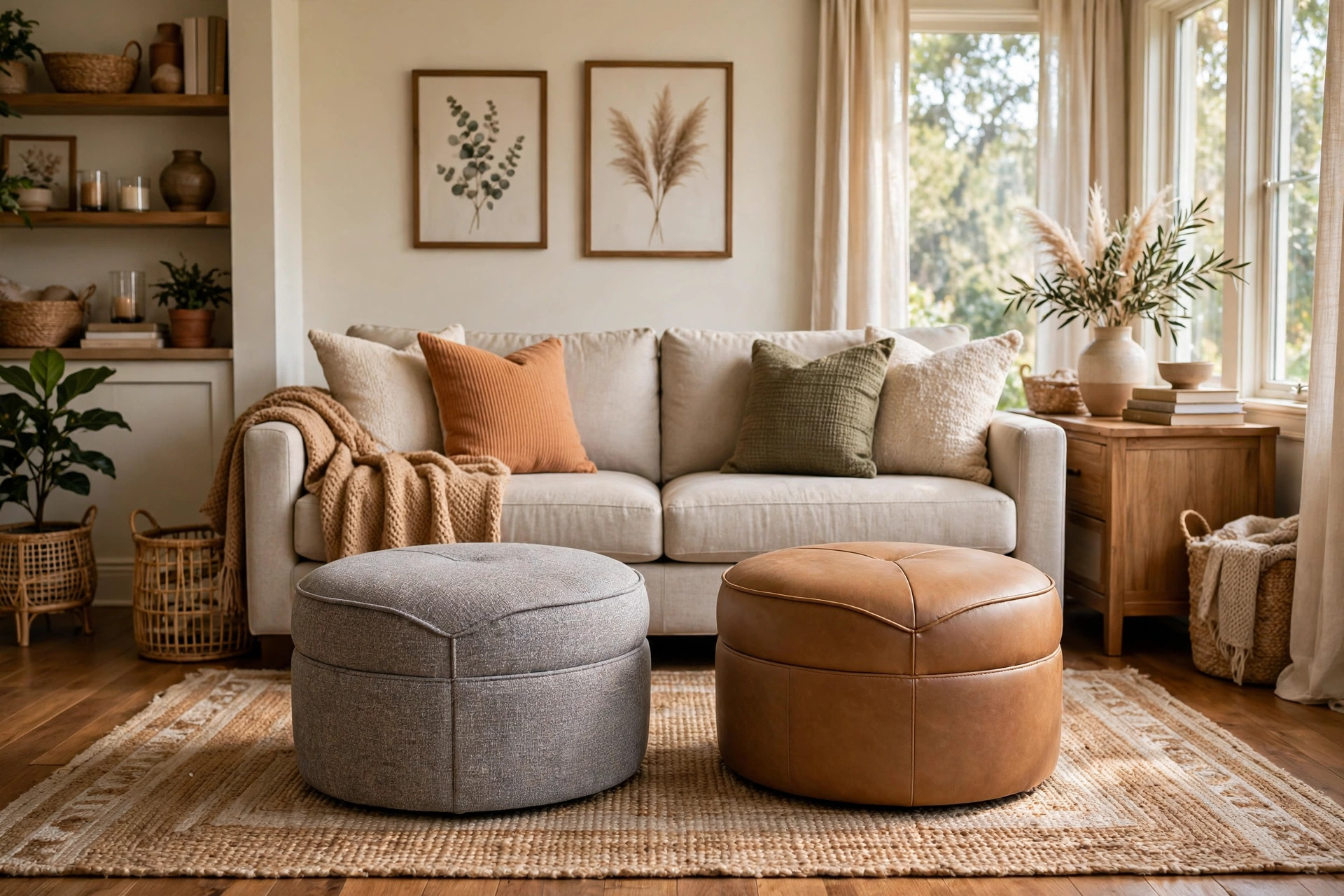

This living room ottomans american homes guide is written for American shoppers who want a clear picture before they buy. An ottoman is a low, soft piece of furniture that serves as a footrest, an extra seat, or even a small table. Many homes in the United States now have at least one. They are useful in rooms of every size, from small city apartments to large country houses. This guide explains why ottomans matter, what to look for, the main types, what they cost, how to care for them, and how to keep them safe for the whole family.
Why Ottomans Belong in the Living Room
Comfort for the Whole Family
A living room is where the family gathers at the end of the day. A sofa gives seats, but an ottoman gives something extra. You can put your feet up after a long day at work. Children can sit on it while they read or play games. Guests can use it when the sofa and chairs are full.
Ottomans also make a room feel softer and more inviting. A hard chair looks firm and cold. A padded ottoman looks warm. Many designers say that rooms with soft low pieces feel more relaxed. You do not need a degree in design to see the difference. Put an ottoman next to a chair, and the whole corner feels like a place to rest.
Another point is movement. Ottomans are light. Most of them weigh far less than an armchair. You can move one across the room in seconds. When guests arrive, you slide it over. When you vacuum, you lift it out of the way. That simple ease of use is one reason American homes have taken to them.
Small Rooms Gain a Lot
Many American homes and apartments have living rooms that are not very large. A second armchair may not fit. An ottoman can fit where a chair cannot. It tucks under a console table or sits beside the sofa. Some models hide inside others, like nesting tables, so they take up almost no floor space when not in use.
For a home office corner or a reading nook, a small ottoman paired with a floor lamp can turn an empty spot into a place people use. See our picks for living room floor lamps for sale usa if you want to build that kind of corner. Even a single ottoman can change how a room works, because it gives every seat a partner for tired feet.
What to Look for When You Choose: Living Room Ottomans American Homes Guide
Size and Height
Size matters most. Measure your space before you shop. Leave at least eighteen inches of walking space around the ottoman so no one trips. In front of a sofa, the ottoman should sit about the same distance from the sofa as a coffee table would, roughly twelve to eighteen inches away.
Height should match your seat. If you use the ottoman as a footrest, its top should sit near the height of your chair seat, or a little lower. Many ottomans stand between fifteen and eighteen inches high. That range suits most sofas and armchairs sold in the United States. A very tall ottoman feels awkward with a low chair, and a very short one will not reach your feet.
Fabric and Material
Fabric sets the look and the feel. Cotton and linen feel soft and natural. They suit casual rooms. Leather looks richer and wipes clean with a damp cloth, which is handy in homes with children. Velvet and chenille feel plush and warm, good for colder months.
Think about color. A neutral tone like gray, beige, or navy fits almost any room. A bold color like red or mustard can serve as the bright note in a plain room. Patterned fabrics hide small stains, which is a real help when children or pets use the piece. Shoppers who browse Wayfair will find hundreds of fabric choices, while IKEA keeps to a simpler range of everyday colors.
Frame and Build
A good ottoman has a solid frame. Kiln dried hardwood is the standard for quality pieces. It resists warping. Cheaper pieces may use soft wood or pressed board. Those can loosen over time. Check the legs. They should sit flat on the floor with no wobble. If the ottoman has a hinged top for storage, open and close it in the store. The hinge should move smoothly and hold the lid up on its own.
Look at the stitching. Straight, even seams show care in the work. Loose threads at the corners are a warning sign. The padding should feel firm, not lumpy. Press down with your hand. If you feel the frame through the padding, choose another piece. Reviews on Houzz and The Spruce often note which brands hold up after years of daily use.
Types of Living Room Ottomans
Storage Ottomans
A storage ottoman has a hollow inside with a lid that lifts or a tray that flips. It is one of the most popular kinds in American homes. You can keep blankets, magazines, remote controls, and board games inside. It cuts clutter without adding another cabinet. Bench style storage ottomans are long and can seat two people. They work well at the foot of a bed too. For small living rooms, a storage ottoman can do the work of two pieces of furniture, which is why many first time buyers start here.
Cocktail Ottomans
A cocktail ottoman is large and low, about the size of a small coffee table. It sits in the center of a seating group. You can put a tray on top and use it as a table for drinks and snacks. You can also put your feet up when no tray is on it. It suits large living rooms where a coffee table would feel too hard. Many families prefer the soft top because children will not bump their heads on a sharp corner. Tufted cocktail ottomans, with buttons pulled into the fabric, give a classic look that has been popular in the United States for decades.
Cube and Round Ottomans
Cube ottomans are small squares, often about seventeen inches on each side. They are sold alone or in sets of two. They are easy to move and easy to store. Round ottomans have a softer look. They break up the straight lines of a sofa and a rug. Both kinds work as footrests or as seats for children. They are also the least costly kind, so they make good first pieces. Designers at CB2 and West Elm often show cube and round ottomans in modern rooms, while Crate and Barrel carries many round styles in natural fabrics.
Ottoman Benches and Poufs
A bench ottoman is long and narrow. It fits against a wall, in a hallway, or under a window. Some have storage inside. A pouf is smaller still, usually round and low, filled with beads or foam. Poufs are light and casual. They suit playrooms and teen rooms. They do not have a frame, so they will not last as long as a framed ottoman. Still, they cost little and children love them.
Pairing Ottomans With Chairs
Many armchairs are sold with a matching ottoman. That set gives a finished look. But you do not have to buy a set. An ottoman in a plain fabric can work with almost any chair. If you like a mid century look, read our mid century chairs american homes guide to see how low profile ottomans pair with that style. And if you are still shopping for the chairs themselves, our notes on mid century chairs where to buy usa list the main American stores that carry them. Home style sites such as HGTV and Apartment Therapy often show mixed pairs that look better than a store set.
Cost and Price
Ottomans come at many prices. A small cube ottoman from a discount store can cost twenty five to sixty dollars. A mid range storage ottoman from a national chain usually runs one hundred to three hundred dollars. A large cocktail ottoman in leather or fine fabric can cost four hundred to nine hundred dollars. Custom pieces from a workroom can pass one thousand dollars.
What sets the price is mostly fabric, size, and build. Leather costs more than cotton. A solid wood frame costs more than a light frame. Brand names add to the price, though a well known brand often means better quality control. Shipping can add a lot for large pieces, so check whether the price you see includes delivery.
To get good value, set your budget first. Then compare at least three stores. Look at sales around holidays, when furniture prices drop. Read the return policy before you buy, since a large piece is costly to send back. Many buyers find that a mid price ottoman with a hardwood frame gives the best balance of cost and life.
Care and Upkeep
Care keeps an ottoman looking good for years. Vacuum fabric ottomans each week with a soft brush head. That removes dust before it settles into the fibers. Treat spills at once. Blot, do not rub, with a clean cloth. Rubbing spreads the stain and pushes it deeper.
For leather, wipe with a damp cloth and use a leather conditioner twice a year. Keep leather out of strong sun, which dries and cracks it. For velvet, brush the nap gently with a soft brush to keep it even. Slipcovers can go in the wash if the label allows it. Check the label first, since some fabrics shrink.
Turn or rotate the ottoman now and then so one side does not wear faster than the rest. Tighten the legs once a year. A loose leg makes the piece wobble and strains the frame. With simple care, a well made ottoman can last ten years or more in a busy family room.
Safety at Home
Safety matters, most of all in homes with small children. Choose ottomans with soft edges. Sharp wooden corners can hurt a child who falls. Storage ottomans should have a lid that stays open on its own. A heavy lid that slams shut can pinch small fingers. Look for safety hinges, which close slowly.
Place the ottoman where no one will trip over it in the dark. Keep a clear path from the door to the seats. Do not let children stand or jump on an ottoman. It can tip, and the frame is not made to hold that kind of weight. If you use a cocktail ottoman as a table, keep hot drinks on a tray so spills do not reach the fabric.
Pets add their own needs. Claw proof fabrics, like tight weave microfiber, hold up better than loose weave linen. A washable slipcover is the simplest fix for a home with dogs or cats. Light colors show pet hair, so many pet owners choose mid tones.
Frequently Asked Questions
What size ottoman fits a standard sofa?
A standard three seat sofa is about eighty four inches wide. A cocktail ottoman about thirty six to forty eight inches wide pairs well with it. For a footrest in front of one seat, a cube of about seventeen to twenty inches square is enough. Always measure your room first and leave walking space around the piece.
Can an ottoman replace a coffee table?
Yes, many families use a large ottoman in place of a coffee table. Put a firm tray on top to hold drinks, books, and the remote. The tray keeps items steady on the soft surface. The advantage is safety and comfort. The cost is that you lose the hard flat top a table gives. For most daily use, a tray on an ottoman works well.
Are storage ottomans strong enough to sit on?
Most storage ottomans are made to hold an adult. Check the weight rating on the label. Many hold two hundred fifty pounds or more. Bench styles often hold more. If the lid feels thin or bends when you press it, do not sit on it. A well built piece will feel firm and steady under your weight.
How do I match an ottoman to my room?
Start with the room’s colors. Pull a tone from the rug, the curtains, or the art on the walls. If the room is mostly neutral, the ottoman can carry a pattern or a strong color. If the room already has a lot of pattern, choose a plain ottoman in a quiet tone. When in doubt, gray, beige, navy, and brown work in almost every American living room.
How long should a good ottoman last?
A well made ottoman with a hardwood frame can last eight to twelve years of daily use. Fabric may show wear sooner in a busy house. Leather often ages better than light fabric. Cheap pieces with soft wood frames may loosen in two or three years. Buying a solid frame is the best way to get long life.
A Short Final Word
An ottoman is a small piece with a large job. It rests tired feet, seats extra guests, hides clutter, and softens a room. Take your time choosing one. Measure your space, test the build, and pick a fabric that suits your life. The right ottoman will serve your family for many years, and this guide has given you the facts you need to find it.
References
Apartment Therapy. (n.d.). Home design ideas and inspiration. https://www.apartmenttherapy.com CB2. (n.d.). Modern furniture and decor. https://www.cb2.com Crate and Barrel. (n.d.). Furniture and home decor. https://www.crateandbarrel.com HGTV. (n.d.). Home and garden ideas. https://www.hgtv.com Houzz. (n.d.). Home design and remodeling. https://www.houzz.com IKEA. (n.d.). Home furnishings. https://www.ikea.com The Spruce. (n.d.). Home and garden advice. https://www.thespruce.com Wayfair. (n.d.). Furniture and home goods. https://www.wayfair.com West Elm. (n.d.). Modern furniture and home decor. https://www.westelm.com
Was this guide helpful?

About Michael Thompson
The My Garden US editorial team writes practical, in-depth home and garden guides for American homeowners — tested advice, no fluff.
You May Also Like

Modern Wall Bookshelves for California Homes: A Practical Buyer’s Guide
May 25, 2026 0 views
Bedroom Dressers Mirror for Sale USA: A Complete Buying Guide
June 9, 2026 0 views
Living Room TV Stands California Homes USA: A Complete Buyer’s Guide
January 28, 2026 0 views