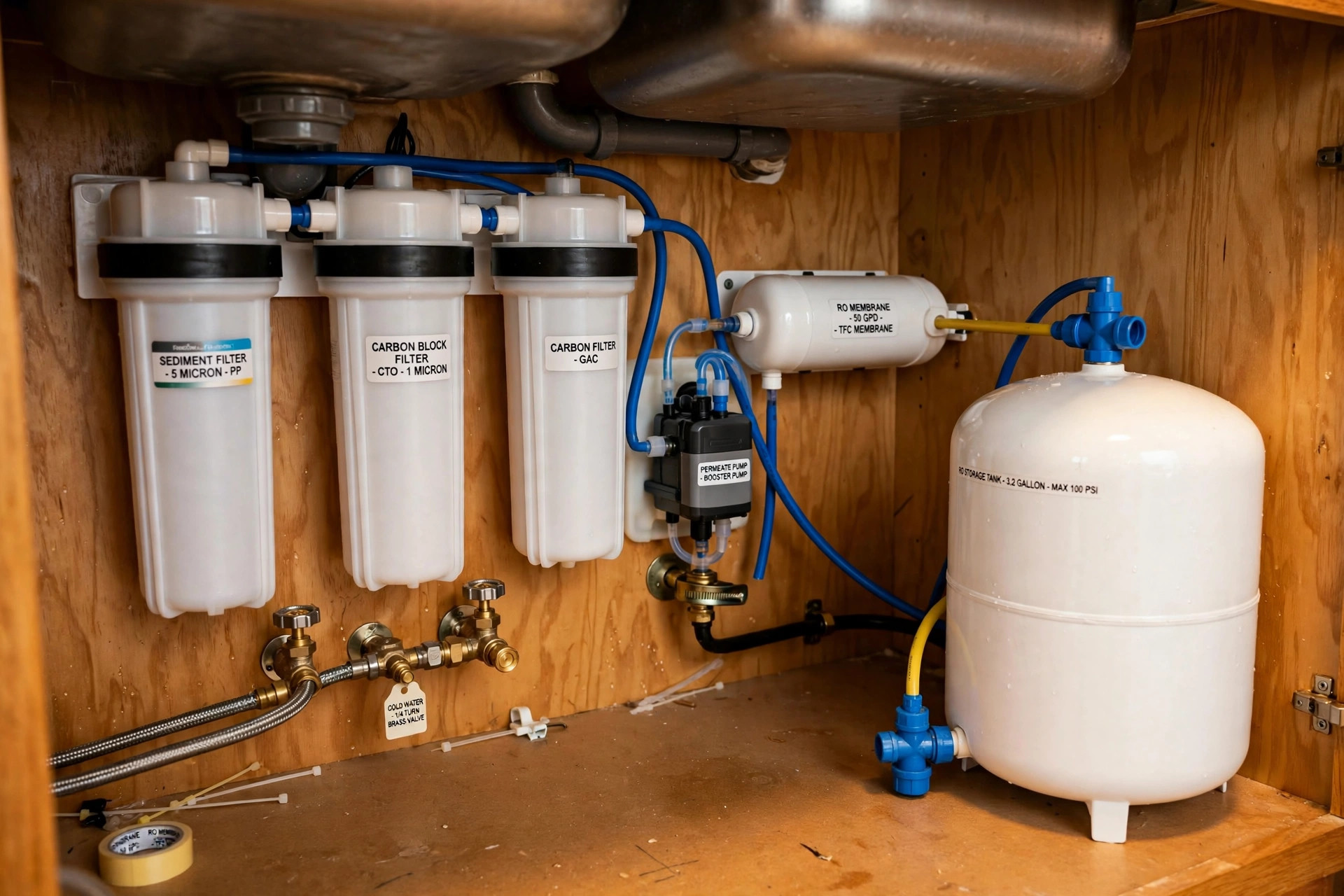

A reverse osmosis drinking water system gives clean water at the kitchen sink. But most home systems waste a great deal of water. For every glass of clean water, an ordinary system can send three or four glasses down the drain. A permeate pump for RO system reviews USA buyers read again and again points to one fix. A small pump can cut that waste by more than half. It also fills the storage tank faster. It needs no electricity. This guide walks through what a permeate pump is, what to look for, what it costs, and how reviews in the United States rate the best models in 2026.
Why It Matters
Water is precious, and water bills keep rising in many American cities. Home plumbing guides on This Old House often remind readers that small changes in the home add up over a year. A reverse osmosis system is one place where a small change makes a big difference.
A standard RO system pushes tap water through a fine membrane. The membrane lets clean water pass and sends the rest to the drain. That reject stream is called brine or waste water. In a common home system, the waste ratio runs from three parts waste to one part clean water. Some systems run even worse when house water pressure is low. The U.S. Environmental Protection Agency runs the WaterSense program, which marks products that use water well. A permeate pump fits the spirit of that program: more clean water from each gallon you buy.
A permeate pump changes the physics inside the system. It uses the energy of the waste stream to push clean water into the tank. The result is less back pressure on the membrane. The membrane works better. Less water goes down the drain. Typical waste ratios fall to one part waste to one part clean water. Some owners report even better numbers. Over a year, a family that drinks and cooks with RO water can save hundreds of gallons.
Better flow is the second benefit. With a permeate pump, the tank fills faster and with fuller pressure. The first glass in the morning comes out stronger. Many permeate pump for RO system reviews USA owners post say the faster fill is the change they notice first.
The third benefit is longer membrane and filter life. When a membrane works against less pressure, it stays cleaner longer. Filters last longer too. That means fewer trips to buy cartridges and less money spent over time.
What Is a Permeate Pump: Permeate Pump for Ro System Reviews Usa
A permeate pump is a small, round device about the size of a soup can. It has no motor and no cord. It works on water pressure alone. Inside, a piston moves back and forth. The waste water stream powers the piston. Each stroke pushes clean water, called permeate, into the storage tank.
The device installs between the membrane housing and the storage tank. It has four ports: clean water in, clean water out, waste water in, waste water out. Tubing connects it into the system in about fifteen to thirty minutes. Most kits come with quick-connect fittings, extra tubing, and a clip to mount the pump.
Because it has no electrical parts, it cannot shock anyone and it makes almost no noise. Some owners hear a soft clicking sound as the piston moves. That is normal. The pump is a common upgrade on five-stage and six-stage RO systems, and it works with most brands sold by retailers like Lowe’s and Home Depot.
How It Differs From an Electric Booster Pump
An electric booster pump is a different tool. It raises the pressure of the feed water going into the membrane. It helps homes with very low water pressure, below about 40 pounds per square inch. It plugs into a wall outlet.
A permeate pump does not raise feed pressure. It lowers the pressure fighting the membrane from the tank side. The two devices solve different problems. If house pressure is fine but the system wastes too much water, the permeate pump alone is the right fix.
What to Look For
Fit With Your System
Not every RO system accepts a permeate pump easily. Check how your system connects its tubing. Most American home systems use quarter-inch tubing. The pump must match. Also check the flow restrictor size on your drain line. The restrictor and the pump must be paired correctly, or the system will not work right. The pump maker usually prints a chart. Match your membrane size in gallons per day to the chart.
Build Quality
Good pumps use a tough plastic body with stainless steel parts inside. Cheap clones may leak at the ports after a year. Reviews across the United States praise pumps with solid seals and clean, smooth fittings.
Noise Level
Most permeate pumps are nearly silent. Some make a light tick or click. If the kitchen is quiet at night, a loud pump can annoy. Reviewers suggest mounting the pump on a soft pad or a short length of foam tape.
Ease of Install
A good kit comes with clear steps and all the tubing and fittings you need. The best kits label each port: permeate in, permeate out, brine in, brine out. If the lines are crossed, the pump will not help and may hurt flow.
Warranty and Support
A solid maker backs the pump for at least two or three years. Some offer five. United States buyers also like makers with an American phone line or email help. When a fitting leaks on a Sunday, fast answers matter.
Types and Options
Standard Non-Electric Models
The classic design is the simple non-electric pump. It fits most home systems from 24 to 100 gallons per day. It needs no power and no drain on the electric bill. This is the model most permeate pump for RO system reviews USA shoppers compare first.
High-Flow Models
Larger homes and light commercial users run bigger membranes, up to 200 or 300 gallons per day. High-flow pumps handle these. They cost more. They also move more water per stroke. A family that fills large bottles or runs a small coffee shop may need one.
Kits With Auto Shutoff Upgrades
Some kits bundle the pump with a better auto shutoff valve and a check valve. The shutoff valve stops feed water when the tank is full. A worn shutoff valve lets water run to the drain all day. Bundling the parts in one kit saves a second order and a second install session.
What Reviews in the USA Say
Across many review sites and store pages, a clear pattern emerges. Owners give the leading permeate pumps four to five stars. The praise repeats the same points: the tank fills faster, the waste water drops, and the faucet flows stronger. Many owners measure the change with a simple cup test. They catch one minute of drain water before the pump, then one minute after. The drop is easy to see.
The complaints repeat too. The top complaint is a bad install. Crossed lines or the wrong restrictor size cause weak flow or no gain at all. The second complaint is noise in very quiet kitchens. The third is a leak at a push fitting, usually fixed by cutting the tube end square and pushing it in deeper.
A few reviewers note that gains shrink when house pressure is already high, above 80 pounds per square inch. At high pressure, the membrane already works well. The pump still helps, but the change is smaller. Reviewers also note that a pump cannot fix a worn membrane. If the membrane is old, replace it first.
Honest reviews also warn about fake look-alike pumps sold online. The fakes cost less but fail sooner. Buyers suggest buying from a known brand or a trusted store.
Cost and Price
A permeate pump kit in the United States costs between 60 and 120 dollars in 2026. The classic non-electric model sits near the middle of that range. High-flow models run 120 to 180 dollars. Kits with extra valves cost a bit more.
The payback comes from two places. First, lower water bills. A family on metered water can save 20 to 40 dollars a year in wasted water alone. Second, longer filter and membrane life. A membrane that lasts three years instead of two saves 40 to 60 dollars. Most owners say the pump pays for itself in one to two years.
Install cost is low because most owners do it themselves in under half an hour. A plumber would charge 75 to 150 dollars for the visit, which would wipe out the savings. If you plan bigger plumbing work at the same time, such as learning hot water recirculating pump cost installed, it can make sense to bundle the jobs.
For readers comparing whole projects, our piece on rough in basement bathroom cost usa shows how small fixture upgrades stack against full remodel budgets. A permeate pump is one of the cheapest upgrades in the home.
Care and Upkeep
A permeate pump needs very little care. It has no filter to change and no motor to oil. Still, a few habits keep it working for years.
First, change your sediment and carbon pre-filters on time. Dirty pre-filters starve the membrane of pressure. A starved membrane makes the pump work harder and shortens its life.
Second, check the fittings once a year. Look for drops of water at each push fitting. Push each tube in firmly. Cut and reseat any tube that weeps. Step-by-step leak checks like this are a staple of DIY advice from Family Handyman.
Third, listen to the pump now and then. A steady soft tick is normal. A loud bang or a long silence with slow tank fill can mean a stuck piston or a clogged check valve. Most makers sell rebuild kits with fresh seals for a few dollars.
Fourth, sanitize the system once a year when you change filters. A clean system protects the pump and keeps the water tasting fresh. Moen, a maker of water products, and other fixture brands echo the same rule for all drinking water gear: clean parts last longer.
Fifth, keep the cabinet dry and clean. Standing water under the sink can corrode fittings over time. A small leak pan under the system catches drips and gives early warning.
Safety
A permeate pump is safe by design. It uses water pressure, not electricity. There is no shock risk. The main safety steps are about water, not power.
Turn off the feed water and open the RO faucet before you cut any line. That releases pressure. Keep a towel and a small bowl handy. A little water will spill when you open the tubing.
Do not drink the water until you flush the system after the install. Run two full tanks through the faucet and send that water down the drain or use it on plants. New fittings and tubing can carry a plastic taste at first.
Make sure the drain line has an air gap at the sink. The air gap stops dirty sink water from flowing back into the clean system. Local codes in many states require it. If your system lacks one, add it during the install.
Frequently Asked Questions
Will a permeate pump work with any RO system?
It works with most standard home systems from 24 to 100 gallons per day. It fits best on systems with a storage tank. Tankless systems do not need one. Check your membrane size and tubing size against the pump chart before you buy.
How much water will it really save?
Most owners see the waste ratio drop from about 4 to 1 down to about 1 to 1. That means roughly a 60 to 75 percent cut in waste water. Results vary with house pressure and water temperature. Cold water and low pressure give the biggest gains.
Does it need electricity?
No. It runs on water pressure alone. There is no cord, no outlet, and no added electric cost. That is one reason reviewers like it over electric booster pumps for simple waste problems.
Will it make my water taste better?
It does not change taste directly. But by helping the membrane reject more impurities, it can raise the purity a little. Fresh filters matter more for taste.
How long does a permeate pump last?
A good pump lasts five to ten years. Seals wear first. Many makers sell cheap seal kits that add years of life. Hard water and dirty pre-filters shorten the life. Clean filters and soft water extend it.
Can I install it myself?
Yes. Most owners finish in fifteen to thirty minutes with no special tools. You cut four tubes and push in the fittings. If your cabinet is very crowded, take a photo of the layout first.
Should I buy the pump or a whole new RO system?
If your system is under ten years old and the membrane is fresh, buy the pump. It is far cheaper. If the system is very old or leaks, a new system may be smarter. Reverse osmosis system makers such as Aquasana sell modern units, and well-known fixture makers such as Kohler and fixtures from Delta Faucet offer water products that pair well with clean drinking water setups.
A Short Final Word
A permeate pump is a small part with a large payoff. It wastes less water, fills the tank faster, and stretches the life of filters and membranes. Read the reviews, match the pump to your membrane, and take care with the tubing. Your sink will give more clean water from every gallon, and your water bill will show it.
Homeowners who enjoy smart water upgrades often look at the bathroom next. Our guide to the best bidet toilet seat reviews usa 2026 covers another fixture that saves water while adding daily comfort.
References
Aquasana. (n.d.). Water filtration systems. https://www.aquasana.com Delta Faucet. (n.d.). Kitchen and bathroom faucets. https://www.deltafaucet.com Family Handyman. (n.d.). DIY home repair and maintenance. https://www.familyhandyman.com Kohler. (n.d.). Bathroom and kitchen fixtures. https://www.kohler.com Lowe’s. (n.d.). Home improvement products. https://www.lowes.com Moen. (n.d.). Faucets and plumbing fixtures. https://www.moen.com The Home Depot. (n.d.). Home improvement products. https://www.homedepot.com This Old House. (n.d.). Home renovation guidance. https://www.thisoldhouse.com U.S. Environmental Protection Agency. (n.d.). Protecting human health and the environment. https://www.epa.gov
Was this guide helpful?

About David Wilson
The My Garden US editorial team writes practical, in-depth home and garden guides for American homeowners — tested advice, no fluff.
You May Also Like
Dry P-Trap Smell Fix for Homeowners in the USA
January 26, 2026 0 views
UV Water Purifier for Well Water Reviews: What Rural Homeowners Should Know
September 6, 2026 0 views
Salt Free Water Softener Reviews for Hard Water
May 16, 2026 0 views