Shopping for window curtain panels florida homes usa is different from shopping for curtains anywhere else in the country. Florida homes deal with long months of bright sun, heavy humidity, and rooms that can feel like greenhouses by mid afternoon. The right panels do more than dress a window. They cut glare, protect furniture from fading, keep rooms cooler, and still let the home feel open and breezy. The wrong ones turn yellow, grow mildew, or hang limp in the damp air. This guide walks through what works, what to avoid, and how to spend wisely.
Why Florida Homes Need Special Care in Choosing Curtains
Florida sun is strong all year. A south or west facing window can bake a room for eight hours a day. Ultraviolet light fades rugs, wood floors, and sofa fabric faster here than in most states. Window panels with a tight weave or a lining slow that damage. They also lower the heat gain that forces the air conditioner to work harder. Homeowners who pick the right panels often notice rooms stay a few degrees cooler.
Humidity is the second problem. Curtains hang close to glass where moisture collects. Heavy cotton drapes can stay damp and develop a musty smell. Light fabrics that breathe and dry fast perform much better. In rooms near the coast, salt air adds one more reason to choose fabrics that wash well and hold color.
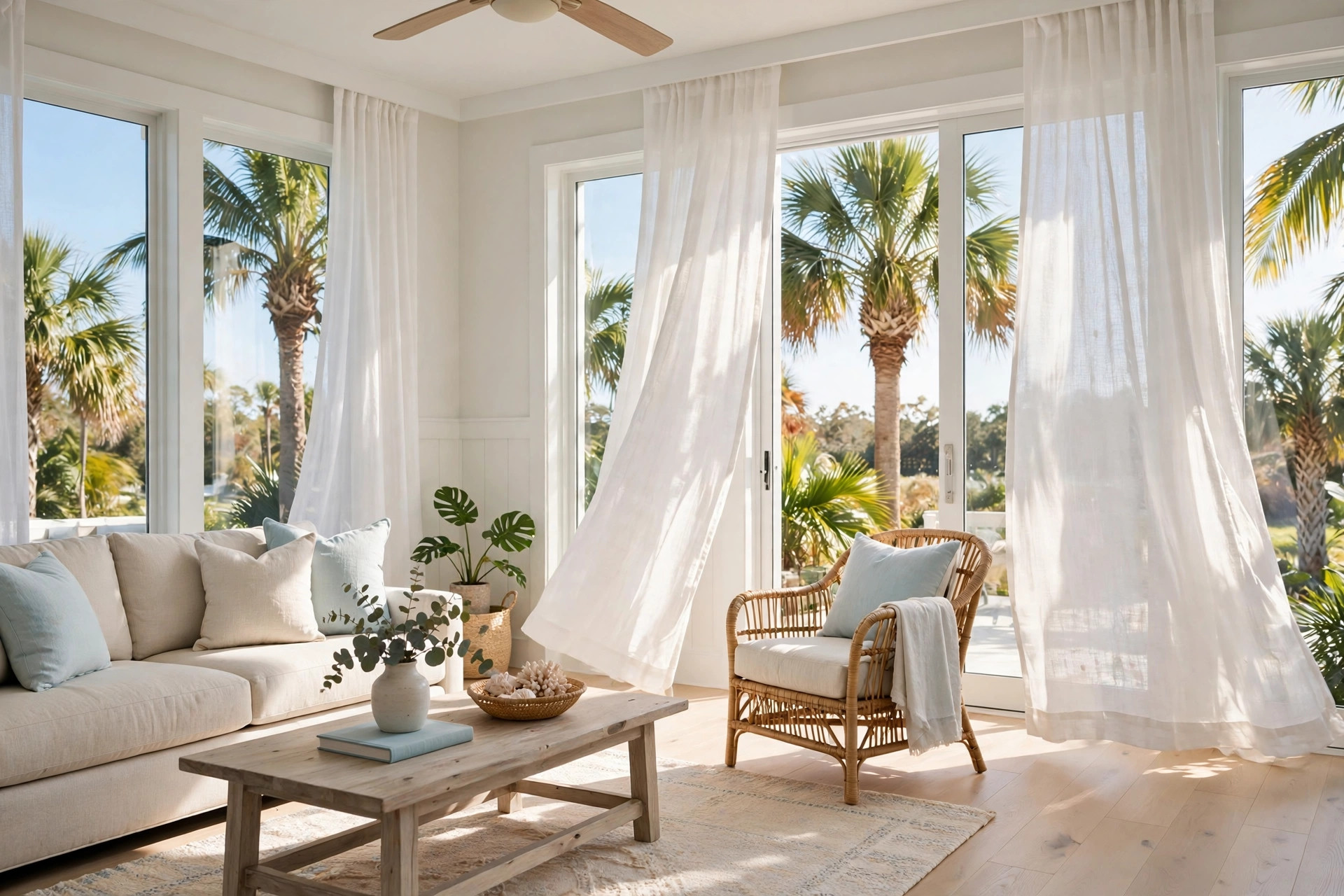
The third factor is style. Florida homes tend to favor light, open interiors. Heavy velvet drapes look out of place in a bright coastal living room. Sheer and semi sheer panels that glow in the sun match the look most buyers want. For a full room refresh, many shoppers pair new panels with guides on luxury area rugs and couch throw pillows to build a complete coastal look.
What to Look for When You Buy: Window Curtain Panels Florida Homes Usa
Fabric That Handles Sun and Moisture
Look for fabrics made for bright climates. Polyester blends, linen look synthetics, and treated cottons resist fading and dry quickly. Pure silk is beautiful but a poor choice in Florida. Sunlight breaks silk fibers down fast, and the cost per panel is hard to justify when panels may need replacing sooner.
Sheer and semi sheer fabrics are the most popular choice. They soften harsh light while keeping the view. Linen look panels give texture without the weight. For bedrooms, blackout panels or panels with a thermal lining make sense. The lining adds a second job to the curtain. It blocks morning sun for sleepers and insulates the window.
Color and Fade Resistance
White, off white, sand, and pale gray are the classic Florida colors. They reflect light and stay cool to the look. If you want color, choose panels labeled fade resistant or solution dyed. These fabrics hold their shade far longer in strong sun. Deep reds and rich blues fade fastest. Check the care label for a lightfastness rating when you shop at places like IKEA or Wayfair, where product details list fabric treatment.
Lining and Weave
A lined panel lasts longer and hangs better. The lining takes the brunt of the sun so the face fabric stays fresh. Unlined sheers are fine for kitchens and breakfast nooks where light control is not needed. For living rooms and bedrooms, lined panels give a richer look and better function. Experts at Crate & Barrel and Houzz often note that lined curtains are the single best upgrade for window treatments in sunny climates.
Types and Options
Sheer Panels
Sheers filter sunlight into a soft glow. They work alone on north facing windows or layered over blinds. They are the least expensive option and the easiest to wash. In a Florida great room, a full wall of sheer panels turns harsh noon light into something warm and calm.
Semi Sheer and Linen Panels
Semi sheers give privacy during the day while keeping rooms bright. Linen look panels add a natural texture that suits coastal and tropical styles. These are the middle ground most Florida buyers choose. They cost more than basic sheers but far less than lined drapes. Browse options at West Elm and CB2 to see current textures and weaves.
Blackout and Thermal Panels
Bedrooms and home theaters call for blackout panels. A foam or triple weave backing blocks nearly all light. Thermal backed panels also cut heat transfer at the glass. In a Florida summer, that means real savings on cooling. They are heavier, so make sure the rod and brackets can carry the load.
Layered Looks
Many Florida designers layer two kinds of panels on one rod. A sheer inner panel stays closed all day. A lined outer panel pulls shut at night or during the hottest hours. Double rods or a wide pocket rod make this easy. This setup gives full control without buying two window treatments.
Outdoor and Patio Panels
Screened lanais and covered patios need panels made for damp air. Look for outdoor rated fabrics that resist mildew and stand up to rain spray. These panels also cut glare on the patio without blocking the breeze. Outdoor lines at major retailers now include styles that match indoor collections.
How to Choose the Right Size
Measure the window frame before you shop. Panels should be one and a half to two times the window width for a full look. Two panels per window is standard. For height, hang the rod four to six inches above the frame. Let panels just touch the floor or hover a half inch above it. Pooled fabric collects dust and holds moisture against the floor.
Rod choice matters in Florida humidity. Metal rods in damp rooms can spot or corrode. Sealed finishes and stainless steel hold up best. Wooden rods should be sealed on all sides. Mount brackets into studs or use strong wall anchors, since heavier lined panels pull hard.
H3 Fitting Common Florida Window Types
Sliding glass doors are common in Florida homes. They need panels wide enough to clear the door when open. Mount the rod well beyond the frame on the side where panels stack. Impact windows with deep frames may need inside mounts or extension brackets. Arched windows look best with the rod mounted above the arch so the curve stays visible.
Cost and Price
Window curtain panels for Florida homes run from about fifteen dollars per panel for basic sheers to over one hundred dollars per panel for lined, fade resistant drapes. A typical living room with two windows and four panels costs between sixty and four hundred dollars, before rods and hardware.
What drives the price up? Lining, wider widths, longer lengths, and name brand fabrics. What keeps it down? Standard sizes, synthetic blends, and buying sets of two. Retailers like Apartment Therapy and The Spruce regularly compare budget and premium options so you can see where the extra money goes.
Set a budget per window, then add twenty percent for rods, rings, and finials. It is easy to buy panels on sale and forget the hardware costs as much as the fabric. Buy one extra panel if the color is discontinued soon. Matching a faded panel two years later is almost impossible.
Care and Upkeep in a Humid Climate
Wash panels before the damp season sets in. Most synthetic panels wash in a home machine on gentle cycle. Shake them out, wash with mild soap, and hang them damp on the rod to dry. This keeps them from wrinkling and lets them air out fully.
Check the hem and header for mildew spots twice a year. A light mix of white vinegar and water on a cloth removes early spots before they set. If panels smell musty, wash them and let them dry in full sun. Sunlight is a natural freshener, which is one thing Florida has in plenty.
Vacuum panels with a brush head every few months. Dust builds up fast near open windows. Rotate panels between windows once a year so fading stays even. The panel on the west window always fades faster than the one on the east. Swapping them keeps the room looking matched.
Pair new curtains with fresh wall art for a full refresh. Shoppers often browse living room wall art ideas at the same time. Design inspiration from HGTV shows how panels, art, and furniture work together in bright rooms.
Safety Notes
Corded curtain hardware is a hazard for small children and pets. Choose cordless panels, wands, or motorized rods. The federal guidance on window covering cords is clear. Loose cords can strangle a curious toddler in seconds. If your home has old corded shades or drapery cords, replace them or retrofit them with cord cleats.
Heavy panels need solid mounting. A rod that pulls loose from drywall can fall on a child or pet. Always anchor brackets into studs when panels are lined or long. Keep floor length panels away from space heaters and candles. Florida homes rarely need heaters, but holiday candles near curtains are a real fire risk every year.
Check that curtain tiebacks do not loop low enough for a child to reach. Store extra curtain hooks and rings out of reach. Small parts are a choking hazard for toddlers.
Frequently Asked Questions
What is the best fabric for curtain panels in Florida?
Polyester blends and linen look synthetics top the list. They resist fading, dry fast in humidity, and cost less than natural fibers. Treated cotton works well too. Avoid pure silk and heavy wool in bright, damp rooms.
Should Florida homeowners use sheer or blackout panels?
It depends on the room. Sheers suit living areas where you want light and a view. Blackout or lined panels suit bedrooms and media rooms where darkness and heat control matter. Many homes use both, with sheers on public windows and blackout panels in bedrooms.
How do I stop curtain panels from fading in strong sun?
Choose fade resistant or solution dyed fabric, use lined panels so the lining takes the damage, and rotate panels between windows once a year. A window film on the glass also cuts the ultraviolet light that causes fading.
Do curtain panels really lower cooling bills in Florida?
Yes, modestly. Lined or thermal backed panels on sun facing windows cut heat gain at the glass. Studies of window coverings show real savings, and in a climate where air conditioning runs most of the year, even small gains add up. Close panels on west and south windows during peak afternoon hours for the best result.
How often should I wash curtain panels in a humid climate?
Wash lightweight panels every three to four months. Heavier lined panels need washing once or twice a year, with vacuuming in between. If you live near the coast or keep windows open often, wash more often to stop salt and dust from building up.
Can I hang the same panels year round in Florida?
Yes. Florida has no real off season for window treatments. Unlike cold states, you do not need heavy winter drapes and light summer sheers. One good set of panels, chosen for sun and humidity, works all year. That makes the purchase simpler and the cost per year lower.
A Short Final Word
The right window curtain panels florida homes usa buyers choose share a few traits. They handle sun without fading fast. They dry quickly in humid air. They suit the light, open style Florida homes are known for. Measure carefully, buy lined panels for bedrooms, keep cords away from children, and wash on a steady schedule. Do that, and your panels will look fresh for years while keeping rooms cooler and calmer. Start with the window that gets the most sun, and work through the house from there.
References
Apartment Therapy. (n.d.). Home design ideas and inspiration. https://www.apartmenttherapy.com CB2. (n.d.). Modern furniture and decor. https://www.cb2.com Crate and Barrel. (n.d.). Furniture and home decor. https://www.crateandbarrel.com HGTV. (n.d.). Home and garden ideas. https://www.hgtv.com Houzz. (n.d.). Home design and remodeling. https://www.houzz.com IKEA. (n.d.). Home furnishings. https://www.ikea.com The Spruce. (n.d.). Home and garden advice. https://www.thespruce.com Wayfair. (n.d.). Furniture and home goods. https://www.wayfair.com West Elm. (n.d.). Modern furniture and home decor. https://www.westelm.com
Was this guide helpful?

About Jennifer Lee
The My Garden US editorial team writes practical, in-depth home and garden guides for American homeowners — tested advice, no fluff.