
Why Deep Well Pumps Deserve Your Full Attention
Any honest set of submersible well pump reviews for deep wells starts with the same plain fact. Your pump is the heart of a private water system. If it fails, your taps run dry. No shower. No laundry. No drinking water from the kitchen tap.
A deep well is generally any well that reaches one hundred feet or more below the surface. Many homes in America draw water from depths of two hundred, three hundred, or even five hundred feet. At those depths only a submersible pump, sitting down inside the well below the water level, can lift water reliably to the surface.
Reviews matter because the market is crowded. Dozens of brands sell pumps in dozens of sizes. Prices range from a few hundred dollars to well over a thousand. The wrong pump may burn out in months in a deep well. The right pump may serve your family for fifteen years with little trouble. This guide reviews what matters in a submersible pump for a deep well. It gives you the knowledge to read any review with a clear eye.
Well water is the only water supply for millions of rural homes. The federal government does not regulate private wells the way it regulates city water systems. The EPA offers clear guidance on testing and protecting private wells.
How a Submersible Pump Works in a Deep Well: Submersible Well Pump Reviews for Deep Wells
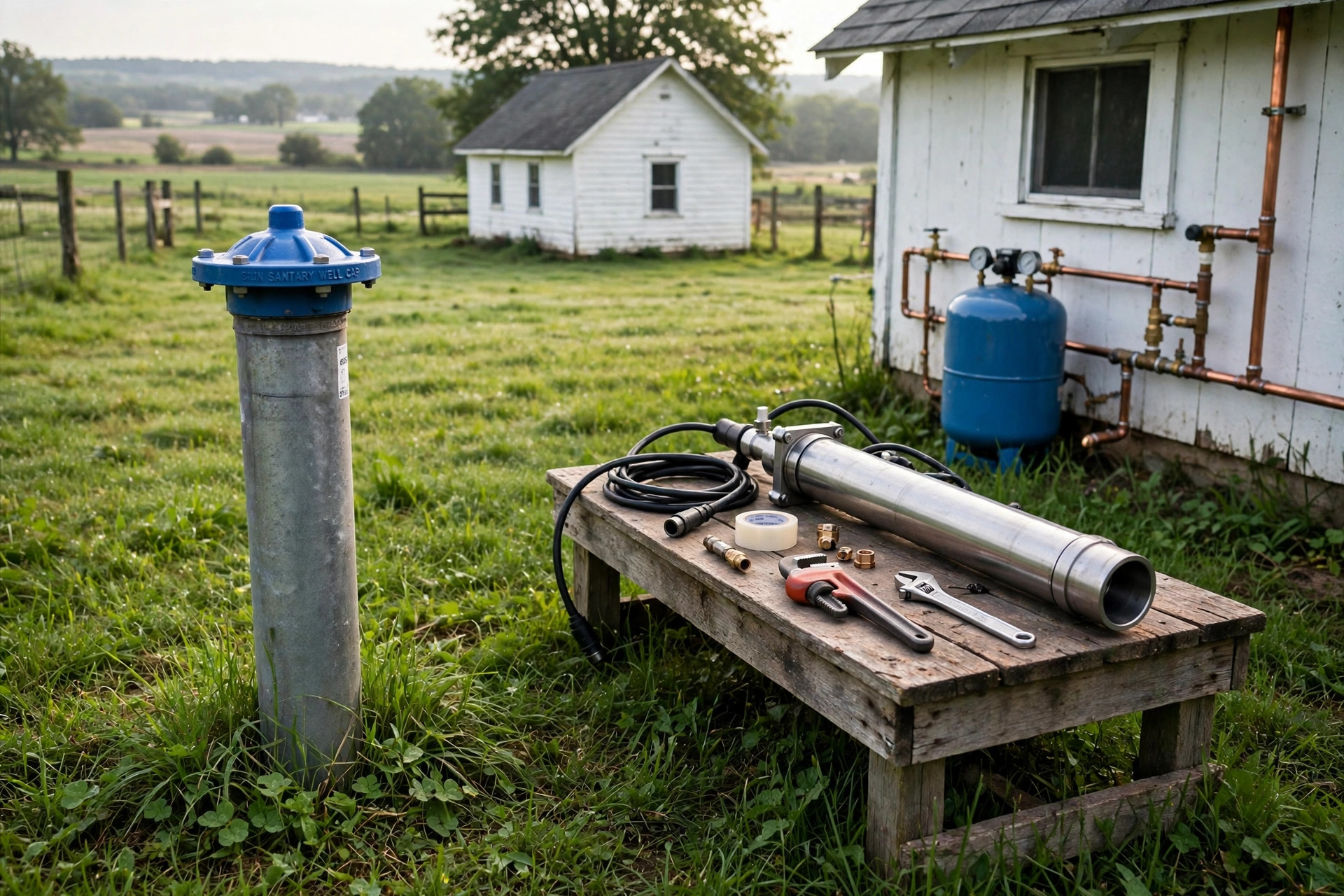
A submersible pump is a long, narrow cylinder that hangs inside the well casing, fully under water. It is sealed tight. An electric motor at the bottom drives a stack of small spinning discs called impellers. Each impeller adds a little more lift. The deeper the well, the more impellers the pump needs.
Water enters through a screen near the middle of the pump. The motor spins the impellers. They push water upward through the pipe, called the drop pipe, all the way to the surface. From there the water flows into a pressure tank in the house. The tank stores water under pressure so the pump does not need to run every time you open a tap.
A pressure switch watches the tank. When pressure falls to forty pounds per square inch, the switch tells the pump to start. When pressure reaches sixty pounds, it tells the pump to stop. This cycle repeats hundreds of times a week.
Because the pump sits under water, the water cools the motor. That is one reason submersible pumps last longer than old-style jet pumps that sit above ground. A submersible pump pushes water up. A jet pump pulls water up. Pushing is far more efficient than pulling, especially at great depth.
What to Look for When Reading Reviews
Most submersible well pump reviews for deep wells list the same basic numbers. Here is what each number means.
Horsepower
Horsepower, often shortened to HP, tells you how strong the motor is. Deep well pumps commonly come in one-half, three-quarter, one, one-and-a-half, and two horsepower sizes. Deeper wells and larger homes need more. A one-horsepower pump suits many wells in the two-hundred to three-hundred-foot range. Wells deeper than four hundred feet often need one-and-a-half or two horsepower. A review that praises a pump should say how deep the well is. Without the depth, the praise means little.
Flow Rate
Flow rate is measured in gallons per minute, or GPM. A small home with two bathrooms does well with ten to fifteen GPM. A large home with irrigation may need twenty or more. A pump that delivers twenty GPM at one hundred feet may deliver only eight GPM at four hundred feet. Depth and flow must be read together.
Head and Total Dynamic Head
Head is the height the pump must lift water, measured in feet. Total dynamic head adds the friction losses in the pipe. A well with the water level at three hundred feet needs a pump rated for at least that much head, plus extra for friction. Reviews that test pumps at a stated head are far more useful than reviews that do not.
Voltage
Deep well pumps run on either one hundred fifteen volts or two hundred thirty volts. Larger pumps, one horsepower and above, almost always use two hundred thirty volts. Check your home wiring before you buy.
Pump Diameter
Most home wells have a four-inch steel or plastic casing. Most home submersible pumps are about four inches across so they fit. Measure your casing before you trust any review. A fine pump that does not fit your well is no pump at all.
Build Quality and Materials
Look for stainless steel housings and thermoplastic or stainless impellers. Cast iron can rust in aggressive water. Reviews that mention the pump running for five or ten years in real wells carry weight.
Types of Submersible Pumps for Deep Wells
Reviews group deep well pumps into a few broad types. Each has its place.
Two-Wire Pumps
A two-wire pump has all its starting parts sealed inside the motor. Only two power wires plus a ground run down the well. Installation is simple. If the starting parts fail, the whole pump must come up for service. Most reviews you read will cover two-wire models.
Three-Wire Pumps
A three-wire pump uses a separate control box above ground. If those parts fail, you replace the box at the surface. The pump stays down the well. Three-wire pumps cost a bit more and take more wiring skill.
High-Head Models
Some makers sell models built for extra depth. They carry more impeller stages in the same length. If your static water level sits below four hundred feet, look closely at high-head models in the reviews.
Stainless Steel Versus Thermoplastic
Stainless steel pumps resist sand and grit better than thermoplastic ones. Sandy wells chew up soft impellers fast. If your well produces sand, stainless models earn their higher price.
When you shop, the big home improvement stores carry several brands side by side. Browsing the pump aisle at Home Depot or Lowe’s lets you compare specification plates and ask staff questions. Online listings at the same stores often carry hundreds of owner reviews with real well depths stated.
Cost and Price: What You Should Expect to Pay
Price is one of the first things readers look for. Here is the plain picture.
The pump alone usually costs between three hundred and one thousand dollars. One-half and three-quarter horsepower models sit at the low end. One-and-a-half and two horsepower stainless models sit at the high end. The control box for a three-wire pump adds fifty to one hundred fifty dollars.
Installation is the larger cost. A professional well contractor typically charges one thousand to three thousand dollars for labor, wire, drop pipe, and fittings, depending on depth and region. Pulling an old pump from a four-hundred-foot well is heavy, skilled work. It is not a normal do-it-yourself job.
Total installed cost for a deep well pump often lands between fifteen hundred and four thousand dollars. Spread over fifteen years of service, it is a small yearly price for your entire water supply.
Watch for false economy. A cheap pump that fails in three years costs more than a good pump that runs for fifteen.
How Reviews Judge Performance
Good reviews test or report several things. Here is how to read them.
Steady pressure. A good pump holds strong pressure at every tap, even when two showers run at once.
Quiet running. You should barely hear a submersible pump. Noise or vibration is a warning sign.
Start-up behavior. The pump should start smoothly each time the switch calls. Hard starts or tripped breakers point to electrical trouble.
Sand handling. Sand is the enemy of impellers. If your well makes sand, give reviews from sandy wells extra weight.
Warranty. Most makers offer one to three years. A few offer five. The warranty length says something about how much the maker trusts its own product.
Be wary of reviews that read like advertisements. Real owner reviews mention depth, well age, water quality, and years of service. They also mention problems.
Installation Basics Every Owner Should Know
You will likely hire a professional to install a deep well pump. Still, knowing the basics helps you judge the work.
The pump hangs on the drop pipe, usually one-inch or one-and-a-quarter-inch PVC or steel. A safety rope runs alongside as backup. Wires run down the well to the motor, sealed in waterproof splices. A pitless adapter at the top of the casing turns the pipe toward the house below the frost line.
The wire must be sized for the distance. Undersized wire causes voltage drop, heat, and early motor death. Ask your contractor what wire size they plan to use.
The pressure tank should be sized to give the pump at least one minute of run time per cycle. Larger tanks mean fewer starts per day, and fewer starts mean longer motor life. Many old systems have tanks that are too small.
After installation, the system should be disinfected with chlorine, and the water should be tested. Well water can carry bacteria, iron, sulfur, or sediment. A sediment filter for well water protects the pump and the house plumbing from grit.
Guides at This Old House and Family Handyman explain the parts of a well system in plain language with clear diagrams. They are worth an evening of reading before you spend a dollar.
Care and Upkeep
A submersible pump needs little care, but the system around it needs regular attention. These habits stretch pump life.
Test the pressure tank yearly. Press the air valve on top. If water comes out, the bladder has failed and the tank must be replaced. Check the air charge with a tire gauge. It should sit two pounds below the cut-in pressure.
Listen to the cycle. Stand near the tank while someone runs water. Short, rapid cycling means trouble. It may be a failed tank, a stuck switch, or a leak.
Test your water yearly. A simple lab test checks bacteria, nitrates, pH, and minerals. Water quality can change over the years. If taste is a concern while you wait for results, a bottom load water cooler is a handy short-term option. For lasting treatment, consider a whole-house filter from a maker like Aquasana.
Keep records. Write down the install date, the pump model, the depth, and the static water level. When the pump fails ten years from now, these notes will save you hours.
Watch the electric bill. A sudden rise may mean the pump is running too much. A leak in the drop pipe or a running toilet can keep the pump working around the clock.
Protect the wellhead. Keep the cap tight and the area graded so surface water drains away. Never pour chemicals near the well.
Fixtures inside the home matter too. Leaky faucets and running toilets waste the water your pump works hard to lift. A dry P-trap smell is a separate plumbing issue, not a pump problem, but it deserves a fix all the same. Quality faucets from makers like Moen, Delta, and Kohler tend to drip less and last longer than bargain models.
Safety
Water and electricity are a dangerous pair. Respect both.
Never open the well cap or touch the wiring unless the breaker is off and locked. Deep well pumps run on two hundred thirty volts. That voltage can kill. All electrical work should meet local code. In most areas, a licensed electrician or well contractor must do the wiring.
Never run the pump dry. A submersible motor depends on water for cooling. Running without water for even a few minutes can destroy the motor. Low-water cutoff switches are cheap insurance for wells with weak yield.
Chlorine disinfection calls for care. Use plain household bleach with no scents or additives, in the amount your contractor advises. Do not drink the water until the chlorine is flushed out and a test shows the water is safe.
Keep children and animals away from the wellhead during service. A proper sanitary cap should always be in place when work is done.
Frequently Asked Questions
How long does a submersible well pump last in a deep well?
Most last ten to fifteen years. Some run for twenty. Life depends on water quality, correct sizing, tank size, and how often the pump cycles.
What size pump do I need for a three-hundred-foot well?
For a typical home, a one-horsepower pump suits wells in the two-hundred to three-hundred-foot range. The true answer depends on the water level, pipe size, desired flow, and pressure. Ask a well contractor to size it.
Can I install a deep well pump myself?
Most owners hire a professional. Pulling hundreds of feet of pipe and wire takes special equipment, and one mistake can cost more than the labor you hoped to save.
Why does my pump turn on and off every few seconds?
This is called short cycling. The usual cause is a failed pressure tank. Other causes include a stuck pressure switch or a leak. Short cycling will burn out the motor fast. Fix it soon.
How do I know my well pump is failing?
Watch for weak pressure, air sputtering from taps, the pump running far longer than usual, odd noises, or high electric bills. Sand in the water can also signal a failing pump.
Should I buy a two-wire or three-wire pump?
Two-wire pumps are simpler to install and are the common choice for new home wells. Three-wire pumps put the starting parts in an above-ground control box, which is easier to service. If you value simple installation, choose two-wire. If you value easy service, choose three-wire.
A Short Final Word
Reading submersible well pump reviews for deep wells is only the first step. The reviews point you toward good brands and honest numbers. Your own well supplies the rest of the story: its depth, its water level, and your home’s demand. Match the pump to the well, size the tank to the pump, and hire skilled hands for the install.
References
Aquasana. (n.d.). Water filtration systems. https://www.aquasana.com Delta Faucet. (n.d.). Kitchen and bathroom faucets. https://www.deltafaucet.com Family Handyman. (n.d.). DIY home repair and maintenance. https://www.familyhandyman.com Kohler. (n.d.). Bathroom and kitchen fixtures. https://www.kohler.com Lowe’s. (n.d.). Home improvement products. https://www.lowes.com Moen. (n.d.). Faucets and plumbing fixtures. https://www.moen.com The Home Depot. (n.d.). Home improvement products. https://www.homedepot.com This Old House. (n.d.). Home renovation guidance. https://www.thisoldhouse.com U.S. Environmental Protection Agency. (n.d.). Protecting human health and the environment. https://www.epa.gov
Was this guide helpful?

About James Carter
The My Garden US editorial team writes practical, in-depth home and garden guides for American homeowners — tested advice, no fluff.
You May Also Like
Best Water Filter for RV Full Time USA: A Plain Guide
February 10, 2026 0 views
Best Water Softener for City Water USA: A Practical Buying Guide
February 11, 2026 0 views
Best Instant Hot Water Dispenser Reviews USA: What to Know Before You Buy
June 6, 2026 0 views