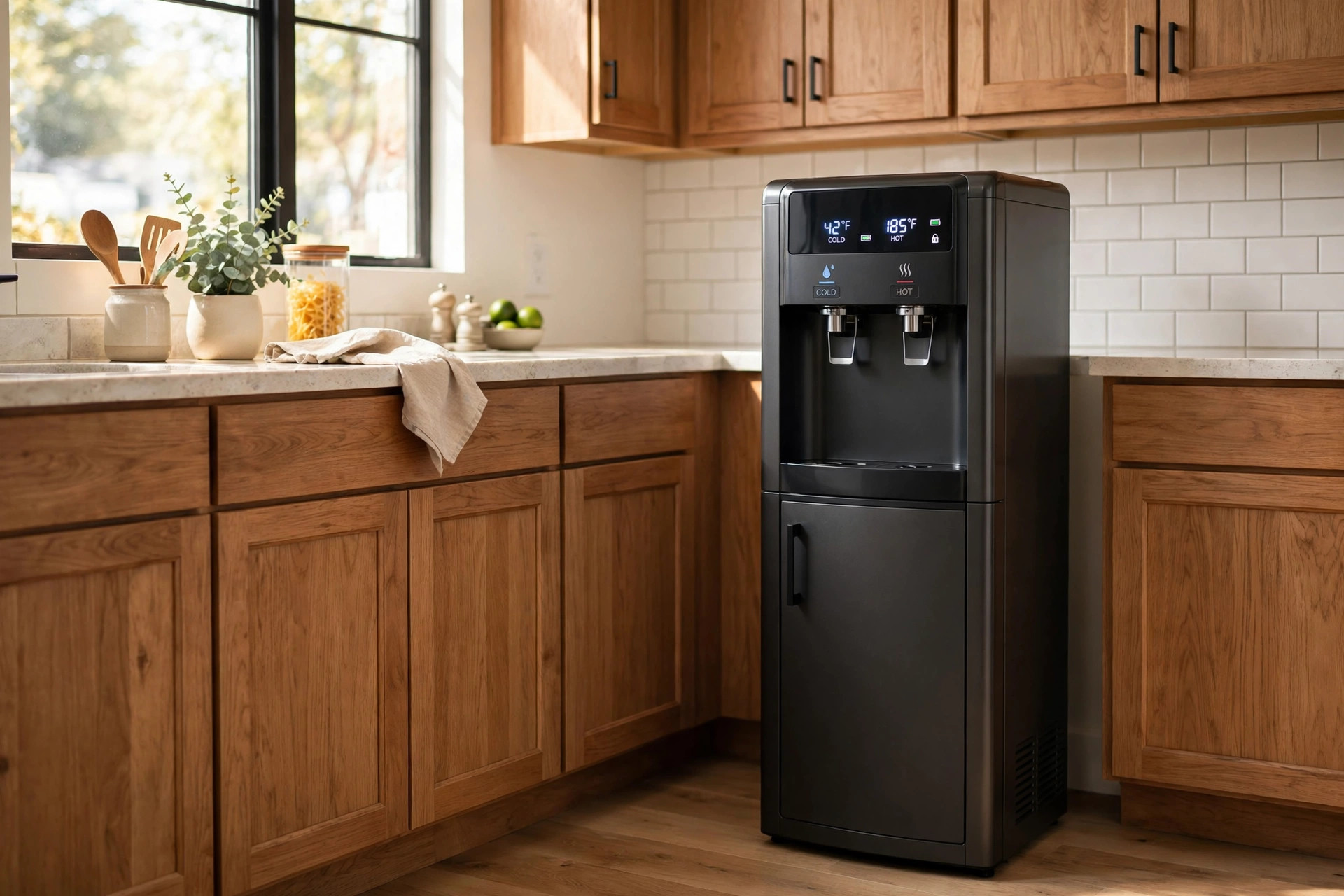

Bottom load water cooler reviews 2026 usa shoppers are reading tend to agree on one point. These machines make cold and hot drinking water easier than ever. The bottle sits hidden in a cabinet at the bottom. No heavy jug to lift. No awkward flip. Just clean water at the press of a spout.
This guide walks through what matters in 2026. You will learn how these coolers work, what to check before you buy, how much they cost, and how to keep one clean and safe. Every point below comes from common buying questions and from the way real households use these units day to day.
Why a Bottom Load Cooler Makes Sense
A top load cooler asks you to lift a five-gallon bottle over your head. That is a real chore. It is hard on the back, and spills are common. A bottom load model changes the job. You slide the bottle into a cabinet at floor level and plug a tube into the neck. A small pump draws the water up into the tank.
Families with older parents like this design. Office break rooms like it too. Rental apartments like it because it is neat and self-contained. The bottle stays out of sight, and the room looks cleaner.
Cold water comes out chilled to about forty degrees. Hot water comes out near one hundred ninety degrees. That hot tap is fine for tea, instant coffee, and oatmeal. Many models include a child safety lock on the hot tap. That detail matters in homes with small children.
What to Look for When You Choose: Bottom Load Water Cooler Reviews 2026 Usa
Not all units are equal. Reviews from the 2026 USA market point to the same short list of features. Use this list when you compare models side by side.
Cold and Hot Performance
Check the temperature specs. A good cold tap cools about four degrees an hour. A good hot tap heats near boiling in under an hour from a cold start. Look for a stainless steel hot tank. It lasts longer than plain aluminum and does not add taste.
Noise Level
Some compressors hum. In an open-plan living room or a bedroom corner, a loud hum is a problem. Quiet models rate under forty decibels. That is about the level of a library. If the cooler sits in a kitchen, noise matters less.
Cabinet and Bottle Cover
The bottom cabinet should hide the bottle fully. Check the door fit. A loose door lets dust in and looks cheap. Also check the tube. It should reach the bottle neck with no strain, and the connector should seal tight.
Safety Locks
The hot tap needs a two-step lock or a push-and-turn guard. This is the single most important safety item for homes with children. Some units also lock the cold tap. That is useful if you want to control use in an office.
Drip Tray and Drain
A removable drip tray saves the floor. Make sure it lifts out and washes easy. A few models add a rear drain plug. That helps when you clean or move the unit.
Energy Use
Look for the Energy Star mark or low wattage figures. A cooler runs all day. A unit rated near five hundred watts for heating will cost more to run than a smaller one. Most households spend only a few dollars a month on power.
Types and Options on the Market
Bottom load coolers come in a few common forms. Each suits a different buyer.
Freestanding units. These are the standard models. They stand about forty inches tall. They fit three or five gallon bottles. Most homes buy this type.
Countertop models. These are smaller and sit on a counter. They usually take smaller bottles. They suit one or two people, or a small office desk area.
Cooler with filtration. Some units skip the bottle. They hook to a tap line and filter the water inside. This type costs more up front but ends each bottle purchase. For a deeper look at filtered drinking water, see Best Countertop Water Filter Reviews 2026.
Cooler with ice maker. A few high-end models add a small ice tray. These cost more and use more power. They suit large offices that serve many guests.
Hot and cold with room temp tap. Some models add a third tap for room temperature water. That is handy for medicines and for pets.
Cost and Price in 2026
Prices in the United States this year run from about one hundred fifty dollars to four hundred dollars for a home model. Basic freestanding units sit near the low end. Models with ice makers or built-in filtration sit near the high end.
The bottles cost extra. A five-gallon bottle of spring water from a delivery service runs six to ten dollars. Many stores sell refill stations for less. A family of four may go through two bottles a week.
Electricity adds a small monthly cost. A typical cooler draws about one kilowatt hour a day. At average rates, that is four to six dollars a month. Units with an energy-saving night mode cost less.
Delivery plans can save money. Local water services often lease the cooler itself for a monthly fee. That fee covers service and cleaning. Buying the unit outright is cheaper over two years, but leasing means repairs are not your problem.
For homes thinking about a wider water upgrade, it helps to know what Best Instant Hot Water Dispenser Reviews USA readers compare, since hot water needs often overlap.
Care and Upkeep
Clean water needs a clean machine. Plan on a short cleaning routine every three months, and a deeper one twice a year.
Start with the outside. Wipe the body with a damp cloth. Pull the drip tray and wash it with dish soap. Do not use strong cleaners on the taps.
Sanitize the inside lines once a quarter. Most manuals describe the same steps. Turn the unit off and unplug it. Drain the tanks through the rear plugs. Mix a mild bleach solution, about one teaspoon of plain bleach per gallon of water. Pour it into the reservoir and let it sit for fifteen minutes. Drain it fully, then flush with fresh water twice. Let the unit air dry before you refill.
Clean the cabinet too. Spills from the bottle tube can leave a sour smell. A damp cloth and a mild soap fix it. Check the door seal for wear.
Replace the bottle tube if it cracks or stains. Tubes are cheap and swap in minutes. Keep a spare on hand so a broken tube does not leave you without water.
If your tap water has heavy sediment, a prefilter can extend the life of any dispenser. The same care habits apply to Lead in Drinking Water Filter Reviews USA choices, where filter upkeep decides water quality.
Safety to Keep in Mind
Hot water burns. Always test the hot tap before you hand a cup to a child. Teach children that the red tap is never a toy. The safety lock helps, but it is not a substitute for watching.
Place the cooler on a flat, dry floor. Keep it away from direct sun and from heat vents. Leave two inches of space behind the unit so the coils can breathe. A hot coil wall raises power use and wears the compressor.
Use only clean bottles. Inspect each bottle neck before you load it. If the seal is broken or the neck is dirty, wipe it with a clean cloth. Do not use a bottle that smells off.
Watch for leaks. A wet floor under the cabinet means a loose tube or a cracked tank. Unplug the unit and drain it before you check. Small leaks caught early are easy to fix.
If you rent the unit from a water service, ask them to clean it on their schedule. Most services include a yearly sanitize visit in the lease.
Common Problems and Quick Fixes
No cold water. Check that the unit is plugged in and the cold switch is on. Give it four hours from a fresh fill. If it still fails, the thermostat or compressor may need service.
No hot water. Check the hot switch. Many units have a separate rocker switch on the back. If the switch is on and the water stays cool, the heating element may be burned out.
Water tastes stale. The lines need sanitizing. Run the cleaning routine described above. Also check the bottle date. Water stored too long in a warm room tastes flat.
Slow flow. Air may be trapped in the line. Remove the bottle, reseat the tube, and reload. Check the tube for kinks.
Where These Coolers Fit Best
A bottom load cooler suits the kitchen corner, the office break room, and the home gym. It suits renters, because it needs no plumbing. It suits small businesses that serve staff and walk-in guests.
It does not suit every home. If your kitchen already has an under-sink filter and a hot tap, a freestanding cooler may be redundant. If you buy mostly small bottled water already, the running cost of five-gallon bottles may not beat your current habit. Write down your weekly water use before you buy. Two people who drink mostly at work may only need one bottle a week.
FAQ
Are bottom load water coolers worth it in 2026? For most households, yes. The prices have come down, the pumps are quieter, and the child locks are better than they were five years ago. The main cost is the bottles, so check local water prices first.
How long does a bottom load water cooler last? A well-kept unit lasts five to eight years. The compressor and the pump are the parts that wear first. Regular cleaning extends the life by a wide margin.
Can I use my own refillable bottles? Yes. Most units accept standard three and five gallon bottles from any brand. Check that the neck size matches the tube connector before you buy refills in bulk.
Do bottom load coolers use a lot of electricity? No. A typical unit uses about one kilowatt hour a day. That adds a few dollars to the monthly power bill. Energy-saving models use even less.
Is the hot water safe for baby formula? The hot tap heats water near boiling, which is the right base for mixing formula. Still, check your pediatric guidance and let the water cool to the right temperature before feeding.
How often should I clean the cooler? Wipe the outside weekly. Wash the drip tray weekly. Sanitize the tanks and lines every three months. A full deep clean twice a year keeps the water tasting fresh.
A Final Word
Bottom load water cooler reviews 2026 usa buyers keep coming back to the same three wins. No lifting. Hidden bottle. Hot and cold water on demand. If those three solve your daily problem, this kind of cooler is a sound buy. Compare two or three models on noise, safety locks, and tank quality. Then check your local bottle prices. That simple math will tell you more than any review can.
For more background, see U.S. Environmental Protection Agency, The Home Depot, and Lowe’s. For more background, see Delta Faucet, Kohler, and Aquasana. Buying guides are also published by This Old House and Family Handyman.
References
Aquasana. (n.d.). Water filtration systems. https://www.aquasana.com Delta Faucet. (n.d.). Kitchen and bathroom faucets. https://www.deltafaucet.com Family Handyman. (n.d.). DIY home repair and maintenance. https://www.familyhandyman.com Kohler. (n.d.). Bathroom and kitchen fixtures. https://www.kohler.com Lowe’s. (n.d.). Home improvement products. https://www.lowes.com The Home Depot. (n.d.). Home improvement products. https://www.homedepot.com This Old House. (n.d.). Home renovation guidance. https://www.thisoldhouse.com U.S. Environmental Protection Agency. (n.d.). Protecting human health and the environment. https://www.epa.gov
Was this guide helpful?

About Robert Taylor
The My Garden US editorial team writes practical, in-depth home and garden guides for American homeowners — tested advice, no fluff.
You May Also Like

Fireclay vs Cast Iron Sink Comparison USA
August 4, 2026 0 views
Best Pull Down Kitchen Faucet 2026 USA: A Complete Buying Guide
March 8, 2026 0 views
Best Workstation Kitchen Sink Reviews 2026: A Plain Guide to Buying Right
January 13, 2026 0 views