
Many homes in America rely on tap water every day. Most tap water is safe to drink. It still carries taste and odor problems in many places. Chlorine leaves a harsh taste. Hard water leaves spots on dishes. Some homes have old pipes that add lead or copper. A countertop water filter sits on the kitchen counter and cleans the water before it reaches the glass. The best countertop water filter reviews 2026 show a wide range of models, from small gravity units to high-end reverse osmosis systems. This guide explains how these filters work, what to look for, and what they cost. It will help you choose a model that fits your kitchen and your budget.
Why Clean Water From the Tap Matters
Water is the most used item in any kitchen. People drink it, cook with it, and wash food in it. When the water tastes bad, everything made with it tastes worse. Coffee turns bitter. Tea loses its clean flavor. Ice cubes smell of chlorine. Clean water makes daily life better in small ways that add up.
Health is the larger reason. Public water systems in the United States follow rules set by the federal government. You can read about drinking water standards from the federal agency that sets them. These rules keep most water safe. But problems still reach homes. Old lead pipes still serve many cities. Farm runoff can reach private wells. Chlorine byproducts form when cities treat water. A good filter removes these concerns at the point where the water leaves the tap.
Bottled water is the costly answer that many families use instead. A family of four can spend hundreds of dollars a year on bottled water. The plastic waste piles up in landfills. A countertop filter gives the same clean taste for a fraction of the cost. It also cuts down on plastic waste. For most homes, it pays for itself within the first year.
What a Countertop Water Filter Does: Best Countertop Water Filter Reviews 2026
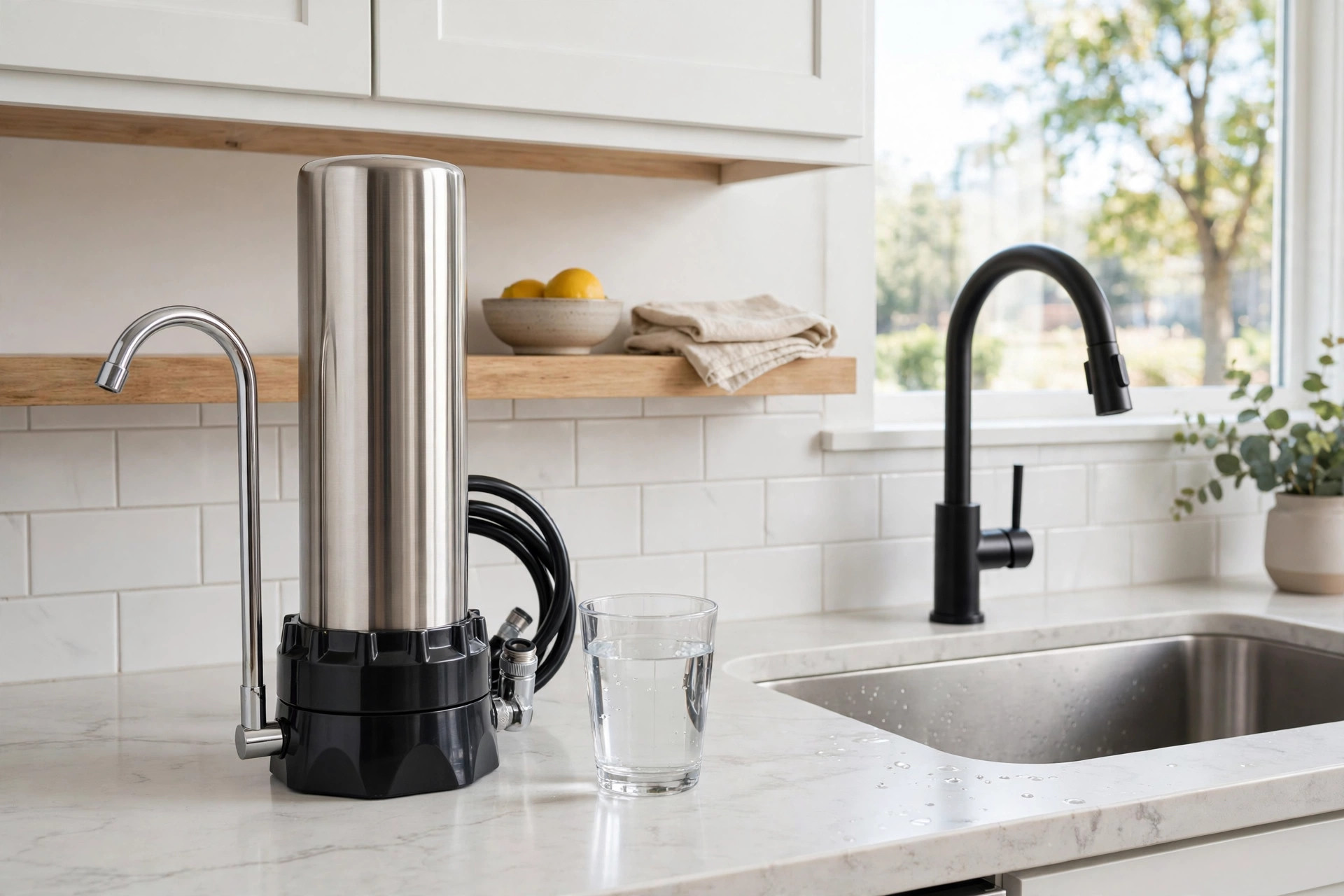
A countertop water filter is a small unit that rests on the counter next to the sink. It takes tap water in and sends filtered water out. Most models connect to the kitchen faucet with a simple adapter. Some models work by gravity and need no connection at all. The filtered water comes out of a separate spout on the unit.
These units differ from under-sink filters because they need no plumber. There is no drilling and no pipe work. They differ from a faucet water filter because they are larger and often filter more deeply. A faucet filter cleans water as it flows through a small cartridge. A countertop unit has more room for bigger filter stages. That means it can remove more contaminants and last longer between changes.
People who rent often choose countertop models. Renters cannot cut pipes or drill holes in cabinets. A countertop filter moves out when the lease ends. Homeowners like them too, because the cost is low and the setup takes minutes.
What to Look for When You Compare Filters
The best countertop water filter reviews 2026 agree on a few key points. Check each one before you buy.
Filtration Type
Different filter types remove different things. Activated carbon is the most common. It removes chlorine, bad taste, and odor. It also catches many pesticides and industrial chemicals. Ceramic filters block bacteria and sediment. Ion exchange resins soften hard water and remove some metals. Reverse osmosis removes a very wide range of contaminants, including lead, fluoride, and nitrates.
Think about what your water needs. If the only problem is taste, a carbon filter is enough. If you worry about lead, look for a unit certified to remove it. A filter for lead removal should carry a clear certification label. Test your water first so you know what you are treating. Many local health departments offer water tests at low cost.
Flow Rate
Flow rate tells you how fast clean water comes out. Gravity models are slow. They drip filtered water into a lower tank over an hour or more. Direct-connect models give water on demand. Reverse osmosis models are slower than carbon models because the membrane pushes water through very slowly. If you cook for a large family, a slow unit will frustrate you. Check the gallons-per-hour rating on the box.
Filter Life and Replacement Cost
Every filter has a limited life. The maker rates it in gallons or in months. A unit may be cheap to buy but costly to keep running. Add up the yearly cost of replacement cartridges. Some brands sell cartridges only through their own stores, which keeps prices high. Others sell them through home improvement stores, which gives you more choice and often lower prices. Read the fine print on cartridge life. Some ratings assume low water use and clean source water.
Size and Fit
Measure your counter space before you order. Countertop units range from the size of a small pitcher to the size of a microwave. Tall gravity units may not fit under upper cabinets. Direct-connect models need space near the faucet for the hose. Also check the faucet adapter. Most kitchen faucets fit standard adapters, but some modern pull-down faucets need special parts.
Certifications
Look for seals from independent testing groups. NSF International and the Water Quality Association test filters against their claims. A unit that says it removes lead should carry NSF/ANSI 53. A unit that says it improves taste should carry NSF/ANSI 42. Reviews mean little without these seals. The seal tells you that an outside lab confirmed the claim.
Types of Countertop Water Filters
Gravity-Fed Filters
Gravity filters have two stacked chambers. You pour tap water into the top. Gravity pulls it down through filter elements into the bottom tank. A spigot on the front gives you clean water. These units need no faucet connection and no electricity. They are popular for emergency use and for off-grid homes. The trade-off is speed. A full tank may take an hour to filter. They also take up real counter space. Many families keep one as a backup even after they install a faster system.
Direct-Connect Carbon Filters
These units sit on the counter and connect to the faucet with a diverter valve. Turn the valve and tap water flows into the filter. Clean water comes out of the unit’s spout. Turn the valve back for normal tap water. Most use multi-stage carbon blocks. They remove chlorine, taste, odor, and many chemicals. Setup takes about ten minutes with no tools. They are the most common type sold in stores today.
Countertop Reverse Osmosis Systems
Reverse osmosis pushes water through a fine membrane. The membrane blocks almost everything: lead, fluoride, arsenic, nitrates, and dissolved salts. These units give the cleanest water of any countertop type. They cost more up front. They also waste some water in the process. Newer models waste far less than older ones. A fluoride filter for home often uses reverse osmosis, because few other home methods remove fluoride well. Choose this type when your water test shows serious contamination.
Specialty Filters
Some units target one problem. Alkaline filters raise the pH of the water. UV units add a light stage that kills bacteria. Ceramic pre-filters handle muddy well water. These work well as add-ons. They rarely make sense as the only filter in the house. Match the specialty to a real test result, not to a sales claim.
Cost and Price in 2026
Countertop water filters cover a wide price range. Simple gravity units sell for about forty to one hundred dollars. Direct-connect carbon units run from about eighty to two hundred fifty dollars. Countertop reverse osmosis systems run from about two hundred to five hundred dollars. Prices vary by brand and by store. Plumbing fixture brands and kitchen fixture brands sometimes sell their own filter lines, which tend to cost more.
The purchase price is only half the story. Replacement cartridges cost from twenty to one hundred dollars each. Most last six to twelve months. A cheap unit with costly cartridges can cost more per year than a costly unit with cheap cartridges. Work out the two-year cost before you decide. Include the cartridges you will buy in year one and year two.
Watch for sales at large retailers. Holiday weekends often bring real discounts. Buying a spare set of cartridges during a sale saves money later. Some makers offer subscription plans that ship cartridges on schedule. These plans help you remember to change the filter on time.
Care and Upkeep
A filter only works when you maintain it. Change cartridges on schedule. A spent cartridge stops removing contaminants. Worse, an old carbon cartridge can grow bacteria. Mark the change date on a calendar or set a phone reminder.
Clean the unit itself. Wipe the outside with a damp cloth. Wash the spigot and the water tank of gravity units each month. Follow the maker’s steps for sanitizing. Home guides and DIY guides often show simple cleaning routines for common filter types. Use only mild soap. Harsh cleaners can leave their own taste in the water.
Store spare cartridges in a cool, dry place. Keep them in the sealed package until you need them. Check the printed date on the package. Old cartridges may not perform as rated.
If you go on a long trip, drain a gravity unit before you leave. Standing water grows stale and can grow bacteria. When you return, flush the unit as the maker directs. For direct-connect units, run the tap through the filter for a few minutes before you drink the water.
Safety Notes
Never assume a filter fixes unsafe water. If your water comes from a private well, test it each year. If a boil notice is in effect in your town, boil the water even if you own a filter. Most home filters do not remove viruses. They are made for treated city water or tested well water.
Keep the unit away from heat. Do not set it next to the stove or in direct sun. Heat can damage plastic housings and can warm the stored water, which speeds bacteria growth. Keep the power cord of electric models dry and away from the sink edge.
Read the manual before the first use. Flush new cartridges as directed. The first water through a new carbon filter often looks gray. This is loose carbon dust. It is harmless, but you should flush it out before drinking. If a unit leaks, turn off the diverter valve and check the seals. Do not force a cross-threaded adapter onto the faucet.
Frequently Asked Questions
Do countertop water filters remove lead?
Many do, but not all. Lead removal needs a filter rated to NSF/ANSI 53. Check the label or the maker’s spec sheet. If your home has old lead pipes, test the water first. Then choose a unit with a clear lead-removal rating. A faucet maker or a water filtration brand can help you read the ratings.
How long does installation take?
Most direct-connect models take ten to fifteen minutes. You screw an adapter onto the faucet and attach the hose. No tools are needed for most models. Gravity models take no installation at all. You rinse the parts, set the unit on the counter, and fill the top tank.
Will a countertop filter fit my faucet?
Most fit standard kitchen faucets. Pull-down and pull-out faucets can be tricky. Some need a special adapter from the maker. Measure your faucet threads or check the manual before you buy. If you rent, keep the original aerator in a drawer so you can put it back when you move.
How often must I change the cartridge?
Most makers say every six to twelve months. The real answer depends on your water use and water quality. A large family that cooks daily will wear out a cartridge faster. Many units have a built-in timer or a gallon counter. Change the cartridge when the indicator says so, even if the water still tastes fine.
Do these filters remove fluoride?
Standard carbon filters do not remove fluoride. You need reverse osmosis, distillation, or a special alumina filter. Check the spec sheet for a clear fluoride claim. If fluoride is your main concern, a countertop reverse osmosis unit is the common choice.
Is filtered water better than bottled water?
For most homes, yes. A good home filter matches bottled water in taste. It costs far less per gallon. It also avoids plastic waste. Bottled water quality varies by brand. Home-filtered water quality is in your hands. You choose the filter and you change the cartridge.
A Final Word
A countertop water filter is a simple tool that does a real job. It costs little. It needs no plumber. It gives your family cleaner, better-tasting water every day. The best countertop water filter reviews 2026 point to the same advice: test your water, pick a filter type that matches the test, and keep up with cartridge changes. Do that, and the filter will pay for itself many times over. Start with a water test this week. Then compare two or three models that fit your kitchen. Your tap water will thank you.
References
Aquasana. (n.d.). Water filtration systems. https://www.aquasana.com Delta Faucet. (n.d.). Kitchen and bathroom faucets. https://www.deltafaucet.com Family Handyman. (n.d.). DIY home repair and maintenance. https://www.familyhandyman.com Kohler. (n.d.). Bathroom and kitchen fixtures. https://www.kohler.com Moen. (n.d.). Faucets and plumbing fixtures. https://www.moen.com The Home Depot. (n.d.). Home improvement products. https://www.homedepot.com This Old House. (n.d.). Home renovation guidance. https://www.thisoldhouse.com U.S. Environmental Protection Agency. (n.d.). Protecting human health and the environment. https://www.epa.gov
Was this guide helpful?

About Jennifer Lee
The My Garden US editorial team writes practical, in-depth home and garden guides for American homeowners — tested advice, no fluff.
You May Also Like
Best Filter for Lead Removal Reviews USA: A Plain Guide for Homeowners
June 24, 2026 0 views
Crawl Space Dehumidifier Reviews 2026 USA: A Plain Guide for Homeowners
May 2, 2026 0 views
Whole House Repipe Cost Calculator USA: How to Plan Your Budget
April 10, 2026 0 views