
Florida water is hard on a house. A reader looking up water softener for Florida homes reviews USA wants to know why the water feels rough, why white crust forms on the faucet, and which system is worth the money. This guide gives a plain answer.
The problem starts underground. Much of Florida sits on limestone. Water passes through this rock and picks up calcium and magnesium. Wells add iron and sulfur to the mix. City water in Tampa, Jacksonville, and Fort Myers is hard too. The result is the same in most homes: scale on glass, dull laundry, and appliances that fail early.
Why Hard Water Is a Florida Problem
Hard water leaves spots on dishes and film on glass shower doors. It builds scale inside water heaters, dishwashers, and washing machines. Over time the scale lowers heat transfer. The water heater works harder and dies sooner.
Iron in well water turns tubs and toilets orange. Sulfur gives the cold water a rotten egg smell. These issues are common from the Panhandle to the Keys. Reviewers across the state report the same complaints. That is why water softener for Florida homes reviews USA is one of the most searched water topics in the country.
Hard water also fights with soap. It takes more detergent to get a good lather. Skin feels dry after a shower. Hair loses its shine. A softener changes all of this by removing the minerals before they reach the tap. Homeowners who install one often say the biggest win is simply cleaner glassware. Guides at Family Handyman note that soft water extends the life of plumbing fixtures and appliances, which matches what Florida buyers report in reviews.
How Water Softeners Work: Water Softener for Florida Homes Reviews Usa
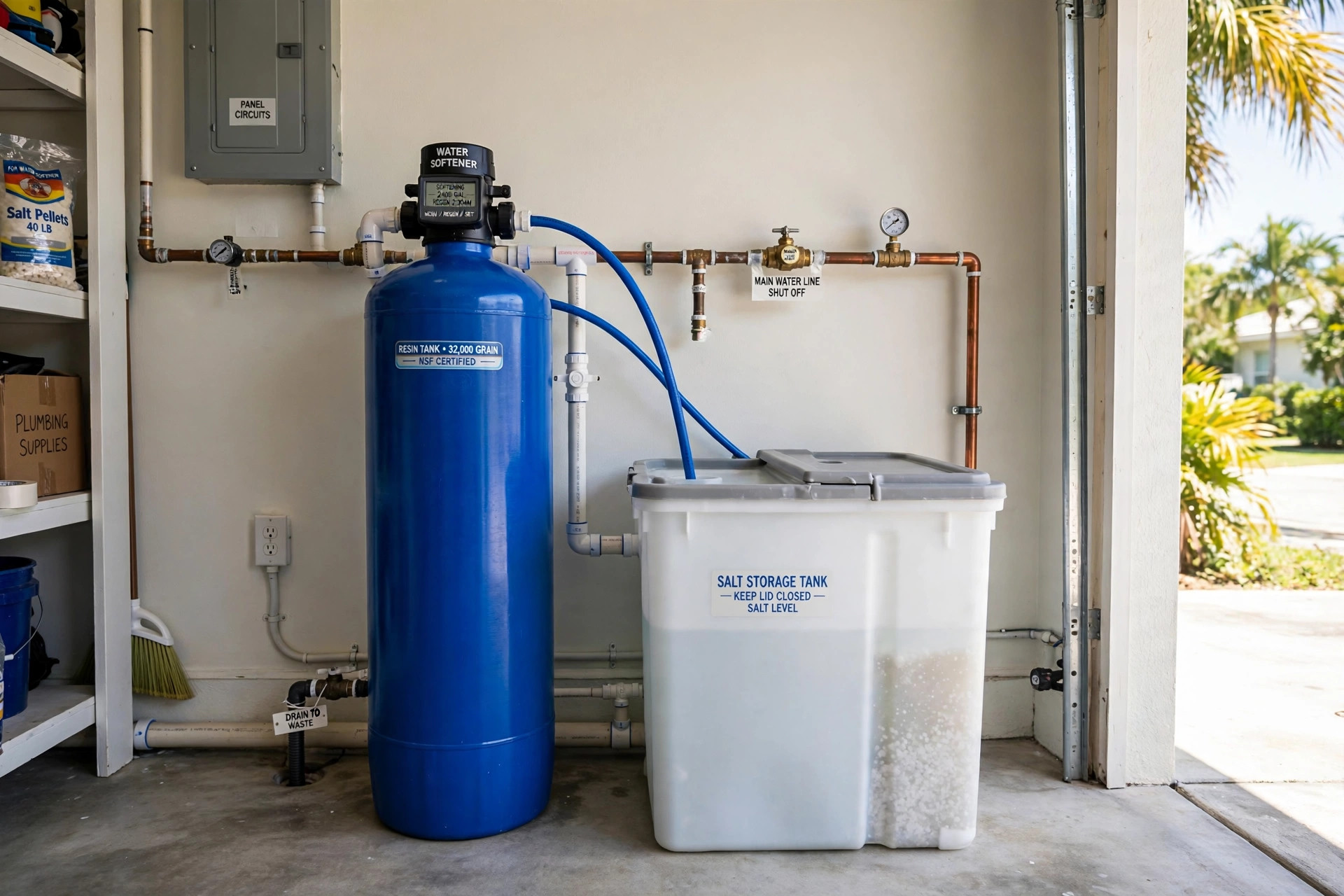
A standard softener uses ion exchange. Hard water flows through a tank of resin beads. The beads grab calcium and magnesium and give off sodium in return. The water that leaves the tank is soft. When the beads are full, the system rinses itself with salt brine and starts again.
Salt-free systems work differently. They do not remove minerals. They change the crystal form of the minerals so they do not stick to pipes and glass. Reviews show these units help with scale, but they do not give the slippery feel of truly soft water. The EPA notes that calcium and magnesium in water are not a health risk, so softening is a matter of comfort and home care, not safety.
A softener sits at the main water line. That means every faucet, shower, and appliance gets treated water. Many Florida homes also add a filter for chlorine taste or a reverse osmosis unit at the kitchen sink. Reviews of whole home setups often pair the softener with a carbon filter. Our guide on best countertop water filter reviews 2026 covers one part of that setup.
What to Look for When You Choose
Start with a water test. Hardness is measured in grains per gallon. Many Florida homes test between 8 and 20 grains. Well water can test higher and often carries iron. Buyers who skip the test guess wrong on size. A free test from a local water company or a simple kit from a home store is enough to begin.
Match the grain capacity to the house. A family of four with 15-grain water needs a 48,000-grain unit at least. An undersized unit runs its rinse cycle too often and wastes salt and water. An oversized unit costs more than it should. Reviews of Florida installs stress this point again and again.
Check the valve. The valve head is the brain of the softener. Metered valves track water use and only rinse when needed. Timed valves rinse on a set schedule and waste capacity. Reviewers prefer metered valves for Florida homes, where water use swings with the season. Good plumbing brands publish clear specs for their valves, and product pages from makers like Moen show the level of detail buyers should look for.
Look for NSF certification. NSF/ANSI 44 is the standard for softeners. It certifies capacity, salt efficiency, and pressure drop. A certified unit does what the label claims. Uncertified units rely on the seller’s word alone.
Think about water for the garden. Softened water has more sodium. It is fine for the house, but it can harm plants and soil over time. Many Florida homes keep a bypass line to an outdoor spigot. Reviews from gardeners in the state call this a must-have feature. Pairing advice appears in This Old House plumbing guides, which walk through bypass and loop installs.
Types of Systems on the Market
Salt-based ion exchange is the proven choice. It truly removes hardness. Dual-tank models switch tanks so soft water never stops, even during the rinse cycle. Single-tank models pause while they clean. Dual-tank costs more but suits larger Florida homes.
Salt-free conditioners use template-assisted crystallization. They need no salt, no drain line, and little upkeep. They suit buyers who want less scale without the soft feel. Reviews are mixed. They work best on moderately hard city water. On very hard well water, they disappoint.
Magnetic and electronic descalers clamp onto the pipe. Reviews show weak results. No standard backs their claims. Buyers in Florida should treat them with care.
Some systems combine softening with filtration. These all-in-one units remove iron, sulfur, and sediment first, then soften. They fit well on Florida wells where one tank alone is not enough. Retailers like Home Depot carry both single-stage softeners and combo units, so buyers can compare side by side.
Under-sink reverse osmosis is a different tool. It strips almost everything from drinking water, including the sodium added by a softener. Many reviews pair a whole-home softener with a kitchen RO unit. If your goal is better cooking and drinking water, our page on submersible well pump reviews for deep wells covers another part of well systems.
Cost and Price
Price runs wide. A basic 48,000-grain salt-based softener costs 400 to 700 dollars at retail. High-end metered models with fine mesh resin run 900 to 1,400 dollars. Dual-tank systems reach 1,500 to 2,500 dollars.
Professional install adds 300 to 800 dollars, more if the main line needs a new loop. Some Florida buyers do it themselves in a weekend. Retail guides from Lowe’s break down the install steps so do-it-yourself buyers can judge the job.
Running cost is low. Salt costs about 5 to 8 dollars a bag. A family of four uses one bag a month. Water used in rinses adds a small amount to the water bill. Over ten years the total cost stays well below the price of one early water heater replacement.
Salt-free units cost 800 to 2,000 dollars up front. They use no salt and no rinse water. The media cartridge needs replacement every few years at 200 to 400 dollars.
Buyers should watch for upsells. Some dealers push costly service contracts or monthly salt delivery. Reviews warn that salt is cheap at any home store. A good unit needs little more than salt and an annual check.
Care and Upkeep
Care is simple. Keep the brine tank about half full of salt. Use solar or evaporated salt pellets. Rock salt works but leaves more sludge. Check the salt level once a month.
Clean the brine tank once a year. Empty it, rinse out sludge, and refill. This takes less than an hour. Guides at Family Handyman show the basic steps with photos.
Sanitize the system if the water smells off. A small amount of household bleach in the brine well during a rinse cycle kills bacteria. This matters in Florida heat, where tanks sit warm in garages.
Watch the resin. Resin beads last 10 to 15 years. Iron in well water shortens their life. Iron-removing resin cleaner, added to the brine tank a few times a year, protects the bed. If water turns hard between cycles, the resin may be worn or the valve may be set wrong.
A softener needs no filter changes. That is one reason reviews favor it over complex filter stacks. But if the home is on a well, keep a sediment pre-filter before the softener and change it on schedule. Well owners who also run dehumidifiers in damp basements may want our notes on best basement dehumidifier with pump usa.
Safety and Smart Use
Softened water is safe to drink for most people. The added sodium is small. One quart of softened water at 10 grains hardness holds about as much sodium as a slice of bread. People on strict low-sodium diets should check with a doctor. The EPA sets no limit on sodium in drinking water but suggests keeping it low.
Do not drink water from the brine tank. That is a strong salt mix for rinsing resin only. The valve keeps it out of the home pipes.
Place the unit where a leak cannot do harm. A garage or utility room with a floor drain is best. Add a simple water alarm under the unit. Florida buyers also raise the softener on blocks in flood-prone areas.
Backwash water goes to a drain or dry well. Check local rules. Some counties limit where softener discharge can go. A licensed plumber knows the local code.
Fixture makers note that soft water is gentler on finishes. Guides from Kohler and Delta Faucet both point out that mineral buildup voids some finish warranties, which is one more reason Florida buyers act.
FAQ
How hard is Florida water really? Most of the state tests moderate to very hard, often 8 to 20 grains per gallon. Well water in central Florida can test above 20 grains and carry iron and sulfur.
Will a softener fix the rotten egg smell? Partly. The smell comes from hydrogen sulfide gas, common in Florida wells. A softener does not remove the gas well. An aeration system or oxidizing filter fixes it. Many buyers add both.
Do I need a softener if I have city water? City water in Florida is often hard enough to cause scale. Test first. If hardness is above 7 grains, a softener pays for itself in longer appliance life.
Salt-based or salt-free for a Florida well? Salt-based. Wells carry high hardness plus iron. Salt-free units cannot handle that load. Reviews from well owners are clear on this point.
How long does installation take? A plumber needs two to four hours for a standard loop install. A do-it-yourself install takes a full day if the main line already has a loop.
Does soft water harm a septic system? No. Studies show softener rinse water does not harm septic tanks or drain fields. The added sodium is small compared to daily laundry and dish loads.
Final Word
Reviews of water softener for Florida homes reviews USA point to the same lesson. Test the water, size the unit right, and pick a metered valve. Salt-based ion exchange remains the safe bet for Florida hardness and well water. The cost is fair, the care is light, and the payoff shows up in clean glass, working appliances, and skin that feels better after a shower. Brands like Aquasana offer filtered alternatives for buyers who want less salt, but for true softness, the classic salt tank still leads.
References
Aquasana. (n.d.). Water filtration systems. https://www.aquasana.com Delta Faucet. (n.d.). Kitchen and bathroom faucets. https://www.deltafaucet.com Family Handyman. (n.d.). DIY home repair and maintenance. https://www.familyhandyman.com Kohler. (n.d.). Bathroom and kitchen fixtures. https://www.kohler.com Lowe’s. (n.d.). Home improvement products. https://www.lowes.com Moen. (n.d.). Faucets and plumbing fixtures. https://www.moen.com The Home Depot. (n.d.). Home improvement products. https://www.homedepot.com This Old House. (n.d.). Home renovation guidance. https://www.thisoldhouse.com U.S. Environmental Protection Agency. (n.d.). Protecting human health and the environment. https://www.epa.gov
Was this guide helpful?

About Sarah Mitchell
The My Garden US editorial team writes practical, in-depth home and garden guides for American homeowners — tested advice, no fluff.
You May Also Like
Garbage Disposal Installation Cost Near Me: A Plain Guide for Homeowners
May 3, 2026 0 views
Chloramine Filter for City Water Reviews USA: What to Know Before You Buy
September 22, 2026 0 views
Waterfall Bathroom Faucet Pros Cons: An Honest USA Guide
March 23, 2026 0 views