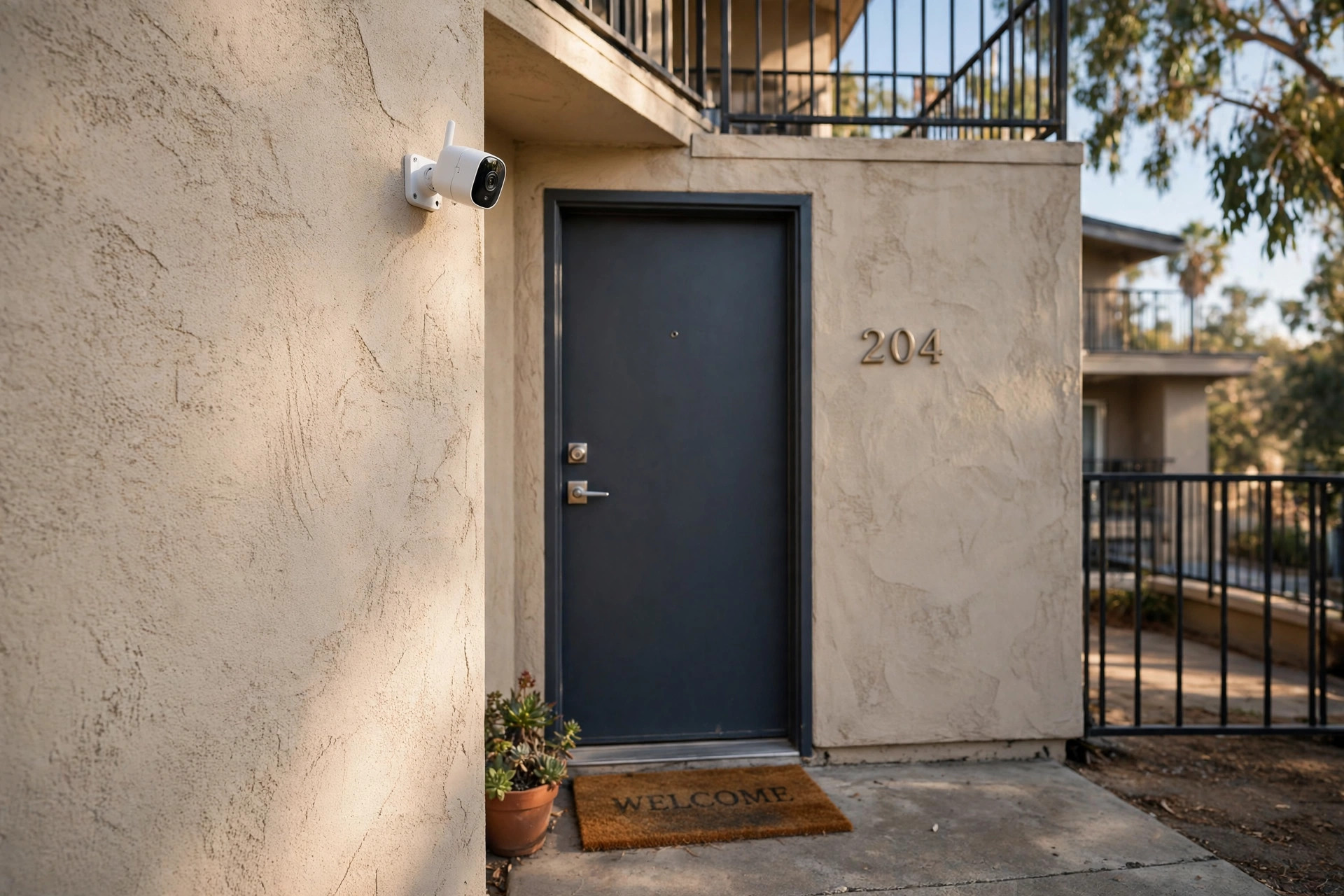

Why Apartment Dwellers Need an Outdoor Camera
The best outdoor security cameras for california apartments answer a plain need. Renters in Los Angeles, San Diego, San Jose, and Fresno want to see who is at the door, know if a package reached the mat, and keep a record if a car in the lot takes a hit. A camera gives them eyes when they are not home.
Many buildings have open walkways and shared halls. Parking lots sit under weak lamps. Parcels pile up by the mailboxes. A camera pointed at an entry or a balcony can cover much of this ground. It does not stop a theft. It does record what took place, and that record matters more than people expect.
Renters face one more limit. A lease often bars drilling into walls or running wire through the siding. That rules out most wired systems. The good news is that the modern camera market favors the renter. Battery cameras, stick-on mounts, and doorbell units need no tools beyond a hand. They come off clean at move-out, and landlords rarely object to what leaves no mark.
A camera also changes behavior. A delivery driver who sees a small lens by the door tends to place a box out of sight. A visitor who spots a blinking light tends to act with care. The lens works as a guard, day and night.
What to Look for in an Apartment-Friendly Camera: Best Outdoor Security Cameras for California Apartments
Before comparing models, settle the features that count for rental life. A list of the best outdoor security cameras for california apartments should pass these tests.
No-drill mounting. Look for cameras with magnetic bases, twist mounts, or strong adhesive plates. A suction mount suits glass sliders. A strap mount wraps around a railing. The unit should attach and detach without marks.
Battery power. A wired camera needs a nearby outlet and a drilled path. A battery camera needs none of that. Modern batteries last two to six months per charge in mild weather. California warmth helps, since cold drains cells fast.
Clear night vision. Many incidents take place after dark. A camera should show faces and plates in low light. Infrared night vision is standard. Some newer units add a soft spotlight for color night video. Both have value.
Two-way talk. A speaker and a microphone let the renter speak with a visitor through a phone. This helps with couriers and uninvited guests alike. The voice should carry clear in both directions.
Motion alerts. The camera should flag movement and push a note to the phone. Zones let the renter mark the walkway and ignore the street. Without zones, every passing car sends a false alarm.
Cloud or local storage. Some cameras keep clips on a card. Others send them to a paid plan. Renters should check the monthly cost before they buy, since plans can double the price over two years.
Readers who check independent test labs will find the same advice. The review team at Consumer Reports tests cameras for image quality, ease of use, and data privacy. Their lab work is a sound starting point for any buyer. The team at PCMag covers the privacy settings of major brands, showing how to turn off audio and limit sharing.
Types of Outdoor Cameras That Suit Apartments
Wire-Free Battery Cameras
These are the top pick for most renters. A wire-free camera hangs on a mount and runs for months on one charge. The renter pops the battery out to charge it at a desk. No cord crosses the wall. Brands sold at Home Depot and Lowe’s cover the full price range, from budget units near forty dollars to premium models near two hundred.
Their weak point is speed. A sleep-to-wake lag of one or two seconds can miss the first step of a fast walker. Placing the camera where people slow down, such as a doorway, cuts this problem.
Video Doorbells
A video doorbell replaces the flat chime plate by the door. Most run on a battery or on the existing doorbell wire. They show who stands at the door and record each visit. Two-way talk is built in. For apartments with a private entry, a doorbell is the simplest single-camera answer.
Renters must check one rule first. Some leases ban changes to the door hardware. An adhesive-backed doorbell avoids the issue. It sticks to the frame and peels off at move-out. Many renters use a wedge mount for a better angle.
Wired Spotlight Cameras
A spotlight camera ties into a porch light socket or a wall outlet. It gives steady power and a bright light that scares off prowlers. The catch is the cord. Some renters can run a flat cable under a door. Others cannot hide the wire, and the look may break lease terms. For ground-floor patios with an outdoor outlet, this type is strong.
Indoor-Outdoor Compact Cameras
Small cube cameras sit on a shelf behind glass and watch the walkway through the window. They need no weather rating and no mount outside. The catch is night glare. Infrared light bounces off glass and blinds the camera after dark. Turning the infrared off and using a porch lamp fixes the issue for many users. The editors at CNET note which models work through glass and how to cut night glare.
How California Rules Shape the Choice
California law is friendly to home cameras with a few clear lines. A camera may record the walkway, the lot, and the common areas. It may not record where people expect privacy, such as inside a neighbor’s unit. Pointing a lens at a shared hall is fine. Pointing it at a bathroom window across the court is not.
Audio needs more care. California is a two-party consent state for private talks. A camera that records sound in a spot where people chat may run into the law. Many renters switch audio recording off for shared areas. This is a point to raise with the landlord and, when in doubt, with a local attorney.
Apartment rules add their own layer. Read the lease for clauses on fixtures, exterior changes, and surveillance. Some buildings allow cameras on private balconies but not on shared rails. A short written note to the manager before mounting saves a fight later.
Cost and Price: What Renters Should Expect
Prices for the best outdoor security cameras for california apartments fall into clear bands.
Budget units run from thirty to eighty dollars. They cover a door or a car with fair daylight video and basic motion alerts. Night video tends to be grainy. Storage is usually a paid plan. For a renter who wants one eye on the porch, a budget unit can be enough.
Mid-range units run from ninety to one hundred eighty dollars. These add sharper video, better night vision, and longer battery life. Many include a free trial of cloud storage. This band is the sweet spot for most apartment buyers.
Premium cloud plans add to the bill. Basic plans run three to eight dollars a month per camera. Some brands offer a yearly plan that cuts the cost. Others keep a free tier with a short clip history. Add the plan to the camera price before comparing models. Hardware stores carry many of these units in the aisle and online, so shoppers can compare side by side at Home Depot or Lowe’s before they decide.
Setting Up Without Damaging the Unit
A clean install takes an hour and no power tools. Pick the spot: the camera should see the door, the mat, and the path a visitor takes. Keep it eight to ten feet high, out of easy reach but low enough for a clear face shot.
Renters have four common mounts:
– Magnetic mount. The camera snaps to a metal plate that sticks to the door frame. – Adhesive plate. A heavy-duty strip bonds to stucco or siding and peels with heat at move-out. – Railing clamp. A small clamp grips a balcony rail with no wall contact. – Suction mount. This grips smooth glass on a slider or a storm door.
Charge the battery fully, pair the camera with the home Wi-Fi from inside the unit, then walk the phone to the mount spot and check the live view before fixing the camera down. Shift the angle until the mat and the door both sit in frame.
Renters with stucco or siding walls should know that adhesive holds best on clean, dry surfaces. Wiping the spot with rubbing alcohol first doubles the grip. This tip also helps with other exterior projects, such as the fixes described in this stucco exterior repair cost guide for USA homes.
The how-to staff at Family Handyman publish clear mounting guides for renters. Their walkthroughs show which strips hold on stucco and which fail. A few minutes with those guides saves a dropped camera.
Care and Upkeep Through the Year
A camera needs little care, but small habits keep it sharp.
Clean the lens each month. Dust and sea salt film build up fast near the coast. A soft cloth and a drop of lens cleaner do the job. A smeared lens turns night video to fog.
Check the battery level in the app. Most apps warn at twenty percent. A spare battery ends downtime for heavy users.
Update the software. Makers patch bugs and close security holes through updates. Turn on auto-update if the app offers it. A camera with old software is an easy target for snoops.
Review the clips now and then. Delete old clips to stay under the storage cap. Check that motion zones still fit after the seasons shift. A plant that grows into the frame will trip alerts all day.
Trim the view of anything that sways. Hanging plants, flags, and loose tarps fill the alert feed with noise. Move them or shrink the zone. Fewer false alerts mean the real ones get noticed. It also helps to keep gutters clear above the mount so water does not streak the lens or stain the wall; this roundup of top rated gutter installation services reviews can help judge that side of exterior care.
The editors at This Old House keep seasonal maintenance checklists for the home exterior. Their fall and spring lists remind renters to check mounts, seals, and batteries at the same time they check other outdoor gear.
Safety and Good Practice
A camera is a tool, not a shield. Keep these safety points in mind.
Secure the feed. Use a strong password on the camera account. Turn on two-step sign-in. Check the sharing list so no old roommate still has access.
Aim with care. Keep the lens on your entry and the shared path. Do not angle it into a neighbor’s window or across a private patio. A respectful aim keeps peace and stays on the right side of the law.
Mind the cord. A camera near a walkway should have no dangling wire. Tuck cables tight. A loose cord is a trip hazard and an easy grab for a thief.
Watch the heat. Do not mount a battery camera where it bakes all day against dark siding. Extreme heat shortens battery life and can warp the housing. A small shift of a few inches fixes most cases.
For wider exterior safety topics, the siding makers keep useful guides. James Hardie and CertainTeed both publish notes on safe exterior work around the home. Renters who also handle small exterior fixes, like a worn path by the door, can compare notes with this guide to the best concrete driveway resurfacing near them for surface repair basics.
Frequently Asked Questions
Can my landlord stop me from mounting a camera? A lease may bar drilling or changes to the outside of the building. A no-drill camera that leaves no marks is rarely an issue. Ask the manager in writing before you mount anything on a shared wall. Keep the camera on your private entry or balcony when the lease is strict.
Do I need Wi-Fi for the camera to work? Most models need Wi-Fi for live views and alerts. Some keep recording to a card when the network drops. A few cellular models skip Wi-Fi but cost more each month. Check the signal strength at the mount spot before buying.
Will a camera work through a window? Daylight works well through glass. Night vision with infrared does not, because the light reflects off the glass. Turn the infrared off and rely on a porch lamp, or mount the camera outside instead.
How long does the battery last? Most makers claim two to six months. Real life depends on traffic. A camera on a busy walkway wakes often and dies sooner. A camera on a quiet door can beat the claim. Cold snaps and heat waves trim the range.
Is there a monthly fee? Many cameras work without a plan, storing clips on a card. Cloud storage and smart alerts usually cost three to eight dollars a month. Read the plan terms before buying the hardware. The two-year cost of camera plus plan is the true price.
What resolution do I need? A 1080p camera shows faces and plates at a doorway. A 2K or 4K camera helps at longer range, such as a parking lot. For a single apartment entry, 1080p with good night vision is enough for most renters.
A Final Word
The best outdoor security cameras for california apartments are the ones that fit rental life: no drills, no wires, no marks at move-out. Pick a battery camera with clear night vision, set tight motion zones, and aim it with respect for the neighbors. Add a video doorbell if the entry is private. Keep the software fresh and the lens clean. The total cost stays modest, the install takes an hour, and the peace of mind lasts for the whole lease.
References
CertainTeed. (n.d.). Building materials and exterior products. https://www.certainteed.com CNET. (n.d.). Technology news and reviews. https://www.cnet.com Consumer Reports. (n.d.). Product reviews and ratings. https://www.consumerreports.org Family Handyman. (n.d.). DIY home repair and maintenance. https://www.familyhandyman.com James Hardie. (n.d.). Fiber cement siding and exterior products. https://www.jameshardie.com Lowe’s. (n.d.). Home improvement products. https://www.lowes.com PCMag. (n.d.). Technology product reviews. https://www.pcmag.com The Home Depot. (n.d.). Home improvement products. https://www.homedepot.com This Old House. (n.d.). Home renovation guidance. https://www.thisoldhouse.com
Was this guide helpful?

About Robert Taylor
The My Garden US editorial team writes practical, in-depth home and garden guides for American homeowners — tested advice, no fluff.
You May Also Like
Top Rated Insulated Garage Doors for USA Homes
April 6, 2026 0 views
Seamless Gutter Guards Price Comparison USA: A Homeowner’s Plain Guide
March 29, 2026 0 views
Best Paver Walkway Installation Near Me: How to Find a Local Pro
February 5, 2026 0 views