Learning how to prune apple trees winter is one of the most useful skills a home gardener can pick up. A few quiet hours with sharp tools in the cold months can decide how many apples you pick the next fall. The tree is asleep, the branches are bare, and every cut you make is easy to see. This guide walks you through the whole job in plain terms, from why the work matters to how to make each cut with confidence.
Why Winter Is the Best Time to Prune Apple Trees
Apple trees do their main pruning work in winter because the tree is dormant. The leaves are gone. The sap is not flowing. You can see the full frame of the tree, which makes it simple to spot branches that cross, rub, or grow straight up into the sky. Wounds also heal well when made before spring growth starts.
Winter pruning shapes young trees and keeps old trees productive. It lets light reach the center of the canopy. Light ripens fruit and dries leaves fast after rain, which cuts down disease. It also balances growth and fruit. A tree that is pruned each winter puts its energy into fewer, better apples instead of many small ones.
Timing matters inside the winter season itself. Late winter is the sweet spot for most home growers. The coldest weather has passed, and the buds have not yet broken open. Pruning in deep cold can damage living wood near the cut, so many gardeners wait until the worst of the season is behind them. If you see silver buds swelling and showing green, you are still in time, but do not wait much longer.
Tools You Will Need for Winter Apple Tree Pruning: How to Prune Apple Trees Winter
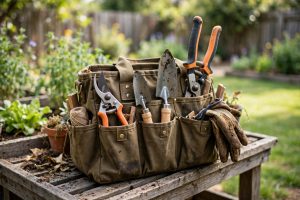
Good tools make this job safe and easy. You need three cutting tools for most backyard trees.
Bypass hand pruners handle small branches up to about three-quarters of an inch thick. They cut like scissors and leave a clean wound. If you are shopping for your first pair, a look at the best pruning shears for rose bushes will teach you what a good bypass blade feels like, even though this guide is about trees.
Loppers give you long handles and extra leverage for branches between three-quarters of an inch and two inches thick. Pick a pair with bypass blades and cushioned grips.
A sharp pruning saw takes care of anything thicker than two inches. A folding saw is safe to carry on a ladder and cuts on the pull stroke, which gives you control.
You will also want a small sharpening stone or file, because clean cuts heal faster than torn ones. A guide on how to sharpen garden tools properly is worth a read before the season starts. Bring a bucket with rubbing alcohol or a bleach-and-water mix to wipe blades between trees, plus a sturdy ladder, work gloves, and eye protection. If you are new to garden gear altogether, garden tool set for beginners reviews can help you assemble a starter kit without overspending.
What to Look for When Buying Pruning Tools
Buy tools that fit your hands and your trees. Handles should feel solid and comfortable when you grip them hard. Blades should be made of high-carbon or hardened steel that holds an edge. Replacement blades and springs are a plus, because they stretch the life of good pruners by years.
Try before you buy if you can. Open and close the tool several times in the store. It should move smoothly with no grinding. For loppers, check that the handles do not flex too much under pressure. For saws, look for teeth that are sharp on both sides of the blade and a handle that locks when folded.
How to Prune Apple Trees in Winter: The Step-by-Step Method
Start by standing back and looking at the whole tree. Good pruning follows a clear order. Work from the dead wood first, then the problem branches, then the shaping cuts.
Step 1: Remove Dead, Damaged, and Diseased Wood
Cut away every branch that is dead, broken, or shows dark sunken spots on the bark. Dead wood snaps dry and shows brown inside instead of green. Cut back to healthy wood, and wipe your blade with alcohol after cutting anything diseased so you do not spread the problem. Advice from tree care writers at The Spruce stresses that sanitation is the first duty of the pruner, and they are right. This step alone often opens up half the problems in an old tree.
Step 2: Take Out Crossing and Rubbing Branches
Look for branches that cross each other or rub bark off a neighbor. Keep the stronger, better-placed branch and remove the other one. Rubbed wounds invite rot, so this step protects the tree for years.
Step 3: Remove Watersprouts and Suckers
Watersprouts are the fast, straight shoots that burst upward from limbs and the trunk. Suckers grow from the roots or the base of the trunk. Neither one makes good fruiting wood. Cut them off flush, or as close as you can without gouging the bark.
Step 4: Thin the Center for Light and Air
The goal is an open shape where light reaches the middle of the tree. Most backyard apples are trained to a central leader, like a small Christmas tree, or to an open center with three or four main limbs. Remove inward-growing branches and any limb that crowds its neighbor. When two limbs grow close together, keep the one with the wider angle to the trunk. Wide angles are stronger and carry fruit better.
Step 5: Shorten Long, Whippy Growth
New shoots that grew long and thin last summer can be headed back by about one-third. Cut just above an outward-facing bud so the new growth heads away from the center. This keeps the tree compact and puts fruit within reach.
The Three Cuts Every Pruner Must Know
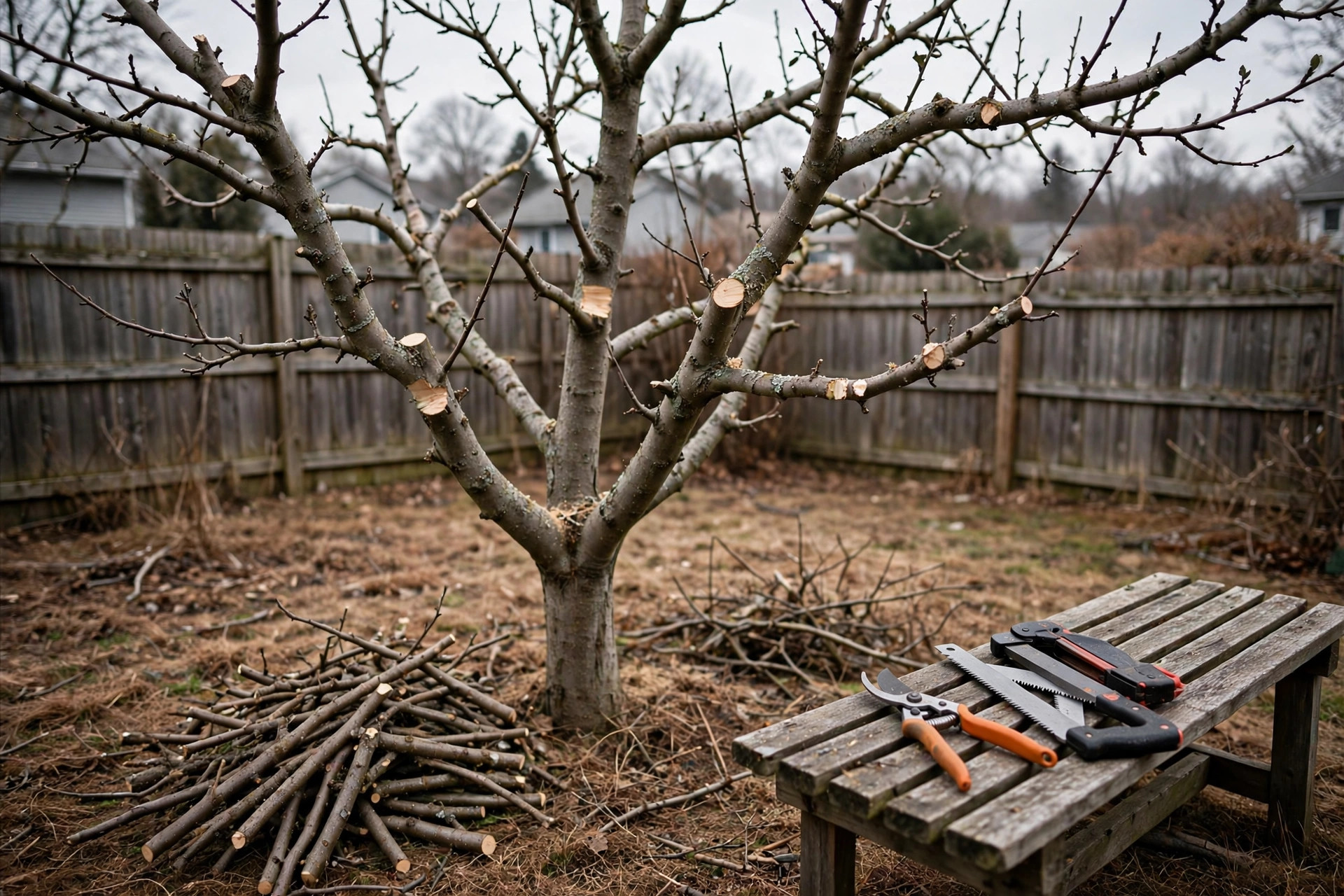
A thinning cut removes a whole branch at its base. This is the most common cut in winter pruning and the one that opens the canopy.
A heading cut shortens a branch by cutting back to a bud or side branch. Use it to control height and shape.
A drop-crotch cut removes a tall upright limb back to a lower side branch that is at least one-third its size. It lowers the tree without leaving a stub.
Always cut just outside the branch collar, the slight swelling where the branch meets the trunk or limb. The collar holds the tree’s own healing tissue. Never leave a stub, and never cut flush into the collar. Product guides at Corona Tools show clear diagrams of this cut, and a quick look will fix the idea in your mind.
Types of Winter Pruning by Tree Age
Young trees need training. In the first three years, pick one strong central leader and three or four well-spaced side limbs. Remove the rest. Keep the leader a little taller than the side limbs so the tree grows into a strong cone shape.
Mature trees need thinning. An older apple that has been pruned each year needs mostly maintenance. Remove a little each winter rather than a lot every few years. Heavy cutting all at once shocks the tree and triggers a burst of watersprouts.
Neglected old trees need renewal over several winters. Never remove more than one-quarter to one-third of the canopy in a single season. Start with the dead wood and the worst crossing limbs. Next winter, thin the center. By the third year, the tree will be back in shape and fruiting better than it has in years.
Cost and Price of Pruning Tools and Hired Help
Pruning apple trees in winter costs very little if you do it yourself. A decent pair of bypass pruners runs from twenty to fifty dollars. Loppers cost thirty to eighty dollars. A folding pruning saw costs twenty to forty dollars. A full basic kit often totals under one hundred fifty dollars, and it lasts for many seasons with care. Price comparisons at Home Depot and Lowe’s show the range for common homeowner brands side by side.
Hiring help is the other path. A professional arborist or tree service usually charges by the hour or by the tree. Expect roughly seventy-five to two hundred dollars per tree for a standard backyard apple, depending on size and location. Large, overgrown trees cost more. Many gardeners find that one professional visit every few years, plus their own yearly touch-ups, is the best balance. Reviews at Consumer Reports can help you judge which tool brands hold up long enough to justify their price.
Care and Upkeep After Pruning
When the cuts are done, the work is not quite finished. Clean your tools with oil and put them away dry. Sharp, dry tools are ready for the next job and last much longer. A thin coat of oil on the blades stops rust through the damp spring months.
Rake up and remove the cut branches. Old prunings can harbor pests and disease, so do not leave piles under the tree. Small branches can go in the compost if they are healthy, but diseased wood should be bagged and thrown out or burned where local rules allow.
Do not paint or seal the cuts. Research has shown that wound dressings do not help trees heal and can trap moisture against the wound. Let the branch collar do its job.
Watch the tree in spring. New growth will tell you how it responded. If you see a flood of watersprouts, you may have cut too hard. Light follow-up thinning in summer can remove them while they are small, but most of the shaping should wait for the next dormant season.
Safety Tips for Winter Pruning
Cold weather and ladders demand respect. Work on dry, windless days when the ground is not icy. Wear boots with good grip, since wet grass and frozen soil are slippery.
Keep three points of contact on the ladder at all times. Never reach too far to one side. It is better to climb down and move the ladder than to stretch and lose balance. For branches you cannot reach safely, call a professional with the right equipment.
Wear eye protection. Branches snap back when cut, and sawdust falls straight down. Gloves protect your hands from thorns and cold steel alike. Take breaks to warm up. Cold fingers lose grip strength, and a tired grip is a sloppy grip. Guidance on safe ladder and tool practice from Bob Vila and Family Handyman is a good refresher before the season.
Also think about the tree’s safety. Do not prune when the wood is frozen solid after a hard freeze. Wait for a milder day. Frozen wood can split and crack below the cut, which makes a bigger wound than you planned.
Frequently Asked Questions
When exactly should I prune my apple trees in winter?
Late winter is best for most regions. You want the tree still dormant but past the coldest stretch of weather. If buds are swelling but not yet open, you are right on time.
How much can I safely remove in one winter?
Take no more than one-quarter to one-third of the canopy in a single season. Light, yearly pruning beats heavy cutting every few years. A neglected tree should be brought back over two or three winters, not one.
Do I need to seal the cuts with paint or tar?
No. Modern tree care says to leave cuts open to the air. The tree seals the wound itself from the branch collar outward. Sealants can trap water and slow the healing.
Can I prune apple trees when it is snowing or freezing?
A light snow day is fine, but skip days with deep cold or ice. Frozen branches crack instead of cutting cleanly, and ladders get dangerous on ice. Pick a calm day above freezing if you can.
What is the difference between thinning cuts and heading cuts?
A thinning cut removes an entire branch at its base and opens the canopy. A heading cut shortens a branch back to a bud or side shoot and controls size and shape. Most winter pruning of apples uses thinning cuts, with heading cuts for young trees and height control.
My old apple tree has never been pruned. Where do I start?
Start with the dead wood. Remove everything dead, broken, or diseased in the first winter. Then take out the worst crossing limbs and watersprouts. Plan a three-year renewal instead of trying to fix everything at once.
A Short Final Word
Winter pruning is patient work, and that is exactly why it suits the season. The tree is at rest, the garden is quiet, and each cut is a small promise of fruit to come. Learn the few basic cuts, keep your tools sharp, and take a little wood each year instead of a lot all at once. Seasoned advice from growers at Fiskars and the garden supply team at Gardener’s Supply Company echoes the same rule: prune a little, prune every year, and the tree will reward you. Your apple tree will stand stronger, bear better, and stay healthy for decades.
References
Bob Vila. (n.d.). Home improvement advice. https://www.bobvila.com Consumer Reports. (n.d.). Product reviews and ratings. https://www.consumerreports.org Corona Tools. (n.d.). Garden and landscape tools. https://www.corona-tools.com Family Handyman. (n.d.). DIY home repair and maintenance. https://www.familyhandyman.com Fiskars. (n.d.). Garden and cutting tools. https://www.fiskars.com Gardener’s Supply Company. (n.d.). Gardening tools and supplies. https://www.gardeners.com Lowe’s. (n.d.). Home improvement products. https://www.lowes.com The Home Depot. (n.d.). Home improvement products. https://www.homedepot.com The Spruce. (n.d.). Home and garden advice. https://www.thespruce.com
Was this guide helpful?

About James Carter
The My Garden US editorial team writes practical, in-depth home and garden guides for American homeowners — tested advice, no fluff.