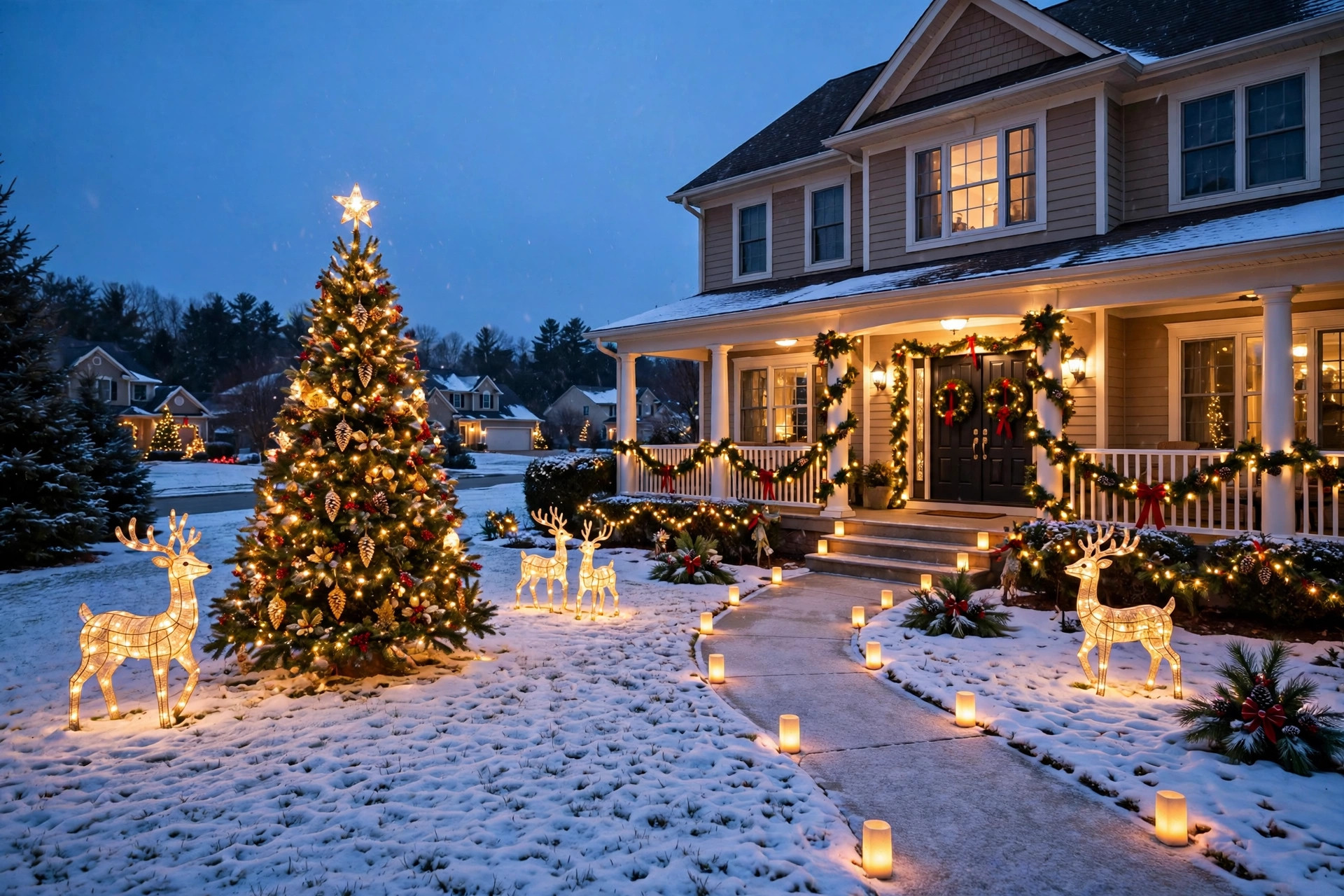

When winter comes, a big yard can look plain and dark. The best outdoor christmas decorations for large yard spaces change that in a single weekend. Tall trees shine. Paths glow. The whole street slows down to look. This guide walks through what works best on large properties, how to choose pieces that last, what they cost, and how to keep every light and figure safe through rain and snow.
Why a Large Yard Needs a Plan
A small front lawn is easy. A wreath, a string of lights, and the job is done. A large yard is different. It eats decoration. Ten strands of lights that would light a small house will vanish on a long driveway and a wide lawn. The eye needs big shapes and clear lines to read the display from the road.
Start with a walk. Step back to the street and look at your property the way a driver sees it. Find the three or four points that catch the eye first. That may be a large oak, the roofline, the walkway, and the open lawn. These become your anchors. Each anchor gets one big element. Between them, you place smaller pieces that tie the scene together.
Scale is the most common mistake. Homeowners buy pieces made for a town lot and spread them thin across an acre. The result looks bare. A large yard calls for large items. Nine-foot inflatables, six-foot wreaths, tall lighted trees, and wide swaths of net lights fill space the way a crowd fills a hall. Fewer, bigger pieces beat many small ones every time.
A plan also keeps the budget sane. When you know your anchors, you buy with a list instead of with impulse. Stores are full of pretty small items in December, and each one adds up. The plan guards the wallet.
What to Look for When You Choose: Best Outdoor Christmas Decorations for Large Yard
Quality matters more outdoors than indoors. Every piece faces cold, wind, rain, and sometimes ice. The best outdoor christmas decorations for large yard displays share a few marks of good design.
Size and Scale
Measure before you shop. Note the height of the trees you want to wrap, the length of the roofline, and the width of the lawn. A string of lights labeled 66 feet sounds long until it covers half a roof edge. For a large yard, buy commercial-grade strands in long runs, or connect several end to end.
Inflatables should stand at least seven feet tall to read from a distance. Yard figures and nativity sets made for large lots run five to six feet. Anything smaller hides behind hedges and fences.
Weather Rating
Look for the UL or ETL mark on the box. These marks mean a testing lab has checked the item for outdoor use. The label will say “suitable for wet locations” on the best pieces. That is the mark you want in regions with snow and rain.
Fabric items such as inflatables should use heavy nylon with sealed seams. Painted metal figures should show a rust-resistant coating. Cheap plastic cracks in the cold of January, and then the piece goes in the trash.
Power Source
LED lights are the standard now. They use a fraction of the power of old bulbs, they stay cool, and they last for years. Solar lights work well for path markers and small accents, since they need no cords at all. Battery packs suit wreaths hung on doors with no outlet near.
For a large yard, count your outlets before you buy. Most homes have only two or three outdoor outlets. You will need weatherproof extension cords and outdoor power stakes to reach the far corners. Plan one circuit per zone so a tripped breaker does not kill the whole display.
Storage
Big decorations need big storage. Inflatables fold flat, which is a point in their favor. Lighted wireframe trees break down into flat sections. Before you buy a twelve-foot reindeer, ask where it will live from January to November. A dry garage or shed shelf keeps fabric and wire safe from mice and damp.
Types of Outdoor Decorations That Fill a Large Yard
LED String and Net Lights
Lights are the base of every display. Warm white LED strands outline rooflines, wrap trunks, and line fences. Net lights throw over hedges and bushes in minutes, giving a full blanket of light with little labor. For houses with long rooflines, outdoor christmas lights for house roofline usa offer the clean straight runs that clips and hooks make simple to hang.
Color choice sets the mood. Warm white reads classic and calm. Multi-color reads festive and bright. Many homes now mix the two, with warm white on the house and color on the trees. Best led christmas lights warm white outdoor styles give that steady golden glow that flatters brick and siding alike.
Inflatables
Nothing fills a large lawn faster than an inflatable. A ten-foot Santa or snowman shows up from three blocks away. Modern inflatables come with LED lights built in and strong tethers. They inflate in minutes and fold into a small bag after the season.
Place them with care. One or two big inflatables anchor a lawn. Five or six crowd it and cheapen the look. Keep them back from the road so drivers do not stop to stare in a bad spot.
Large Yard Trees
A lighted outdoor tree gives a yard its center. Some are wire frames wrapped in lights, standing six to twelve feet tall. Others are full artificial trees made for outdoor use. Place the tree where the whole street can see it, such as the center of the front lawn or near the driveway entrance.
Pathway Lights
A long walk or drive needs guidance. Stake lights along the path in even rows. Solar stakes charge by day and glow by night with no wiring. For a strong look, keep the color and height of all stakes the same. Mixed sets look scattered.
Nativity Sets and Figures
For many families, a nativity scene is the heart of Christmas. Outdoor sets made for large yards stand life-size and light from within. Christmas nativity set for outdoor yard display options include painted resin figures and simple white lighted silhouettes. Both read well at night from the street.
Other figures fill out a theme. Reindeer, sleighs, carolers, and nutcrackers each tell a story. Pick one theme and hold to it. A yard that mixes Santa, dinosaurs, and angels confuses the eye.
Light Projectors
A projector throws moving patterns of snowflakes or stars across a house front. It is the fastest way to cover a large wall. One stake in the ground replaces hours of ladder work. Projectors work best as an accent, not as the whole show. Pair one with real lights for depth.
Wreaths and Garland
A large wreath on the garage or barn door ties the house to the yard display. Outdoor wreaths run 36 to 60 inches for big homes. Pre-lit versions save the trouble of wrapping lights. Garland along fences and porch rails links the pieces together with a green thread.
Cost and Price
A large yard display can cost as little as two hundred dollars or as much as several thousand. The spread is wide because the pieces range so much in size and quality.
A basic setup runs about 200 to 500 dollars. That buys LED strands for the roofline, net lights for bushes, a few pathway stakes, and one mid-size inflatable. It looks tidy and cheerful.
A full display runs 500 to 1,500 dollars. This adds a large inflatable or two, a lighted yard tree, a nativity set or figure group, and a projector. Most large-yards owners land in this band.
A showpiece display runs 1,500 to 5,000 dollars or more. These are the homes people drive across town to see. They use commercial-grade lights, multiple large figures, timed controllers, and sometimes music synced to the lights.
LED lights cut the running cost to almost nothing. A full LED display often adds only a few dollars to the monthly power bill. Old-style bulbs cost far more to run and burn out faster. The higher price of LEDs pays for itself in the first season.
Buy in stages if the budget is tight. Lights and one anchor piece the first year, then add a figure each season. By year three, the yard looks full and the cost spread out.
Care and Upkeep
Good care adds years to every decoration. Most damage comes from poor storage, not from weather.
Take everything down within a week or two after the holiday. Sun and ice wear on decorations left out all winter. Wind snaps guy lines that held fine in December. A prompt takedown keeps paint bright and fabric whole.
Wrap light strands around a spool or a piece of cardboard. Tangled lights are the main reason people throw away good strands. Label each spool with where it hung. Next year the job takes half the time.
Let inflatables dry fully before folding. Fold them loose, not tight, and store them in the bag they came in. Keep all fabric items off concrete floors, which sweat in spring and breed mildew.
Check cords each year before you hang them. Look for cracked insulation and loose plugs. A frayed cord belongs in the trash, not on the roof. Replace burnt-out LED bulbs with the spares that come in the box.
Painted figures last longer with a coat of clear outdoor sealant every two or three years. Wipe metal parts dry before storage so rust never starts.
Safety
A large display uses a lot of power and a lot of ladders. Both demand respect.
Use only outdoor-rated cords, timers, and power strips. Indoor cords have thin insulation that cracks in the cold. Keep all connections off the ground where snowmelt pools. A simple plastic cover over each plug joint keeps water out.
Do not overload a circuit. Read the wattage on each item and add them up. Most home outdoor circuits handle 1,800 watts. LEDs make this easy since each strand draws so little. If lights dim when the inflatable starts, split the load across two circuits.
Anchor every tall piece. Inflatables need all their tethers staked tight. Wireframe trees need guy wires in windy country. A twelve-foot snowman in a winter storm is a sail. The Consumer Product Safety Commission advises homeowners to check decorations for damage before each season and to keep cords away from walkways where guests may trip.
Ladder safety matters. Hang roofline lights with a helper holding the ladder. Do not reach sideways from the top rung. In icy weather, wait for a dry day. No display is worth a fall.
Keep lights away from dry trees and shrubs. Even cool LEDs sit near real branches, and a short in any cord is a risk. The U.S. Department of Energy notes that LED holiday lights use far less energy and produce far less heat than old incandescent strings, which is one more reason to choose them.
Turn the display off at night. A timer that shuts lights at midnight saves power and gives the neighborhood quiet dark. It also lowers the chance of trouble while everyone sleeps.
Frequently Asked Questions
How many lights do I need for a large yard?
A rough rule is 100 lights per foot of roofline and per large tree, with net lights for bushes. A wide property often needs 2,000 to 5,000 lights for a full look. Start with the anchors, then add strands until the gaps close.
Are inflatables safe in heavy wind?
Good ones are, if staked right. Use every tether and stake that ships in the box. In gusts over 40 miles per hour, deflate them until the storm passes. Sandbags at the base add weight on hard ground where stakes will not hold.
Can I leave outdoor decorations up all winter?
It is better not to. Sun, ice, and wind wear out fabric and fade paint. Most makers rate their pieces for about 90 days of use per year. Take them down in January and they will look new next December.
Do LED Christmas lights really save money?
Yes. An LED strand uses about one tenth the power of an old-style strand. A large LED display often costs under five dollars a month to run. The bulbs also last many seasons, so you buy fewer replacements.
What is the best way to hang lights on a tall roof?
Use plastic clips made for gutters or shingles, not nails or staples. Metal fasteners cut wire insulation and cause shorts. Work from a sturdy ladder with a helper, and hang in daylight so you can see what you are doing.
How do I store large decorations in a small garage?
Fold inflatables flat and stack them on high shelves. Break wireframe trees into sections and lean them against a wall. Hang wreaths on hooks to save floor space. Keep everything in sealed bags or bins to keep out dust and mice.
A Short Final Word
The best outdoor christmas decorations for large yard displays are not the most expensive ones. They are the ones that fit the space, stand up to the weather, and tell one clear story. Measure first. Buy big where the eye lands. Light the paths. Anchor every tall piece. Then step back to the street on the first cold night, and enjoy the glow you made.
For more background, see Michaels, The Home Depot, and Wayfair. For more background, see The Spruce, HGTV, and Country Living.
References
Country Living. (n.d.). Country home and lifestyle. https://www.countryliving.com HGTV. (n.d.). Home and garden ideas. https://www.hgtv.com Michaels. (n.d.). Arts and crafts supplies. https://www.michaels.com The Home Depot. (n.d.). Home improvement products. https://www.homedepot.com The Spruce. (n.d.). Home and garden advice. https://www.thespruce.com U.S. Consumer Product Safety Commission. (n.d.). Product safety information. https://www.cpsc.gov U.S. Department of Energy. (n.d.). Energy efficiency and renewable energy. https://www.energy.gov Wayfair. (n.d.). Furniture and home goods. https://www.wayfair.com
Was this guide helpful?

About Jennifer Lee
The My Garden US editorial team writes practical, in-depth home and garden guides for American homeowners — tested advice, no fluff.
You May Also Like
Best New Year Eve Party Decorations for Home
February 16, 2026 0 views
Best Easter Decorations for Mantel Spring Display
May 28, 2026 0 views
Christmas Village Houses for Mantel Display: A Complete Guide
February 4, 2026 0 views