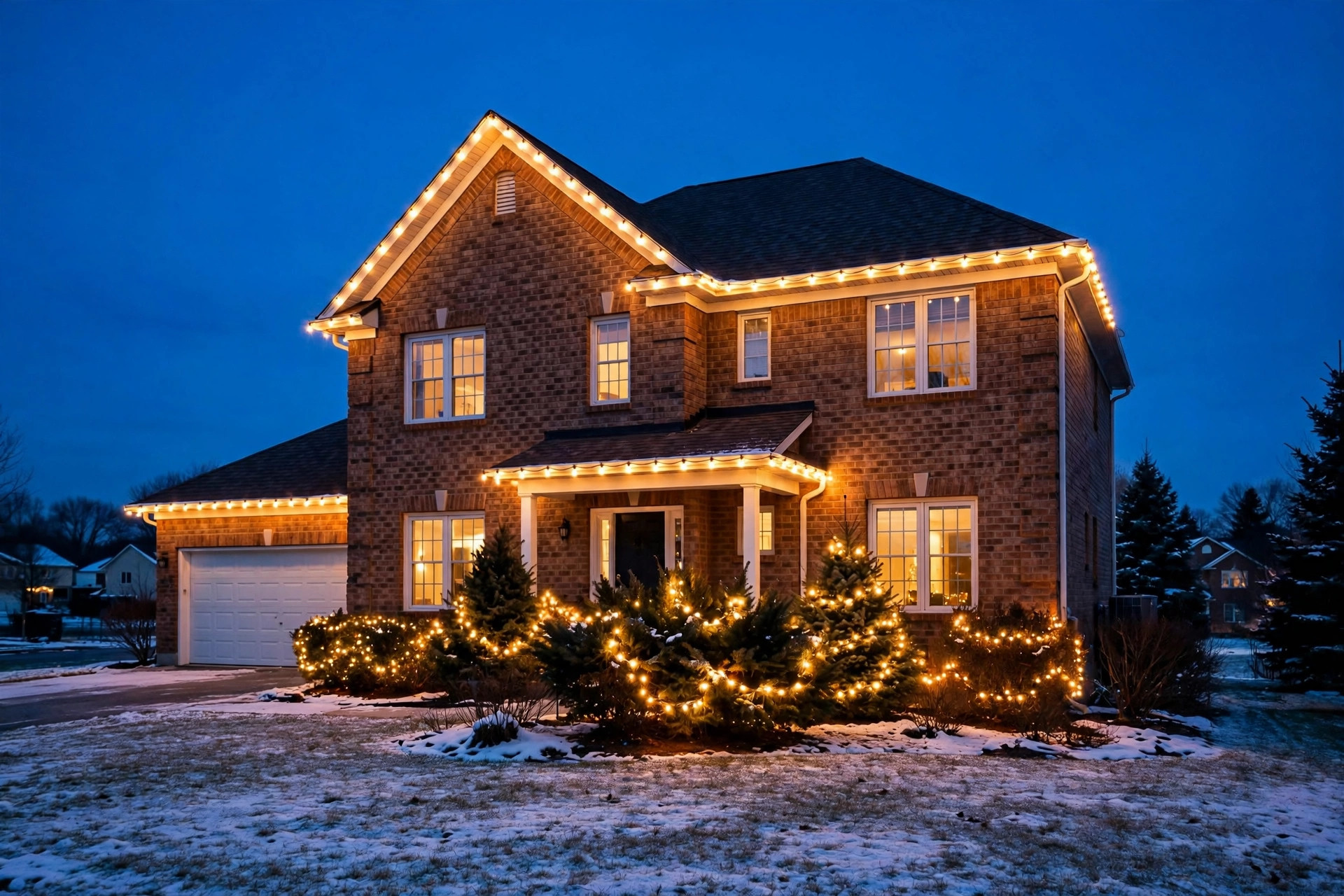
The best LED Christmas lights warm white outdoor are the ones that glow with a soft golden tone, stand up to rain and snow, and keep the power bill low. Warm white has become the favorite color of many American families because it looks like candlelight. It gives a house the same gentle shine that old bulbs gave, but it lasts much longer and uses far less power. This guide will help you pick the right string, hang it with care, and keep it shining all season.
Why Warm White LED Christmas Lights Matter
Color makes the whole display. Cool white light has a sharp blue tone. Some people like it, but many find it cold. Warm white sits near 2700 Kelvin. That is close to the glow of the old glass bulbs from years past. It flatters brick, stone, wood siding, and evergreen bushes alike. Porches look welcome. Roof lines look clean.
LED bulbs changed the way people light their homes for Christmas. A single string of warm white LED lights can use about one tenth of the power of an old string. That means you can link more strings end to end without fear of blowing a fuse. The bulbs also stay cool to the touch. That is a real comfort when the string rests against dry garland or a wreath. Ideas from the editors at Country Living often favor this warm glow for front porches and entryways, and most families agree that the look feels right for the season.
How to Choose the Best Outdoor LED Christmas Lights: Best Led Christmas Lights Warm White Outdoor
Shopping for lights can feel hard when every box looks the same. Keep to a few simple checks and you will pick well.
Check the Color Temperature
Look at the box for a number near 2700K. That marks warm white. Some makers call it soft white. Anything above 3000K starts to look less warm. If the box does not list a number, compare the words. Warm white and golden white are what you want. The displays at Michaels and the product guides at Home Depot both group outdoor strings by color temperature, which makes side by side shopping easier.
Count the Bulbs and Measure Your Space
Measure the roof line, the porch rail, or the tree you plan to light before you buy. A common string holds 50 to 100 bulbs over 20 to 30 feet. For a full two story roof line you may need four or five strings. Buy all the strings from the same maker and the same batch if you can. That keeps the color match exact from one string to the next.
Look for Weather Ratings
Outdoor strings must carry a UL listing for outdoor use. The letters on the tag matter. UL listed for outdoor means the wire, the sockets, and the plugs were tested for rain, snow, and cold. Indoor strings should never go outside, no matter how fine they look. The safety team at the U.S. Consumer Product Safety Commission reminds shoppers each year to check these marks before they hang a single bulb. Warm white LED Christmas lights for outdoor use should also state that the bulbs are shatterproof or break resistant, since plastic LED bulbs hold up far better than glass in a storm.
Types of Warm White LED Christmas Lights
Not all strings serve the same job. Pick the shape that fits the spot.
Mini Lights
Mini lights are the classic choice. They are small, light, and easy to wrap around bushes, small trees, and porch posts. Warm white mini strings give a fine sparkle at night. They work well in large numbers. For a full roof line, plan on a string every two to three feet of length for a rich look.
C9 and C7 Bulbs
C9 bulbs are the big traditional bulbs you see on roof lines across America. C7 bulbs are a step smaller and suit windows, fences, and garden beds. Both come in warm white LED versions that mimic the old glow. Their larger size throws more light, so a house reads clearly from the street. Because each bulb socket locks in place, C9 strings are a top pick for roofline lighting ideas where neat straight runs matter.
Net Lights and Icicle Lights
Net lights drape over a bush in one motion. A four by six foot net covers a small shrub in under a minute. Icicle lights hang from eaves in uneven drops. In warm white, icicles look like slow moving candle flames along the gutter. Both save hours of work compared with single strings.
Projectors and Alternatives
Some families skip strings altogether and point a light projector at the house. A Christmas lights projector for the house exterior can wash a whole wall in warm white dots with no ladder work. Projectors are fast, but they do not match the depth of real strung bulbs. Many homes use both: strings on the roof line and a projector on the garage wall.
Solar LED Strings
Solar strings charge by day and glow by night. They suit fences, mailboxes, and paths far from an outlet. Warm white solar lights have grown brighter in recent years. They still fade on cloudy weeks, so keep them near a sunny spot. Guidance on efficient lighting from ENERGY STAR notes that LED technology keeps these low voltage strings safe and cheap to run.
Cost and Price of Outdoor LED Christmas Lights
Prices run in a wide band. A basic 50 bulb warm white mini string costs about five to ten dollars. A 100 bulb string with thicker wire runs ten to twenty dollars. C9 strings cost more per foot, often fifteen to thirty dollars per string. Net lights and icicles fall in the middle.
The long term math favors LED. An old 100 bulb string could draw 40 watts or more. The LED version draws about five watts. Over a full season of nightly use, the savings add up. LED bulbs also last for many seasons. A well made string can serve five to ten years. That spreads the purchase price thin. Price trackers at Wayfair and the hardware guides at Lowe’s show that warm white outdoor sets tend to sell out by mid December, so buying early often means better prices and fuller shelves.
Related decorating guides on this site can help you plan the whole display. If you decorate a small home, see our guide on the best artificial Christmas tree for small apartments for matching indoor ideas.
Hanging and Care Tips
Good hanging makes cheap lights look dear. Start with a plan on paper. Mark where each string begins and ends. Use plastic clips made for gutters or shingles rather than nails or staples. Staples nick the wire and let water in.
Hang the strings on a dry mild day. Work from the power source outward so each run ends where you expect. Keep plugs off the ground and point them downward so rain drips away. Use outdoor rated extension cords with three prongs. Do not run cords under rugs, through windows, or across walkways where feet can catch them.
When the season ends, take the lights down within a few weeks. Sun and weather age the wire faster than indoor storage does. Coil each string loosely around a piece of cardboard or a cord reel. A tangled string is the one most likely to break. Store the coils in a dry box in the garage or attic. A small label on each box noting the length and bulb count saves time next year, since you will know at a glance which box holds the roof line set and which holds the porch set. Keep spare bulbs and fuses in the same box. Most makers include a few spares, and a five minute repair beats a store trip in December. Check each string next year before you climb the ladder. The project editors at This Old House suggest testing every string on the ground first, which saves a second trip up the ladder.
Safety Rules for Outdoor Christmas Lights
Safety comes first every season. The points below keep your home and family safe.
– Buy only strings marked UL listed for outdoor use. – Do not link more strings than the box allows. Three to five strings end to end is the usual limit. – Keep all plugs and timers inside weatherproof boxes or under cover. – Use a ground fault circuit interrupter outlet for every outdoor run. – Turn lights off at night with a timer. Do not leave them on while you sleep or while no one is home. – Keep ladders away from power lines. Have a second person hold the ladder. – Check wires each year for cracks, bare spots, or loose sockets. Throw away any damaged string. – Keep paper, dried garland, and hay bales away from plugs and connections.
Families with young children should also keep low hanging strings out of reach and unplug indoor trees before bed. The design editors at HGTV and the home writers at The Spruce both publish yearly checklists that echo these same points, and they are worth a read before you start.
Frequently Asked Questions
How long do warm white LED Christmas lights last?
Most quality strings are rated for 25,000 to 50,000 hours of bulb life. In real use, the wire and sockets wear out first. Expect five to ten seasons with careful storage. When a bulb fails, many LED strings keep the rest lit, which is a marked gain over old style strings.
Can I leave LED Christmas lights outside all winter?
Yes, if they are rated for outdoor use. Rain, snow, and cold will not harm a listed string. Take them down when the season ends anyway. Long months in sun and wind age the insulation. Proper storage in a dry box extends the life of the set.
Do warm white LEDs use much electricity?
No. A 100 bulb LED string draws around five watts. That is less than a small night light from years past. Running several strings each night for six weeks adds only a few dollars to the power bill. That low draw is the main reason LED took over the market.
Why do some warm white strings look different from each other?
Color can shift a little between makers and between production runs. One set may read more gold and another more cream. Buy matching sets at one time for the best match. If you must mix brands, test them side by side at night before you hang them.
Are LED Christmas lights safe around real trees and wreaths?
They are safer than old glass bulbs because they run cool. Still, keep any plug, timer, or extension cord away from dry needles. Water a real tree daily. Take the tree down when the needles turn brittle. Cool bulbs reduce risk but do not remove it.
Should I choose connectable strings?
Connectable strings save outlets and timers. You can link several runs into one plug. Read the box for the limit, since each maker sets its own number. Never force a plug that does not fit, and never cut a molded plug to join two sets.
A Final Word
The best LED Christmas lights warm white outdoor turn an ordinary house into a warm sight on a cold night. Pick a true warm white near 2700K, measure before you buy, and check for an outdoor UL listing. Hang with clips, protect your plugs, and store the strings with care. Do these simple things and your lights will glow soft and golden for many seasons to come.
References
Country Living. (n.d.). Country home and lifestyle. https://www.countryliving.com ENERGY STAR. (n.d.). Energy efficient products. https://www.energystar.gov HGTV. (n.d.). Home and garden ideas. https://www.hgtv.com Lowe’s. (n.d.). Home improvement products. https://www.lowes.com Michaels. (n.d.). Arts and crafts supplies. https://www.michaels.com The Home Depot. (n.d.). Home improvement products. https://www.homedepot.com The Spruce. (n.d.). Home and garden advice. https://www.thespruce.com This Old House. (n.d.). Home renovation guidance. https://www.thisoldhouse.com U.S. Consumer Product Safety Commission. (n.d.). Product safety information. https://www.cpsc.gov Wayfair. (n.d.). Furniture and home goods. https://www.wayfair.com
Was this guide helpful?

About Lisa Anderson
The My Garden US editorial team writes practical, in-depth home and garden guides for American homeowners — tested advice, no fluff.